We remain dedicated to a nuclear-free Australia
Has this website given up on the anti-nuclear struggle? Now dedicated to climate action?
Absolutely not. But right now, the world is at a precipice – act now, or condemn this home planet to an unimaginable climate disaster.
SO – let’s join the global effort to prevent that.
Meanwhile – we keep our finger on the pulse of Australia’s anti-nuclear battle.
Promoting coal at UN Climate Summit, did Patrick Suckling speak officially for Australia?
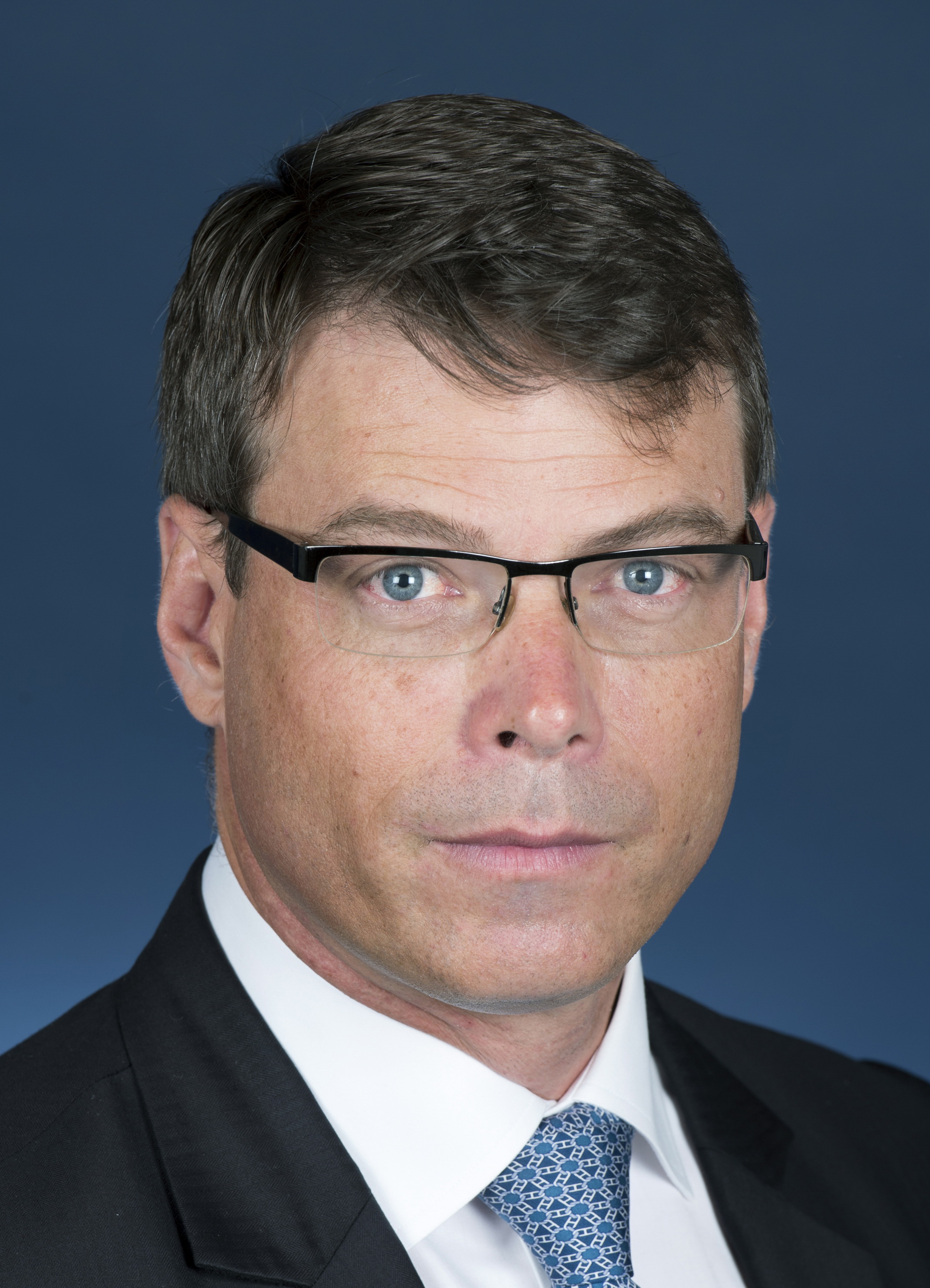 Climate Mobilisation Australia, 11 Dec 18, The Australian Ambassador for the Environment, Patrick Suckling, appeared on a panel for a US government side-event pushing clean coal technologies as climate solutions. The session on Monday 10 December was called: “U.S. Innovative Technologies Spur Economic Dynamism – Promoting innovative approaches”.
One must ask was Ambassador Suckling’s presence sanctioned at Ministerial level? His attendance on the panel is hardly good diplomacy for Australia, even given the Liberal Government support for coal and weak climate targets and climate policy.
After about 9 minutes the first speaker was disrupted and youth and civil society delegates unfurled a banner and made their own testimonies on the disruptive and dangerous nature of coal for health and climate.
They chanted “Keep it in the ground” and “Shame on you”, before leaving the session. After they left, there were very few people to listen to the myths being spouted of clean coal.
Watch the Facebook Livestream video of young delegates taking over the side event about 9 minutes in and making their own testimony on the fossil fuel industry.
The Australia Institute Director of Climate & Energy Program Richie Merzian was there to document the session in the tweets below.
“How could this be good for Australia? The Ambassador finding himself in the middle of the largest cultural battle at #COP24” remarks Richie Merzian…… https://www.facebook.com/groups/859848424161990/
Climate change talks result in renewed pledge to cut emissions

 EU, Canada, New Zealand and developing countries to keep global warming below 1.5C Guardian, Fiona Harvey, Ben Doherty and Jonathan Watts in Katowice, 13 Dec 2018
The promise, which follows increasingly dire scientific warnings, was the most positive message yet to come from the ongoing talks in Poland.
The announcement came at the end of a day in which the UN secretary general made an impassioned intervention to rescue the talks, which have been distracted by US, Russian and Saudi moves to downgrade scientific advice.
“We’re running out of time,” António Guterres told the plenary. “To waste this opportunity would compromise our last best chance to stop runaway climate change. It would not only be immoral, it would be suicidal.”
The talks have centred on devising a rulebook for implementing the 2015 Paris agreement and raising countries’ level of ambition to counter climate change, but progress has been slow on several key issues and divisions have emerged between four fossil fuel powers – the US, Russia, Saudi Arabia and Kuwait – and the rest of the world.
The UN believes China could play a stronger role in the absence of leadership from the US. Sources said Guterres would make a telephone call to Xi to ask for his help in nudging talks forward.
The EU also wants China, which is a key member of the block of 77 developing countries, to step up to ensure that countries all follow the same rules in being transparent over their greenhouse gas emissions.
Campaigners praised the decision by the High Ambition Coalition group of countries, made up of the EU and four other developed countries, including Canada and New Zealand, as well as the large grouping of least developed countries and several other developing nations, to scale up their emissions-cutting efforts in line with a 1.5C temperature rise limit.
Wendel Trio, director of the Climate Action Network Europe, said: “The spirit of Paris is back. The statement will boost greater ambition at the crunch time of these so far underwhelming talks. For the EU this must mean a commitment to significantly increase its 2030 target by 2020, even beyond the 55% reduction some member states and the European parliament are calling for. We call upon the countries that have not signed the statement so far to stop ignoring the science.”
Guterres, in a pointed criticism aimed at the four countries that have been refusing to “welcome” the Intergovernmental Panel on Climate Change’s special report on 1.5-degree warming, said rejecting climate science was indefensible.
He added: “The IPCC special report is a stark acknowledgment of what the consequences of global warming beyond 1.5 degrees will mean for billions of people around the world, especially those who call small island states home. This is not good news, but we cannot afford to ignore it.”
Frank Bainimarama, the prime minister of Fiji and the outgoing chair of COP23, amplified Guterres’ message. He told delegates they risked going down in history as “the generation that blew it – that sacrificed the health of our world and ultimately betrayed humanity because we didn’t have the courage and foresight to go beyond our short-term individual concerns: craven, irresponsible and selfish”.
The former US vice-president Al Gore told delegates they faced “the single most important moral choice in history of humanity”.
Behind the scenes, delegates said there had been strong progress on finance thanks to a doubling of commitments by Germany and Norway to help poorer nations adapt to climate change and build institutions capable of monitoring emissions. Nicholas Stern, the author of a landmark review on the economics of climate change, praised “the level of ideas and cooperation”.
But others said there were still many disputed brackets in the negotiating text on transparency and other elements of the rulebook……..
“The window for action is closing fast. We need to do more and we need to do it now,” said the document, which would form part of the official statement from this conference. https://www.theguardian.com/environment/2018/dec/12/un-chief-antonio-guterres-attempts-to-revive-flagging-climate-change-talks
High alert as bushfire risk reaches Black Saturday levels
 12 Dec 18, The bushfire risk is back to Black Saturday levels in Victoria’s most dangerous and populous zone, stretching from Kilmore to Morwell and covering 59 per cent of the state’s population… . (subscribers only)
Maine watchdogs keep close eye on Trump’s bid to change nuclear waste storage rules
 https://bangordailynews.com/2018/12/12/news/midcoast/maine-watchdogs-keep-close-eye-on-trumps-bid-to-change-nuclear-waste-storage-rules/ • December 12 2018, A new proposal by President Donald Trump’s administration to reclassify some high-level nuclear waste to reduce cleanup costs will not affect the 550 metric tons of spent nuclear fuel stored in more than 60 airtight steel canisters near the former Maine Yankee nuclear reactor in Wiscasset. https://bangordailynews.com/2018/12/12/news/midcoast/maine-watchdogs-keep-close-eye-on-trumps-bid-to-change-nuclear-waste-storage-rules/ • December 12 2018, A new proposal by President Donald Trump’s administration to reclassify some high-level nuclear waste to reduce cleanup costs will not affect the 550 metric tons of spent nuclear fuel stored in more than 60 airtight steel canisters near the former Maine Yankee nuclear reactor in Wiscasset.
The new proposal focuses on waste generated by nuclear weapons, not power plants. But Mainers tasked with advocating for safe handling of atomic waste voiced concern that it could foretell changes that would affect the Maine Yankee waste.
“Safety costs money; environmental protection costs money,” said Edgecomb resident Ray Shadis, technical adviser to the New England Coalition on Nuclear Pollution in Brattleboro, Vermont, and founder of the group Maine’s Friends of the Coast that eventually got Maine Yankee shut down. “I think that’s the next shoe. This initiative at the weapons’ facilities is very likely the first step.” The U.S. Department of Energy has proposed reclassifying some high-level radioactive waste in various U.S. locations to low-level, allowing the department to leave the waste buried in the ground and save $40 billion in cleanup costs, the Associated Press reported Tuesday. Per the Atomic Energy Act of 1954 and the Nuclear Waste Policy of 1982, high-level radioactive waste is currently defined as waste resulting from processing irradiated nuclear fuel that is highly radioactive. Shadis said the proposal would not affect waste at the former Maine Yankee plant, which closed in 1996. Trump’s current proposal would only affect high-level radioactive waste generated by nuclear weapons production — currently stored in South Carolina, Idaho, Washington and New York — not waste generated by civilian nuclear production. “The terms ‘highly radioactive’ and ‘sufficient concentrations’ are not defined in the [Atomic Energy Act] or the [Nuclear Waste Policy Act],” the proposal states. It goes on to argue that “Congress left it to [Department of Energy] to determine when these standards are met. Given Congress’ intent that not all reprocessing waste is [high-level waste], it is appropriate for DOE to use its expertise to interpret the definition of [high-level waste], consistent with proper statutory construction, to distinguish waste that is non-HLW from waste that is HLW.” According to Shadis, industry officials and regulators have insisted since the beginning of the nuclear age that civilian nuclear production and weapons production for defense have nothing to do with each other. They are not integrated in any way and are handled separately. In fact, waste generated by civilian nuclear reactors is regulated by the U.S. Nuclear Regulatory Commission. Eric Howes, spokesman for Maine Yankee, said Tuesday he is not aware of any proposals to reclassify waste stored at Maine Yankee. Nevertheless, Shadis said, “I will say that we could simply wait for the other shoe to drop, because the Trump administration has rushed to the rescue of commercial power plants, which are shutting down all over the country because they are no longer competitive … it’s one way of fixing the game. One way of adjusting the cost of nuclear is to be more lenient when it comes to environmental regulations, including regulations regarding nuclear waste.” “That’s completely outrageous,” Don Hudson, chairman of the Maine Yankee Community Advisory Panel, said of the proposal. “They couldn’t have done that with a straight face. But it doesn’t affect Maine Yankee’s waste.” A federal judge has already awarded Maine Yankee $24.6 million in a decision based on the federal government’s failure to remove and dispose of the spent nuclear fuel. But Hudson said again on Tuesday there is no viable solution for the waste in Wiscasset, although “there are a couple of potential projects that might get built sometime in the next decade for above-ground storage near Carlsbad, New Mexico, and west Texas.” Previous administrations have said “stranded” nuclear waste — hazardous materials stored where there is no operating nuclear plant such as Maine Yankee, Yankee Rowe in Massachusetts and several others — would be the first to be removed, according to Hudson. But he said he isn’t holding his breath. “The impasse on the nuclear waste issue continues,” Howes said. “Congress to date has not provided any funding in the fiscal year 2019 budget for consolidated interim storage or the Yucca Mountain license application process. Maine Yankee and many others are urging Congress to provide fiscal year 2019 funding for nuclear waste management during this lame duck session of Congress.” “I hate to sound cynical, but I’m not going to believe it’s going to happen until I actually hear there’s a bulldozer on the ground,” Hudson said. “It’s really dangerous stuff, and it needs to be taken care of … depending on who you ask, it’s going to be multi tens of thousands of years before you could assign just casual care of this waste.” |
|
TRUMP WANTS TO RECLASSIFY RADIOACTIVE WASTE FROM NUCLEAR WEAPONS TO ‘LOW LEVEL’ SO DISPOSAL IS CHEAPER
|
NEWSWEEK, BY ON 12/11/18President Donald Trump’s administration reportedly plans to reclassify high-level radioactive waste scattered around the U.S. in order to make it easier and cheaper to dispose of. The Department of Energy intends to relabel high-level radioactive waste left over from the production of nuclear weapons as low-level, the Associated Press reported. Currently, high-level radioactive waste is defined as that which is a byproduct of fuel reprocessing (where leftover fissionable material is separated from the waste) or from nuclear reactors. Low-level waste, on the other hand, represents around 90 percent of all such waste, according to the American Nuclear Society, and generally comes from facilities where radioisotopes are used, such as nuclear power stations, and local hospitals. Items often include wipes, clothes and plastic. In the U.S., 90,000 metric tons of nuclear waste is being temporarily stored as successive administrations have grappled to find a long-term solution. Storing nuclear waste safely presents a number of challenges: it needs to be protected from natural disasters, and stopped from seeping into the surrounding water and soil, while its radiation blocked. Thieves must be kept from accessing it, and so too future generations who may not understand how toxic such materials are. The Associated Press reported the agency said the reclassification would shave $40 billion off the cost of cleaning up after the production of nuclear weapons. A Department of Energy official told Newsweek it is requesting public comment on its interpretation of the meaning of the statutory term of high-level radioactive waste through the federal register. …….. Facilities which would be affected include the country’s most highly contaminated: the Hanford Nuclear Reservation in Washington state, which takes up an area half the size of Rhode Island. Opened in 1943, the site produced the plutonium for the atomic bomb dropped on Nagasaki, Japan in 1945, according to its website. The production of nuclear materials carried on until 1987, leaving behind waste that threatened the local environment, prompting the state and federal authorities — including the Department of Energy, the Environmental Protection Agency — to pledge in 1987 to clean up the site, without success. Other facilities mentioned in the plans are the Savannah River Plant, South Carolina and the Idaho National Laboratory, according to the Associated Press……. Alex Smith, Program Manager of the State of Washngton Department of Ecology Nuclear Waste Program, which is involved in the Hanford project, told the Associated Press: “They see it as a way to get cleanup done faster and less expensively.” The consultation originally ran from October 10 until December 10. Democratic Senator Ron Wyden for Oregon requested a public consultation on the proposal be extended to January 9……..https://www.newsweek.com/trump-reclassify-radioactive-waste-nuclear-weapons-low-level-disposal-cheaper-1253063?fbclid=IwAR1H-mvAOsdN24NT1pKy3MGAuVDn_q_siZc67iXsl-eLkKNFNMeZ4F8xKgA |
|
|
Australia silent, as New Zealand rules out using ‘Kyoto credits’ for Paris
New Zealand rules out using ‘Kyoto credits’ for Paris, Australia shtum, (shtum means silent, non-communicative), Brisbane Times ,By Peter Hannam, 11 December 2018 New Zealand’s Climate Change Minister James Shaw has ruled out his nation using carryover credits to count against its Paris climate target, saying such a move would make it challenging for the world to meet the important goal of reducing emissions.Australia silent
Mr Shaw made the comments to Australasian journalists in a conference call on Tuesday after meeting his Australian counterpart Melissa Price during the climate talks in Katowice, Poland.
As the Herald has reported, Ms Price and her environment department have refused to exclude use of any surplus credit generated during the soon-to-be concluded Kyoto Protocol against Australia’s Paris emissions pledges.
Federal Labor also said it won’t rule out the use of Kyoto credits until it has received advice………
Low ranking
Mr Shaw’s comments come as Australia was named 55th out of 60 nations on a Climate Change Performance Index compiled by Germanwatch, a non-government agency. Saudi Arabia and the US occupied the bottom rankings, while Sweden and Morocco topped the list.
Australia scored particularly poorly for its national climate policy and per capita greenhouse gas emissions – at more than 16 tonnes of CO2 a year – both ranked second-worst.
The Paris target – in which the Abbott government set at reducing 2005 levels of carbon pollution to 26 per cent by 2030 – was rated 12th among the 60 nations.
Pacific island countries accuse USA of obstructing talks at UN climate change summit
Vanuatu’s foreign minister says worst offenders on global warming are blocking progress, Guardian, Ben Doherty in Katowice@bendohertycorro, Wed 12 Dec 2018
“It pains me deeply to have watched the people of the United States and other developed countries across the globe suffering the devastating impacts of climate-induced tragedies, while their professional negotiators are here at COP24 putting red lines through any mention of loss and damage in the Paris guidelines and square brackets around any possibility for truthfully and accurately reporting progress against humanity’s most existential threat,” he said.
Regenvanu said the countries most responsible for climate change were now frustrating efforts to counter it.
The UN’s climate change talks in Poland have been distracted by a semantic debate over whether the conference should “welcome” or “note” the IPCC’s special report warning of dire consequences if global warming rises more than 1.5C above pre-industrial levels, with a bloc of four oil-producing countries – the US, Saudi Arabia, Russia, and Kuwait – insisting the report be only “noted”.
Documents from the conference presidency, seen by the Guardian, indicate the issue of how to acknowledge the report will be returned to later in the week and is likely to further slow progress on negotiating a final outcome. Negotiators said they are growing increasingly pessimistic that talks can be concluded by their deadline on Friday…….
As 193 countries at the climate talks seek to establish a “rule book” on how to implement the commitments made in the Paris agreement three years ago, Regenvanu condemned a two-tier system that exempted high-emissions countries from reductions obligations, saying the world needed “one common rule book, in which rules apply to all”.
The US state department declined to comment on his remarks……https://www.theguardian.com/environment/2018/dec/11/us-accused-of-obstructing-talks-at-un-climate-change-summit
Bushfire threat to vital koala habitat
Salamander Bay bushfire threatens homes, vital koala habitat in Port Stephens, ABC 11 Dec 18 An entire koala population in Port Stephens could be wiped out after a fire devastated their habitat near Port Stephens, an animal rescue group fears.
An estimated 16 hectares of the Mambo Wetlands, north of Newcastle, was scorched on Monday night, according to Port Stephens Koalas.
The reserve is about 40 per cent of the vital koala habitat.
The blaze broke out near the Salamander Bay shopping centre about 6:30pm and dozens of firefighters spent the night backburning to protect homes.
It burnt away more than 80 hectares of swampy scrub, which made access difficult for fire crews.
The fire flared up to a watch and act level at 3:00am, but weather conditions eased in the early hours and the blaze was brought under control.
Carers from the rescue group today surveyed the damage and fielded calls about stranded and injured wildlife.
Simone Aurino, senior carer at Port Stephens Koalas, said the reserve was one of the most important areas in the Tomaree Peninsula.
“It has a viable breeding population and its central to all the other habitats,” she said.
“It’s a really, really essential habitat.”
Ms Aurino said the blaze would lead to significant flow-on effects which may not be known for some time.
“It has the potential to wipe out the population in this area, it’s really quite devastating,” she said.
“The habitat’s been changed, so the animals are going to move…….https://www.abc.net.au/news/2018-12-11/bushfire-threatens-vital-koala-habitat-in-port-stephens/10605160
Australia’s Liberal Coalition govt cosying up to coal megaminer Adani
 Adani met with environment department 40 times in six months
Coalition ‘holding Adani’s hand’ through mine approvals, Greens senator says, Guardian, Lisa Cox and Ben Smee, Tue 11 Dec 2018
The environment minister, Melissa Price, and energy minister, Angus Taylor, met the company once each in Canberra. The meetings occurred between 7 May and 7 November this year and were tabled by the department in response to questions on notice from the Greens senator Larissa Waters.
Waters had asked at an estimates hearing in October if the department, minister or assistant minister had “met with Adani representatives or lobbyists in the past six months”.
She said on Tuesday the number of meetings suggested the department was “holding Adani’s hand through the approvals process”.
The number of meetings was evidence of the “cosy relationship” Adani had with the federal government, Waters said.
“The environment department is supposed to be a regulator and protector of our environment yet it’s holding Adani’s hand through the approvals process to get this mega coalmine off the ground.
“It shouldn’t be facilitating the development of a new dirty coalmine, it should be standing up for the best interests of our people and planet.”
The company announced late last month it would self-finance its controversial coalmine but it still requires approvals from state and federal governments for its groundwater-dependent ecosystem management plan and its management plan for the black-throated finch before significant work can start at the site.
The Queensland government is also under renewed pressure to rule out two potential subsidies to Adani.
The Mackay Conservation group released polling of marginal central Queensland electorates on Tuesday that showed 60% of people oppose any form of government subsidy. Only 22% supported subsidies, and 18% were unsure.
An Australia Institute report has found a potential royalties deferment deal would effectively be a low-interest loan to Adani, worth up to $385m.
The report also looked at $100m in road upgrades being considered by the Queensland government. It analysed approval plans for the Carmichael mine and found Adani’s vehicles “would be nearly all of the traffic on the road”.
Researcher Tom Swann, the author of the report, said: “The Queensland government has said repeatedly that it will not provide taxpayer funds to Adani, but Queenslanders are on the hook for hundreds of millions of dollars because of these deals.”
The state government’s public statements on Adani have been sceptical in recent weeks since the announcement it would self-fund a slimmed down version of Carmichael.
The premier, Annastacia Palaszczuk, said last month, “We will believe it when we see it”.
The royalties deal, which has not yet been signed, was premised as support for the “first mover” in a coal basin………. https://www.theguardian.com/environment/2018/dec/11/adani-met-with-environment-department-40-times-in-six-months
Coalition designs underwriting tender so it can choose what it wants, including coal — RenewEconomy

Coalition underwriting documents allow government to pick and choose its favoured projects and adjust the criteria to suit. Even emissions intensity may not be a factor. The post Coalition designs underwriting tender so it can choose what it wants, including coal appeared first on RenewEconomy.
via Coalition designs underwriting tender so it can choose what it wants, including coal — RenewEconomy
December 12 Energy News — geoharvey

Opinion: ¶ “Trump’s Losing, Lonely Fight to Save Coal” • President Trump has stood by coal whenever he could. He appointed a former coal lobbyist to the Federal Energy Management Commission. His administration promoted coal at COP 24. And yet the industry has not yet benefited from having an energetic booster in the Oval Office. […]
1414 Degrees’ molten silicon biogas energy storage system set for trial in S.A. — RenewEconomy

A world-leading, Adelaide-made 10MWh molten silicon energy storage system is on its way to Glenelg, where it will be tested at an SA Water treatment plant. The post 1414 Degrees’ molten silicon biogas energy storage system set for trial in S.A. appeared first on RenewEconomy.
via 1414 Degrees’ molten silicon biogas energy storage system set for trial in S.A. — RenewEconomy
Know your NEM: Wind and solar is boosting competition — RenewEconomy

The wind and solar boom is clearly adding to competition, but 5GW of battery storage in coming years will really focus the minds of incumbent utilities. The post Know your NEM: Wind and solar is boosting competition appeared first on RenewEconomy.
via Know your NEM: Wind and solar is boosting competition — RenewEconomy
1 This month

of the week – Australians for War Powers Reform (AWPR)
To see nuclear-related stories in greater depth and intensity
 Antinuclear