Why Labor is taking the right course on nuclear disarmament

|
Labor sets the right course on nuclear disarmament, https://www.smh.com.au/politics/federal/labor-sets-the-right-course-on-nuclear-disarmament-20181224-p50o22.html, By Gem Romuld, 27 December 2018 On the final afternoon of the recent 48th Labor national conference, Anthony Albanese took to the podium to announce that a future Labor government will sign and ratify the UN Treaty on the Prohibition of Nuclear Weapons. He declared that “people who change the world are ones that are ambitious”, after three days of intense negotiations on nuclear policy among senior Labor parliamentarians.The Coalition government has not only refused to join the treaty, but boycotted the negotiating conference and opposed the process leading up to it. While claiming to wholeheartedly seek a world free of nuclear weapons, foreign affairs ministers Julie Bishop and Marise Payne have failed to act. Their preferred path is one that doesn’t challenge the nuclear-armed states, especially our powerful ally, and protects the status quo.
After words of caution from Senator Penny Wong and MP Richard Marles in October, supporters of the nuclear ban treaty within Labor had to move a mountain to get the leadership on side. Even with former foreign minister Gareth Evans warning against the treaty, out of deference to the United States, on the eve of the resolution the supportive majority won out. With 78 per cent of the federal caucus signed up to support the ban, 83 per cent of Labor voters on side, and two dozen unions adding their voice, Labor has a clear mandate. Soon after the resolution passed unanimously, commentators rushed to dismiss the resolution as aspirational, ineffective and conditional upon whether nuclear-armed states join the treaty. This is not true; there are no binding caveats to the resolution. Labor must only “take account of” various factors ahead of signing and ratifying. Conservatives within Labor tried to attach binding preconditions, but their attempts failed. As for whether the resolution is aspirational, in fact it is binding. Therefore, it is no longer a matter of whether a Labor government will join the TPNW – only when. A recently published paper by Harvard Law School’s International Human Rights Clinic is clear that Australia joining the ban treaty would advance its stated goal of supporting nuclear disarmament without creating insurmountable legal obstacles to ongoing military relations with the United States. Australia signed up to the landmines and cluster munitions treaties when the United States did not, and still has not, signed on. The alliance relationship doesn’t bind us to include weapons of mass destruction in our defence policies. Further, the ANZUS Treaty contains no obligation to accept the policy of nuclear deterrence. The threat posed by nuclear weapons is real and urgent. More than ever, our security depends on an effective rules-based international order and strong multilateral institutions. No nuclear-armed states have yet joined the treaty, but this will change. No treaty, whether on disarmament or human rights or climate change, has ever enjoyed universal support at the outset. Support is always built up over time. Monumental strides forward in human history rarely begin with all parties coming together to agree on a common course of action. The majority of the world’s nations negotiated the TPNW based on their firm belief that it would have a profound impact on the behaviour of nuclear-armed states and their allies, even if its provisions would not, at the outset, be binding on those states. Treaties prohibiting other inhumane, indiscriminate weapons demonstrate this process; for example, the landmine ban treaty is widely regarded as a success, with massive reductions in use and production worldwide. Within the nuclear weapon ban treaty’s first year of existence, money is moving. The Norwegian sovereign wealth fund and the largest Dutch pension fund have decided to exclude nuclear-weapon-producing companies from their investment portfolios, citing the treaty as their reason. The Australian Medical Association and the Australian Red Cross have urged the Australian government to sign and ratify the treaty as a humanitarian imperative. Cities within countries opposed to the treaty are also joining the call for national action, including Los Angeles, Toronto, Manchester, Melbourne and Sydney. The ban treaty is a powerful new tool for advocacy, and nuclear disarmament is back on the political agenda. Since the treaty opened for signature in September 2017, 69 states have signed on and 19 have ratified. The 50th nation to deposit its instrument of ratification will enable the treaty to enter into force and become permanent international law. With dozens of nations currently undergoing domestic processes to sign and ratify, entry- into-force is expected by 2020. It is beyond time for Australia to quit our role as nuclear enabler for the United States. The nuclear weapon ban treaty presents us with a persistent question; will we join the global majority and contribute to the consensus against these WMDs, or remain implicated in the nuclear threat? Labor’s commitment clears a pathway forward for the next Government. Gem Romuld is the Australian director of the International Campaign to Abolish Nuclear |
|
The Story of Sustainability in 2018: “We Have About 12 Years Left”

Harvard Business Review 27th Dec 2018 Andrew Winston, – We have about 12 years left. That’s the clear message from a monumental
study from the Intergovernmental Panel on Climate Change (IPCC).
To avoid some of the most devastating impacts of climate change, the world must slash carbon emissions by 45% by 2030, and completely decarbonize by 2050 (while, in the meantime, emissions are still rising).
The IPCC looked at the difference between the world “only” warming two degrees Celsius (3.8°F) — the agreed upon goal at global climate summits in Copenhagen and Paris — or holding warming to just 1.5 degrees. Even the latter, they say, will require a monumental effort “unprecedented in terms of scale.”
We face serious problems either way, but every half degree matters a great deal in human, planetary, and economic losses.
It wasn’t just the IPCC that told a stark story. Thirteen U.S. government agencies issued the U.S. National Climate Assessment, which concluded that climate change could knock at least 10% off of GDP. Other studies tell us that sea
level rise is going to be worse than we thought, Antarctica is melting three times faster than a decade ago, and Greenland is losing ice quickly as well. If both those ice sheets go, sea level rise could reach 200-plus feet, resulting in utter devastation, including the loss of the entire Atlantic seaboard (Boston, New York, D.C., etc.), all of Florida, London,
Stockholm, Denmark, Paraguay, and land now inhabited by more than 1 billion Asians). https://hbr.org/2018/12/the-story-of-sustainability-in-2018-we-have-about-12-years-left
Labor is right to support a nuclear ban treaty
The cold war is back. Labor is right to support a nuclear ban treaty https://www.theguardian.com/commentisfree/2018/dec/28/the-cold-war-is-back-labor-is-right-to-support-a-nuclear-ban-treatyLabor’s pledge to commit to nuclear disarmament puts the alternative party of government on the right side of history.
The gulf between the shenanigans of way too many politicians, and the growing urgency of grave and looming threats has rarely seemed wider. Action on crucial issues languishes while parliamentarians make naked grabs for power, acting in the interests only of themselves. Poor personal behaviour seems endemic. On the two unprecedented dangers looming over all humanity – nuclear war and climate disruption – Australia has been not just missing in action, but actively on the wrong side of history, part of the problem rather than the solution.
The government’s own figures demonstrate that our country, awash with renewable sun and wind, is way off track to meet even a third of its greenhouse gas emissions reduction target by 2030 – itself nowhere near enough.
Not only is nuclear disarmament stalled, but one by one, the agreements that reduced and constrained nuclear weapons, hard-won fruit of the end of the first cold war, are being trashed. All the nuclear-armed states are investing massively not simply in keeping their weapons indefinitely, but developing new ones that are more accurate, more deadly and more “usable”. The cold war is back, and irresponsible and explicit threats to use nuclear weapons have proliferated. Any positive effect that Australia might have on reducing nuclear weapons dangers from the supposed influence afforded us by our uncritical obsequiousness to the US is nowhere in sight. Our government has been incapable of asserting any independence even from the current most extreme, dysfunctional and unfit US administration. The US has recently renounced its previous commitments under the nuclear non-proliferation treaty (NPT); we have said nothing.
The one bright light in this gathering gloom is the 2017 UN treaty on the prohibition of nuclear weapons. For its role in helping to bring this historic treaty into being, the International Campaign to Abolish Nuclear Weapons (Ican) was awarded the Nobel peace prize for 2017 – the first to an entity born in Australia. This treaty provides the first comprehensive and categorical prohibition of nuclear weapons. It sets zero nuclear weapons as the clear and consistent standard for all countries and will help drive elimination of these worst weapons of mass destruction, just as the treaties banning biological and chemical weapons, landmines and cluster munitions have played a decisive role in progressing the elimination of those other indiscriminate and inhumane weapons. The treaty lays out a clear pathway for all states, with and without nuclear weapons, to fulfil their binding legal obligation to accomplish nuclear disarmament. It is currently the only such pathway.
Regrettably, the Australian government was the most active “weasel” in opposing the treaty’s development at every step and was one of the first to say it would not sign, even though we have signed every other treaty banning an unacceptable weapon.
Hence the Labor party’s commitment at its recent national conference in Adelaide that “Labor in government will sign and ratify the Ban Treaty” is an important and welcome step. It is a clear commitment, allowing no room for weaselling.
The considerations articulated alongside this commitment are fairly straightforward and consistent with the commitment. First, recognition of the need for “an effective verification and enforcement architecture” for nuclear disarmament. The treaty itself embodies this. Governments joining the treaty must designate a competent international authority “to negotiate and verify the irreversible elimination of nuclear weapons” and nuclear weapons programmes, “including the elimination or irreversible conversion of all nuclear-weapons-related facilities”. Australia should also push for the same standard for any nuclear disarmament that happens outside the treaty.
Second, the Labor resolution prioritises “the interaction of the Ban Treaty with the longstanding Nuclear Non-Proliferation Treaty”. The treaty has been carefully crafted to be entirely compatible with the NPT and explicitly reaffirms that the NPT “serves as a cornerstone of the nuclear disarmament and non-proliferation regime”, and that its full and effective implementation “has a vital role to play in promoting international peace and security”. All the governments supporting the treaty support the NPT, and the NPT itself enshrines a commitment for all its members to “pursue negotiations in good faith on effective measures relating to cessation of the nuclear arms race at an early date and to nuclear disarmament”. The UN secretary general, Antonio Guterres, and the International Committee of the Red Cross are among those who have affirmed that the treaty and the NPT are entirely consistent, complementary and mutually reinforcing. Even opponents of the treaty recognise that prohibition is an essential part of achieving and sustaining a world free of nuclear weapons.
Third, the Labor resolution refers to “Work to achieve universal support for the Ban Treaty.” This too is mirrored in one of the commitments governments take on in joining the treaty, to encourage other states to join, “with the goal of universal adherence of all States to the Treaty.”
An Australian government joining the treaty would enjoy wide popular support in doing so – an Ipsos poll last month found that 79% of Australians (and 83% of Labor voters) support, and less than 8% oppose, Australia joining the treaty.
Australia would also stop sticking out like a sore thumb among our southeast Asian and Pacific Island neighbours and be able to work more effectively with them. Brunei, Cook Islands, Fiji, Indonesia, Kiribati, Laos, New Zealand, Malaysia, Myanmar, Palau, Philippines, Samoa, Thailand, Timor-Leste, Tuvalu, Vanuatu and Vietnam have already signed the treaty.
Most importantly, joining the treaty and renouncing nuclear weapons would mean that Australia would become part of the solution rather than the problem of the acute existential peril that hangs over all of us while nuclear weapons exist, ready to be launched within minutes. Time is not on our side. Of course this crucial humanitarian issue should be above party politics. The commitment from the alternative party of government to join the treaty and get on the right side of history when Labor next forms government is to be warmly welcomed. It is to be hoped that the 78% of federal parliamentary Labor members who have put on record their support for Australia joining the treaty by signing Ican’s parliamentary pledge will help ensure Labor keeps this landmark promise.
• Dr Tilman Ruff is co-founder of the International Campaign to Abolish Nuclear Weapons (Ican) and Nobel peace prize winner (2017)
Chinese city residents protest over plans for nuclear research plant
Local suspicions over Changsha plant heightened by failure to officially announce the plans until one day before public consultation process was due to end, SCMP, Mandy Zuo, 28 Dec 18, Dozens of residents in a city in central China have staged a protest over plans to build a nuclear research institute near their homes.
The protesters fear that radioactive materials used at the planned facility in Changsha, the capital of Hunan province, will pose a health risk.
The institute behind the project did not officially release their plans on Tuesday – after work had began on the site and one day before the public consultation period was supposed to end.
An environmental impact assessment into the project said No 230 Research Institute, a branch of the China National Nuclear Corporation, had acquired a space of over 20,000 square metres near a densely populated area to expand its offices and laboratories at the site, which will be dedicated to the geological exploration of uranium.
Although the facility is not intended to handle refined uranium, and scientists say that unprocessed material does not emit harmful levels of radiation, residents have expressed concerns about the possible health risks and have called for building work to be halted.
Their concerns were heightened by the failure to carry out an assessment of the radiological hazards and the decision to announce the plans a day before the consultation period was due to end.
Wu Xiaosha, one of the protesters, said people were also angry that the project is already being built without approval.
“The environmental impact assessment report lied about the population in the area – it said there are only 40,000 people in the area, but actually it’s nearly 250,000,” said Wu.
Yang Wenqiang, an official from the Changsha Urban Rural Planning Bureau, refused to comment on the matter, saying the government was holding an emergency meeting and would release a statement later……
Environmental concerns have fuelled a growing number of protests in China in recent years as public awareness of the possible health risks increases.
The Chinese Academy of Social Sciences reported that half of protests with more than 10,000 participants between 2001 and 2013 were sparked by concerns about pollution. https://www.scmp.com/news/china/society/article/2179905/chinese-city-residents-protest-over-plans-nuclear-research-plant
Despite 47.5 degrees Celsius heat, Senator Rex Patrick drove to Kimba to explore the question of “community consent” for nuclear waste dump

VISIT TO KIMBA TO DISCUSS NRWMF PROCESS
Today I drove to Kimba to meet with local residents about the ongoing process to determine where Australia’s National Radioactive Waste Management Facility will be located. I spoke with those ‘in favour’ of a local facility and those ‘against’.
Australia needs to take responsibility for its own low/intermediate level radioactive waste. We need a new national facility, but I don’t want to see it located anywhere where there is not ‘broad community support’. Actually, that’s the Government’s stated position too, but unfortunately they have not set a criteria for ‘broad community support’.
Imagine voting in the next Federal election without knowing how the winner will be determined. Even worse, imagine the current Prime Minister deciding the result of the election AFTER he had been told by the AEC what the voting outcome was.
This has to be fixed. So too does the fact that alternate Commonwealth sites have not been properly assessed. I had something to say about this in this morning’s The Australian newspaper https://www.theaustralian.com.au/…/fd851b6cefd7c5701d354c7e…
I talked to the locals about the need to have an alternate plan for the growth of Kimba in the event the facility is located elsewhere (e.g. Woomera, Leonora etc.). That’s a dialogue I want to continue.
Despite the mercury reaching 47.5 degrees, I took some time out after the meetings to have a look at a few Kimba tourist sites – have a look at their silo art. It’s worth spending some time in Kimba if you’re passing by. https://www.facebook.com/groups/344452605899556/
Editorial: Japan must ditch nuclear plant exports for global trends in renewable energy — Fukushima 311 Watchdogs

December 25, 2018 Projects to export nuclear power plants, a pillar of the “growth strategy” promoted by the administration of Prime Minister Shinzo Abe, appear to be crumbling. Factors behind the failures include ballooning construction costs due to strengthened safety standards after the triple core meltdowns at Tokyo Electric Power Co.’s (TEPCO) Fukushima Daiichi Nuclear […]
Prosecutors demand 5-year prison terms for Tepco’s ex-bosses for Fukushima nuclear disaster — Fukushima 311 Watchdogs

Prosecutors say TEPCO leaders should have known the risks a tsunami could pose to the Fukushima Dai-ichi nuclear power plant, which sits along Japan’s eastern coast. Here, the Unit 3 reactor is seen this past summer, amid storage tanks of radiation-contaminated water. Executives In Fukushima Nuclear Disaster Deserve 5-Year Prison Terms, Prosecutors Say December 26, […]
Flinders Ranges Traditional Owners take radioactive waste concerns to Australian Human Rights Commission

 18 December 2018
The complaint, also being provided to the Australian Government, demonstrates the Traditional Owners’ continuing opposition to the nomination of Wallerberdina Station as a place to both dispose and store federal radioactive waste.
The complaint has been prepared on a pro-bono basis by Maurice Blackburn Lawyers on behalf of the Adnyamathanha Traditional Lands Association (ATLA).
It alleges that both the ballot to assess community support for the waste facility, which excludes many traditional owners, and the damage done to significant cultural heritage sites by Commonwealth contractors constitutes unlawful discrimination.
Maurice Blackburn lawyer Nicki Lees, acting for ATLA, said the nomination process for the Hawker site has been fundamentally flawed from its inception and the AHRC complaint is necessary to seek independent insight into the adequacy of the process.
“From day one this process has shown a complete lack of regard for the Traditional Owners and for the significance of this site to the Adnyamathanha people,” Ms Lees said.
Vince Coulthard, CEO of ATLA and proud Adnyamathanha man, said that “ATLA remains strongly opposed to any nomination of their land for a future radioactive waste dump site and the lodging of an AHRC complaint is important in seeking a fair hearing for our deep concerns”.
There are also serious probity questions to be answered about this process – including the nomination of the site by senior South Australian Liberal Party figure Grant Chapman, without prior consultation with the Traditional Owners.
A separate application challenging the lawfulness of a ballot to assess community support in the Kimba region by the Barngarla people for the proposed waste facility is also currently before the Federal Court of Australia.
Maurice Blackburn Lawyers previously acted pro-bono on behalf of Traditional Owners who successfully overturned the nomination of Muckaty Station as a radioactive waste dump in the Northern Territory.
Australian government promoting Australia’s secret weapons deals to Saudi Arabia and UAE for murderous war in Yemen
|
Documents reveal Australia’s secret arms deals with nations fighting Yemen’s bloody war, ABC News
Internal Defence Department documents obtained under Freedom of Information (FOI) and from parliamentary hearings reveal since the beginning of 2016, Canberra has granted at least 37 export permits for military-related items to the United Arab Emirates, and 20 to Saudi Arabia. They are the two countries leading a coalition fighting a war against Houthi rebels in the Middle East’s poorest nation, Yemen. The four-year war in Yemen has killed tens of thousands and an air-and-sea embargo has led to more than 85,000 Yemeni children under five dying from hunger, according to one children’s agency. Australia’s burgeoning exports to the UAE and Saudi Arabia may be connected to a plan announced by then-Prime Minister Malcolm Turnbull in January to drastically increase defence sales over the next decade. Australia will spend $200 million between now and 2028 in order to make Australia the 10th-largest arms exporter in the world. It is currently the 20th largest. The strategy states the Middle East is a “priority market” for defence exports. The Government has tried to keep details of the exports secret, but New South Wales lawyer and human rights activist Kellie Tranter has spent a year trying to shed light on the sales. Continue reading |
We are fools to believe that a change of venue for Lucas Heights nuclear waste will make it safe
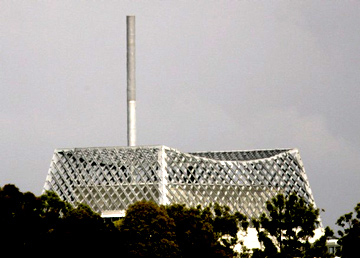 Paul Waldon Fight To Stop Nuclear Waste Dump In Flinders Ranges SA, 28 Dec 18 The “forever” radioactive contamination that has promoted the death of tens of thousands, and nothing short of a 100 thousand more people being diagnosed with cancers and other diseases, while waiting for settlement of what they say is a compensable injury from their time working in the inherently dangerous American nuclear industry. However the documentation rarely includes the numbers of people in the communities whom have suffered the burden to their health from radioactive wastes abandoned in their backyard.
Australia has had its share of nuclear accidents, and we are fools to believe that a change of venue for nuclear wastes would make it safe.
Why did Sir Mark Oliphant not speak out about nuclear bombs radioactively contaminating Maralinga?
My own research has been into why Sir Mark Oliphant, Australia’s premier nuclear physicist and a prime mover in the Tube Alloys group that showed the Americans how to build atomic bombs in time to use in the second world war, never spoke out about the contamination (from H-bomb tests) of his beloved home state of South Australia and further eastward just weeks before the 1956 Olympic Games took place in Melbourne.
He told me in 1993: “The Brits thought they could ensure any fallout or contamination was not too big. They were very pigheaded about it. The people in control were very haphazard about the estimates.” Why didn’t he speak out about the residual radioactive contamination at Monte Bello, Maralinga and Emu Field, even when he was governor of South Australia? He replied: “You can really decontaminate Maralinga by leaving it alone. Plutonium alpha particles contamination, I think, is grossly overplayed. The Aborigines are using it to the full. At the same time it was very naughty of the British to leave it, and to think of spreading it that way in the first place was very nasty. The British people were very reticent about revealing contamination, especially regarding food contamination. They hugged that to their chests very closely.”
I suggest that Sir Mark Oliphant was Australia’s – and Britain’s – J Robert Oppenheimer. The evidence is set out on my website www.rabbittreview.com and was mostly found in the files I accessed in the UK National Archives.
The outlook for the uranium industry is very poor – Cameco as a case in point
 How Poor Is the Long-term Outlook for Cameco Corp. (TSX:CCO)? The Motley Fool Matt Smith | December 27, 2018 “………it is becoming increasingly unpopular. This is primarily due to the dangers it poses during times of catastrophic failure, as demonstrated by the Fukushima incident. There are also concerns over the safe processing and storage of the radioactive waste that it produces.
Bullish analysts point to growing demand for the fuel and rising supply constraints as the reason to be optimistic for uranium and Cameco. This makes the demand side dynamics for uranium appear healthy, pointing to higher consumption which will bolster prices.
However, other nations are moving to reduce their dependence on nuclear power in favour of renewable sources of energy which in recent years have become significantly cheaper to install and operate. The inherent risks associated with nuclear power see France intending to reduce the share of its electricity generated by nuclear by 25% by 2025. Whereas Germany has measures in place to decommission all reactors by 2022 and South Korea intends to undergo a similar process.
According to analysis conducted by asset management firm Lazard, utility scale solar and wind generated electricity is significantly cheaper to produce than nuclear as well as coal and natural gas-fired power generation. This explains why a record level of renewable energy was installed during 2017 and most of that new installed capacity was composed of solar and wind. This points to a sharp deterioration in demand for nuclear power over the long term, particularly given that some of the reactors under construction will replace existing reactors that are to be decommissioned.
No analysis is complete without an understanding of the supply-side of the equation. Recent production cutbacks by Cameco and Kazakhstan’s state-owned producer Kazatomprom triggered uranium’s latest rally and those are likely only to be temporary. Both miners will boost output once uranium prices firm sufficiently to make the operations that they have shuttered economic to operate. Then you have nations such as Namibia, the world’s sixth-largest producer, which is aiming to boost production to benefit financially from uranium before it falls into disuse, becomes a stranded asset and loses its value.
The long-term outlook is poor
While the average spot price during the third quarter 2018 was higher than the equivalent period in 2017 Cameco’s revenue of $488 million was flat year over year. This can be attributed to much of the uranium sold by the miner being priced according to long-term contracts. Cameco, however, reported a significant improvement in its bottom line, announcing adjusted net income of $15 million compared to a $50 million loss a year earlier.
The miner has also secured additional uranium deliveries during the fourth quarter 2018, which along with firmer prices, bodes well for Cameco to report stronger earnings. This will give its stock a short-term lift, but it appears that any lasting recovery may never occur. The reasons for this are simple: there is no sign of the bear market for uranium ending anytime soon. A combination of declining demand over the long-term and the potential for supply to grow significantly all points to uranium never attaining its pre-Fukushima prices. https://www.fool.ca/2018/12/27/how-poor-is-the-long-term-outlook-for-cameco-corp-tsxcco/
Remembering heroes who tried to save others in nuclear disasters
However don’t bet the farm that Boris, Natasha, or even Fearless Leader will come to the party when Australia has a severe radioactive accident in any nuclear instillation within or outside of Lucas Heights.
Steve Dale “Are these nuclear workers accidental heroes or did they just try to redeem themselves” – it is never the politicians or the nuclear lobbyists risking their lives when things go wrong. It is the poor innocent workers that have to suffer the insults of nuclear radiation, radiation inhalation/ingestion. To further rub salt into the wound, the nuclear lobbyists/enthusiasts then try to claim that radiation exposure/inhalation/ingestion is not a problem. I pity the workers/responders (and their families/parents) of the next inevitable nuclear catastrophe. https://www.facebook.com/groups/344452605899556/
Did you know that McAfee computer virus protection company is in partnership with nuclear corporation AREVA, (now rebranded as ORANo, and rebranded again as FRAMATOME)
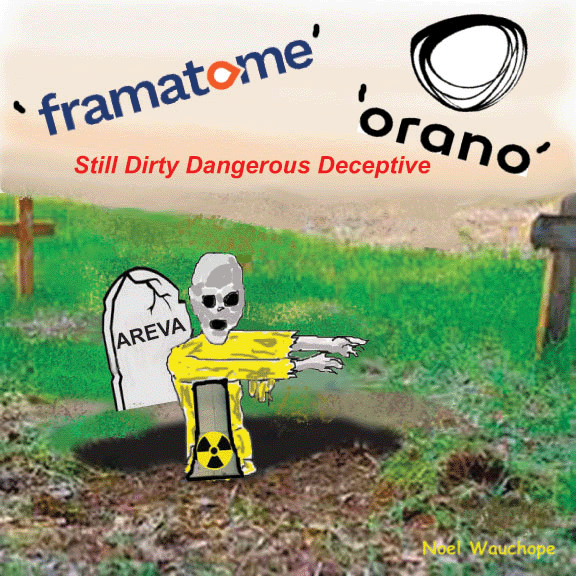 Framatome partners with McAfee to support energy industry cybersecurity 24 May 2018, Framatome signed an agreement with McAfee, the device-to-cloud cybersecurity company, to distribute cybersecurity solutions to energy transmission, distribution and generation facilities worldwide. Together, Framatome and McAfee will work with these facilities to help protect their digital assets and support the reliable production of electricity.
“In a rapidly evolving digital landscape, holistic and robust cybersecurity programs are critical to protecting nuclear energy facilities and electrical power and distribution infrastructure,” said Catherine Cornand, senior executive vice president of Framatome’s Installed Base Business Unit. “This partnership with McAfee will enhance our ability to provide customers with the right combination of cutting-edge technologies and expertise.”…….http://www.framatome.com/EN/businessnews-1331/framatome-partners-with-mcafee-to-support-energy-industry-cybersecurity.html
December 28 Energy News — geoharvey

Opinion: ¶ “The 35 Easiest Ways to Reduce Your Carbon Footprint” • In the face of the recent National Climate Assessment report on the threats of climate change, the Trump administration keeps on trying to roll back environmental policies. Individuals, can make a difference, however, by reducing personal greenhouse gas emissions. [State of the Planet] ¶ […]
1 This month

of the week – Australians for War Powers Reform (AWPR)
To see nuclear-related stories in greater depth and intensity
 Antinuclear