It’s not worth wiping out a species for the Yeelirrie uranium mine
 SBS, BY GAVIN MUDD 26 Apr 19, Like the rest of the Western Australian outback, there’s a wonderful paradox where the land appears barren, but is, in fact, rich with biodiversity – and animals are under threat of extinction if the mine goes ahead. The Western Australian outback may look bare at first glance, but it’s teeming with wildlife, often beneath the surface.
The Tjiwarl Traditional Owners have fought any uranium mining on their land for the last 40 years, and the decision by the government wasn’t made public until the day before Anzac Day……..
This region is home to several of Australia’s deposits of uranium and not only holds cultural significance as part of the Seven Sisters Dreaming Songline, but also environmental significance. If the mine goes ahead, groundwater levels would drop by 50cm and wouldn’t fully recover for 200 years. And 2,422 hectares of native vegetation would be cleared.
I visited the site 16 years ago and, like the rest of the Western Australian outback, there’s a wonderful paradox where the land appears barren, but is, in fact, rich with biodiversity.
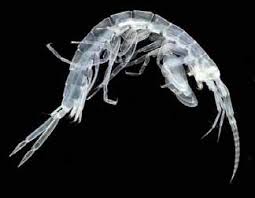
Native animals living in underground water, called stygofauna, are one such example of remarkable Australian fauna that aren’t obvious at first glance. These animals are under threat of extinction if the Yeelirrie uranium mine goes ahead.
Stygofauna are ecologically fragile
Most stygofauna are very tiny invertebrates, making up species of crustaceans, worms, snails and diving beetles. Some species are well adapted to underground life – they are typically blind, pale white and with long appendages to help them find their way in total darkness.
n 2016, the Western Australian Environmental Protection Agency (EPA) advised against building the Yeelirrie uranium mine because it would threaten the stygofauna species there, despite the proposed management strategies of Cameco Australia, the mine owner.
Stygofauna are extremely local, having evolved in the site they’re found in. This means individual species aren’t found anywhere else in the world. EPA chairman Tom Hatton said:
Despite the proponent’s well-considered management strategies, based on current scientific understanding, the EPA concluded that there was too great a chance of a loss of species that are restricted to the impact area.
And to get to the uranium deposit, the miners need to dig through the groundwater, a little like pulling the plug in the middle of the bathtub. Stygofauna have adapted to living at different levels of the water, so pulling out the plug could dry out important parts of their habitat.
Stygofauna are also susceptible to any changes in the chemistry of the groundwater. We simply do not know with confidence what mining will do to the groundwater chemistry at Yeelirrie in the long term. Various wastes will be backfilled into former pits, causing uncertainty for the welfare of surrounding stygofauna.
The approval conditions suggest that the mine should not be allowed to cause extinction – but if this does happen, nothing can be done to reverse it. And there would be no penalty to Cameco either – which has said it can’t guarantee such a condition can be met………..https://www.sbs.com.au/news/it-s-not-worth-wiping-out-a-species-for-the-yeelirrie-uranium-mine
April 26 Energy News — geoharvey

Opinion: ¶ “What That Flashy Renewable Energy Paper Got Wrong” • A much talked-about paper from the University of Chicago says renewable energy mandates have high costs. But the paper, which was not peer-reviewed, has serious problems. Its most recent data is from 2015, when costs were 50% higher than they are today. [Natural Resources […]
Australian wave power technology tapped to power Spanish Canary Island — RenewEconomy

WA-based Bombora Wave Power to supply 4MW of its mPower technology to help wean fourth largest of Spanish Canary Islands, Lanzarote, off diesel. The post Australian wave power technology tapped to power Spanish Canary Island appeared first on RenewEconomy.
via Australian wave power technology tapped to power Spanish Canary Island — RenewEconomy
Labor commits $10M to boost CSIRO climate science centre capabilities — RenewEconomy

A Shorten Labor Government will commit $10 million to boost the capabilities of the CSIRO Climate Science Centre, better coordinate Australian climate science and develop an Australian climate science capability plan. The post Labor commits $10M to boost CSIRO climate science centre capabilities appeared first on RenewEconomy.
via Labor commits $10M to boost CSIRO climate science centre capabilities — RenewEconomy
Washington becomes sixth US state to commit to 100% renewables — RenewEconomy

The state-led drive towards 100% renewable energy in US continues at breakneck speed as Washington State pass bill requiring 100% carbon-free power by 2045 and coal phase-out by 2025. The post Washington becomes sixth US state to commit to 100% renewables appeared first on RenewEconomy.
via Washington becomes sixth US state to commit to 100% renewables — RenewEconomy
Renewables delivered record 77% of German power on Easter Monday — RenewEconomy

Power production from renewables in Germany hit a new record high on Easter Monday, delivering 77% of net public electricity supply, and more than demand at certain times. The post Renewables delivered record 77% of German power on Easter Monday appeared first on RenewEconomy.
via Renewables delivered record 77% of German power on Easter Monday — RenewEconomy
1 This month

of the week – Australians for War Powers Reform (AWPR)
To see nuclear-related stories in greater depth and intensity
 Antinuclear