Submissions due by 16 September to the parliamentary Inquiry on Nuclear Power for Australia
 One month for nuclear inquiry submissions, Daily Telegraph, Rebecca Gredley, Australian Associated Press, August 8, 2019

Australians have until next month to make a submission to the federal government’s inquiry into the feasibility of using nuclear energy as a local power source.
Submissions are open until September 16, with the hope of finalising the report by the end of the year…….
The committee will consider waste management, health and safety, environmental impacts, affordability and reliability, economic feasibility and workforce capability.
Security implications, community engagement and national consensus will also be reviewed.
Despite calling for the inquiry, Energy Minister Angus Taylor has continued sending mixed messages over his intentions with nuclear power……
The new probe will have regard to two previous inquiries, a 2016 look at the nuclear fuel cycle by the South Australian government and a 2006 review by the Howard government.
The SA inquiry recommended pursuing a dump for overseas nuclear waste in the state, which hit a wall ahead of the last state election.
However, a federal government proposal to store low-level and intermediate-level waste generated in Australia is subject to ongoing debate on a suitable location.
The Howard government review found Australia would need about 25 reactors to supply one-third of the nation’s electricity supply by 2050. https://www.dailytelegraph.com.au/news/breaking-news/one-month-for-nuclear-inquiry-submissions/news-story/50cdda8762cd616650dde4f662c065da
Energy Minister Angus Taylor orders inquiry into nuclear energy – a distraction from Australia’s climate policy failure?
 We’re wasting too much energy on nuclear talk https://www.canberratimes.com.au/story/6320212/were-wasting-too-much-energy-on-nuclear-talk/?cs=14246, Richie Merzian, 10 Aug 19 Late last Friday – a timeslot where ministers are known to announce policies they are most proud of – the Minister for Energy, Angus Taylor, ordered a parliamentary inquiry into nuclear energy.
As the Prime Minister flies to the Pacific Island Forum on Tuesday, he will now be armed with another sorry excuse as to why Australia is not expediting the transition to renewables and storage: ‘Sorry, we are still looking into nuclear’. But in the end, whatever is sparking this debate is less important than the economic and safety risks of nuclear. You don’t need to be an economist to see that nuclear power is an expensive and dated solution.
Richie Merzian is climate and energy program director at the Australia Institute.
Two military accidents in Russia, one with release of radiation
Russia explosion: Five confirmed dead in rocket blast, BBC 10 Aug 19 Five people were killed and three injured following a rocket explosion on a naval test range in Russia on Thursday, state nuclear company Rosatom confirmed.
Rostacom said the accident occurred during tests on a liquid propellant rocket engine.
The three injured staff members suffered serious burns in the accident.
Authorities had previously said that two people died and six were injured in the blast at the site in Nyonoksa.
The company told Russian media that its engineering and technical team had been working on the “isotope power source” for the propulsion system.
The Nyonoksa site carries out tests for virtually every missile system used by the Russian navy, including sea-launched intercontinental ballistic missiles, cruise missiles and anti-aircraft missiles.
Authorities in Severodvink, 47km (29 miles) east of Nyonska said that radiation levels shortly after the blast were higher than normal for about 40 minutes but returned to normal……..
Ammunition dump blaze
It is the second accident involving Russia’s military this week.
On Monday, one person was killed and eight others were injured in a blaze at an ammunition dump in Siberia.
Flying munitions damaged a school and a kindergarten in the area. More than 9,500 people were evacuated. https://www.bbc.com/news/world-europe-49301438
Australia’s Liberal Coalition government still dreaming about nuclear power

|
Although a parliamentary inquiry is revisiting the possibility of nuclear power in Australia, recent history suggests any support is unlikely to gain critical mass.
when it delivered its findings, the [South Australian ]royal commission found that a nuclear power plant was not commercially viable, and this was considered to have killed off any prospect of a nuclear-powered Australia.
the federal government’s determination to keep the nuclear option alive a source of confusion to many in South Australia and beyond.
the legislative and regulatory work required to choose a site, select designs, approve them, build prototypes and carefully oversee the process to completion would take at least two decades. “And that is being optimistic,”
“There’s a core group of mainly older white blokes who think nuclear is a great idea”
The pipe dream of nuclear power https://www.thesaturdaypaper.com.au/news/environment/2019/08/10/the-pipe-dream-nuclear-power/15653592008587, By Royce Kurmelovs.
When the federal energy minister, Angus Taylor, announced a new parliamentary inquiry into what it would take for Australia to get into the nuclear power business, he might have expected a bigger headline.
In a letter sent last Friday, the minister said the inquiry would “consider the economic, environmental and safety implications of nuclear power” and that he was confident the multi-party committee was “the best way to consider this issue in a sensible way”. Taylor, himself a long-time advocate for nuclear power, made the announcement on the heels of a recent campaign by Coalition MPs and the Australian Minerals Council to consider the economic benefits of going nuclear. Queensland MP Ted O’Brien, chair of the standing committee on the environment and energy, which will oversee the inquiry, said he took seriously the responsibility handed to him, and the committee would “determine the circumstances under which future Coalition or Labor governments might consider nuclear energy generation”. O’Brien stressed the Coalition government had no current plans to lift the moratorium on nuclear power generation. All told, it was an odd series of qualifiers for an announcement meant to shock, leading some observers to ask: Why bother? Continue reading |
Russia’s secrecy over nuclear incident in 2017
A group of scientists called the ‘Ring of 5’ found evidence of a major nuclear accident that went undeclared in Russia, https://www.insider.com/nuclear-accident-unreported-russia-2017-2019-8 Aria Bendix
- In 2017, a group of scientists known as the “Ring of Five” detected “an unprecedented release” of radiation in Europe and Asia.
- At the time, no country claimed responsibility for the release, but a new study from the Ring of Five attributes it to a nuclear accident at Russia’s Mayak nuclear facility.
- The facility was previously the site of the 1957 Kyshtym explosion, the world’s third-worst nuclear accident, behind Fukushima and Chernobyl.
A group of scientists called the “Ring of Five” has been scouring Europe’s atmosphere for elevated levels of radiation since the mid ’80s.
In July, the group released a study detailing evidence of an undisclosed nuclear accident that may have taken place less than two years prior. The likely culprit, the scientists said, was the Mayak nuclear facility in Russia, which was once the center of the Soviet nuclear-weapons program.
At the time of the alleged accident in 2017, Russian officials said the facility wasn’t the source of the release, even though the nation showed elevated levels of a radioactive isotope called ruthenium-106. Instead, officials in Russia attributed the radiation to an artificial satellite that burned up in the atmosphere.
But the latest Ring of Five study contradicts that account. Continue reading
Australia’s strategy for ‘new nuclear’ – based on non-existent plant!
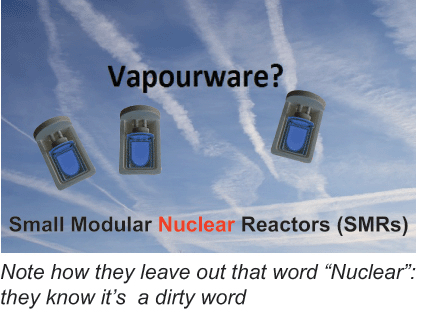 Are SMRs vaporware? https://johnquiggin.com/2019/08/08/are-smrs-vaporware/ AUGUST 8, 2019It seems as if nuclear fans in Australia have given up on conventional Generation III/III+ reactors such as the Westinghouse AP1000 and Areva EPR: unsurprising in view of the massive cost overruns and delays experienced in attempts to construct them.
So, is BWX going to build a factory, or is this going to be a bespoke job using existing plants (presumably much more expensive). I went to their website to find out. But far from getting a clear answer, I could find no mention at all of a deal with NuScale, or of any recent activity around SMRs.
Japan’s Fukushima ‘Reconstruction-Obstruction Olympic Games
 In reality, these Games are about forgetting the nuclear accident itself and with it “the victims of the nuclear accident”
Refugees are currently to be forced by financial pressure to return to areas that have been evacuated after the 2011 triple disaster, despite still significantly increased levels of radiation, as retired nuclear physicist Hiroaki Koide is pointing out. According to him, the fact that even children or pregnant women have to live with a twenty-fold increased limit for annual radiation exposure (from 1 millisievert per year before and up to 20 mSv after the incident), “is something that cannot be accepted at all”.
The Olympics are being organised “so that people in Japan forget the responsibility of the state for the nuclear accident,”
“What’s really dangerous, is that “the athletes will tell the world that Fukushima is safe”
‘Bad for Fukushima, bad for democracy’ https://www.playthegame.org/news/news-articles/2019/0586_bad-for-fukushima,-bad-for-democracy/ 7.08.2019, By Andreas Singler
July 24 – one year to go until the opening of the Summer Olympics in Tokyo – may have been a day of joyful anticipation for many who embrace the Olympic Movement. But not all people anticipate this event as cheerfully as the organisers in Japan, a large part of the media and the Government of Prime Minister Shinzo Abe would appreciate. There was and still is much opposition against the hosting of the Olympic and Paralympic Games 2020 in Tokyo. Opponents call it both “bad for democracy” and “bad for Fukushima” – the area hit by a nuclear power plant disaster on 11 March 2011 and a devastating earthquake and tsunami.
For those critics, July 24 was a reason to take to the streets against Tokyo 2020. They had announced a rally for this memorable day followed by a demonstration in Shinjuku, one of the most crowded hubs in Tokyo. A leaflet even suggested that the Olympics could be “given back even a year before”. The protest in Tokyo was part of a so-far unique international gathering of ‘NOlympics’ activists from several countries. For eight days, opponents from Tokyo, Pyeongchang, Rio de Janeiro, Paris and Los Angeles discussed the dark sides of the Olympics with critical scholars and alternative media. A press conference was held at the Foreign Correspondents’ Club of Japan.
The motto ‘the Reconstruction Games’, that the organisers and the Government chose after the 2011 East Japan triple disaster, sounds like sheer mockery, opponents say. Organisers as well as the International Olympic Committee (IOC), including President Thomas Bach, often talk about reconstruction, but hardly ever mention the Fukushima Daiichi nuclear power plant disaster as one of the main reason for the need of such rebuilding.
Federal nuclear waste management “consultative committees” – secretive – a farce?
 Ruth Tulloch Fight To Stop Nuclear Waste In The Flinders Ranges, 10 Aug 19 These committees were originally set up as a way of “consulting with the community”. They haven’t been allowed to discuss much (if any thing) with the community and any one who wants to go and sit in on a meeting has to ‘ask’ (beg, be vetted) for an invite. These are supposed to be public meetings and as such should be run like a public meeting ie. local council….where any one is entitled to go and sit in at any time. https://www.facebook.com/groups/941313402573199/
Australia’s Emissions Reduction Minister Angus Taylor makes light of UN’s urgent climate warning
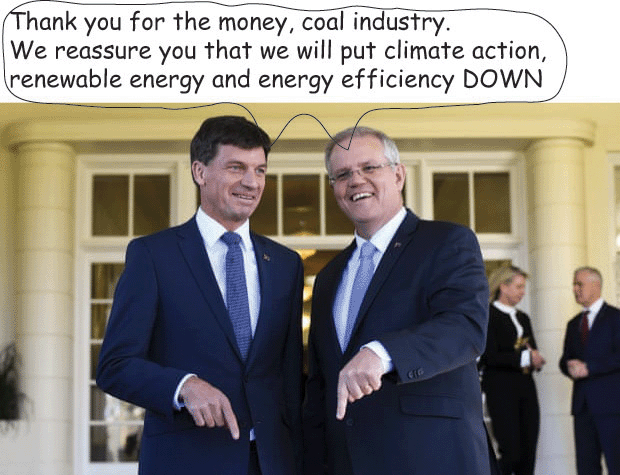 Australian government brushes off UN’s urgent climate warning, SBS News 9 Aug 19 Humanity faces increasingly painful trade-offs between food security and rising temperatures within decades unless emissions are curbed and unsustainable farming and deforestation halted, according to a landmark climate assessment.
The federal emissions reduction minister has defended Australia’s land management practices after a new United Nations climate change report called for changes in the way the world produces and consumes food.
The UN’s Intergovernmental Panel on Climate Change warned efforts to limit global warming while feeding a booming population could be wrecked without swift and sweeping changes to how we use the land we live off.
The report on land use and climate change highlighted the need to protect remaining tropical forests as a bulkhead against future warming. It offered a sobering take on the hope that reforestation and bio-fuel schemes alone can offset mankind’s environmental damage, underlining that reducing emissions will be central to averting disaster.
“Land is a source of emissions as well as a sink,” IPCC chair Hoesung Lee told AFP.
“Obviously you want to reduce emissions from land as much as possible. But that has a lot to do with what’s happening to the other side of the equation: greenhouse gas emissions, mainly from the energy sector.”
But Emissions Reduction Minister Angus Taylor said Australia is already absorbing emissions from land management. “This is a very, very important success story in Australia. Farmers, in particular, haven’t been given the credit they deserve for the role, the enormous role, they’ve played on this front,” he told ABC News on Friday.
But the minister brushed off concerns about the role meat-heavy diets play in climate change, suggesting the report was “forcing” people to become vegan……..
Land is intimately linked to climate. With its forests, plants, and soil it sucks up and stores around one-third of all man-made emissions. Intensive exploitation of these resources also produces huge amounts of planet-warming CO2, methane and nitrous oxide, while agriculture guzzles up 70 percent of Earth’s freshwater supply.
National Farmers Federation president Fiona Simson said the food warning should send “a shiver down your spine”…….
As the global population balloons towards 10 billion by mid-century, how land is managed by governments, industry and farmers will play a key role in limiting or accelerating the worst excesses of climate change.
Farmers for Climate Action want the federal government to implement a national strategy on climate change and agriculture, and to speed up the transition to clean energy.
“With NSW marking one year since it was 100 per cent drought-declared … and farmers across the country hurting from droughts, heatwaves and other extreme weather events, it is clear that climate change is already hurting Australian agriculture,” the group said in a statement……https://www.sbs.com.au/news/australian-government-brushes-off-un-s-urgent-climate-warning
Space Radiation Will Damage Mars Astronauts’ Brains
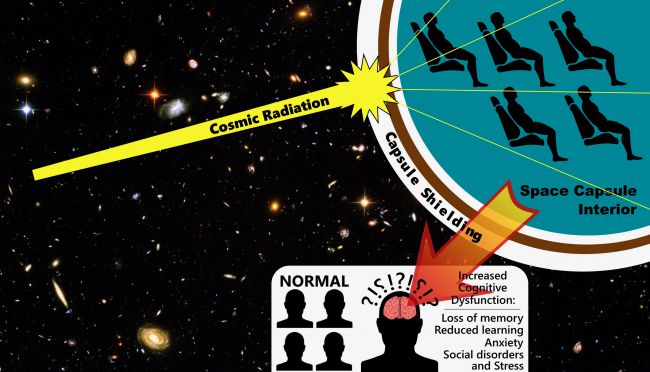
Space Radiation Will Damage Mars Astronauts’ Brains, Space.com By 9 Aug 19, Space radiation will take a toll on astronauts’ brains during the long journey to Mars, a new study suggests.
The connection between indigenous and nuclear issues

“These trucks are carrying radioactive materials over the water supply for seven states, and they are driving by our communities and our families,” “This is an unacceptable risk.”
Local activists highlight connection between indigenous and nuclear  issues, https://news.wbfo.org/post/local-activists-highlight-connection-between-indigenous-and-nuclear-issues, By KYLE S. MACKIE 9 Aug 19, A celebration of Indigenous Peoples and Nuclear-Free Future Day returns Friday to the Buffalo History Museum. Ahead of the event, local Native Americans and environmental activists explained how the issues of indigenous peoples and nuclear power are intertwined.
Representatives from local indigenous communities, the Western New York Peace Center and Peace Action New York State gathered Tuesday at the history museum’s Japanese Garden. Agnes Williams, coordinator of the organization Indigenous Women’s Initiatives, helped hold up two colorful banners that read, “No More Waste” and “Water is Life.”
“The nuclear issue is very important to us as indigenous people because we’re on the beginning and the end of the nuclear chain, at uranium mining and waste disposal,” said Williams, who is a member of the Seneca Nation.
Williams and other speakers discussed the long history of indigenous land around the world and in the U.S. being taken and used for mining, testing of nuclear weapons and then disposal of radioactive waste.
“We thank indigenous wisdom for the guidance,” said Victoria Ross, executive director of WNY Peace Center. “All of our issues are connected. We are working to #UniteTheStruggles.” Continue reading
August 9 Energy News — geoharvey

Opinion: ¶ “The Shipping Industry Must Go Carbon Neutral To Survive” • A report from Maritime Strategies International predicts the value of all the world’s oil tankers will enter a period of dramatic decline from 2025 onward due to a dramatic collapse in demand for oil and coal. Ships built in 2015 may not be […]
Rooftop solar slashes demand levels and emissions across main grid — RenewEconomy

Australian Energy Market Operator data shows rooftop solar pushing down demand in daytime hours and reducing emissions. The post Rooftop solar slashes demand levels and emissions across main grid appeared first on RenewEconomy.
via Rooftop solar slashes demand levels and emissions across main grid — RenewEconomy
Angus Taylor’s Liddell taskforce slammed as guise for propping up coal — RenewEconomy

Federal and NSW Governments establish taskforce to examine options for Liddell closure that’s set to reignite pro-coal push. The post Angus Taylor’s Liddell taskforce slammed as guise for propping up coal appeared first on RenewEconomy.
via Angus Taylor’s Liddell taskforce slammed as guise for propping up coal — RenewEconomy
The Present and the Future of the Australian Power Grid. Big Bucks and Fewer and Fewer Users. — Nuclear Exhaust
The Present and the Future of the Australian Power Grid. Big Bucks and Fewer and Fewer Users. Currently Australians are discussing and are concerned about the cost of electrical power. The cost of the electrical grid has become more and more expensive. Energy market authorities have noted that this fixed cost is increasing. At the […]
1 This month
7 April – WEBINAR – Australia and the Doomsday Clock – Preventing nuclear war through NoFirstUse and other policies
Online | Tuesday April 7, 4:00-5:30pm, Australian Eastern Time / 8:00-9:30am Central Europe Time
– Access the registration link
15 April – Zoom –Nuclear Power is Not the Solution
Apr 15, 2026 01:00 AM in Canberra, Melbourne, Sydney

Join the International Physicians for the Prevention of Nuclear War (IPPNW) on Tuesday, April 14th for a timely webinar exploring the risks associated with nuclear power and challenging the myth that it offers a simple, safe, carbon-free solution to the climate crisis

21 April Webinar: No Nuclear Weapons in Australia
Start: 2026-04-21 18:00:00 UTC Canberra, Melbourne, Sydney (GMT+10:00)
End: 2026-04-21 19:30:00 UTC Canberra, Melbourne, Sydney (GMT+10:00)
Event Type: Virtual
A virtual link will be communicated before the event.
Host Contact Info: australia@icanw.org

of the week – Australians for War Powers Reform (AWPR)
To see nuclear-related stories in greater depth and intensity
 Antinuclear