Does Angus Taylor REALLY believe that nuclear energy would be viable in Australia
 Nuclear energy inquiry: is Angus Taylor’s move logical or just for the backbench?
Guardian, Adam Morton Environment editor@adamlmorton 11 Aug 2019 Political arguments about nuclear power in Australia are not new, but the energy minister, Angus Taylor, says this time is different.
Announcing a parliamentary inquiry into what would be necessary to develop a nuclear energy industry, Taylor suggested people should no longer be thinking of the large-scale plants that had dominated the global industry since the 1950s. The future of nuclear, if it had one, was small.
“The technology that’s emerging is not gigawatt power, it is actually small modular reactors,” Taylor told the ABC.
He said there were no plans to drop Australia’s moratorium on nuclear energy, but there were different points of view on the subject and the cost of small modular reactors was changing quickly. “Finding affordable, sustainable, reliable, baseload power for the decades ahead is an important role of government and of parliament and that’s why I have asked for this inquiry,” he said.
The Guardian asked Taylor’s office what had shaped his belief that small modular reactors were getting cheaper, but did not get an answer.
At least in part, the minister seems to have been informed by the work of SMR Nuclear Technology, a company hoping to bring the technology to Australia. Its directors include coal power plant owner and Coalition donor Trevor St Baker, who the company says has met Taylor on the issue.
Small nuclear reactors are in some ways not a new idea. Similar technology is employed in nuclear-powered submarines and icebreakers. But they are next to non-existent in power generation.
The model favoured by SMR Nuclear Technology is being developed by a US company, NuScale Power, which originally hoped to have a plant running by 2022. Its plan for 60-megawatt nuclear modules is yet to receive regulatory approval in the US. The company hopes to clear this hurdle by September 2020, for construction of the first module to start in 2023 and for it to start producing electricity by late 2026.
The industry says small modular reactors have several benefits: they have less nuclear material and better temperature regulation and are therefore easier to keep safe; the reactor can be installed underground to provide protection from above ground risks such as extreme weather and terrorism; the initial capital cost is low and building modules in factories can cut costs further.
Given the technology has yet to complete a three-year review, the cost is difficult to assess, but some experts have given estimates. In Australia, the last full examination of nuclear power was a 2016 South Australian royal commission that found neither large nor modular nuclear reactors were likely to deliver a commercial return between now and 2050 even if a strong carbon price was introduced, something the government says it has no intention of doing.
It found that while the smaller version had the benefit of requiring less upfront capital investment, it also raised a number of potential cost hurdles. They included that small modules were likely to require more fuel than large reactors, and promised cost-savings from building in factories would not kick in unless the industry reached a scale that justified a production line.
More recently, an analysis of the cost of electricity generation by the CSIRO and the Australian Energy Market Operator published in December found modular nuclear power was likely to be far more expensive out to 2050 than all other forms currently used or seriously considered by the government, including solar and wind with storage.
From a global perspective, an assessment by the International Energy Agency in May found nuclear power in the developed world was in decline, with plants closing due to age and little new investment. Only four large-scale plants are under construction in Europe and North America, and all have suffered delays, cost blowouts or both. Construction costs have nearly doubled since 2015……..
In Australia, the industry is blocked by a legislated ban on “nuclear action” in national environment laws. Tony Irwin, technical director of SMR Nuclear Technologies, acknowledges the political challenge of winning bipartisan support for change and believes nuclear plants will be built here only if communities volunteer to host them. He says some have expressed an interest, but declines to name them…….
The inquiry by the standing committee on the environment and energy is due to report back within four months.https://www.theguardian.com/environment/2019/aug/11/nuclear-energy-inquiry-is-angus-taylors-move-logical-or-just-for-the-backbench
August 12, 2019 -
Posted by Christina Macpherson |
AUSTRALIA - NATIONAL, politics
No comments yet.
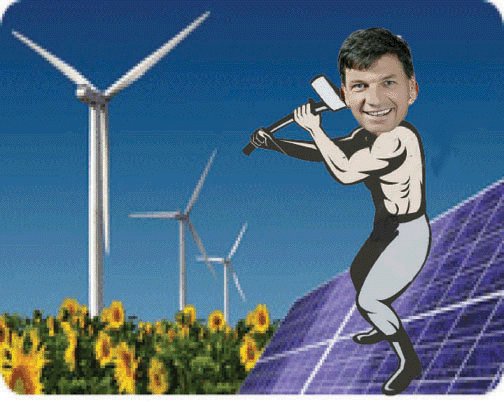 Nuclear energy inquiry: is Angus Taylor’s move logical or just for the backbench?


 Antinuclear
Leave a comment