Australian media push for press freedom (pity they’re not helping Julian Assange, though)
|
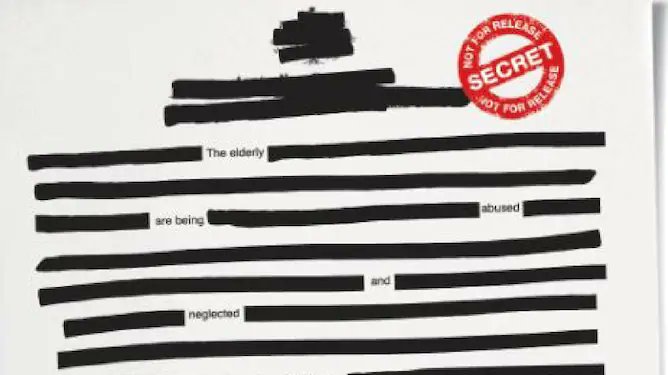
‘A culture of secrecy’: what is the Right to Know campaign about? Media companies say their journalists are being stopped from holding the powerful to account. What’s stopping them? What do they want government to do about it? Why should you care? The Age By Fergus Hunter, OCTOBER 20, 2019 All of Australia’s major media organisations have joined forces to call for reforms to protect public interest journalism in Australia. Australia’s Right to Know coalition includes Nine, News Corp, the ABC, SBS, The Guardian, and journalists’ union the Media, Entertainment and Arts Alliance. The campaign, an unprecedented show of unity between competitors, is pushing for stronger protections for media freedom after years of perceived deterioration. The outlets are seeking to combat a growing culture of secrecy that restricts journalists’ ability to hold the powerful to account.
Did anything, in particular, spark this?Media organisations in Australia have long been concerned about threats to journalism, but the issue exploded into the public consciousness following two consecutive police raids earlier this year. On June 4, police conducted a six-hour raid on the home of News Corp political journalist Annika Smethurst over an April 2018 story. The story had revealed a proposal for electronic intelligence agency the Australian Signals Directorate to take on an expanded domestic role and that figures inside government were concerned about the idea.
Did anything, in particular, spark this?Media organisations in Australia have long been concerned about threats to journalism, but the issue exploded into the public consciousness following two consecutive police raids earlier this year. On June 4, police conducted a six-hour raid on the home of News Corp political journalist Annika Smethurst over an April 2018 story. The story had revealed a proposal for electronic intelligence agency the Australian Signals Directorate to take on an expanded domestic role and that figures inside government were concerned about the idea.
What was the government’s response?Prime Minister Scott Morrison and senior colleagues defended the police raids as the independent actions of an agency doing its job to protect national security. They have responded to the broader furore over press freedom by calling a parliamentary inquiry and issuing directives to agencies emphasising the importance of a free press. The inquiry, conducted by the intelligence and security committee, is examining the impact of national security laws on press freedom. This inquiry has heard from media outlets, government officials and independent experts. It is being conducted alongside a more wide-ranging press freedom inquiry by a Senate committee. Officials, including senior figures at the Australian Security Intelligence Organisation and the Department of Home Affairs, have defended the need for a high level of secrecy, criticised media coverage and argued that some of the recommendations put forward by media organisations would threaten national security. Ministers and officials have declined to rule out pursuing charges against the News Corp and ABC journalists targeted in the raids.
Home Affairs Minister Peter Dutton has issued a directive to the federal police stating they should consider the “importance of a free and open press” and broader public-interest implications before involving media outlets in investigations. Attorney-General Christian Porter also instructed Commonwealth prosecutors not to charge journalists under certain secrecy laws without his approval. Porter has said he would be “seriously disinclined” to authorise the prosecutions. Privately, the Morrison government has indicated a scepticism that media freedom is something that grabs the public’s attention. There is also hostility within the Coalition towards any changes seen as weakening national security. With these political and policy factors in mind, the government does not yet seem convinced of the need for sweeping law reform. What do the media companies want to achieve?Australia’s Right to Know coalition has six key proposals for “necessary and urgent” reform. The changes would strengthen rights and protections for public-interest journalism.
|
|

No comments yet.
1 This month

of the week – Australians for War Powers Reform (AWPR)
To see nuclear-related stories in greater depth and intensity
 Antinuclear
Leave a comment