A duplicitous letter from Sam Chard, General Manager, Radioactive Waste Taskforce
 What a duplicitous letter from Sam Chard!
Nuclear assurance, by SAM CHARD, NRWMF taskforce general manager
I WRITE in response to the letter from Michele Madigan (“Nuclear vote”, The Advertiser, 11/11/19).
The National Radioactive Waste Management Facility will be for the permanent disposal of low-level waste, and temporary storage of intermediate-level waste.
A separate facility, likely a deeply geological one, will be found for the permanent disposal of the intermediate-level waste, but that’s a few decades off.
The transport of waste will be conducted safely, and examples in France and the UK demonstrate such a facility can coexist with a clean, green image and a successful export industry.
In the recent Kimba community ballot, more than 61 per cent of local residents supported hosting the facility, and now a ballot is under way for residents near Wallerberdina Station.
Traditional owner, neighbour, and business consultation is also being undertaken, and anyone else with an interest can make a submission
Australian Government report states that Lucas Heights spent nuclear fuel rods (for Kimba dump?) are High Level Wastes
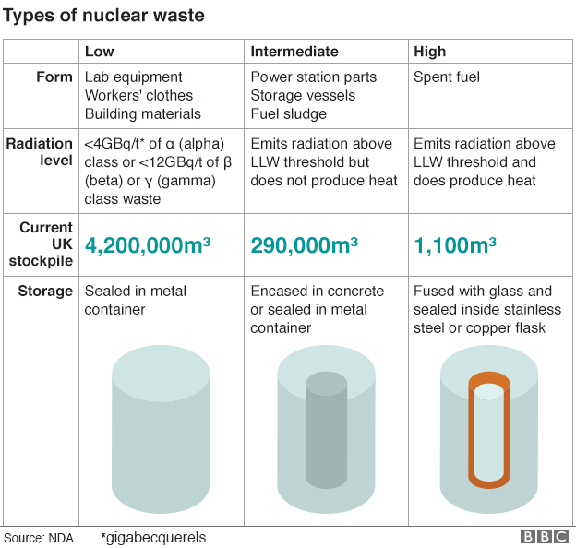
This is an extract from a government report from1993.
The report calls the nuclear fuel rods from the decommissioned Hifar reactor High Level waste.
This would be dumped in the Flinders or Kimba.
Stop the lies, stop the dump.
“The report of the Research Reactor Review examines, among many other things, the issue of the management of spent fuel rods from the HIFAR reactor, which had been accumulating at Lucas Heights since 1963. The Report says:
The spent fuel rods at Lucas Heights can only sensibly be treated as high level waste.
The pretence that spent fuel rods constitute an asset must stop’ (p. 216)
waste. … The pretence that spent fuel rods constitute an asset must stop.”
(McKinnon Review, Principal Conclusions p.xxiii, July 1993)
A cauldron of extreme heat developing in Western Australia is heading straight for the east coast bushfire zone
A cauldron of extreme heat developing in WA is heading straight for the east coast bushfire zone, ABC News, By Irena Ceranic 15 Nov 19, A build-up of intense heat that will see temperatures in WA soar into the mid 40s this weekend will be dragged across the country next week, right into parts of New South Wales and Queensland devastated by bushfires this week.
Key points:
- Four lives and hundreds of homes have been lost in NSW and Queensland fires
- Milder temperatures should provide some relief for NSW in the coming days
- But intense heat from WA is likely to be dragged across the country next week
The NSW and Queensland bushfires have already burnt through more than a million hectares of land, killing four people and destroying more than 300 homes.
Bureau of Meteorology spokesman Neil Bennett said milder temperatures were expected to provide some relief to parts of NSW where fires continue to burn over the next few days, but the bushfire threat was far from over with the heat expected to ramp up again.
The areas in dark red on the map below [on original] show parts of WA will bake in temperatures above 45 degrees Celsius over the weekend, before the hot air mass bears down on the east coast by Tuesday. ……. https://www.abc.net.au/news/2019-11-15/wa-hot-air-mass-will-head-to-the-east-coast-bushfire-zone/11705750
Federal Govt to decide on new radioactive waste storage facility next year
|
Federal Govt to decide on new radioactive waste storage facility next year, https://www.abc.net.au/radionational/programs/breakfast/federal-govt-to-decide-on-new-radioactive-waste-storage-facility/11706852?fbclid=IwAR0Ux4kgvx9WnXGWBNrmuAOxsLZEYDfanXY69yT7-ZRIbGIB009IAab5NPY Australia’s 40-year search for a site for a national radioactive waste storage facility could be coming to an end.The Federal Government says it’ll make a final decision early in the New Year on three sites under consideration in South Australia.
This week ballot papers are being sent to residents of Hawker in the Flinders Ranges to gauge local support. It follows a recent vote of the Kimba community on the Eyre Peninsula, which showed a majority in favour. Guests: Jeff Baldock, Kimba landholder and member, Working for Kimba’s Future group Producer: Cathy Van Extel |
|
Meterologist shocked at prospect of Australia’s coming summer of heat and drought

|
‘A horrible map to look at’: No rain as Australia enters grim summer, https://thenewdaily.com.au/news/national/2019/11/14/a-horrible-map-to-look-at-no-rain-as-australia-enters-grim-summer/
Robyn Wuth Australia is staring down the barrel of a horrific summer season that will drag scorching temperatures and extreme conditions well into the new year.Livio Remano has never seen such extreme conditions in the 20 years he has worked with the Bureau of Meteorology, comparing the long term seasonal outlook to a bad chest X-ray. “It’s horrible, it’s a horrible map to look at,” he said on Thursday. “I have never seen this before in my life … the entire country of Australia is covered in deep red.” That red colour means 70 to 80 per cent of the country is experiencing above-average temperatures, and is being blamed on something called an extremely positive Indian Ocean Diode. Westerly winds weaken along the equator and push warm water to shift towards Africa during a typical IOD. The wind changes allow cool water to rise from the depths of the ocean in the east, causing a temperature difference across the tropical Indian Ocean, with unusually cooler water in the east and warmer in the west. It means atmospheric moisture levels drop in Australia’s northwest, which alters the path of weather systems coming from Australia’s west. The result is less rainfall and higher than normal temperatures over parts of Australia. Queensland is moving into its wet season but there is little chance of significant rainfall until January. But eventually, Mr Remano says the rain will come. Whatever rain does fall will be isolated and could cause more harm than good with the threat of dry lightning strikes sparking new fires. “What we need is English rain, but it is not forthcoming – certainly not anytime soon,” he added. |
|
Rio Tinto drives ERA rehabilitation of Ranger uranium mine
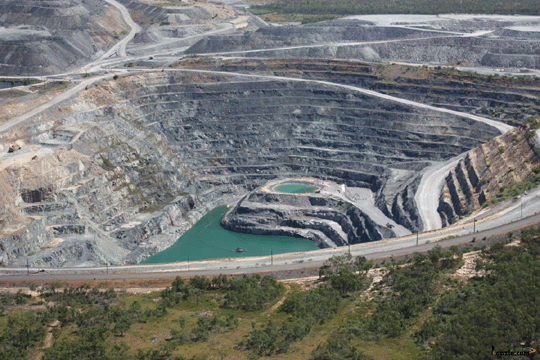 Rio Tinto drives ERA rehabilitation of Ranger, https://www.australianmining.com.au/news/rio-tinto-drives-era-rehabilitation-of-ranger/
The company has announced an offer of new fully paid ordinary shares to raise the rehabilitation funds, with support from majority owner Rio Tinto.
As ERA’s largest shareholder, Rio Tinto is subscribing to its full entitlement of approximately $326 million.
ERA is not able to secure third-party underwriting support, therefore Rio Tinto is also acting as the underwriter to ensure ERA secures the funds it needs.Rio Tinto energy and minerals group executive Bold Baatar said it was committed to ensuring ERA’s position to fund the rehabilitation.
“We take mine closure very seriously and ensuring ERA is able to fund the closure and rehabilitation of the Ranger project area, through participating in this entitlement offer, is a priority,” Baatar said.
The shares will be offered to all eligible shareholders for $0.15 per share, representing a 38 per cent discount to the $0.24 per share 10-day volume weighted average price (VWAP).
After the increase in the rehabilitation provision in 2018, ERA found it did not have sufficient existing cash resources or expected future cash flows to fulfil the Ranger rehabilitation.
ERA believes it will have an achievable plan for the Ranger rehabilitation with the completion of this entitlement officer.
As per the obligation with the Commonwealth and Northern Territory governments and the Traditional Owners, ERA will return the Ranger project area to an environment similar to the nearby Kakadu National Park.
Under its mining approval terms, ERA must end mining and processing at Ranger by January 2021 and finish final rehabilitation by January 2026.
ERA is not expected to generate any direct financial return from the Ranger rehabilitation expenditure.
Air Independent Propulsion (AIP) submarines to supercede nuclear ones?
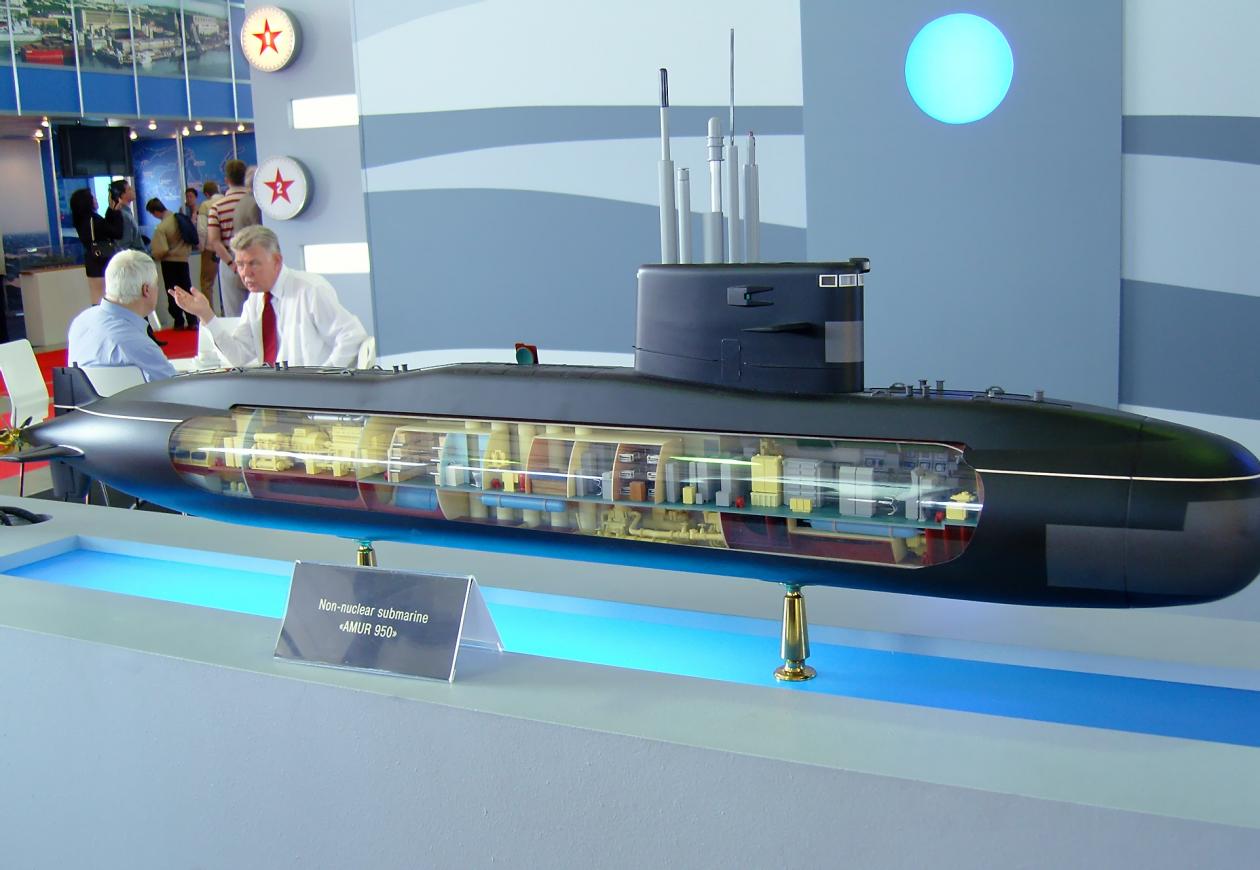
Why is the nuclear lobby frantically propagandising nuclear reactors for  Australian submarines, just as it looks as if cheaper AIP submarines look likely to take over?
AIP powered-submarines have proliferated across the world using three different types of engines, with nearly 60 operational today in fifteen countries. Around fifty more are on order or being constructed.
Stealth:…..AIP submarines can, if properly designed, swim underwater even more quietly.
Cost: ….a country could easily buy three or four medium-sized AIP submarines instead of one nuclear attack submarine
|
All U.S. Navy Submarines are Nuclear Powered (But That Could Change)
Here come the subs. National Interest, 11 Nov 1 9, by Sebastien Roblin Key point: AIP subs are affordable and, when piloted by a competent crew, can sink carriers.
Nuclear-powered submarines have traditionally held a decisive edge in endurance, stealth and speed over cheaper diesel submarines. However, new Air Independent Propulsion (AIP) technology has significantly narrowed the performance gap on a new generation of submarines that cost a fraction of the price of a nuclear-powered boat…….
In the 1990s, submarines powered by Air Independent Propulsion (AIP) technology entered operational use. Though the concept dated back to the 19th century and had been tested in a few prototype vessels, it was left to Sweden to deploy the first operational AIP-powered submarine, the Gotland-class, which proved to be stealthy and relatively long enduring. The 60-meter long Gotlands are powered by a Stirling-cycle engine, a heat engine consuming a combination of liquid oxygen and diesel fuel. Since then, AIP powered-submarines have proliferated across the world using three different types of engines, with nearly 60 operational today in fifteen countries. Around fifty more are on order or being constructed. China has 15 Stirling-powered Yuan-class Type 039A submarines with 20 more planned, as well as a single large Type 032 missile submarine that can fire ballistic missiles. Japan for her part has eight medium-sized Soryu class submarines that also use Stirling engines, with 15 more planned for or under construction. The Swedes, for their part, have developed four different classes of Stirling-powered submarines. Germany has also built dozens of AIP powered submarines, most notably the small Type 212 and 214, and has exported them across the globe. The German boats all use electro-catalytic fuel cells, a generally more efficient and quiet technology than the Stirling, though also more complex and expensive. Other countries intending to build fuel-cell powered submarines include Spain (the S-80), India (the Kalvari-class) and Russia (the Lada-class). Finally, France has designed several subs using closed-cycle steam turbine called MESMA. Three upgraded Agosta-90b class subs with MESMA engines serve in the Pakistani Navy. Continue reading |
Scott Morrison shuns Torres Strait Islanders worried about climate change
 Scott Morrison shuns Torres Strait Islanders worried about climate change, https://www.sbs.com.au/news/scott-morrison-shuns-torres-strait-islanders-worried-about-climate-change Scott Morrison has declined to visit the homes of a group of Torres Strait Islanders who are taking their complaint against government inaction on climate change to the UN.
A group of Torres Strait Islanders have accused the Morrison government of breaching their human rights over its failure to cut emissions and build defences such as sea walls.
After lodging an official complaint with the UN Human Rights Committee in May, they asked Mr Morrison to see for himself the effects of climate change on their low-lying homes.
But Mr Morrison has declined, as has Emissions Reduction Minister Angus Taylor to make the journey to Australia’s north.
Complainant Yessie Mosby said they were disappointed Mr Morrison would not visit.
“Just like those battling bushfires on the mainland, our islands are on Australia’s climate frontline.”
Mr Mosby said the complainants are demanding Australia increase its commitment to cut emissions under the Paris Agreement in the lead-up to COP 26 next year.
“We’ll wait and see what Canberra declares in coming months, as will our fellow islanders across the Pacific.
“This is not a problem for another country to sort out. Bushfires, floods, droughts, extreme heat and in our case rising seas – this is the reality of living in Australia now,” he added.
In their letter to Mr Morrison, the Torres Strait Islanders described how rising seas were threatening homes, swamping burial grounds and washing away sacred cultural sites.
The prime minister’s office has been contacted for comment.
Coal lobby wields power over Australian govt, like the National Rifle Association does in USA
 While Australia burns, the world watches our credibility go up in smoke, The New Daily, Damien Cave 14 Nov 19, When a mass shooting shattered Australia in 1996, the country banned automatic weapons.In its first years of independence, it enacted a living-wage law.
Stable retirement savings, national health care, affordable university education – Australia solved all these issues decades ago.
But climate change is Australia’s labyrinth without an exit, where its pragmatism disappears. The bushfires that continued raging on Wednesday along the country’s eastern coast have revealed that the politics of climate in Australia resist even the severe pressure that comes from natural disaster.
Instead of common-sense debate, there are culture war insults.
The deputy prime minister calls people who care about climate change “raving inner-city lunatics”. Another top official suggests that supporting the Greens party can be fatal.
And while the government is working to meet the immediate need – fighting fires, delivering assistance – citizens are left asking why more wasn’t done earlier as they demand solutions.
“We still don’t have an energy policy, we don’t have effective climate policy – it’s really very depressing,” said Susan Harris Rimmer, an associate professor at Griffith Law School. ……
in Australia, where coal is king and water is scarce, the country’s citizens have spent the week simmering with fear, shame and alarm……..
Even as the country’s emissions continue to soar, it’s been hard to reach a political consensus on energy and climate change policy because of Australia’s mining history and a powerful lobby for one product: Coal.
“Coal is our NRA,” said Dr Harris Rimmer, referring to the National Rifle Association, which has stymied changes to gun laws in the US even as mass shootings have become shockingly common.
“They have total control over Parliament.”……
For conservatives in particular, extraction of natural resources in rural areas is a stand-in for values worth fighting for against condescending urban elites.
Just a few days before the fires, for example, Prime Minister Scott Morrison told a mining group that new laws were needed to crack down on climate activists and progressives who “want to tell you where to live, what job you can have, what you can say and what you can think”.
“Climate change has become a proxy for something else,” said Robyn Eckersley, a climate politics expert at the University of Melbourne…….
Mr Morrison, who in the past has made it clear that Australia’s economic prosperity comes first, has repeatedly argued in recent days that now is not the time to discuss climate policy or politics.
Photographed hugging fire victims, he has sought to focus on emotional and financial support.
Joëlle Gergis, a climate scientist and author, said that “it wastes the opportunity to explain to the Australian public what we’re seeing in climate extremes”……. https://thenewdaily.com.au/news/2019/11/14/while-australia-burns-the-world-watches-our-credibility-go-up-in-smoke/
“Interim” radioactive waste dump could become permanent, with transport dangers, too
Some fear the “interim” storage facility could become a de facto permanent 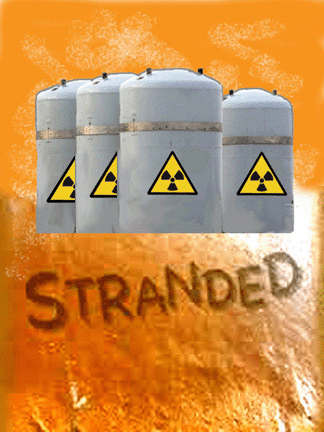 storage facility
transport of high-level radioactive waste across the state could also lead to potentially dangerous nuclear releases, leaving impacted communities responsible for emergency responses.
the proposal fits into a wider pattern of negligence and environmental racism on behalf of the federal government towards one of the United States’ poorest majority-minority states.
|
The proposal, which has been in the works since 2011, would see high-level waste generated at nuclear power plants across the country transported to New Mexico for storage at the proposed facility along the Lea-Eddy county line between Hobbs and Carlsbad. Continue reading |

China General Nuclear Power Group to invest $2.5 billion into a huge solar project – plus 2 GW of wind turbines
China General Nuclear Power Group is reportedly preparing to invest almost $2.5 billion into a huge solar project – plus 2 GW of wind turbines – in the autonomous province of Inner Mongolia. Local authorities say the massive project will be complete in 2021.
NOVEMBER 15, 2019 VINCENT SHAW Sources in Beijing have told pv magazine the state-owned China General Nuclear Power Group (CGN) is preparing to invest RMB17 billion ($2.43 billion) in renewables generation capacity in northern China, including 1 GW of solar panels.
The nuclear power company is also planning 2 GW of onshore wind capacity, with all the facilities to be built in the Inner Mongolian city of Ulanchabu.
The authorities in Ulanchabu say compliance reviews and administrative procedures will be carried out in the first half of next year with construction due to start on the massive renewables project by August, ready for completion in 2021.
Having been founded in 1994 in Guangdong province to operate China’s first nuclear power station – the Daya Bay plant – CGN has long since diversified into solar and wind power. The company claims to operate a 4.4 GW solar portfolio and 12.7 GW of wind facilities across all provinces of its homeland after funding more than 300 clean energy projects. The nuclear company also claims to have a 13.4 GW overseas renewable energy project pipeline.
The autonomous region of Inner Mongolia boasts excellent sunshine resources and the Inner Mongolia Solar Energy Industry Association said the construction of ultra-high voltage transmission lines in the province has enabled the authorities to set a curtailment target of near zero for solar electricity, and of 10% for wind power.
November 15 Energy News — geoharvey

Opinion: ¶ “How Long Will It Take To Replace Fossil Fuels With Renewable Sources Of Energy?” • The world is racing to replace fossil fuels with renewable sources and for good reason. People understandably ask, “How long will it take to replace fossil fuels?” The answer isn’t straightforward. But here’s some information that might help. […]
Australia may seek forgiveness, rather than permission, for Kyoto carryover — RenewEconomy

Australia to take increasingly isolationist approach to climate action, as Morrison defies advice that climate diplomacy is good for the economy and the planet. The post Australia may seek forgiveness, rather than permission, for Kyoto carryover appeared first on RenewEconomy.
via Australia may seek forgiveness, rather than permission, for Kyoto carryover — RenewEconomy
Bushfires should make us think about energy resilience, and micro-grids — RenewEconomy

One solution to the risk of bushfires is to rely more on each other for our energy supply. The post Bushfires should make us think about energy resilience, and micro-grids appeared first on RenewEconomy.
via Bushfires should make us think about energy resilience, and micro-grids — RenewEconomy
1 This month
Chernobyl: The Lost Tapes – A good documentary on Chernobyl on SBS available On Demand for the next 3 weeks– https://www.sbs.com.au/ondemand/tv-program/chernobyl-the-lost-tapes/2352741955560
15 April – Zoom –Nuclear Power is Not the Solution
Apr 15, 2026 01:00 AM in Canberra, Melbourne, Sydney

Join the International Physicians for the Prevention of Nuclear War (IPPNW) on Tuesday, April 14th for a timely webinar exploring the risks associated with nuclear power and challenging the myth that it offers a simple, safe, carbon-free solution to the climate crisis

21 April Webinar: No Nuclear Weapons in Australia
Start: 2026-04-21 18:00:00 UTC Canberra, Melbourne, Sydney (GMT+10:00)
End: 2026-04-21 19:30:00 UTC Canberra, Melbourne, Sydney (GMT+10:00)
Event Type: Virtual
A virtual link will be communicated before the event.
Host Contact Info: australia@icanw.org

of the week – Australians for War Powers Reform (AWPR)
To see nuclear-related stories in greater depth and intensity
 Antinuclear