Climate change will make fire storms more likely in southeastern Australia
Climate change will make fire storms more likely in southeastern Australia https://theconversation.com/climate-change-will-make-fire-storms-more-likely-in-southeastern-australia-127225, Giovanni Di Virgilio, Research associate, UNSW, Andrew Dowdy, Senior Research Scientist, Australian Bureau of Meteorology, Jason Evans, Associate Professor, UNSW, Jason Sharples, Associate Professor, School of Physical, Environmental and Mathematical Sciences, UNSW Australia, UNSW, Rick McRae, Researcher, Bushfire Cooperative Research Centre, ACT Emergency Services Agency
November 20, 2019 Temperatures across many regions of Australia are set to exceed 40℃ this week, including heatwaves forecast throughout parts of eastern Australia, raising the spectre of more devastating bushfires.
We have already heard warnings this fire season of the possibility of firestorms, created when extreme fires in the right conditions form their own weather systems.
Firestorms are the common term for pyrocumulonimbus bushfires – fires so intense they create their own thunderstorms, extreme winds, black hail, and lightning.
While they are very rare, our research published earlier this year, found climate change is making it likely they will become more common in parts of southeast Australia.
We also identified certain regions in southern and eastern Australia, including near Melbourne’s fringe, that in the second half of this century will be far more vulnerable to these events than others.
How firestorms happen
Pyrocumulonimbus events begin with the intense heat of a very big and fast-burning wildfire, which causes a large and rapidly rising smoke plume. As the plume rises, low atmospheric pressure causes it to expand and cool. Moisture can condense into a type of cloud known as a pyrocumulus – not pyrocumulonimbus, yet. This type of cloud can be common in large fires.
These thunderstorms can create erratic and dangerously strong wind gusts. These can drive blizzards of embers that ignite spot fires beyond the fire font.
Lightning from the plume can start new fires, well ahead of the main fire. In one case, lightning generated in a pyrocumulonimbus cloud has been recorded starting new fires up to 100km ahead of the main fire.
How climate change makes firestorms more likely
Previous research has found there is more dynamic interaction between a large fire and the atmosphere when the air about 1.5km above the surface is relatively dry, and when there are larger temperature differences across increasing altitudes.
The larger the temperature difference, the more unstable the atmosphere may become. When higher altitudes get cold more quickly than normal, and are also very dry at low levels, it can become more likely that a pyrocumulonimbus event will develop during a large fire.
We were then able to identify how often dangerous fire weather days occurred at the same time as a dry and unstable atmosphere. Verifying our models against past observations, we then examined how often these two characteristics coincided in the future under climate change, should our greenhouse gas emissions remain on their current trajectory.
The results were startling. From 2060 onwards, we saw sharp increases in dangerous fire days across southeast Australia that coincided with atmospheric conditions primed to generate firestorms.
These extremely dangerous days also shifted across seasons, starting to appear in late spring, whereas historically Australian pyrocumulonimbus wildfires have typically been summer phenomena.
No comments yet.
1 This month
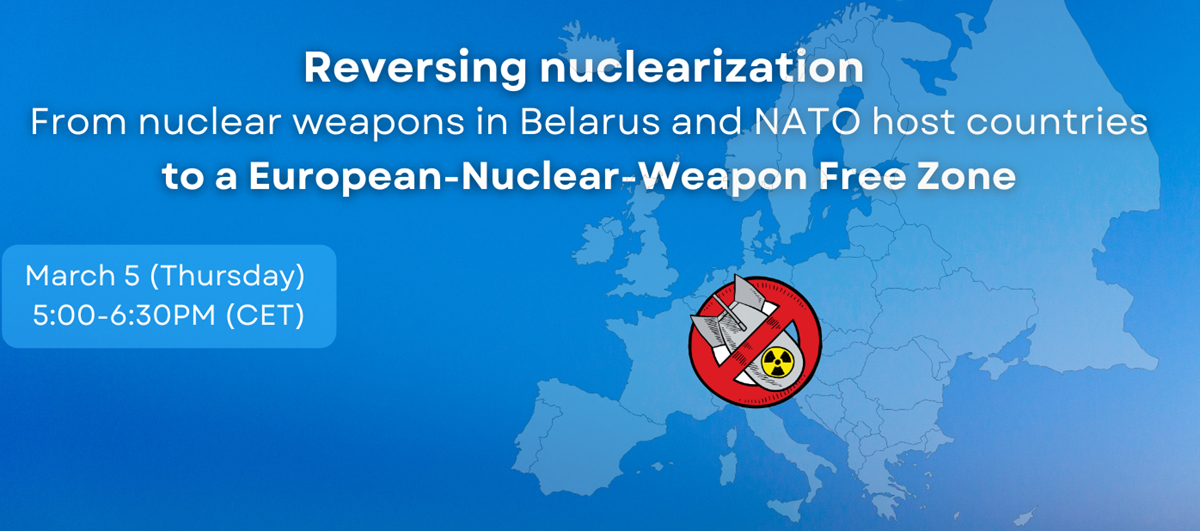
6 March -Online – Reversing nuclearization:
From nuclear weapons in Belarus and NATO host countries to a European-Nuclear-Weapon Free Zone
Mar 6, 2026 03:00 AM in Canberra, Melbourne, Sydney

of the week – Australians for War Powers Reform (AWPR)
To see nuclear-related stories in greater depth and intensity
 Antinuclear
Leave a comment