A tiny percentage of South Australian people coerced into the decision on nuclear waste dump
This is a decision which will affect all South Australians, not just a tiny percentage of people who have experienced four years of federal government promises and pressure to acquiesce.
the Minister failed to mention the main component of the project — long lived intermediate level waste from the Lucas Heights reactor
 Farmers and Traditional Owners decry SA nuclear more
  https://www.eurekastreet.com.au/article/farmers-and-traditional-owners-decry-sa-nuclear-vote, Michele Madigan,20 November 2019
-
- On 12 November, Senator Canavan, federal Minister for Resources, took a question from the rather more junior Senator Alex Antic. The questioner wondered whether there was any recent progress on the federal nuclear facility proposed for Antic’s own state of South Australia.
Union spokespeople are under no illusion that accidents are inevitable and about who will be automatically called for the cleanup. As Jamie Newlyn, South Australian Branch Secretary of the Maritime Union of Australia, warns: ‘MUA members work in critical points of the logistics cycle and therefore the safe handling and above ground storage for decades is of great concern to the MUA … ‘
A day of high temperatures and strong winds last month did nothing to deter opponents of the federal government’s nuclear plans from the latest Port Augusta Rally. Terry Schmucker, who owns a farm in nearby Poochera, had no vote in the recent poll. He was scathing about the inability of the nuclear industry to guarantee project safety when ANSTO has been unable to prevent radioactive leaks even on site.
After the rally, Aboriginal Co-Chairs of the Australian Nuclear Free Alliance (ANFA), Dwayne Coulthard and Vicki Abdulla, led a strong contingent to present ANFA’s petition to the office of South Australia’s Minister for Energy and Mining, Dan van Holst Pellekaan: ‘South Australia has legislation that makes such waste facilities illegal: The Nuclear Waste Storage (Prohibition) Act 2000 … We ask you to act now and protect South Australia and its people from Minister Canavan’s site selection process that has caused so much distress to South Australian communities … ‘
No, Senator Canavan, South Australians don’t believe that 452 people in one small town have the right to agree to burden us with all the nation’s nuclear waste — and forever.
In fact the Barngarla Determination Aboriginal Corporation has just set another challenge. With the results of their own Australian Electoral Company internal members vote showing 83 No and zero Yes votes, the Barngala have issued a statement which reads in part: ‘BDAC has written to Minister Canavan advising him of the result. BDAC has requested that given the first people for the area unanimously have voted against the proposed facility that the Minister should immediately determine that there is not broad community support for the project. ‘
With the arrival of the voting papers for the proposed alternative Flinders Ranges site on 14 November, the intensity of the division between potential yes and no voters in the small towns and hinterlands of Hawker and Quorn seems to have hit fever pitch. The potential yes voters welcoming of a new ‘industry’ to the area seem to disregard the effect a nuclear facility will have on the major tourism industry and Adnyamathanha heritage; not to mention the threats to groundwaters in an area subject to seismic activity and floods.
This is a decision which will affect all South Australians, not just a tiny percentage of people who have experienced four years of federal government promises and pressure to acquiesce.
Scott Morrison’s devious and incorrect claim about emissions and bushfires
 Scott Morrison contradicted on link between emissions and bushfires, https://www.brisbanetimes.com.au/politics/federal/scott-morrison-incorrect-on-link-between-emissions-and-bushfires-20191121-p53crh.html, By Mike Foley Scott Morrison contradicted on link between emissions and bushfires, https://www.brisbanetimes.com.au/politics/federal/scott-morrison-incorrect-on-link-between-emissions-and-bushfires-20191121-p53crh.html, By Mike Foley
November 21, 2019 Experts have contradicted Scott Morrison’s claim that Australia’s level of greenhouse gas emissions could not have increased the current level of risk from bushfires.
The Prime Minister said on Thursday climate change is a “global phenomenon” and Australia is doing its bit to reduce emissions. He has acknowledged that climate change increases bushfire risk, but said there could be no link drawn between our emissions and any current bushfires. “To suggest that with just 1.3 per cent of global emissions that Australia doing something differently, more or less, would have changed the fire outcome this season, I don’t think that stands up to any credible scientific evidence at all,” Mr Morrison said. “If anything Australia is an over-achiever on global commitments.” Mr Morrison made the comments on a day when several homes were lost to fires in South Australia while Melbourne recorded its hottest November day since 1894 when the mercury hit 40.9 degrees at Olympic Park in the mid-afternoon. Climate Council head of research Dr Martin Rice said there was a direct link between climate change and heightened bushfire risk. Global carbon project executive director and CSIRO research scientist Pep Canadell said Mr Morrison was “incorrect” to argue there was no link between Australia’s emissions and climate change. “It’s the tragedy of the commons. Below the biggest emitters in China and the US you have dozens and dozens of countries contributing between 1.5 and 0.8 million tonnes, which adds up to the climate problem,” Dr Canadell said. Because all the individual contributions are small no one feels responsible. “Another way to put it is on my next tax bill, because my contribution to the country’s revenue is so small, that it doesn’t matter if I don’t pay.” A recent analysis by RMIT ABC Fact Check estimated Australia’s domestic emissions of about 1.3 million tonnes, coupled with the emissions embedded in its exports, represented about 3.6 per cent of global emissions in 2016. CSIRO’s most recent State of the Climate report found “there has been a long-term increase in extreme fire weather and in the length of the fire season across large parts of Australia since the 1950s”. Eight of Australia’s 10 warmest years on record have occurred since 2005 and since the late 1990s there has been about an 11 per cent decline in cool-season rainfall between April and October in the south-east of the country. |
|
Launch of Australia’s National Environmental Defenders Office
 National Environmental Defenders Office launches https://www.lawyersweekly.com.au/sme-law/26968-national-environmental-defenders-office-launches, By Jerome D, oraisamy|21 November 2019 The new EDO will have offices in Adelaide, Brisbane, Cairns, Canberra, Darwin, Hobart, Perth and Sydney, with all state and territory EDOs finalising their merger process over the coming months.
Launched yesterday, the national Environmental Defenders Office will “take high-impact enforcement cases to the courts to make sure the public interest is upheld, and our communities are properly protected by our environmental laws”, it said in a statement.
In explaining why the former environmental legal centres were now coming together under one roof, EDO CEO David Morris said that the environmental problems facing Australia are not bound by our state and territory borders.
“The Murray-Darling crisis spans four jurisdictions. Our iconic koalas are dying right up and down the east coast. Climate change doesn’t stop at any border,” he said.
“Now more than ever, national leadership is required to protect Australia’s natural and cultural heritage. That’s where the new national EDO steps in.”
Moreover, the merger will see us the new EDO become the “largest public interest environmental law centre in the Australia-Pacific region”, Mr Morris told Lawyers Weekly.
“With that additional scale comes opportunities to play a bigger role empowering communities and protecting places. We see big opportunities to increase our presence in the Pacific and to better serve local communities in remote parts of Australia, including northern Australia,” he said.
“Increasingly communities across northern Australia are seeking legal assistance in respect of gas developments and we intend to ensure that our expert lawyers are available to assist them.” Merging also allows the EDO, Mr Morris added, to address the “problems of scale” identified by the Productivity Commission in its Access to Justice Arrangements report.
“That is, we’re able to centralise much of the offices’ administrative, financial and communications work freeing up our legal staff to provide better services to the community. The opportunity is that as a much bigger organisation we can play a bigger role at a national level on national issues, but at the same we’re committed to maintaining and strengthening connections to grass roots communities,” he said.
Another challenge and opportunity I expect will be big issues for us in the next twelve months will be coming to grips with what it means to be a distributed national team across a large area and multiple time-zones and multiple jurisdictions. We’ve got some tools and we’ve got some resourcing to improve our legal technology, rolling that out and implementing it will be crucial to the merger’s success.”
Australia is one of the “most naturally beautiful and biologically diverse places on Earth”, EDO’s statement continued, “but our environment is in decline”.
“There are more than 1,700 threatened species in Australia, we have lost more animals to extinction than any other country in the world. And while the Australian community expects robust accountability and oversight when it comes to environmental protection, trust in government processes and institutions has eroded to an all-time low.
Mr Morris said: “Regulations are regularly not enacted or enforced. Governments have cut resources to departments that are supposed to monitor breaches of environment law.”
“Companies routinely and intentionally breach state and federal environment laws. The problem is systemic and widespread because there is no clear legal deterrent.
“As a merged, national organisation we can share expertise, more closely scrutinise projects and address the widespread culture of non-compliance with environment laws.”
UK election issues – climate crisis is the top concern

 Climate crisis topping UK election agenda is ‘unprecedented’ change
 Environmentalists say such political focus on green issues ‘unthinkable’ just five years ago, Guardian, Fiona Harvey Environment correspondent, Fri 22 Nov 2019 The climate emergency has risen to the top of the UK’s election agenda in a way that would have been “unthinkable” even five years ago, leading environmentalists have said, predicting that it augurs a permanent change in British politics.On Wednesday, Labour took the unprecedented move of putting green issues as the top section of its manifesto, the first time one of the UK’s two major parties has done so. Jeremy Corbyn led the appeal to voters with policies including an £11bn windfall tax on oil and gas companies, a million new jobs in a “green industrial revolution” and commitments on moving to a net-zero carbon economy.
“Such focus on climate and the environment would have been almost unthinkable five years ago,” said Shaun Spiers, executive director of the Green Alliance. “Tackling climate change runs through this manifesto in a way that is unprecedented from either of the main parties ahead of a UK general election.”
“It would not have been possible five years ago,” said Tom Burke, chairman of environmental thinktank E3G and former adviser to several governments, who said the move marked a permanent change in British politics, as younger voters in particular were “energised” over the environment. Public anxiety had been fuelled by people seeing extreme weather around the world, and the rise of climate activism in movements such as Extinction Rebellion and the school climate strikes reflected that. “The politicians are following the public on this, not the other way round.”
…….. The Liberal Democrats, while focusing on Brexit, have also made the climate emergency a key priority, promising to generate 80% of the UK’s electricity from renewable sources by 2030, to bring forward to 2045 the deadline for net-zero carbon, and to expand electric vehicles and ban fracking. The Green party wants to spend £100bn a year for the next decade on the climate crisis, replacing high-carbon infrastructure and creating jobs…. https://www.theguardian.com/environment/2019/nov/21/climate-crisis-topping-uk-election-agenda-is-unprecedented-change
Australia must stop burning coal by 2030- report from Climate Analytics
|
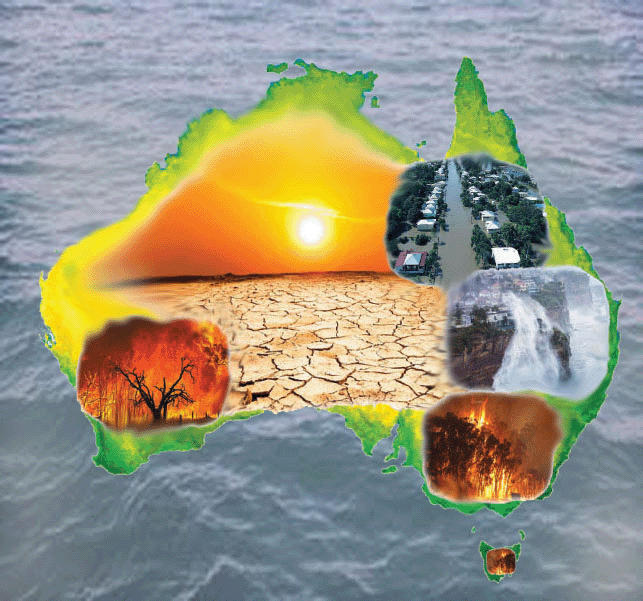
Climate science institute suggests Australia must stop burning coal by 2030, https://www.sbs.com.au/news/climate-science-institute-suggests-australia-must-stop-burning-coal-by-2030 Australia must stop burning coal by 2030 if it is to help contain warming to a 1.5-degree rise, a new climate report suggests. Australia needs to stop burning coal by 2030 if it wants to help limit global warming to 1.5 degrees, a new report warns.Non-profit climate science and policy institute Climate Analytics says the government needs a national plan to phase out remaining coal-fired plants – and must take them offline faster than already planned.
Such considerations would help provide the energy sector with certainty, the report released on Thursday says. The organisation’s chief executive Andrew Hare pointed to the current bushfires in New South Wales and Queensland as a sign the country needed to curb emissions rapidly. The realisation that climate change poses an existential threat to Australia is certainly hitting home right now,” Mr Hare said. “Australia must play its part in fighting climate change, and it could start by switching from coal to renewables in its own electricity system.” The report, using data from the recent report by the Intergovernmental Panel on Climate Change, says phasing coal out completely by 2030 would allow Australia to do its bit. It warns just half a degree more warning above 1.5C would see the death of nearly all of Australia’s coral reefs.t says at the slow rate coal fired plants were being shut down across the country, Australia would still emit twice more than what it was allowed to under the Paris Agreement. The report said 10 plants had closed since 2012 with the 19 remaining plants feeding Australia 60 per cent of its electricity. This made it the only OECD country in the G20 that relied on coal fire more than half of its energy supply. In a decade half of these plants, which the report says were already technically obsolete, would be 40 to 60 years old. The report says Australia had natural advantage when it came to renewable energy resources and should jump on this to move to a carbon free energy system. It warns Australia faced longer bushfire seasons, less rain and more drought due to climate change. |
|
November 22 Energy News — geoharvey

Opinion: ¶ “Are We Doing Enough To Tackle Global Transport Emissions?” • According to the World Resources Institute, “72% of global transport emissions come from road vehicles, which accounted for 80% of the rise in emissions from 1970-2010.” And since 2012, emissions from the transportation sector have been increasing with increased traffic. [CleanTechnica] ¶ “US […]
Finkel’s national hydrogen strategy gets green light, but could be lifeline for coal — RenewEconomy

Finkel national hydrogen strategy gets green light from COAG, but there are fears it will provide a lifeline to prop up the coal industry and dreams of “carbon capture”. The post Finkel’s national hydrogen strategy gets green light, but could be lifeline for coal appeared first on RenewEconomy.
via Finkel’s national hydrogen strategy gets green light, but could be lifeline for coal — RenewEconomy
City of Melbourne leads second “bulk-buy” renewables auction — RenewEconomy

Melbourne Renewable Energy Project releases second tender, combining purchasing power of seven large energy users to source 113GWh a year of Victorian solar or wind. The post City of Melbourne leads second “bulk-buy” renewables auction appeared first on RenewEconomy.
via City of Melbourne leads second “bulk-buy” renewables auction — RenewEconomy
Calix launches advanced battery reactor in Victoria — RenewEconomy

Calix launches $2.7m proprietary BATMn electric reactor for producing advanced battery materials, in Bacchus Marsh, Victoria. The post Calix launches advanced battery reactor in Victoria appeared first on RenewEconomy.
via Calix launches advanced battery reactor in Victoria — RenewEconomy
Energy Insiders Podcast: World’s biggest solar farm, and biggest battery — RenewEconomy

In a week of “world’s biggest projects”, billionaires Mike Cannon Brookes and Twiggy Forrest back huge project in Northern Territory, while Tesla big battery in South Australia gets an upgrade. The post Energy Insiders Podcast: World’s biggest solar farm, and biggest battery appeared first on RenewEconomy.
via Energy Insiders Podcast: World’s biggest solar farm, and biggest battery — RenewEconomy
NSW announces 3,000MW renewable energy zone, and energy security target — RenewEconomy

NSW unveils plans for 3,000MW renewable energy zone and “security target” as it admits “firm wind and solar” its cheapest energy option. The post NSW announces 3,000MW renewable energy zone, and energy security target appeared first on RenewEconomy.
via NSW announces 3,000MW renewable energy zone, and energy security target — RenewEconomy
COGATI: A tax on renewables paid to fossil fuels — RenewEconomy

COGATI is an extraordinarily complex beast, but its effect would be real and immediate – it would significantly reduce investment in large-scale renewables. The post COGATI: A tax on renewables paid to fossil fuels appeared first on RenewEconomy.
via COGATI: A tax on renewables paid to fossil fuels — RenewEconomy
Australia’s first national environmental law watchdog puts polluters on notice — RenewEconomy

Australia’s first national, not for profit legal watchdog for the environment launches today with a mandate to ensure environmental laws are observed and properly enforced. The post Australia’s first national environmental law watchdog puts polluters on notice appeared first on RenewEconomy.
via Australia’s first national environmental law watchdog puts polluters on notice — RenewEconomy
Smoke and mirrors: Taylor to meet states as global expert laments Australian “tragedy” — RenewEconomy

Energy ministers head to Perth for the first COAG energy council meeting in almost a year, with frustrations amongst State and Territory ministers high. The post Smoke and mirrors: Taylor to meet states as global expert laments Australian “tragedy” appeared first on RenewEconomy.
1 This month
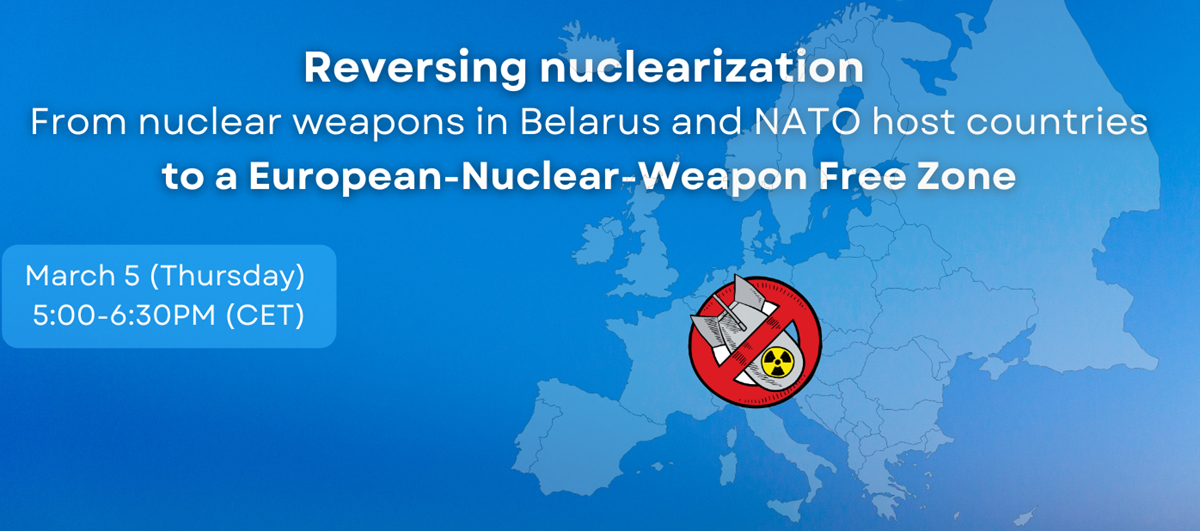
6 March -Online – Reversing nuclearization:
From nuclear weapons in Belarus and NATO host countries to a European-Nuclear-Weapon Free Zone
Mar 6, 2026 03:00 AM in Canberra, Melbourne, Sydney

of the week – Australians for War Powers Reform (AWPR)
To see nuclear-related stories in greater depth and intensity
 Antinuclear