“A world without nuclear weapons” – call from Pope Francis at Nagasaki
Pope Francis calls for a ‘world without nuclear weapons’ during Nagasaki visit, https://www.theguardian.com/world/2019/nov/24/pope-francis-calls-for-a-world-without-nuclear-weapons-during-nagasaki-visit
Pontiff urges disarmament as he tours Japan’s atomic bomb sites and meets survivors of the 1945 attacks, Justin McCurry in Tokyo and agencies Mon 25 Nov 2019 Pope Francis has condemned the “unspeakable horror” of nuclear weapons during a visit to Nagasaki, one of two Japanese cities destroyed by American atomic bombs towards the end of the second world war.
Speaking on the second day of the first papal visit to Japan for 38 years, Francis urged world leaders to end the stockpiling of nuclear weapons, saying it offered their nations a false sense of security.
“This place makes us deeply aware of the pain and horror that we human 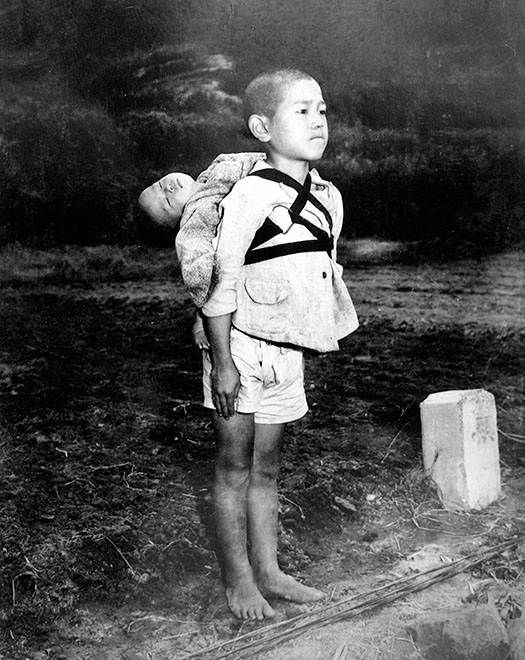 beings are capable of inflicting upon one another,” Francis said, standing next to a large photograph of a young boy carrying his dead baby brother on his back at a crematorium in the aftermath of the attack on Nagasaki.
“In a world where millions of children and families live in inhumane conditions, the money that is squandered and the fortunes made through the manufacture, upgrading, maintenance and sale of ever more destructive weapons, are an affront crying out to heaven,” Francis said.
A survivor of the Nagasaki bombing said he hoped the pope’s words would make nuclear powers think seriously about disarmament. Describing his experience 74 years ago as “a living hell,” Minoru Moriuchi, an 82-year-old Catholic, said: “My father’s sister ran away to our house with her two children and I never forgot the sight – their bodies were reddish-black and completely burnt.
“Four other relatives were brought in … but they didn’t look like humans,” he told Agence France-Presse.
The symbolism of his visit to Nagasaki extends beyond its tragic place in wartime history.
Francis was scheduled to pay tribute at a site in the city devoted to martyrs among Japan’s earliest Christians, whose religion was banned by the country’s shogun rulers in the early 1600s. Suspected believers were forced to renounce their faith or be tortured to death. Many continued to worship in secret, as “hidden Christians” until the ban was lifted in the late 1800s.
Francis is the first pope to visit Japan – where there are fewer than half a million Catholics – since 1981, when John Paul II traveled to Nagasaki and Hiroshima to call for the abolition of nuclear weapons amid cold war tensions between the US and the Soviet Union.
The inheritance from nuclear submarines : costly, dangerous wastes
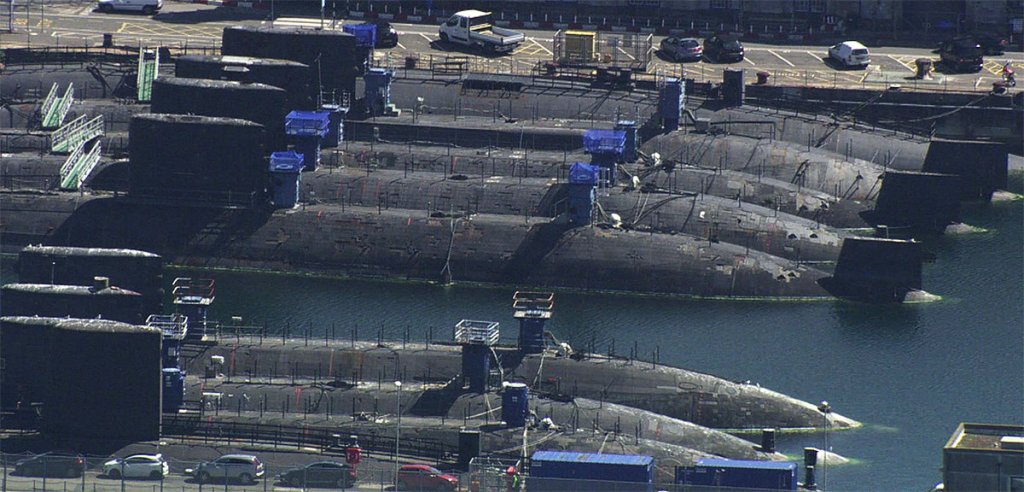
 If Australia is foolish enough to get nuclear submarines, Australia too will end up with this expensive and intractable problem – these submarines have a relatively short useful life – then become long-lasting radioactive corpses, with no burial place.
|
The Royal Navy Is Having Real Trouble Disposing Of Its Old Nuclear Submarines. It’s expensive. National Interest , by Michael Peck. 24 Nov 19,
Key point: Britain isn’t the only nation that has problems disposing of nuclear warships. When you need to dispose of an old car, you can take it to a junkyard. But what do you do with a nuclear submarine whose reactor can make people glow in a most unpleasant way? Britain has retired twenty nuclear submarines since 1980. None have been disposed of, and nine still contain radioactive fuel in their reactors, according to an audit by Britain’s National Audit Office. These subs spent an average of twenty-six years on active service—and nineteen years out of service. “Because of this, the Department [Ministry of Defense] now stores twice as many submarines as it operates, with seven of them having been in storage for longer than they were in service,” the audit states. Even worse is the price tag. Britain has spent 500 million pounds ($646.4 million) maintaining those decommissioned subs between 1980 and 2017. Full disposal of a nuclear sub would cost 96 million pounds ($112.1 million). As a result, the total cost for disposing of the Royal Navy’s ten active subs and twenty retired vessels would be 7.5 billion pounds ($9.7 billion), NAO calculated……. The plan is to begin defueling subs, beginning with HMS Swiftsure, in 2023. But even then, the Ministry of Defense will have to deal with different subs that have different disposal requirements. “At present, the Department does not have a fully developed plan to dispose of Vanguard, Astute and Dreadnought-class submarines, which have different types of nuclear reactor,” NAO pointed out. “For the Vanguard and Astute-class it has identified suitable dock space which, if used, will need to be maintained.” Interestingly, the British military gets an exemption when it comes to nuclear waste. “Within the civil nuclear sector, organizations must consider nuclear waste disposal during the design stage of power stations and nuclear infrastructure. The Department does not have a similar obligation.” Britain isn’t the only nation that has problems disposing of nuclear warships. The Soviet Union sank nineteen nuclear vessels, and fourteen shipborne nuclear reactors, at sea, sparking fears of an environmental catastrophe. Even the U.S. Navy is struggling with how to dispose of nuclear subs and aircraft carriers, such as the decommissioned carrier USS Enterprise. https://nationalinterest.org/blog/buzz/royal-navy-having-real-trouble-disposing-its-old-nuclear-submarines-98017
|
|
November 24 Energy News — geoharvey

Science and Technology: ¶ “Climate Change Affecting Diversity In Some Of Australia’s Most Remote Areas, Despite Work Of Indigenous Rangers” • Three-quarters of all of Australia’s species that are currently known to be threatened occur in Indigenous tenures. And in Indigenous Protected Areas the land is protected by Indigenous Rangers. [ABC News] (Lots of photos) […]
NSW tenders $3.5 billion supply contract in firm test for wind and solar — RenewEconomy

NSW seeks new 1.8 terawatt hour electricity supply contract, with focus on “fast start” dispatchable capacity, suggesting mix of renewables and gas or batteries. The post NSW tenders $3.5 billion supply contract in firm test for wind and solar appeared first on RenewEconomy.
via NSW tenders $3.5 billion supply contract in firm test for wind and solar — RenewEconomy
IPA wants to hit EVs with road tax “before they appear in every driveway” — RenewEconomy

Infrastructure think tank demands immediate introduction of a 4c/km road use fee for EVs – but not hybrids – “before there is an EV in every driveway” The post IPA wants to hit EVs with road tax “before they appear in every driveway” appeared first on RenewEconomy.
via IPA wants to hit EVs with road tax “before they appear in every driveway” — RenewEconomy
Electric car ultra rapid chargers arrive in heart of brown coal country — RenewEconomy

A row of electric car chargers in the La Trobe Valley will soon go online, but there are still hurdles to jump. The post Electric car ultra rapid chargers arrive in heart of brown coal country appeared first on RenewEconomy.
via Electric car ultra rapid chargers arrive in heart of brown coal country — RenewEconomy
1 This month

of the week – Australians for War Powers Reform (AWPR)
To see nuclear-related stories in greater depth and intensity
 Antinuclear