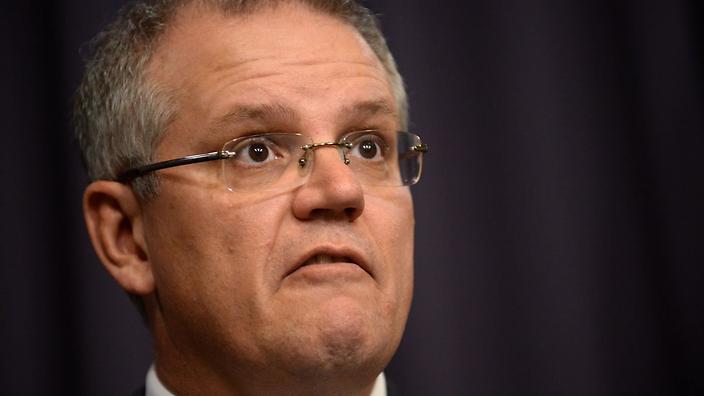
Dramatic drop in P.M. Scott Morrison’s popularity, over his climate stance
|
Appearing on Insiders on Sunday morning, Mr Morrison said it was his “intention to meet and beat” Australia’s 2030 commitment to cut emissions 26 to 28 per cent on 2005 levels. And he left the door slightly ajar to cut more emissions if needed.
It’s a small but significant step considering just weeks ago Mr Morrison said he saw no need to change his climate policies. In another move to show it is helping the environment, the Morrison government will on Monday announce it is pledging $50 million to help protect wildlife and fauna impacted by bushfires. Could it signal that the bushfire disaster has finally woken the government up to do more to acknowledge and fight manmade climate change? Experts aren’t holding their breath. And now the polls indicate the PM has some work to do to persuade voters amid fury over Mr Morrison’s bushfire response. The latest Newspoll figures show Mr Morrison’s approval rating has plunged and Labor leader Anthony Albanese is now the preferred leader. Mr Albanese leads the Liberal leader 43 to 39 per cent, according to the survey results released on Sunday night. Labor is in front 51-49 on a two-party-preferred basis in the poll conducted for The Australian, a significant turnaround from early December when results showed the coalition led 52-48. Support for the Greens rose one point to 12 per cent, while One Nation lost ground, falling one point to four per cent. Meanwhile, scientists say Mr Morrison’s mea culpa on his holiday and hint on climate policy shift are nowhere near the strong response needed to show the government is going to commit to any meaningful change in their climate response. Lesley Hughes, a professor of biology at Macquarie University and a climate councillor at the Climate Council of Australia, said the government’s targets are so “weak” that it means little when the PM promises to meet or beat them. “It’s like saying I want a 20 per cent pass rate on my exam. So we met those targets because they were so low,” Professor Hughes told The New Daily. Meeting the 2030 Paris targets would rely heavily on including emissions reductions from the previous international agreement, the Kyoto protocol. “The best analogy I’ve heard – and it’s not mine – but it’s like saying I got a really good mark on my kindergarten colouring test and I want to use that to pass my university test now,” Professor Hughes said. On top of the targets being criticised as too low, the UN reported last year that Australia was not even on track to meet them. “There has been no improvement in Australia’s climate policy since 2017 and emission levels for 2030 are projected to be well above the target,” the report found. Central to the government’s climate plan is the Emissions Reduction Fund, which was allocated an additional $2 billion to purchase about 100 million tonnes of emissions from businesses between 2021 and 2030. While the framework of the ERF has been praised, the OECD said in a 2019 report it would need to be scaled up to meet the Paris targets. Australia is part of a growing cohort of G20 countries that are falling short. This will have dire consequences for our environment and economy, Professor Hughes said. If we do meet our 26 per cent reduction, it is not enough if you multiply that on a global scale to stop us from getting to three degrees of warming,” she said. “This fire season has been with just one degree of warming. Just imagine three times – what that means. That’s what we’re talking about.” Coal: Australia’s kingOpposition leader Anthony Albanese has said the government is “refusing to act” on climate change, but he has also backed coal exports……. https://thenewdaily.com.au/news/national/2020/01/13/scott-morrison-insiders-climate-change/ |
|
No comments yet.
1 This month
Chernobyl: The Lost Tapes – A good documentary on Chernobyl on SBS available On Demand for the next 3 weeks– https://www.sbs.com.au/ondemand/tv-program/chernobyl-the-lost-tapes/2352741955560
15 April – Zoom –Nuclear Power is Not the Solution
Apr 15, 2026 01:00 AM in Canberra, Melbourne, Sydney

Join the International Physicians for the Prevention of Nuclear War (IPPNW) on Tuesday, April 14th for a timely webinar exploring the risks associated with nuclear power and challenging the myth that it offers a simple, safe, carbon-free solution to the climate crisis

21 April Webinar: No Nuclear Weapons in Australia
Start: 2026-04-21 18:00:00 UTC Canberra, Melbourne, Sydney (GMT+10:00)
End: 2026-04-21 19:30:00 UTC Canberra, Melbourne, Sydney (GMT+10:00)
Event Type: Virtual
A virtual link will be communicated before the event.
Host Contact Info: australia@icanw.org

of the week – Australians for War Powers Reform (AWPR)
To see nuclear-related stories in greater depth and intensity
 Antinuclear
Leave a comment