Australia’s options for climate change action

 What is ‘real’ action on climate change? SMH , What form would greater climate change action take – and what would it cost? By Staff reporters
What does climate action actually mean?
Climate change action takes two forms: mitigation, which means reducing greenhouse gas emissions at a rate fast enough to prevent massive damage to our environment in the future; and adaptation, which means bracing and preparing for the changes that are happening and which will intensify.
Adapting to climate change is essential and there are many ways to do so, such as beefing up emergency services and strengthening farms and infrastructure against fires, storms and rising sea levels.
But the source of the problem is the rising emissions that are trapping heat in the atmosphere and oceans. In Australia, emissions come from electricity, industry, transport and agriculture as well as other sectors.
If we are serious about tackling climate change, we must reduce emissions faster than we are doing now. That’s the view of the world’s leading scientific bodies as well as the key expert bodies in Australia, including the CSIRO and the Australian Academy of Science. Their advice is clear: Australia needs to be close to carbon neutral by the middle of the century.
It would be nice to be able to flick a switch and change to zero emissions next week. In practice, decarbonising the nation will be a long, complex process.
The Garnaut Review, led by senior economist Ross Garnaut almost a decade ago, is still the most comprehensive assessment of Australia’s options for climate change action. It drew on leading Australian research on bushfire impacts to forecast an increase in bushfire danger by 2020. On our current trajectory, we are on track to see catastrophic fire days increase by 300 per cent by the second half of this century.
The review outlines various types of policy that can help cut emissions, both “carrots” and “sticks”. There are public subsidies, such as government funding for wind and solar farms; or special tariffs to pay householders with solar panels. Then there are systems for making polluters pay, such as a carbon price implemented through a carbon tax or an emissions trading scheme. There are also policies that rely on regulating an industry, such as the now-abandoned National Energy Guarantee policy, under which companies would be required by law to use a mix of different technologies.
Several types of policy can operate at the same time. Australia had a carbon price from 2012 to 2014 before it was repealed after a change of government. Currently, it has some direct subsidies for emissions reduction projects but no mechanism for cutting greenhouse gases at the speed required.
The Garnaut Review found – and other studies, including by the OECD and by the Australian National University, have since agreed – that a carbon price coupled with an emissions trading scheme and a cap on greenhouse gas emissions would be the most effective and efficient way of cutting emissions.
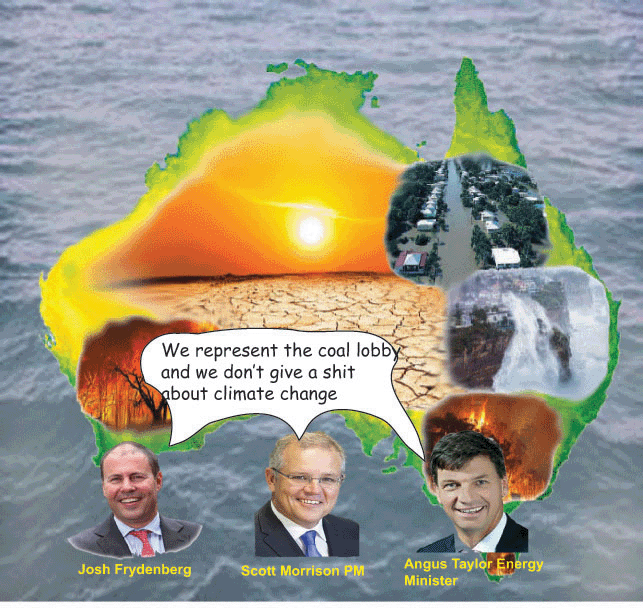
The Prime Minister, Scott Morrison, has ruled out a “carbon tax” or other action that would raise electricity prices or affect polluting industries. In the wake of the fires, Mr Morrison has flagged “resilience” and “adaptation” as the areas he wants to focus on……..
Australia currently has no mechanism for controlling its greenhouse gas emissions and may not meet its Paris commitments……. https://www.smh.com.au/national/what-is-real-action-on-climate-change-20200115-p53rok.html
Matt Canavan. Minister for Nuclear Promotion, announces nuclear waste dump for Kimba, South Australia
 This farce must be stopped. One white farmer offers his land for substantial gain. Aboriginal traditional group were denied a voice in this decision. Bribes given to the local white community looked attractive, but would nowhere near compensate for the loss of the area’s clean green image for agriculture.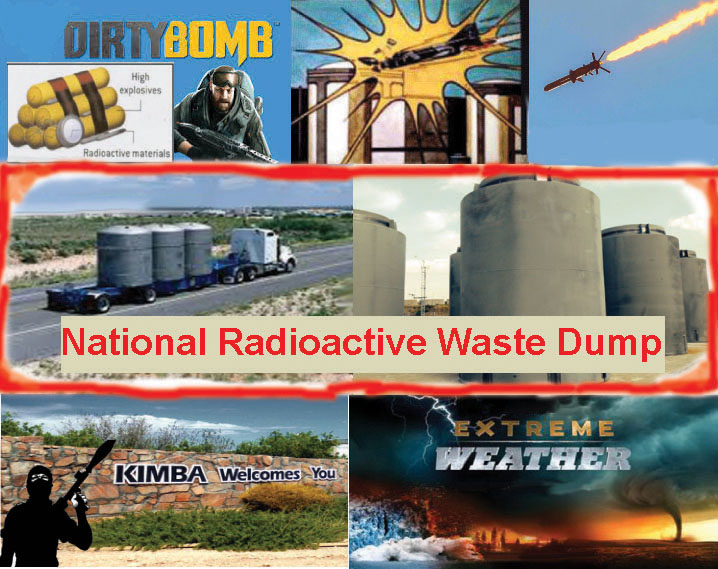
|
SA nuclear waste dump rally site chosen, Canberra Times, Kathryn Bermingham, 1 Feb 2020,
A farming property on South Australia’s Eyre Peninsula will become a nuclear waste dump, the federal government has announced, as opponents of the facility make a last-bid ditch to stop it. Federal Resources Minister Matt Canavan on Saturday said 160 hectares of the Napandee property in Kimba would host Australia’s radioactive waste, the vast majority of which comes from the production of nuclear medicine and is held across more than 100 sites. “Napandee was volunteered by the landowner, is suitable from a technical perspective, and has broad community support from those who live and work nearby,” he said in a statement.
The site near the town of Kimba will store low-level waste permanently and intermediate-level waste temporarily. It will employ about 45 people and the government will gift the community a $31 million package.
A property at Lyndhurst, also near Kimba, had been in the running but Mr Canavan said the Napandee proposal had more support. “The facility has broad community support in Kimba but I acknowledge there remains opposition, particularly amongst the Barngarla People and their representative group,” he said. “We will work with traditional owners to protect culture and heritage, and to maximise economic opportunities and outcomes for local Aboriginal communities near the future facility.” Before the announcement, Peter Woolford, president of the No Radioactive Waste on Agricultural Land in Kimba or SA committee, said locals and visitors will rally against the project on Sunday. Mr Woolford says five years of consultation has taken its toll on the town and his group is calling on the federal government to abandon both sites. “The process the federal government has undertaken to find a location for this facility has been a long and arduous one for the Kimba community,” he said. “Matthew Canavan’s process has been arbitrary, completely lacking in clarity and an extremely divisive process. “It is time for him to acknowledge that the prerequisite of ‘broad community support’ does not exist in Kimba, and allow the community to move forward.” The dump is opposed by environmental and indigenous groups – but a recent poll conducted around Kimba returned a 62 per cent vote in favour of the facility.
“We’re always looking for ways to attract new industry and try and boost our local community. “This is one of those projects that is not only supplying us with jobs but with an opportunity to attract new industry.” The Department of Industry, Innovation and Science said it had provided a significant amount of material to inform the site decision. “The department has put the community at the centre of this process, which involved more than four years of deep consultation and technical assessments,” it said. Guest speakers at Sunday’s rally will include local Labor MP Eddie Hughes, Conservation Council of SA chief Craig Wilkins and Kimba farmers James Shepherdson and Tom Harris. https://www.canberratimes.com.au/story/6609008/sa-nuclear-waste-dump-rally-site-chosen/?cs=14231 |
|
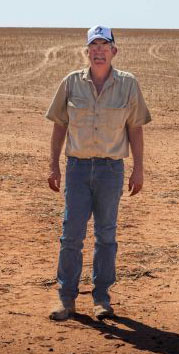
Nuclear waste dump on farming land? NOT A DONE DEAL!
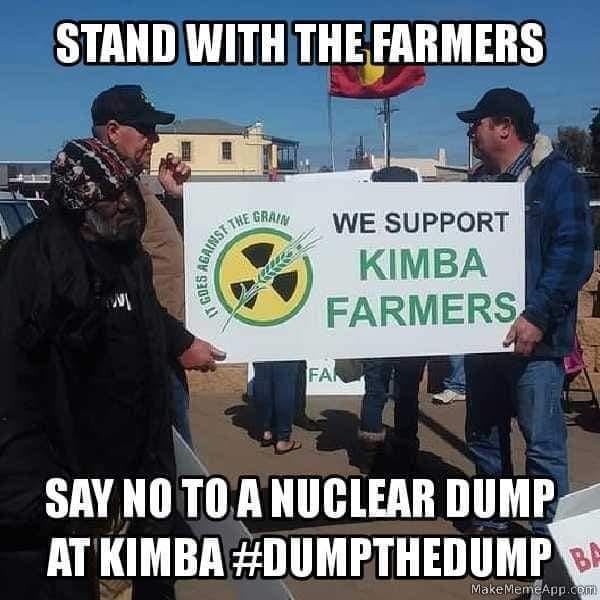
Barb Walker Fight To Stop A Nuclear Waste Dump In South Australia, 1 Feb 2020
THIS IS NOT A DONE DEAL!!! A site has been selected but the process is FAR FROM OVER!!!
The whole state of South Australia needs to get behind our KIMBA FARMERS and say, SOUTH AUSTRALIA IS TOO GOOD TO WASTE!!!
KIMBA IS PART OF A HUGE GRAIN GROWING FOOD BOWL – NOT A PLACE FOR A NUCLEAR WASTE DUMP!!!
Please come and join the bus-loads of people coming from all over the Eyre Peninsula and SA regions tomorrow: KIMBA RALLY tomorrow Sunday 2nd Feb, at 11am.
SAY NO TO A NUCLEAR WASTE DUMP IN KIMBA, SOUTH AUSTRALIA
Please contact South Australia’s Premier, Steven Marshall, and remind him that under our South Australian state legislation we have a PROHIBITION ACT AGAINST THE STORAGE OF NUCLEAR WASTE !!!
https://www.legislation.sa.gov.au/…/NUCLEAR%20WASTE…
LEGISLATION.SA.GOV.AU
South Australian Legislation https://www.facebook.com/groups/941313402573199
A questionable vagueness about the federal govt’s nuclear waste plan for Kimba
Mark Simpkin Fight To Stop A Nuclear Waste Dump In South Australia 1 Feb 2020, Once again smelly. Without fair balanced consultation with the community, disallowing all stockholders to participate in the ballot, there’s a questionable vagueness of what this dump will entail in terms of its storage of intermediate / high level waste.
 When Rowan Ramsay (Kimba’s local federal member) was interview by Peter Goers on ABC Radio, no indication of the proximity of Rowan Ramsey’s own land to the dump site, little mention that land owners can NAME THEIR OWN PRICE for the land with no government oversight .
Finally our own state Liberal government allowed this to run its course with full knowledge of our existing laws that were established to prevent this and to top it all, this announcement at a time when the countries attention and grief is for the bushfires speaks volumes of the nature and character of these individuals. Poor form. https://www.facebook.com/groups/941313402573199/
#ScottyFromMarketing is dodging the need for real action on climate change
|
Climate change calls for action, not adaptation, SMH January 31, 2020 Judy Dillon, Garran ACT In the midst of our horrific summer, polls show the majority of people want to see urgent action on climate change, (”PM’s bushfire response must include climate change: experts”, January 30). We don’t want a focus on ”resilience and adaptation” or ”meeting and beating” pathetically low targets with the use of accounting tricks. Emissions are continuing to rise while the Morrison government uses weasel words to pretend they are doing something effective, all while handing billions to the fossil fuel industry.
The House of Representatives is scheduled to sit for a total of 72 days in 2020, so politicians have no time to lose. If they are not prepared to get on with the mammoth task of taking real and significant climate action in the interests of all Australians, and indeed the whole world, then they should get out of the way now so politicians who are so motivated can take their place. Quiet Australians have had enough – we will not be silent. –
– Peter Spencer, Castle Hill The PM is setting up an inquiry that avoids the real cause of of this and future bushfires – climate change. Once again, he gives the impression he is doing something when he is avoiding the real issue. Another opportunity wasted.
Adrian Owen, Killawarra , The PM now reluctantly concedes our continent is warming and drying. By saying the effects of the emissions already in the atmosphere will be felt for decades regardless of any action, he seeks to portray emissions mitigation as a lost cause. He must imagine the public will willingly surrender to warming beyond two degrees. His new focus on resilience and adaptation will lead to the absurd situation in which the coal industry will continue apace while federal government will spend money elsewhere to try to protect the rest of us from the ravages of a warming climate. –
– Mike Reddy, Vincentia After listening to Morrison talk about climate change action, I think his government is focused on hope. Hope that individuals keep putting solar panels up. Hope that the states keep pulling their weight. Hope that the rest of the world reduces its emissions. Hope that no one notices he is doing nothing. Hope that rising sea levels don’t swamp Waikiki.
Graham Lum, North Rocks Barilaro claims that Matt Kean’s comments on climate change are unhelpful and do not represent the whole of government. That may be so, but I suggest they do represent the views of the majority of Australians. -… https://www.smh.com.au/national/nsw/climate-change-calls-for-action-not-adaptation-20200129-p53vwp.html
|
|
Japan planning to release over a million tonnes of radioactive water into sea from Fukushima power plant
|
Japan planning to release over a million tonnes of radioactive water into sea from Fukushima power plant https://www.independent.co.uk/environment/japan-nuclear-waste-fukushima-power-station-tsunami-water-sea-olympics-a9312246.htmlCoolant contains toxic element which cannot be removed, Harry Cockburn 31 Jan 2020, Massive amounts of radioactive water being stored at Japan’s Fukushima power plant could be released into the sea under plans provisionally accepted by the country’s government.
Tokyo Electric has collected nearly 1.2 million tonnes of contaminated water from cooling pipes used to keep fuel cores from melting since the plant was devastated by the earthquake and tsunami which hit eastern Japan in 2011. The water, containing 62 radioactive elements, is stored in huge tanks on the site of the now disabled power plant, but Tokyo Electric has said it will run out of room to store the water by 2022. Continue reading |
Aboriginal peoples must be restored as custodians of Country
Research Fellow, University of Melbourne, January 31, 2020 In the wake of devastating bushfires across the country, and with the prospect of losing a billion animals and some entire species, transformational change is required in the way we interact with this land.Australia’s First Peoples have honed and employed holistic land management practices for thousand of generations. These practices are embedded in all aspects of our culture. They are so effective, so perfectly suited to this harshest of continents, that we are the oldest living culture in the world today.
A reintroduction of traditional land management is essential if we want to address the ecological crisis we now face.
Not just ‘consultants Continue reading
Meet the scientists quitting academia for climate activism
 Meet the scientists quitting academia for climate activism, https://www.dw.com/en/meet-the-scientists-quitting-academia-for-climate-activism/a-51452337
Emotional stress, burnout, and a sense of frustration at policy makers are driving some academics to take a different path in tackling climate change. DW spoke to three people to find out why they became activists.
Most people have the option to switch off from the terrifying media stories of how climate change is affecting the planet. This isn’t so easy for environmental scientists and academics who spend their days researching the consequences of climate change.
In a letter published in Science magazine in October this year, biologists Andy Radford, Stephen Simpson and Tim Gordon, said the loss of nature for people with a strong emotional attachment to it “triggered strong grief responses.”
They argued institutes needed to adapt strategies from “healthcare, disaster relief, law enforcement and military” for environmental scientists so they can manage their “emotional stress.”
After the letter a number of colleagues reached out to Radford, a professor at the University of Bristol, to express their comfort at the views being made public.
Caught between frustration at the disconnect between climate science and policy, and a hope inspired by burgeoning global climate protests in the last year, DW spoke to three people shunning academia in favor of activism. Continue reading
Geoengineering strategies could help tackle climate change
 Could geoengineering strategies help tackle climate change? DW, 31 Jan 2020, A range of technologies — loosely defined as ‘geoengineering’ — are being explored as responses to climate change. Yet their effectiveness, and whether they should be implemented at all, is debated among scientists.Australia’s bushfires have brought the devastating consequences of a warming world into sharp relief. And with modelling pointing to temperature increases of between three and four degrees Celcius by 2100 in a business-as-usual scenario, predictions suggest such extreme events are set to become more frequentV.
What if we could reverse the warming that is fueling drought and causing flooding around the world?
That is exactly what organizations like the US-based non-profit Foundation for Climate Restoration (F4CR), are proposing. The group wants to restore carbon dioxide levels in the atmosphere to under 300 parts per million, as was the case in the pre-fossil fuel age. Today, the global average measures more than 400 parts per million.
“I’m very interested in leaving [behind] a world where our children can survive,” Pieter Fiekowsky, an MIT-trained physicist who founded F4CR in 2015, told DW. To him, “that clearly requires getting CO2 back to safe levels.”
According to the foundation, achieving that involves “climate restoration,” that is, making sure we’re collectively removing more greenhouse gases from the atmosphere than we produce. The foundation believes around a trillion tons of carbon dioxide needs to be extracted.
That would require large-scale implementation of nature-based or artificial technologies to suck vast quantities of greenhouse gases out of the atmosphere to cool the planet — strategies that fall under the loose definition of “geoengineering.” However, which technologies are best suited, and whether to implement them at all, is hotly debated among scientists.
Climate benefits
Rob Jackson, an earth systems scientist at Stanford University,believes that restoring the climate to what it once was is a better goal than merely stabilizing Earth’s temperatures.
“We need a new story, a new narrative around climate change,” says Jackson, who argues this should involve ambitions that go beyond merely limiting the damage of climate change. “[Climate restoration] will bring climate benefits. It will save lives by reducing air pollution. It will provide a host of other benefits.”
One solution proposed by F4CR in awhite paper last year entails restoring marine habitats that store carbon, such as underwater kelp forests. Another is a form of concrete that binds carbon as it’s made, which was used recently to build a new terminal at San Francisco airport……….
“I think these long-term goals [of climate restoration] take away focus from the really important challenge that we have today of bending the emissions curve downward,” says Joeri Rogelj, a climate scientist at Imperial College London.
There is also concern that geoengineering technologies could create a false sense of security that increased emissions could be removed. Rogelj says ecosystems unable to adapt to current warming are not likely to return even if temperatures decrease……..
A middle ground?
Bhowmik believes it should be possible to achieve a net decline in greenhouse gases without resorting to the most radical geoengineering approaches. The Exponential Roadmap report published in 2019, in which Bhowmik led the modelling work, lays out a strategy focused heavily on nature-based solutions.
To follow that roadmap, the world would need to halve global greenhouse gas emissions every decade from 2020 onwards, improve agricultural practices so farmland absorbs rather than emits carbon, restore large areas of forest and protect carbon-storing ecosystems like peatlands.
“If you follow that route, it would actually be possible by the end of this century to have a substantial reduction in the atmosphere greenhouse gas concentrations. And soon thereafter we will reach the level that was in the preindustrial period,” Bhowmik believes.
Climate restoration got a boost in September 2019 when F4CR joined scientists, venture capitalists and youth activists at a UN Forum aiming to spur investment for a range of nascent technologies to reverse global warming.
Even though there’s disagreement on what — if any — form climate restoration should take, most scientists do agree that it shouldn’t be a replacement for mitigating climate change or helping communities around the world cope with the impacts of rising temperatures.
That includes F4CR. “Climate restoration is a critical third pillar,” says Rick Parnell, CEO of the organization. “[It’s] a third leg of the stool, along with mitigation and adaptation.” https://www.dw.com/en/geoengineering-projects-climate-change/a-52117714
January 31 Energy News — geoharvey

Opinion: ¶ “US Government Sees Renewables Passing Natural Gas In 20 Years” • For the first time, the EIA’s default projection places renewables as the largest single source of electricity generation, with renewables surpassing natural gas somewhere around 2040. But renewables’ prices seem to make the report’s projections obsolete already. [Ars Technica] World: ¶ “GE […]
South Australia to accelerate transition, emissions cuts, after bushfires — RenewEconomy

South Australia hints at zero emissions target, and pushes for more renewables, storage and other climate action. The post South Australia to accelerate transition, emissions cuts, after bushfires appeared first on RenewEconomy.
via South Australia to accelerate transition, emissions cuts, after bushfires — RenewEconomy
Quid pro coal: Morrison support for NSW renewables contingent on fossil fuel expansion — RenewEconomy

“Deal with the devil” directly links support for renewable energy infrastructure with expansion of coal and gas industries. The post Quid pro coal: Morrison support for NSW renewables contingent on fossil fuel expansion appeared first on RenewEconomy.
CEC calls for action on grid issues as renewables investment cut in half — RenewEconomy

Clean Energy Council says action on grid connection issues necessary after investment in Australia’s large-scale renewables sector was cut in half in 2019. The post CEC calls for action on grid issues as renewables investment cut in half appeared first on RenewEconomy.
via CEC calls for action on grid issues as renewables investment cut in half — RenewEconomy
Is Morrison government fit for purpose, or the greatest danger to our national security? — RenewEconomy

The Prime Minister’s office is effectively run as a branch of the Minerals Council and other conservative interests, climate denialists to the core. The post Is Morrison government fit for purpose, or the greatest danger to our national security? appeared first on RenewEconomy.
Fortescue to add 150MW solar and a big battery to Pilbara iron ore mines — RenewEconomy

Billionaire Twiggy Forrest is investing in world’s biggest solar plant, and now his own iron ore operations are adding solar and battery to cut costs and emissions. The post Fortescue to add 150MW solar and a big battery to Pilbara iron ore mines appeared first on RenewEconomy.
via Fortescue to add 150MW solar and a big battery to Pilbara iron ore mines — RenewEconomy
1 This month
Chernobyl: The Lost Tapes – A good documentary on Chernobyl on SBS available On Demand for the next 3 weeks– https://www.sbs.com.au/ondemand/tv-program/chernobyl-the-lost-tapes/2352741955560
15 April – Zoom –Nuclear Power is Not the Solution
Apr 15, 2026 01:00 AM in Canberra, Melbourne, Sydney

Join the International Physicians for the Prevention of Nuclear War (IPPNW) on Tuesday, April 14th for a timely webinar exploring the risks associated with nuclear power and challenging the myth that it offers a simple, safe, carbon-free solution to the climate crisis

21 April Webinar: No Nuclear Weapons in Australia
Start: 2026-04-21 18:00:00 UTC Canberra, Melbourne, Sydney (GMT+10:00)
End: 2026-04-21 19:30:00 UTC Canberra, Melbourne, Sydney (GMT+10:00)
Event Type: Virtual
A virtual link will be communicated before the event.
Host Contact Info: australia@icanw.org

of the week – Australians for War Powers Reform (AWPR)
To see nuclear-related stories in greater depth and intensity
 Antinuclear