Conservative push for nuclear power will drive a wedge into the Coalition
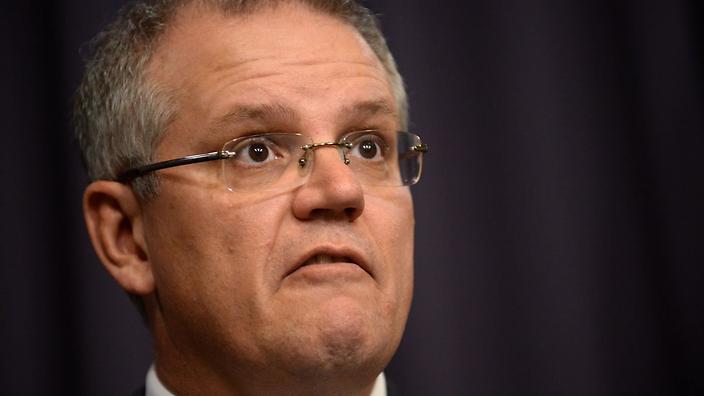 Conservative push for nuclear power will drive a wedge into the Coalition, Jim Green, 5 March 2020, RenewEconomy https://reneweconomy.com.au/conservative-push-for-nuclear-power-will-drive-a-wedge-into-the-coalition-39428/
The NSW Parliament’s State Development Committee has released its report into nuclear power. In a rare show of unity, conservative committee members held together, with Liberals, Nationals, Shooters Fishers and Farmers, and Paulina Hanson’s One Nation all recommending repeal of state laws banning uranium mining and nuclear power. But that unity is unlikely to last. Comments by Premier Gladys Berejiklian and Energy Minister Matt Kean suggest they oppose the push to repeal legislation banning nuclear power.
Elsewhere, deep rifts are evident within the Coalition. The SA Liberal government’s submission to a 2019 federal nuclear inquiry opposed the pursuit of nuclear power, as did the Tasmanian Liberal government’s submission and even that of the Queensland Liberal-National Party.
The federal government said it would not repeal laws banning nuclear power even before it established the nuclear inquiry. The majority report of the inquiry recommended a partial repeal of the bans ‒ retaining the ban against large, conventional reactors but permitting the development of non-existent ‘Generation IV’ reactor concepts ‒ but that recommendation is unlikely to be adopted by the Morrison government.
The prospects for Generation IV concepts ‒ such as thorium or fusion ‒ were studied by the South Australian Nuclear Fuel Cycle Royal Commission. The Commission concluded in its 2016 report that Generation IV concepts are unlikely to be feasible or viable in the foreseeable future, and carry a high commercial and technical risk.
For both conventional and Generation IV nuclear power, cost is the main sticking point ‒ even for conservatives. “I don’t sign up on anything if I can’t look Australians in the eye and say how much it will cost,” Prime Minister Morrison recently said.
There are many examples of shocking cost overruns overseas. The cost of the two reactors under construction in the US state of Georgia has doubled and now stands at A$20.4‒22.6 billion per reactor. In 2006, Westinghouse said it could build a reactor for as little as A$2.1 billion ‒ 10 times lower than the current estimate.
The only other reactor construction project in the US, a twin-reactor project in South Carolina, was abandoned in 2017 after the expenditure of at least A$13.4 billion. Westinghouse filed for bankruptcy soon after, almost bankrupting its parent company Toshiba in the process.
The cost of the only reactor under construction in France has nearly quadrupled and now stands at A$20.0 billion. The cost of the only reactor under construction in Finland has nearly quadrupled and now stands at A$17.7 billion. The projects in France and Finland are both 10 years behind schedule, and still incomplete.
The cost of the four reactors under construction in the United Arab Emirates has increased from A$7.5 billion per reactor to A$10‒12 billion per reactor. South Korea ‒ which is supplying the UAE reactors ‒ is held out to be a model for the global nuclear industry. But South Korea is slowly phasing out its nuclear reactors, its nuclear industry is riddled with corruption (the courts have dispensed a cumulative 253 years of jail time to 68 offenders), and its business model clearly sacrifices safety in order to improve economics.
In the UK, the estimated cost of the only two reactors under construction is A$25.9 billion per reactor. In the mid-2000s, the estimated cost was almost seven times lower. The UK National Audit Office estimates that taxpayer subsidies for the project will amount to A$58 billion, despite earlier government promises that no taxpayer subsidies would be made available.
The Australian debate should be seen in the context of the culture wars, not the energy debate. With few exceptions, pro-nuclear conservatives don’t believe in climate science, they support subsidised fossil fuel plants, and they vigorously oppose renewables. Former Prime Minister Malcolm Turnbull describes nuclear power as the “loopy current fad … which is the current weapon of mass distraction for the backbench”.
Pro-nuclear conservatives hope to split the Labor Party and environmentalists on nuclear power, but they are only dividing themselves. They should take a history lesson. The Howard government’s promotion of nuclear power was alive in the 2007 election campaign, but the policy did nothing to divide the Labor Party or the environment movement.
On the contrary, it divided the Coalition, with at least 22 Coalition candidates publicly distancing themselves from the government’s promotion of nuclear power during the 2007 election campaign. The policy of promoting nuclear power was seen to be a liability and it was ditched immediately after the election.
A December 2019 report by CSIRO and the Australian Energy Market Operator finds that construction costs for nuclear reactors are 2‒8 times higher than costs for wind or solar. Costs per unit of energy produced are 2‒3 times greater for nuclear compared to wind or solar including either two hours of battery storage or six hours of pumped hydro energy storage.
Australia can do better than fuel higher carbon emissions and unnecessary radioactive risk. We need to embrace the fastest growing global energy sector and become a driver of clean energy thinking and technology and a world leader in renewable energy technology. Our shared energy future is renewable, not radioactive.
Dr. Jim Green is the national nuclear campaigner with Friends of the Earth Australia and editor of the World Information Service on Energy’s Nuclear Monitor newsletter.
“NuclearHistory” exposes the unpleasant facts about liquid fluoride thorium nuclear reactors

Some people believe that liquid fluoride thorium reactors, which would use a high temperature liquid fuel made of molten salt, would be significantly safer than current generation reactors. However, such reactors have major flaws. There are serious safety issues associated with the retention of fission products in the fuel, and it is not clear these problems can be effectively resolved. Such reactors also present proliferation and nuclear terrorism risks because they involve the continuous separation, or “reprocessing,” of the fuel to remove fission products and to efficiently produce U-233, which is a nuclear weapon-usable material. Moreover, disposal of theused fuel has turned out to be a major challenge. Stabilization and disposal of the
remains of the very small “Molten Salt Reactor Experiment” that operated at Oak
Ridge National Laboratory in the 1960s has turned into the most technically challenging cleanup problem that Oak Ridge has faced, and the site has still not been cleaned up. Last updated March 14, 2019″ Source: Union of Concerned Scientists, at https://www.ucsusa.org/sites/default/files/legacy/assets/documents/nuclear_power/thorium-reactors-statement.pdf I wonder who is correct, The Union of Scientists or Mr. O’Brien and ScoMo?
The Industry Push to Force Nuclear Power in Australia, Part 1 of A Study of the “Report of the inquiry into the prerequisites for nuclear energy in Australia” Australian Parliamentary Committee 2020.by nuclearhistory, February 29, 2020, “………Nuclear power enables the great powers to project power. It is a crucial geo-political influencer. If the committee has it’s way, we will be working with Russia and China and others on reactors they want to develop, that their own people have not had a say in, that are all based upon reactor designs first thought of in the 1950s, and where actual examples were built at that time, turned out to be unsafe failures which continue to present cost and risk at their sites to this day.
The committee’s first recommendation to government includes the following two sub parts:
c. procuring next-of-a-kind nuclear reactors only, not first-of-a- kind.” end quote.
“procuring next-of-a-kind nuclear reactors only, not first-of-a- kind” How refreshing that the Committee does not want the first gen iv type reactors – the Fermi 1 and Monju type for example. Those dangerous failures that sit like wounded Albatross in the US and Japan and continue to demand taxpayer funds. The failure of Monju, which has long been foreseen by many, renders the original basis for the Japanese nuclear industry subject to severe doubt. As result of vastly improved safety standards, fuel reprocessing in Japan is in doubt, its future course uncertain, and the nature of high level waste management has been an even more pressing issue.
Nuclear free has served NSW well and should remain- Australian Conservation Foundation
 Nuclear free has served NSW well and should remain, https://www.miragenews.com/nuclear-free-has-served-nsw-well-and-should-remain/ Nuclear power has no role in Australia’s energy future and is a dangerous distraction from the climate challenges facing Australia.
A pro-nuclear NSW upper house inquiry initiated by One Nation MLC Mark Latham has recommended removing the state’s long-standing legislative ban on uranium mining and opening the door to nuclear power, but Labor committee members have reaffirmed their party’s opposition to uranium mining and nuclear energy.
The inquiry report recommends the repeal of the Uranium Mining and Nuclear Facilities (Prohibitions) Act, but a dissenting statement by Labor committee members says a ‘Labor Government will maintain a ban on uranium exploration, extraction and export’ and a ‘Labor Government will not introduce nuclear power in NSW’.
The Australian Conservation Foundation said Australia was blessed with outstanding renewable resources and did not need to explore dangerous nuclear energy options. “The state ban on uranium mining has served NSW well and should remain,” said ACF nuclear campaigner Dave Sweeney.
New South Wales upper house Inquiry, stacked with pro nuclear people, recommends lifting nuclear bans
 NSW upper house recommends lifting bans on nuclear energy
Michael Mazengar, 4 March 2020, A NSW upper house parliamentary committee has recommended that prohibitions on the exploration and use of nuclear energy in NSW be lifted, a move that environmental groups fear will be the first step towards the establishment of an Australian nuclear power industry.
The upper house inquiry, which was stacked with pro-nuclear members of the legislative council, concluded that state parliament prohibitions on nuclear developments should be repealed, and argued that nuclear energy would be necessary to support future NSW electricity supplies.
The inquiry was instigated at the behest of One Nation member of the NSW upper house, and former federal Labor leader, Mark Latham and was formed to consider the Uranium Mining and Nuclear Facilities (Prohibitions) Repeal Bill 2019, tabled by Latham that would repeal legislation that prohibits uranium mining and the construction of a nuclear power station in New South Wales……
A recent update to the CSIRO GenCost assessment found that nuclear power represents one of the most expensive sources of new generation capacity, noting the lack of existing power stations in Australia and the lack of industry knowledge on the construction and operation of a nuclear plant.
Australia’s uranium mining sector has also struggled in recent years, following a significant reduction in global demand for nuclear fuels as a result of the 2011 Fukushima nuclear disaster in Japan.

 In a dissenting statement included in the report, the Labor members of the committee said that their party would continue to oppose the development of nuclear industries.
“On the basis of current technologies and costs, we remain unconvinced of the benefits nuclear power may bring. We remain mindful of the challenges caused by managing and storing spent fuel rods and radioactive waste that lasts many lifetimes,” the dissenting Labor report says.
“Nuclear power continues to have question marks both over its lasting environmental impact via waste as well as its cost. Labor believes the future of energy generation for NSW lies in clean and renewable energy sources, supported by firming and storage.”
“A Labor government will maintain a ban on uranium exploration, extraction and export. A Labor Government will not introduce nuclear power in NSW.
 Greens MLC David Shoebridge, who serves as the party’s energy spokesperson, labelled the committee’s findings as dangerous and nonsensical, saying that the pursuit of nuclear power would ultimately cost NSW households more and that any development of the industry would take so long that it would simply work as a way to prop up the coal industry.
Every megawatt of new nuclear power costs at least three times new fossil-fuelled power and at least six times that of solar or wind power,” Shoebridge said.
“Those costs are based only on the construction and operation of nuclear power plants and entirely ignore the billions more required to decommission and manage the radiation from a nuclear power plant for hundreds of years after it closes.”
“Recent history tells us clearly that even if it was given an immediate greenlight not one megawatt of nuclear power in Australia will be available until well beyond 2040. The effect of nuclear advocacy is to prolong the life of coal-fired power.”……. https://reneweconomy.com.au/nsw-upper-house-recommends-lifting-bans-on-nuclear-energy-90875/
Flinders University, South Australia: collusion with nuclear power promotion, Prof Pam Sykes, and the scam of “hormesis”
The Industry Push to Force Nuclear Power in Australia, Part 1 of A Study of the “Report of the inquiry into the prerequisites for nuclear energy in Australia” Australian Parliamentary Committee 2020.by nuclearhistory, February 29, 2020“………….The most recent nuclear collaboration between Australia and a nuclear power for nuclear purposes commenced in the year 2000. At that time a US Department of Energy Contractor named Bobby Scott, based at Los Alamos and at Lovelace Respiratory Research Laboratory, New Mexico, came to Adelaide carrying contract documents. The documents were to be signed by the US DOE and involved personnel of Flinders University. Bobby Scott is a well known (to people in the field) as a leading advocate for the theory of radiation hormesis. The contract to be signed was the first of a number. From the time of the signing of that contract, Flinders University engaged in very strong advocacy of the expansion of nuclear industry in South Australia. Prof Pam Sykes was flown from Adelaide to Los Almos and undertook training and seminars in Hormesis. The concept that radioactive substances are, in her words, “like vitamins”.
I have fully explained that this unproven theory flies in the face of reality in terms of radiological safety and data from monitoring of dose and disease all over the world, including, contrary to the claims of the school hormesis, the naturally high background radiation regions of Iran and India. In those parts of Iran and India, (the five northern provinces in Iran, and Kerala in India) some cancer rates are among the highest in the world. Further, in those Iranian provinces breast cancer in teenage women is more common than it is even in the West. And so on. There are five types of cancer in northern Iran which have very high rates. In south western Kerala, the rates of female thyroid cancer is very, very high.
Contrary the to statements made by the school of hormesis, headquartered at Los Alamos, USA and Flinders University Adelaide. From 2000 on, Flinders University promoted the idea of radioactive substances such as uranium and its decay products and the fission products as being “like vitamins”, necessary for life. By 2011 the university was promoting the idea that an expansion of the state’s uranium mines would be good for the health of South Australians, because the natural background here is “too low” for good health. Presumably the transport of tons of additional uranium ore by train from the mines to the ports in open railway trucks would result in faint clouds of radionuclide “vitamins” being dispersed over the whole population of the state in precisely the right theoretical dose, taking into account, somehow, automatically, the age, gender and health status of each South Australian. (I didn’t write what Sykes did, so don’t blame me.). In 2011 the US DOE funded Flinders University put its pedal to the metal and flew into the debate, labelling South Australians who disagreed with it’s position in words which were insulting and which labelled us as lunatics, radiophobes and totally ignorant of radiological safety principles, cowardly, and devoid of reason. Read it here: https://news.flinders.edu.au/blog/2011/07/14/radiation-response-a-meltdown-in-reason/
Liberals coy about nuclear power, Premier Gladys thinks “it doesn’t matter to the people of New South Wales”
NSW Deputy Premier John Barilaro backs bill to overturn nuclear power ban https://www.abc.net.au/news/2020-03-04/john-barilaro-backs-bill-to-overturn-nuclear-power-ban/12024960, By state political reporter Ashleigh Raper New South Wales Liberals must decide whether they support the overturning of a ban on uranium mining that could also pave the way for nuclear energy in the state.
Key points:
- A bill put forward by One Nation MP Mark Latham supports a pathway to nuclear power
- Deputy Premier John Barilaro has long-supported a push towards nuclear energy
- A parliamentary inquiry will deliver findings in September
A parliamentary inquiry, led by Liberal MP Taylor Martin, has recommended that the law prohibiting uranium mining and nuclear facilities should be repealed.
The inquiry was looking into a bill put forward by One Nation MP Mark Latham in the Upper House and, through its recommendations, supports the piece of legislation.
Deputy Premier John Barilaro says the Nationals will support the bill, so too will the Shooters, Fishers and Farmers.
Mr Barilaro has long-supported nuclear energy and hopes the Nationals’ support will put pressure on the Commonwealth.
“That will put the focus on the Federal Government because without the Federal Government lifting its ban, there’s no way we will see a nuclear industry here in Australia,” he told Sky News.
Labor will oppose the bill, along with the Greens and Independent MP Justin Field.
So far, the Liberals don’t have a position because the issue hasn’t gone before cabinet.
Local Government Minister Shelley Hancock today said in budget estimates she wouldn’t support uranium mining or facilities in her electorate on the South Coast.
“There will never be any uranium mining on the South Coast,” she said.
“And I oppose any facilities on the South Coast.”
In Question Time, Premier Gladys Berejiklian was asked by Labor whether the Liberal Party wanted to lift the ban like its Coalition partner, but she wouldn’t be drawn.
“The Deputy Premier has been talking about this for two to three years,” she said.
“Get a better strategy for Question Time. I say to those opposite, ask me questions that matter to the people of New South Wales.”
She told Parliament the Government didn’t need to respond to the inquiry findings until September, but Upper House MPs are likely to vote on the legislation before that time.
New South Wales National Party will support Latham’s nuclear power bill, says Barilaro
 Barilaro says Nationals will support Latham’s nuclear power bill, https://www.smh.com.au/politics/nsw/barilaro-says-nationals-will-support-latham-s-nuclear-power-bill-20200304-p546pe.html, By Alexandra Smith, March 4, 2020 Deputy Premier John Barilaro says the NSW Nationals will support Mark Latham’s bill to allow nuclear power in NSW, in a move likely to cause a split in the junior Coalition party.In his strongest comments yet, Mr Barilaro, a long-time supporter of nuclear power, said the government should “lift the ban on nuclear energy” and confirmed his party would support it. Barilaro says Nationals will support Latham’s nuclear power bill, https://www.smh.com.au/politics/nsw/barilaro-says-nationals-will-support-latham-s-nuclear-power-bill-20200304-p546pe.html, By Alexandra Smith, March 4, 2020 Deputy Premier John Barilaro says the NSW Nationals will support Mark Latham’s bill to allow nuclear power in NSW, in a move likely to cause a split in the junior Coalition party.In his strongest comments yet, Mr Barilaro, a long-time supporter of nuclear power, said the government should “lift the ban on nuclear energy” and confirmed his party would support it.
But the position has not been taken to the Nationals’ party room, and several MPs said there would be serious concern among some members, including those who hold coastal seats. A report into Mr Latham’s bill was tabled in Parliament on Wednesday, recommending the state government support repealing laws that ban uranium mining and nuclear facilities. The report followed an inquiry into the One Nation leader’s private member’s bill, which is before the upper house. The bill would allow the ban on uranium mining and nuclear power be lifted. The issue dominated question time on Wednesday, with Energy Minister Matt Kean stressing the government’s focus was “cheap reliable energy” provided by renewables. Despite Mr Barilaro’s stance, Premier Gladys Berejiklian said the government had until September to respond to the report but MPs will vote on Mr Latham’s bill later this month. Speaking on Sky News on Tuesday night, Mr Barilaro said: “I would say here today that the National Party will support his [Mr Latham’s] bill in relation to lifting the ban on mining uranium and nuclear energy.” He said it follows a motion at last year’s party conference, which supported nuclear power. But a senior Nationals MP said the issue could be very problematic for coastal MPs, where there is a strong Greens vote and anti-mining sentiment. “I think much of the party room will be agnostic but I think if you speak to the coastal Nats, they will have a very different view. This would be very problematic for them.” The MP confirmed Mr Barilaro had not taken the issue to the Nationals’ party room. Nationals MP Geoff Provest, who holds the North Coast seat of Tweed, said he would be “worried about the decision” to support Mr Latham’s bill. “Our job is to represent our communities and I think a few coastal Nats might have a few concerns,” he said. Asked whether Mr Barilaro had told Mr Latham that the Nationals would support his bill, Mr Latham said: “What he has said on Sky is consistent with what he has told me.” The group Nuclear for Climate Australia has identified 12 sites as “regions of interest” in NSW for nuclear reactors, including the area between Coffs Harbour and Port Macquarie, Grafton, Shoalhaven and the South Coast. Cabinet has not considered the issue, and the Liberals do not yet have a position on nuclear power. But in budget estimates on Wednesday, Liberals’ Local Government Minister and South Coast MP Shelley Hancock said she would not support a reactor in her electorate. There will never be any uranium mining on the South Coast and I oppose any facilities on the South Coast,” she said. Chair of the inquiry who looked into Mr Latham’s bill, Liberals’ MP Taylor Martin said, “the prohibitions on uranium mining and nuclear energy reflect the outdated fears of the 1980s”. “On the balance of evidence gathered for this inquiry, nuclear power in its emerging small scale applications is a compelling technology where energy policy settings seek to decarbonise emissions while delivering secure, reliable and affordable energy to the NSW grid,” Mr Martin said.
Labor’s energy spokesman Adam Searle said nuclear would produce the “most expensive electricity” which would “cripple homes and businesses across the state”. “The future of energy generation for NSW lies in clean and renewable energy sources, supported by storage,” Mr Searle said. |
|
Fight for nuclear justice continues in the Marshall Islands
 Fight for nuclear justice continues in the Marshall Islands https://www.rnz.co.nz/international/pacific-news/410871/fight-for-nuclear-justice-continues-in-the-marshall-islands
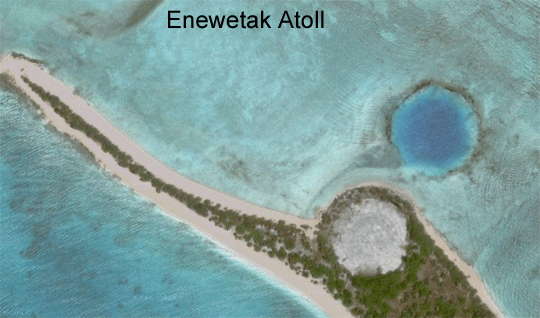
The fight for nuclear justice continues in the Marshall Islands where people have been gathering to call for the US to atone for its legacy of testing.The country marked National Nuclear Victims Remembrance Day on Monday, the 64th anniversary of the Castle Bravo hydrogen bomb test that exposed thousands of people to downwind effects.At a ceremony in the capital, Majuro, a tribute was paid to 22 living survivors from the communities affected by the nuclear testing.
This comes as the Marshall Islands and the United States have begun preliminary talks on a new agreement to address the legacy of testing.
The compact of free association, which guarantees relations and funding for the Marshalls from the US, expires in two years.
Last year, it was revealed the US withheld information about nuclear waste it left behind when the Marshalls gained independence, and the extent of the tests it carried out.
Washington previously said there would be no replacement compact. But the chair of the Marshall Islands Nuclear Commission, Rhea Moss-Christian, said nuclear issues were a key, ongoing aspect of negotiations.
“Well we are coming up on renegotiating the economic provisions of the compact, and we’ve had some initial discussions with the US officials.
“So yes internally we are working on our strategy and pulling together all the key issues to include in those negotiations, including the nuclear legacy.”
Ms Moss-Christian, who said formal talks should start later in the year, vowed that the fight for nuclear justice for Marshall Islanders would continue.
“Really it comes down to compensation for loss of land. It’s about health care for those who might be having medical issues,” she said.
“It’s about livelihoods and how much their lifestyles were forced to change when they were moved from their land. These are just a few examples.”
Meanwhile, an essay competition for high schoolers was held as part of Monday’s commemoration programme.
The winner was a senior at Marshall Islands High School on Majuro, Rosie Ammontha, who wrote:
“They had the choice to test those bombs, we didn’t. They had the choice to be truthful about the consequences that awaited us, we didn’t. They had the choice not to endanger innocent lives, we didn’t. They had the choice to help protect our oceans and environment, we didn’t. At the end of the day, nuclear justice means righting what was wronged.”
Prof Peta Ashworth, stooge of the nuclear lobby, is again propagandisingfor them
Supposedly independent (LOL), Ms Ashworth was contracted by DIIS to massage the NRWMF community consultation process ~ & recommended a 2 site competition strategy to “…. ‘motivate competing communities to become invested in winning …”
Yet here she now be, boldly spruiking nuclear power in the company of other tricky nuke cyclists……
PS…. JACOBS would be one of the front runners in the chase to get the Govt contract for construction &/or to operate any national radioactive suppository. https://www.facebook.com/groups/1314655315214929/
Government’s latest pressure on the ABC is slammed by Paul Keating
‘Ideological contempt’: Keating slams pressure to sell ABC offices, The Age, By Jennifer Duke and Fergus Hunter, March 3, 2020 Former prime minister Paul Keating has slammed the government for encouraging the ABC to canvass a sale of its inner-city offices, saying it shows “ideological contempt” and is an attempt to “fracture” the public broadcaster.
Communications Minister Paul Fletcher wrote to ABC managing director David Anderson on Monday recommending the broadcaster consider reviewing its capital city property portfolio, which includes offices in Sydney’s Ultimo and Melbourne’s Southbank. Mr Fletcher did not refer to specific property assets in the letter, but government sources who declined to be identified said the Ultimo office in particular was under-used.
Mr Keating said the pressure on the ABC to explore these sales represented “nothing other than an attempt by the Liberal and National parties to fracture the ABC at its foundations, in settlement of its ideological contempt for the organisation”.
“For the first time in its long history, the Ultimo, Sydney and Southbank, Melbourne premises delivered to the ABC a consolidation of workplaces which facilitated cross-platform and cross-divisional facilitation of a kind that was impossible in the old fragmented locational structure,” he said in a statement.
The ABC is grappling with a funding freeze projected to shave up to $84 million off its annual budget and is set to present a five-year strategic plan for the broadcaster later this month. ……
Mr Anderson said the broadcaster’s costs had risen while it was also confronting the funding freeze. The unprecedented bushfire season saw the ABC’s emergency broadcast requirements surge, adding about $3 million on top of expected spending.
“We estimate that it’s going to cost us an extra $5 million per annum from next financial year where we are going to have to build up our ability to respond [to] this being the new normal,” he said…… https://www.theage.com.au/politics/federal/ideological-contempt-keating-slams-government-pressure-to-sell-abc-offices-20200303-p546ev.html
Cosy little cocktail party for Liberal and Labor MPs, with coal industry bigwigs
Climate campaigners condemn ‘insidious’ cocktail party for MPs and coal industry
Parliament House event represents an effort to undermine climate action, environmental group 350 Australia says, Guardian, Christopher Knaus @knauscWed 4 Mar 2020 Environmental campaigners say a cocktail night involving the fossil fuel industry and federal politicians represents an “insidious” lobbying effort to undermine climate action.
The pro-coal Liberal MP Craig Kelly and Labor’s Joel Fitzgibbon hosted a cocktail event at Parliament House to discuss carbon capture and storage with industry leaders on Wednesday night.
An invite seen by the Guardian was sent out by Kelly and Fitzgibbon, who chair the parliamentary friends of resources, together with representatives of Santos and the carbon capture body CO2CRC. The event is described as a “cocktail event to mark the inaugural meeting of the CO2CRC Carbon Capture and Storage Policy Forum”.
That forum features companies such as BHP, Chevron, Coal21, ENI, Exxon, the Global Carbon Capture and Storage Institute, JPower, Shell and Woodside.
The invite says the forum aims to “work with governments, industry and other stakeholders” to create “suitable policy settings and a regulatory framework to accelerate the development and deployment of CCS technology in Australia”…..
Environment group 350 Australia says the event shows the need to “crack down on the undue influence of lobby groups on our democracy”.
The 350 Australia chief executive, Lucy Manne, said the event was an “insidious effort by the fossil fuel lobby to undermine action on the climate crisis”.
Manne said carbon capture and storage had proven a “pipe dream of the coal and gas lobby” and diverted millions away from proven renewables…..
“It’s outrageous that instead of working out how to rapidly transition to the renewable energy future the vast majority of Australians and businesses want, our elected representatives will tonight be sipping cocktails with the coal lobby and discussing how to extend the life of dirty coal-burning power stations.”
Such lobbying is generally hidden from the public unless revealed by the media. The Fitzgibbon-Kelly cocktail event was reported in News Corp papers.
It does not appear in any of the transparency measures governing lobbying. Federal ministers are also not required to disclose who they have met with, unlike in states like Queensland and New South Wales. ……https://www.theguardian.com/australia-news/2020/mar/04/climate-campaigners-condemn-insidious-cocktail-party-for-mps-and-coal-industry
Solar farms to carry cost of Territory government’s glacial pace on grid reform — RenewEconomy

New performance standards set to be imposed on NT generators, raising costs for solar developments, after NT government delayed reforms. The post Solar farms to carry cost of Territory government’s glacial pace on grid reform appeared first on RenewEconomy.
via Solar farms to carry cost of Territory government’s glacial pace on grid reform — RenewEconomy
S.A. government teams with Sonnen to offer free home batteries to bushfire victims — RenewEconomy

South Australians forced to rebuild after their homes were destroyed in bushfires offered free battery storage through program backed by state Liberal government and battery manufacturer Sonnen. The post S.A. government teams with Sonnen to offer free home batteries to bushfire victims appeared first on RenewEconomy.
via S.A. government teams with Sonnen to offer free home batteries to bushfire victims — RenewEconomy
Comcar confusion as Teslas tested, but not assessed for government fleet — RenewEconomy

Department officials delay providing further details for why two Tesla models were test-driven but then overlooked for the government’s Comcar fleet. The post Comcar confusion as Teslas tested, but not assessed for government fleet appeared first on RenewEconomy.
via Comcar confusion as Teslas tested, but not assessed for government fleet — RenewEconomy
March 4 Energy News — geoharvey

Opinion: ¶ “This Is Positive News For UK Renewables – The Key Will Be Translation Into Policy” • After five years stripped of government support, the idea of onshore wind and solar competing in the next Contracts for Difference round is “a delightful surprise,” according to writer Mike Blanch, but the devil will be in […]
1 This month

of the week – Australians for War Powers Reform (AWPR)
To see nuclear-related stories in greater depth and intensity
 Antinuclear