Why don’t we treat the climate crisis with the same urgency as coronavirus?
 Why don’t we treat the climate crisis with the same urgency as coronavirus? Owen Jones Guardian, 6 Mar 2020 No Cobra meetings, no sombre speeches from No 10, yet the consequences of runaway global heating are catastrophic, It is a global emergency that has already killed on a mass scale and threatens to send millions more to early graves. As its effects spread, it could destabilise entire economies and overwhelm poorer countries lacking resources and infrastructure. But this is the climate crisis, not the coronavirus. Governments are not assembling emergency national plans and you’re not getting push notifications transmitted to your phone breathlessly alerting you to dramatic twists and developments from South Korea to Italy.More than 3,000 people have succumbed to coronavirus yet, according to the World Health Organization, air pollution alone – just one aspect of our central planetary crisis – kills seven million people every year. There have been no Cobra meetings for the climate crisis, no sombre prime ministerial statements detailing the emergency action being taken to reassure the public. In time, we’ll overcome any coronavirus pandemic. With the climate crisis, we are already out of time, and are now left mitigating the inevitably disastrous consequences hurtling towards us. While coronavirus is understandably treated as an imminent danger, the climate crisis is still presented as an abstraction whose consequences are decades away. Unlike an illness, it is harder to visualise how climate breakdown will affect us each as individuals. Perhaps when unprecedented wildfires engulfed parts of the Arctic last summer there could have been an urgent conversation about how the climate crisis was fuelling extreme weather, yet there wasn’t. In 2018, more than 60 million people suffered the consequences of extreme weather and climate change, including more than 1,600 who perished in Europe, Japan and the US because of heatwaves and wildfires. Mozambique, Malawi and Zimbabwe were devastated by cyclone Idai, while hurricanes Florence and Michael inflicted $24bn (£18.7bn) worth of damage on the US economy, according to the World Meteorological Organization.As the recent Yorkshire floods illustrate, extreme weather – with its terrible human and economic costs – is ever more a fact of British life. Antarctic ice is melting more than six times faster than it was four decades ago and Greenland’s ice sheet four times faster than previously thought. According to the UN, we have 10 years to prevent a 1.5C rise above pre-industrial temperature but, whatever happens, we will suffer.
Pandemics and the climate crisis may go hand in hand, too: research suggests that changing weather patterns may drive species to higher altitudes, potentially putting them in contact with diseases for which they have little immunity. “It’s strange when people see the climate crisis as being in the future, compared to coronavirus, which we’re facing now,” says Friends of the Earth’s co-executive director, Miriam Turner. “It might be something that feels far away when sitting in an office in central London, but the emergency footing of the climate crisis is being felt by hundreds of millions already.”
Imagine, then, that we felt the same sense of emergency about the climate crisis as we do about coronavirus. What action would we take? ….. https://www.theguardian.com/commentisfree/2020/mar/05/governments-coronavirus-urgent-climate-crisis
1 Comment »
Leave a comment
1 This month
7 April – WEBINAR – Australia and the Doomsday Clock – Preventing nuclear war through NoFirstUse and other policies
Online | Tuesday April 7, 4:00-5:30pm, Australian Eastern Time / 8:00-9:30am Central Europe Time
– Access the registration link
15 April – Zoom –Nuclear Power is Not the Solution
Apr 15, 2026 01:00 AM in Canberra, Melbourne, Sydney

Join the International Physicians for the Prevention of Nuclear War (IPPNW) on Tuesday, April 14th for a timely webinar exploring the risks associated with nuclear power and challenging the myth that it offers a simple, safe, carbon-free solution to the climate crisis
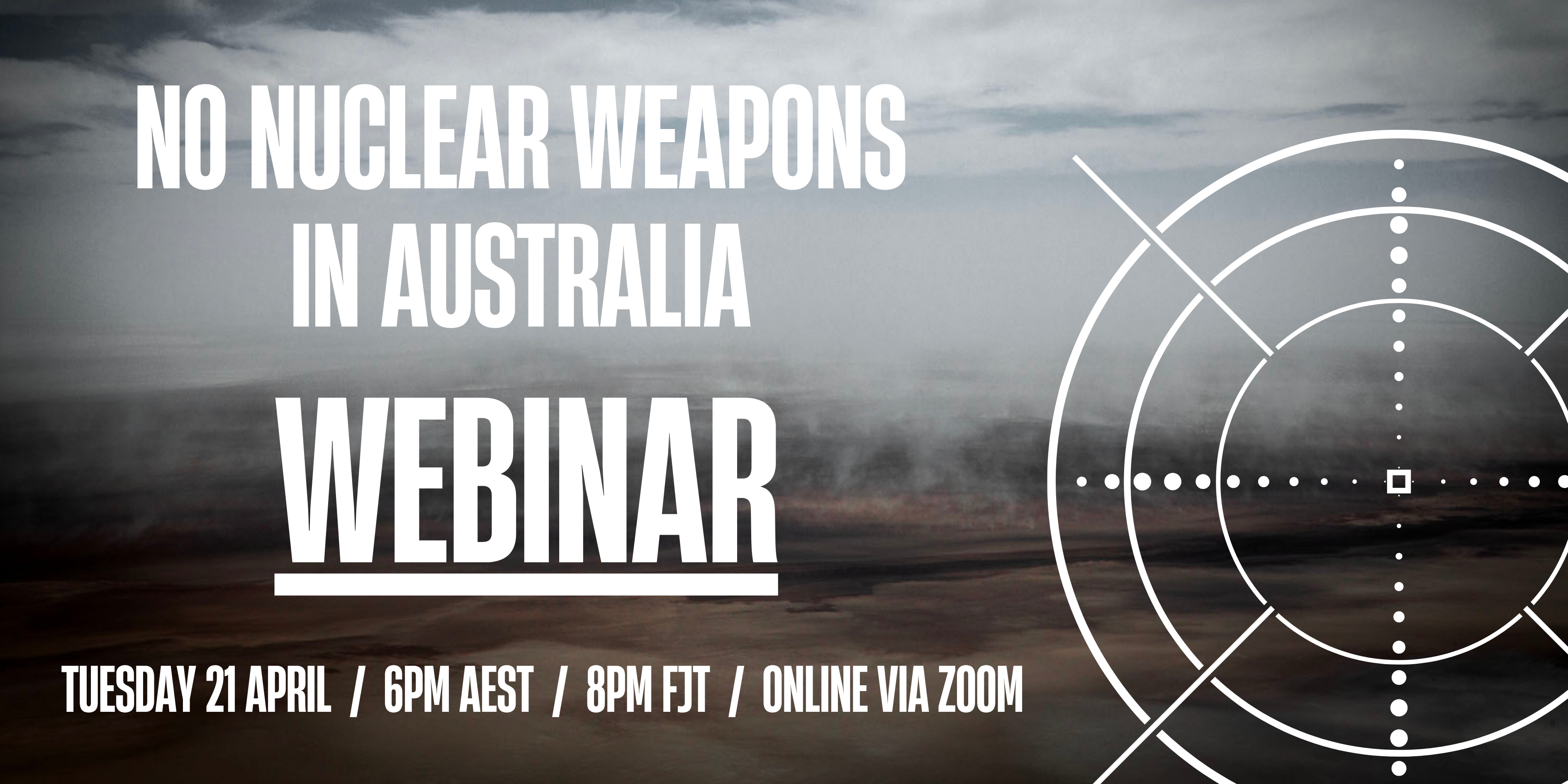
21 April Webinar: No Nuclear Weapons in Australia
Start: 2026-04-21 18:00:00 UTC Canberra, Melbourne, Sydney (GMT+10:00)
End: 2026-04-21 19:30:00 UTC Canberra, Melbourne, Sydney (GMT+10:00)
Event Type: Virtual
A virtual link will be communicated before the event.
Host Contact Info: australia@icanw.org

of the week – Australians for War Powers Reform (AWPR)
To see nuclear-related stories in greater depth and intensity
 Antinuclear
As with asbestos, nuclear ionizing radiation, and tobacco there are immense commercial and political vested interests in continuing to burn fossil fuels. These vested interests can stall any community, environmental, scientific and medical opposition for many many decades, such is the power of greed under the misleading banner of development. Australia is a good example of the loss of species, vegetation, indigenous peoples, and quality of life in the name of progress.
Various aspects of renewable energy have been co-opted in this race to the bottom; for example hydro electricity and solar farms, which destroy large areas of vegetation. From the point of view of ecologically sustainable energy only certain forms of solar energy qualify. To see a solar farm in the midst of healthy vegetation is environmentally contradictory. How much healthy vegetation are we going to clear in the name of renewable energy? As usual, the answer is being determined by vested commercial and political interests.
Bushfires have been blamed for mass destruction of wildlife, but their effect is small compared with the wholesale slaughter of indigenous plants, animals and people sanctioned by governments in the name of development.
LikeLike