The week in nuclear, climate, and coronavirus news
 Awareness about infectious diseases seems to have faded, up until suddenly just lately. It really is a long time between epidemics, and now we have a pandemic. The quickly spreading Coronavirus disease is being handled differently, according to each country. Climate scientist Paul Beckwith explains this, and warns on the necessity of urgent action. Another excellent resource is Corona Virus – With Dr. John Campbell. There is also the inhumane theory of “herd immunity”, being recommended by some as a strategy for Britain.
Climate scientists are bemoaning the slowness to take action on the coronavirus, but, even more so, the continuing slowness to act on global heating.
A bit of good news – One Million ‘Wonder Plant’ Seedlings Are Planted in Wales to Fight Climate Crisis—and Create Healthy Seas
AUSTRALIA.
Coronavirus spreading – Federal and State governments taking appropriate action .P.M. Scott Morrison a bit slow to cop on, and, Trump-style, inclined to use the occasion as a PR pitch.
Australian defence officials and politicians, like Christopher Pyne, rotate quickly between government and weapons industry jobs.
Australian govt rejects a report that recommends nuclear submarines.
NUCLEAR
- Australia to feature at Fukushima in the opening Olympics event.
- Small Nuclear Reactors, like large ones, are out of the question for Australia, due to staggering costs. Small nuclear reactors, (just like large) can survive only with massive subsidies.
- Time that Australia closed the door on the dangerous distraction of nuclear power. Fact-checking the false nuclear claims of NSW Deputy Premier John Barilaro. New South Wales National MPs embrace nuclear industry, other MPs are shocked. Nuclear lobbyists have got into the ears of NSW’ National Party. Melinda Pavey National Party MP wants Small Nuclear Reactors for the Riverina. Labor MP Yasmin Catley stands up for New South Wales nuclear ban laws. Call to Premier Gladys Berejiklian to stand up for a nuclear-free New South Wales.
- This week’s uranium report- prices fall again, Australia’s “nuclear future” going nowhere.
- Australian government manipulates the National Radioactive Waste Management Act so as to prevent an Appeal. – ANSTO lies about necessity of nuclear reactor: Nuclear medicines are being made in Adelaide, without dirty nuclear reactor. Submissions due by Thurs 26th March to Senate Nuclear Waste Inquiry. Court dismisses Aboriginal group’s appeal to stop the Kimba nuclear waste dump.
CLIMATE. Global heating is intensifying a rare natural phenomenon that brings severe drought to Australia. Climate change fuelled Australia’s devastating Black Summer – Climate Council Report. The climate denialist spin machine – the “Anti-Greta” in Australia. NSW Environment Minister Matt Kean contradicts the Coalition party line – wants climate action and NO nuclear.
RENEWABLE ENERGY. Rooftop solar unstoppable as market breaks “all previous records” in February . NSW unveils two new renewable energy zones in $11 billion Net Zero strategy. Major clean energy industry events postponed in response to Coronavirus. Regional community solar and storage projects win NSW government grants. Australian researchers smash efficiency record for ‘tandem solar cells’. Major solar farm and battery approved for New South Wales coal country.
INTERNATIONAL
Polar ice melting at an accelerating rate. The planet’s largest ecosystems could collapse faster than we thought.
Global response to Covid-19 is rapid. Response to climate change is too damn slow. Coronavirus poses threat to climate action.
Bulletin of the Atomic Scientists warns on doomsday. Hypocrisy: new commitments to Non-Proliferation of Nuclear Weapons (NPT) include push for nuclear power.
Nuclear modernisation, cyber operations, raise a dilemma for nuclear deterrence.
Investigative journalism – Fukushima, and the ocean’s history of nuclear waste dumping.
Tritium – more hazardous than gamma rays and most X-rays..
Time that Australia closed the door on the dangerous distraction of nuclear power
 Fukushima nine years on: Warnings for Australia https://independentaustralia.net/environment/environment-display/fukushima-nine-years-on-warnings-for-australia,13685#.Xm3ACigBj88.twitter Fukushima nine years on: Warnings for Australia https://independentaustralia.net/environment/environment-display/fukushima-nine-years-on-warnings-for-australia,13685#.Xm3ACigBj88.twitter
By Dave Sweeney | 15 March 2020 The anniversary of the Australian uranium-fuelled Fukushima nuclear disaster is no time to open the door to an expanded nuclear industry in Australia, writes Dave Sweeney.
NINE YEARS AGO this week the world learned to pronounce the word Fukushima as the March 11, 2011 Great Eastern earthquake and tsunami devastated large areas of Japans eastern seaboard. It also breached the safety and back-up systems at the Tokyo Electric Power Company’s Fukushima Daiichi nuclear complex leading to mass evacuations, hundreds of billions of dollars in economic loss and the release of large amounts of radioactive contamination. The crisis continues today with Japanese nuclear authorities confirming active intervention will be required for at least four more decades to stabilise the stricken site, contested and continuing releases of radioactive water to the Pacific and mounting waste management concerns. Fukushima means “fortunate island” but the luck largely melted down alongside the reactor and Fukushima remains a profound environmental, economic and human disaster that continues to negatively impact lives in Japan and far beyond. Against the shadow of Fukushima, the current pro-nuclear push in Australia is even more startling as it all started in the back of a big yellow truck in Australia. In October 2011, the Australian Parliament was formally advised that a load of Australian uranium was fuelling the Fukushima complex at the time of the disaster. Australian radioactive rocks are the source of Fukushima’s fallout, but sadly the miners and their political fellow travellers have been more focused on managing the political fallout. In September, 2011, the UN Secretary-General called on Australia to conduct:
This never happened. Instead of scrutiny, we have a swag of conservative state and federal politicians and commentators lining up to beat the zombie drum for this down but not dead sector. Their fanciful claims of economic benefit belie the reality of an embattled sector that has failed to deliver the dollars and has never made sense. And recently these atomic advocates have been joined by a conga line of nuke-spruikers championing domestic nuclear power and seeking public funds for a technology whose time has passed in the case of old reactors or whose time is not here, and never likely to be, in the case of so-called “next-generation” reactors. As home to around 35% of the world’s uranium reserves, Australia is a significant player in the global nuclear trade and what we do, or fail to do, matters. Since the 1980s the “modern” period of Australian uranium mining has been dominated by two major operations – Ranger in Kakadu and Olympic Dam in northern South Australia. Processing of stockpiled ore limps on at Ranger but mining has ended and parent company Rio Tinto is now focussed on rehabilitation work. The era of uranium mining in Kakadu is over – now comes the costly and complex clean-up and repair. At Olympic Dam, the world’s biggest mining company, BHP is seeking to expand operations. However, this move is being driven by the growing global demand for copper, not because of any appetite for uranium. And the big Australians plan poses a big threat to the SA environment and the local workforce. The company is persisting with a development model based on the continuation of “extreme risk” tailings dams and massive water consumption in Australia’s driest state. Meanwhile, smaller uranium operations mines like Honeymoon in SA or undeveloped projects like Cameco’s Kintyre and Yeelirrie projects in WA have been deferred or placed on extended care and maintenance due to the depressed uranium market and low commodity price. The sector’s prevailing business model is to sort the paperwork, duchess conservative politicians and commentators and hope for better times. Historically the sector has been constrained by political uncertainty, restrictions on the number of mines, a consistent lack of social license and strong Aboriginal and community resistance. Recent years have seen fewer political constraints but a dramatic decline in the price of uranium and popularity of nuclear power following Fukushima Australia’s uranium industry generates less than 0.2% of national export revenue and accounts for less than 0.02% of jobs in Australia – under one thousand people are employed in Australia’s uranium industry. The sector is an economic minnow and a waste, risk and cost whale. In an attempt to jump-start the flat-lining uranium trade successive federal governments have embraced enthusiasm rather than evidence. They have failed to scrutinise the sector, preferring to further remove already scant environmental and public health protections and fast-track increasingly irresponsible uranium sales deals including to India, Ukraine and the UAE. Australia’s uranium sector is high risk and low return. It means polluted mine sites at home and nuclear risk and insecurity abroad. And it fuelled Fukushima. This anniversary, it is time to learn one simple lesson from Fukushima. Radioactive risk is more constant than a politician’s promise or corporate assurance. For Australia, this means it is time to close the door on the dangerous distraction of domestic nuclear power and open the door to a credible and independent review of costs and consequences of the uranium sector. Dave Sweeney is the Australian Conservation Foundation’s nuclear-free campaigner and was a member of the Federal advisory panel on radioactive waste. You can follow him on Twitter @nukedavesweeney. |
|
|
Australia to feature at Fukushima in the opening Olympics event

Japan, Australia to open Tokyo Olympics with Fukushima softball game, NBC Sports , By OlympicTalkMar 12, 2020 Japan and Australia will play the first sporting event of the Tokyo Olympics, a softball game in Fukushima, the site of 2011 nuclear plant meltdowns caused by an earthquake and tsunami 155 miles north of Tokyo.
Japan and Australia will play on Wednesday, July 22, at 9 a.m. local time (Tuesday evening U.S. time), two days before the Opening Ceremony. In Summer Olympics, soccer matches have traditionally started days before the Opening Ceremony, though the first soccer match will not be held before the first softball game in Japan….
The Olympic softball schedule was announced Wednesday evening. https://olympics.nbcsports.com/2020/03/12/olympic-softball-schedule/?fbclid=IwAR0mQPZoaa44H6NIkyVlIQgXV-Yqq18kLvFrhG9pS8Xhu55gRnKHBpCon68
Small nuclear reactors to save the nuclear industry? But they’re targets for terrorism

|
Pentagon invented the internet: This time portable Micro Nuclear reactors, https://www.globalvillagespace.com/pentagon-invented-the-internet-this-time-portable-micro-nuclear-reactors/ 12 Mar 20, There’s no shortage of hefty defense deals awarded by the US Department of Defense, but the $40 million contract for micro-reactors definitely stands out, as it hides safety risks and raises doubts over its economic efficiency.The nuclear device that the DoD strategists want must have the capability to be safely and rapidly transported by road, rail, sea or air (sic!) as well as swiftly set up and shut down. The project split between three companies — BWX Technologies, Westinghouse Government Services and X-energy — calls for a “safe, mobile and advanced nuclear micro-reactor.”
The safety part sounds particularly soothing, but how would it look on the ground? What if those miniature reactors, when moved by land, become targets of high-profile terrorist attacks? And will it prove to be a real alternative (which means cheaper price, of course) to conventional energy sources? The more reactors — the greater the danger“Any nuclear reactor attracts terrorists,” Andrey Ozharovsky, nuclear scientist, program expert at the Russian Social Ecological Union, told RT. “It doesn’t matter if it’s located at a nuclear power plant [or inside a portable device]… if you remember, the terrorists planned directing one of the planes at a nuclear plant during 9/11.” The logic here is simple, he pointed out: “the more reactors are out there — the greater the danger.” If the US builds hundreds, or even dozens of such devices, it’ll be really hard for them to properly defend them all. Another vital safety issue is the reliability of the nuclear micro-reactors. Interestingly enough, the US military had already experimented with them back in the 1950s and 1960s — and it ended in a tragedy. Several portable reactors were built and setup in Greenland and Panama, but one of them blew up in 1961, killing three operators. The Army Nuclear Power Program was shut down shortly after that. “There were eight US micro-reactors and one of them exploded. That’s how safe they are,” Ozharovsky said, adding that the Pentagon’s idea of bringing them back will “likely create more risks instead of solving any problems.” Micro-reactors yet to prove their economic efficiencyBut even if the portable reactors will be shielded from the perils of the battlefield and operate without failure, what’s the Pentagon’s rationale behind bringing the radioactive fuel to their military bases? For decades, the army had been successfully running on gasoline, diesel and fuel oil; when going off-grid, it would switch to generators and high-power accumulators. “The main problem has nothing related to safety,” Anton Khlopkov, director of Energy and Security Center and member of Russian Security Council’s Scientific Council argued. Micro-reactors must prove their viability from the economic point of view since such plants always have alternatives It is yet to be proven that micro-reactors won’t be “many times more” expensive than other conventional sources of energy. Electricity produced by such devices should be at least comparable in cost to the one produced by diesel generators, he said. Some kind of a soap bubbleIf micro-reactors are such a questionable solution, why is the Pentagon pushing for their development? The answer isn’t lying on the surface, but it isn’t buried too deep. “They work against the trends,” Ozharovsky suggested. And those trends are that the world is giving up on the use of civilian nuclear energy due to being too expensive. Washington may be trying to “support the US the nuclear industry that’s dying out with the use of the military budget; sponsor their research and development — which is an expensive thing.” RT with additional input by GVS News Desk At last – someone recognises the bleeding obvious – thank you! To keep the nuclear industry alive there MUST be new nuclear reactors built. With no willing private investment available, then it must be the tax-payer who coughs up. Especially in USA, it seems that the only respectable use of tax-payer money is in that most sacred of cows – defence. |
|
Tritium – more hazardous than gamma rays and most X-rays.
 Ian Fairlie 13th March 2020, The Nuclear facilities emit very large amounts of tritium, 3H, the radioactive isotope of hydrogen. Much evidence from cell/animal studies and radiation biology theory indicates that tritium is more hazardous than gamma rays and most X-rays.
However the International Commission on Radiological Protection (ICRP) continues to underestimate tritium’s hazard by recommending a radiation weighting factor (wR) of unity for
tritium’s beta particle emissions. Tritium’s exceptionally high molecular exchange rate with hydrogen atoms on adjacent molecules makes it extremely mobile in the environment.
This plus the fact that the most common form of tritium is water, i.e. radioactive water, means that, when tritium is emitted from nuclear facilities, it rapidly contaminates all biota in adjacent areas. Tritium binds with organic matter to form organically bound tritium (OBT) with long residence times in tissues and organs making it more radiotoxic than tritiated water (HTO).
Epidemiology studies indicate increases in cancers and congenital malformations near
nuclear facilities. It is recommended that nuclear operators and scientists should be properly informed about tritium’s hazards; that tritium’s safety factors should be strengthened; and that a hazard scheme for common radionuclides be established.
Danger of corrosion in nuclear waste storage canisters
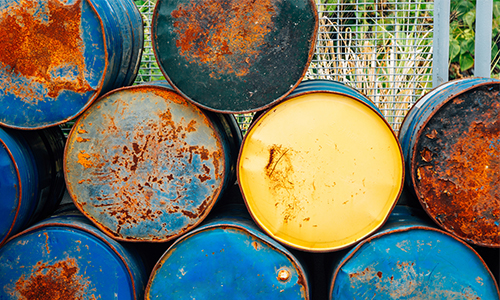 Corrosion poses risk in nuclear waste storage https://frontline.thehindu.com/science-and-
 technology/article30913130.ece March 13, 2020 The materials the United States and other countries plan to use to store high-level nuclear waste are likely to degrade faster than previously thought because of the way those materials interact, new research from Ohio State University shows.
The findings, published in a recent issue of “Nature Materials”, show that corrosion of nuclear waste storage materials accelerates because of changes in the chemistry of the nuclear waste solution and the way the materials interact with one another. “This indicates that the current models may not be sufficient to keep this waste safely stored,” Xiaolei Guo, lead author of the study was quoted in the news release issued by the university.
The team’s research focussed on storage materials for high-level nuclear waste that is highly radioactive. While some types of the waste have half-lives of about 30 years, others like plutonium have a half-life that can be tens of thousands of years.
With no long-term viable nuclear waste disposal mechanism yet in operation, in most sites nuclear waste is stored near the plants where it is produced. While countries around the world have debated the best way to deal with nuclear waste, only Finland has started construction of a long-term repository for high-level nuclear waste.
In general, proposals involve mixing nuclear waste with other materials to form glass or ceramics and then encasing those pieces of glass or ceramics, now radioactive, inside metallic canisters. The canisters are buried deep underground in a repository to isolate it.
Researchers found that when exposed to an aqueous environment, glass and ceramics interact with stainless steel to accelerate corrosion, especially of the glass and ceramic materials holding nuclear waste. The study measured the difference between accelerated corrosion and natural corrosion of the storage materials. “In the real-life scenario, the glass or ceramic waste forms would be in close contact with stainless steel canisters. Under specific conditions, the corrosion of stainless steel will go crazy,” he said. “It creates a super-aggressive environment that can corrode surrounding materials.”
To analyse corrosion, the research team pressed glass or ceramic “waste forms” (the shapes into which nuclear waste is encapsulated) against stainless steel and immersed them in solutions for up to 30 days, under conditions that simulate those under Yucca Mountain, the proposed nuclear waste repository in the U.S.
Those experiments showed that when glass and stainless steel were pressed against one another, stainless steel corrosion was “severe” and “localised”. The researchers also noted cracks and enhanced corrosion on the parts of the glass that had been in contact with stainless steel.
Part of the problem lies in the Periodic Table. Stainless steel is made primarily of iron mixed with other elements, including nickel and chromium. Iron has a chemical affinity for silicon, which is a key element of glass.
The experiments also showed that when ceramics, another potential holder for nuclear waste, were pressed against stainless steel under conditions that mimicked those beneath Yucca Mountain, the ceramics and stainless steel corroded in a “severe localised” way.
Global response to Covid-19 is rapid. Response to climate change is too damn slow
Climate Policy Times 15th March 2020
The deadly threat posed by the rapid spread of Covid-19 has resulted in
unprecedented action from governments around the world. There’s a lesson
here for climate change: it’s too damn slow. What would happen, for
example, if we learnt that the polar icecaps had reduced by almost half
overnight, rather than since the 1980s? What if some of the world’s
largest lakes mysteriously dried up over January, not over the past decade?
What sort of panic would ensue if a quarter of the world’s population
found their homes under water tomorrow, instead of being told it would
happen in 80 years?
Infigen says new big battery offsets huge losses from wind farm shut-down — RenewEconomy

Infigen says revenue from new battery offsets impact of huge reduction in wind output caused by severing of the main transmission link to South Australia. The post Infigen says new big battery offsets huge losses from wind farm shut-down appeared first on RenewEconomy.
via Infigen says new big battery offsets huge losses from wind farm shut-down — RenewEconomy
March 15 Energy News — geoharvey

Opinion: ¶ “Now Would Be A Good Time To Appreciate Solar Power, Amirite?” • March 13 was Solar Appreciation Day, and the US Energy Department sent out an email reminding everyone to appreciate solar power. It offers up an interesting counterpoint to a major energy report from The Atlantic Council advocating continued use of fossil […]
WHO Director General: This is a Controllable Pandemic; Countries Need to Double Down on Their Efforts at Containment — Mining Awareness +
“Let me be clear: describing this as a pandemic does not mean that countries should give up. The idea that countries should shift from containment to mitigation is wrong and dangerous. On the contrary, we have to double down. This is a controllable pandemic.” (WHO Director-General, 12 March 2020). WHO is a UN organization. The […]
UK Chief Sci Advisor & Former GSK Pharma Exec Wants to Let Coronavirus Spread for “Herd Immunity” — Mining Awareness +
Sir Patrick Vallance, who is the UK’s Chief Scientific Advisor, was President of Research and Development at British Pharmaceutical Company GlaxoSmithKline (GSK) from 2012-17. While the head of the World Health Organization asked countries to double down on containment, Vallance suggested that the “herd” of British citizens need to get the coronavirus, (even though that […]
What would an Olympics cancelation cost Japan? — limitless life

With Japanese domestic spending already weak, the hit from an Olympics cancelation could ripple through the economy Photo: AFP 2020 Tokyo Olympics What would an Olympics cancelation cost Japan? Today 06:33 am JST 6 Comments By Etienne BALMER TOKYO Japan and Olympic organisers are at pains to insist this summer’s Games in Tokyo are on, despite the new coronavirus outbreak, […]
via What would an Olympics cancelation cost Japan? — limitless life
1 This month

of the week – Australians for War Powers Reform (AWPR)
To see nuclear-related stories in greater depth and intensity
 Antinuclear