The Morrison govt’s emergency measures are a massive subsidy to Australia’s largest corporations.
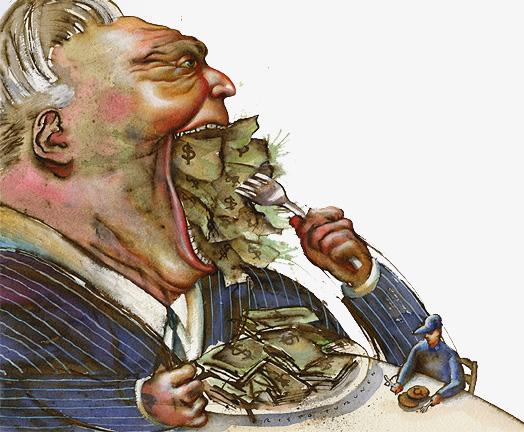
|
Bankster Bailout: will the trickle-down package trickle beyond the banks and big business? Michael West Media, by Michael West | Mar 20, 2020 The Morrison Government’s emergency measures to protect the economy are another massive subsidy from embattled taxpayers to Australia’s largest corporations. They are a failure of government to govern. Michael West reports.
Question: why would a bank lend money to a business with no customers? Answer: it wouldn’t. Question: who will benefit from the Reserve Bank’s massive loan and money-printing program? Answer: banks, bond traders and corporate customers. Question: why? Answer: because the Government has delivered control of its money-printing program to the Reserve Bank and the banks. Instead of simply printing money and handing it to those who need it – indeed to those who will spend it – it is also giving the banks cash for loans (assets) which they are keen to offload. Question: if you were a banker would you lend money to a high risk small business or would you lend it to Qantas, Exxon or Energy Australia? Answer: the latter. You are more likely to get your money back from an airline which is protected by Government, an oil and gas multinational which extracts $10 billion a year from Australian seabeds and pays no tax or an oligopoly which provides essential services and also pays almost no tax. A whole generation of young people, and many not so young, are struggling to pay the rent and survive the coronavirus. But what does the Government do?
This Government really does have trouble actually governing. Lest it be accused of spending too much, its routine accusation against arch-rival Labor, and although it has already more than doubled the nation’s debt, the Government has decided to outsource its spending decisions to the banks. Ironically, the banks have today emerged to say the $90 billion loan package announced this week won’t work. Commonwealth Bank chief, Matt Cormyn, has just stated the obvious, small businesses don’t need a loan as much as direct assistance. Even if they did need a loan it would take a month to organise the $90 billion program and by then, we suspect, it might be too late anyway. Small businesses needed “direct” assistance, Cormyn told the ABC. As for the QE program, it is more nuanced than our explanation above – written to capture the essence of what is going on here (the very mention of the letters QE make the eyes glaze over and that sleepy feeling come on). Dissecting QETo the Reserve Bank’s QE program, Quantitative Easing or QE is technobabble for the RBA creating new money or, as they say, “printing money”. But there is a twist to this QE — a twist which has entirely eluded the mainstream media. Rather than the Government raising money – that is by issuing bonds – it has designed a program, a liquidity facility effectively, to be operated by the banks. In other words, the banks get money at attractive rates and they are expected to lend it to their customers. Herein lies the rub; how do the banks lend their new billions to small businesses with no customers? Anybody who has been awake over the last ten days and has engaged in the old-fashioned activity of conversation will have heard story after story about people who had a business last month but barely have one now. Their problem is not how to grow their business by borrowing money. They don’t have any customers. To be more specific, and as predicted here, the government has privatised its QE program. Instead of issuing bonds and deciding who needs it most, it has outsourced that decision-making process to the banks. How QE works, a simple explanation:………. So, the government has so far seen interest rates cut despite it being clear there will be little relief from even lower rates – and despite the banks declining to pass it all on to customers. It has buck-passed its QE program to the banks – which in reality is more of a liquidity bail-out than anything which can help small business. It has already had its $90 billion loan program queried by the banks themselves – all while ramping up its buying of assets from the banks. Over the past week the Reserve Bank’s repo holdings have soared to $20 billion which means they are using taxpayer money to cover the banks’ risk in their mortgage lending books. Most of this is RMBS, bundles of residential mortgages. Question: what will be the upshot of the coronavirus crisis? Answer: big business will grow in power and market dominance. https://www.michaelwest.com.au/bankster-bailout-will-the-trickle-down-package-trickle-beyond-the-banks-and-big-business/ |
|
No comments yet.
1 This month

of the week – Australians for War Powers Reform (AWPR)
To see nuclear-related stories in greater depth and intensity
 Antinuclear
Leave a comment