Australian govt’s devious ploy to further dispossess the Bangarla Aboriginal people
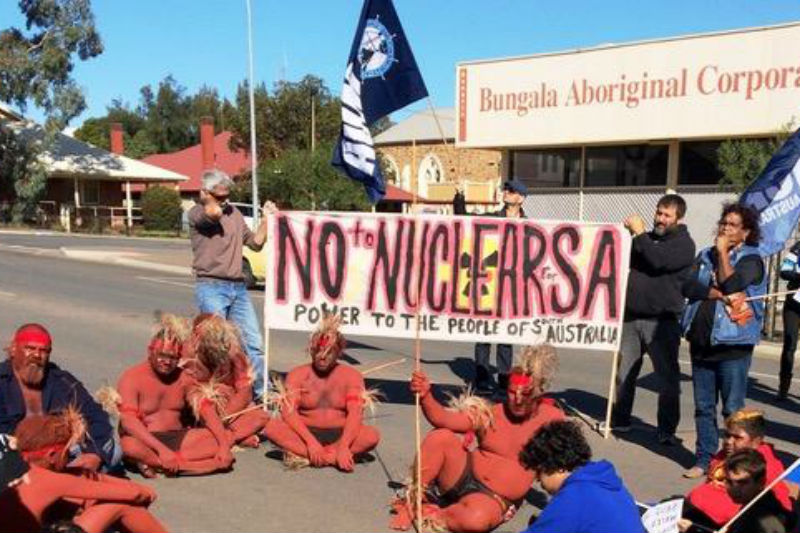
First Nations communities continue to be left behind, Eureka Street, Michele Madigan -22 Apr 20 “………..As well as their own real fears for their health in the COVID-19 pandemic as documented in their recent submission (number 25) to the Senate Standing Economics Legislation Committee of Inquiry the Barngarla peoples of South Australia’s Eyre Peninisula are being forced to counter attempts to further their dispossession in new schemes by federal government. The Barngarla Determination Aboriginal Committee (BDAC) plead with the federal government to delay the current procedures so that the public hearings regarding the site of the federal nuclear waste facility in the Kimba region may take place ‘on Country’ rather than by teleconference, which would greatly disadvantage their cause.
Even more seriously, the BDAC submission (among others) denounces the purposeful strategy by the Resources Minister in refusing to make a formal declaration. Instead, the Minister made ‘a policy decision’ in naming the chosen site of Napandee, having ‘presented it as a declaration’.
BDAC points out, ‘The Government is now seeking to legislate directly, as an indirect but very effective means to prevent judicial oversight.’ That is, the Minister is seeking to change the current legislation of the National Radioactive Waste Management Act so that Parliament itself will ‘select’ Napandee as the site and thereby stopping any judicial oversight of anything untoward in the long administrative process to date.
As the BDAC submission summarises, ‘This is highly concerning to the Barngarla people as it should be to all Australians.’
In the last few days, the federal Parliamentary Joint Committee on Human Rights has written a report critical of the treatment of Barngarla Traditional Owners. It is a unanimous report, endorsed by Coalition members of the Committee.
And there we have it. As Aboriginal communities still await the needed funding to ensure their survival during this pandemic, the wheels of another government ministry are confidently seeking to further dispossess and disempower by such proposed legislation. Shameful indeed.
Michele Madigan is a Sister of St Joseph who has spent the past 38 years working with Aboriginal people in remote areas of SA, in Adelaide and in country SA. Her work has included advocacy and support for senior Aboriginal women of Coober Pedy in their campaign against the proposed national radioactive dump. https://www.eurekastreet.com.au/article/first-nations-communities-continue-to-be-left-behind?utm_medium=email&utm_campaign=Eureka%20Street%20Daily%20-%20Wednesday%2022%20April%202020&utm_content=Eureka%20Street%20Daily%20-%20Wednesda
An initial brief look at the submissions to the Senate Nuclear Waste Bill Inquiry

Initial Summary: – focussing on submissions from individuals , with brief looks at those from organisations
* Of the 102 submissions published, 74 were ‘against’; 19 were ‘for’; one (ANSTO’s) was ‘neutral’; and eight were ‘unknown’ (as details were confidential).
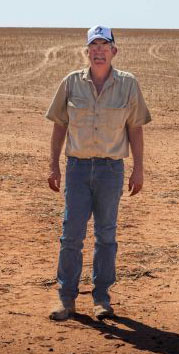 * The leading explicitly-stated concern was with the process and decision-making (71 of 102), followed by the environment (67 of 102), health and safety (65 of 102), the economy (62 of 102) and traditional owners’ rights (47 of 102).
Six out of 13 favourable submissions were from people with the surname Baldock. (Jeff Baldock sold the land for the site to the government) – Source : https://www.aph.gov.au/Parliamentary_Business/Committees/Senate/Economics/RadioactiveWaste/Submissions
Australia’s climate experts urge govt to use rebuilding economy to combat global heating.
|
Climate scientists say coronavirus could be Australia’s golden opportunity— SBS News
Climate experts say the way Australia chooses to rebuild its economy after the COVID-19 pandemic will seal its climate change fate. BY CLAUDIA FARHART, 22 APR 20
Australian climate scientists are urging the government to recognise the similarities between the COVID-19 pandemic and climate change, arguing they could be the key to stopping global warming. Professor Matthew England from the University of New South Wales’ Climate Change Research Centre said acting early, listening to expert advice and mitigation were the keys to solving both crises.
While the coronavirus is posing a serious risk to millions of lives right now, Professor England said climate change will threaten even more lives over the next five decades. “We’ve seen all around the world that the nations ignoring the best advice of their scientists are suffering the most, and climate change is no different,” he told SBS News. “We have expert reports that have been tabled for the last three or four decades, but many nations are ignoring those, so I think that COVID-19 provides a wake up call for what happens if you do ignore the best scientific advice.”………
While these significant improvements in air and water quality are showing people around the globe what is possible when emissions are reduced, Professor England said it is not time to celebrate yet. Instead, he says Australia needs to recognise the opportunity COVID-19 presents to rebuild in a more environmentally friendly way. “This is going to be a major stall in the global economy, but out of this pandemic we’re certainly going to see a huge economic boom and it’s going to be a real chance to make that boom a low-carbon boom,” he said.
“To solve climate change, we actually need large scale innovation and the huge economic boom that is poised to happen out of this pandemic.” ‘Fight or flight’While COVID-19 has already killed at least 90,000 people, the World Health Organisation has warned that climate change will kill as many as 250,000 people per year by 2030………https://www.sbs.com.au/news/climate-scientists-say-coronavirus-could-be-australia-s-golden-opportunity |
|
During the pandemic, health and wellbeing of the First Nations people is disregarded, as usual.
First Nations communities continue to be left behind, Eureka Street, Michele Madigan, 22 April 2020
On the other hand, while there have been literally billions of dollars allocated to the crisis in general and to very many organisations, it is astounding that the most vulnerable group of all remains at the bottom of the pile. First Nations people themselves and their allies remain nonplussed at the clear lack of resources allocated to First Nations people. No one left behind? The facts suggest otherwise.
Who else in our nation is living in housing with another 26 or so people?
This huge, rarely mentioned and ongoing deeply shameful situation regarding the health and housing of First Nations people comes into sharp relief by the present crisis…….
https://www.eurekastreet.com.au/article/first-nations-communities-continue-to-be-left-behind?utm_medium=email&utm_campaign=Eureka%20Street%20Daily%20-%20Wednesday%2022%20April%202020&utm_content=Eureka%20Street%20Daily%20-%20Wednesda
Current Review of Environment Protection and Biodiversity Conservation Act (EPBC) ? – it’s all about promoting the polluters
 The Government puts business ahead of the environment , Independent Australia, By Sue Arnold | 22 April 2020, The writing is on the wall for the environment. And it doesn’t look good.
Prime Minister Scott Morrison has promised to:
‘Fast-track new and existing major infrastructure projects and adopt an aggressive pro-business strategy ahead of the October budget to help the country claw its way out of an expected virus-induced recession.’
Tax breaks for big business, deregulation and wide-scale industrial relations reform will form part of the Morrison Government’s attempts to lift the nation out of the economic black hole, according to the Sydney Morning Herald.
Environmental organisations, ecologists, wildlife shelters and Australia’s biodiversity are facing an Armageddon as a result of state and federal governments’ absolute failure to protect the environment in the face of a serious economic recession.
Yet this is the nation which has lost over one billion animals to the catastrophic bushfires. A nation with dying and dead ecosystems, and thousands of hectares of burned-out forests. The forests will take many years to recover and ecosystems may never be rehabilitated.
A glimpse of what’s in store can be gained from the current review of the Environment Protection and Biodiversity Conservation Act 1999 (‘EPBC Act’), undertaken under the chairmanship of Professor Graeme Samuel AC.
The review is required under the EPBC Act every ten years, to examine the operation of the legislation and the extent to which its objects have been met.
An expert panel was set up to support Professor Samuel. Panel members include Bruce Martin, an inaugural member of the Prime Minister’s Indigenous Advisory Council and President of the Cape York Peninsula Live Export Group.
Dr Erica Smyth AC is a panel member with over 40 years’ experience in the mineral and petroleum industry, having worked for ten years in the oil and gas industry managing government approvals for offshore facilities, LNG and methanol facilities……
With no ecologists, environmental lawyers, or conservation organisations, the review and its panel completely fails the pub test.
It is important to note that in accordance with section 522A of the EPBC Act, the review is supposed to examine:
‘The operation of the Act; and
The extent to which the objects of the Act have been achieved.’
Added to the terms of reference is the following statement:
‘The review will make recommendations to modernise the EPBC Act and its operation to address current and future environmental challenges.’
The terms of reference may be at odds with section 522A of the Act, if the phrase ‘modernise the Act’ is interpreted as code for change to focus on economic growth at the expense of the environment.
Further evidence of the focus of the Government’s dirty business can be found on the EPBC website which lists as one of the objectives of the EPBC Act to:
‘Provide a streamlined national environmental assessment and approvals process.’
The legislation contains no such provision, and other objectives have also been changed ‘to promote the conservation of biodiversity” to ‘conserve Australia’s biodiversity’.
More importantly, the following legal objective wasn’t included:
‘To promote a cooperative approach to the protection and management of the environment involving governments, the community, land-holders and indigenous people.’
In October 2019, Environment Minister Sussan Ley said that “cutting delays in project approvals could save the economy $300m a year,” with the Morrison Government promising to “tackle green tape”.
No one should be surprised by the review’s focus or the outcome.
The review will be ‘guided by the principles’ which include:
……… Making decisions simpler, including by reducing unnecessary regulatory burdens for Australians, businesses and governments;
…….. Obviously, the first principle should be the predominant, sole guiding focus of the review given the catastrophic state of Australia’s biodiversity and environment.
Instead, the evidence of a drastically changed focus favouring the growth and the economy is made abundantly clear by the guiding principles and panel choices. There’s no explanation of the extraordinary failure to focus on the inability of the EPBC Act to have fulfilled any of its objectives.
April 17 was the final day for submissions to the review’s lengthy discussion paper. Six major environmental groups asked the Federal Government to delay the submission deadline and the review as a result of the chaos caused by the COVID-19 pandemic……..
Australia is currently cursed with governments and politicians who continue to ignore the environment. It’s almost incomprehensible that after the bushfire catastrophes, the environment should sink to the bottom of the pile……. https://independentaustralia.net/environment/environment-display/the-government-puts-business-ahead-of-the-environment,13819

Tsunami could overtake Fukushima Daiichi Nuclear Plant’s seawall
Tsunami could overtake Fukushima Daiichi’s seawall, https://www3.nhk.or.jp/nhkworld/en/news/20200422_03/
An estimate by a Japanese government panel suggests that tsunami could overwhelm a new seawall at the Fukushima Daiichi nuclear power plant, if a mega-quake occurs in a deep-sea trench off northeastern Japan.
The panel of experts on Tuesday released its projection of the scale of tsunami that could be triggered by a massive quake along the Japan Trench.
The panel expects that waves as high as 13.7 meters could hit Futaba Town, Fukushima Prefecture, where the plant is located.
That is higher than the 11-meter-high seawall being built on the ocean side of the compound. The wall is one of the anti-tsunami measures taken by Tokyo Electric Power Company as it decommissions the plant.
Other measures include blocking the openings of the reactor buildings and deploying power supply vehicles on higher ground to continue cooling spent nuclear fuel.
TEPCO says it will examine the estimate and consider what measures to take.
- Nearly 1,000 tanks of radioactive wastewater are stored in the compound. The operator says the projected tsunami won’t reach the higher ground where they are located
Australian rooftop solar continues to weather Covid-19 storm – at “very healthy levels” — RenewEconomy
Australia’s rooftop solar market maintains “very healthy levels” of growth despite the uncertain start to 2020, with just the usual Easter lull over the past fortnight. The post Australian rooftop solar continues to weather Covid-19 storm – at “very healthy levels” appeared first on RenewEconomy.
South Australia could meet state Liberals’ 100 pct renewables target 5 years early — RenewEconomy

Latest AEMO modelling suggests South Australia Liberal government goal of reaching net 100 per cent renewables could be achieved five years early. The post South Australia could meet state Liberals’ 100 pct renewables target 5 years early appeared first on RenewEconomy.
via South Australia could meet state Liberals’ 100 pct renewables target 5 years early — RenewEconomy
State of the climate: First quarter of 2020 is second warmest on record — RenewEconomy

Past 12 months were nearly tied for the warmest 12-month period on record, and near-record sea surface temperatures have driven extensive coral bleaching in southern hemisphere. The post State of the climate: First quarter of 2020 is second warmest on record appeared first on RenewEconomy.
via State of the climate: First quarter of 2020 is second warmest on record — RenewEconomy
Wind, solar help push grid emissions to record low, prices to four year low — RenewEconomy

Despite incredible volatility, wholesale electricity prices fell to their lowest levels since 2016, while emissions were at record lows in the first quarter. The post Wind, solar help push grid emissions to record low, prices to four year low appeared first on RenewEconomy.
via Wind, solar help push grid emissions to record low, prices to four year low — RenewEconomy
April 22 Energy News — geoharvey

Opinion: ¶ “A Decade After Deepwater Horizon Oil Spill, We’re Going In The Wrong Direction” • The Deepwater Horizon disaster was ten years ago. It killed 11 people and injured 17. It went uncapped for 87 days, coating more than 1.300 miles of beaches and wetlands with oil, walloping the coastal economy. We could hope […]
Taylor to loosen Australia’s lax fuel standards to support oil sector — RenewEconomy

Angus Taylor announces plans to loosen Australia’s already lax fuel standards in bid to help out oil industry hit by tumbling prices. The post Taylor to loosen Australia’s lax fuel standards to support oil sector appeared first on RenewEconomy.
via Taylor to loosen Australia’s lax fuel standards to support oil sector — RenewEconomy
NSW amends planning laws to pave way for stand alone big battery projects — RenewEconomy

NSW legislative change paves way for big batteries to be built as stand alone systems, rather than as part of a wind or solar project. The post NSW amends planning laws to pave way for stand alone big battery projects appeared first on RenewEconomy.
via NSW amends planning laws to pave way for stand alone big battery projects — RenewEconomy
Turnbull says his biggest leadership failure was on climate change — RenewEconomy

Former PM says his biggest regret was a failure to secure meaningful climate policy, but that the Snowy 2.0 expansion is core to his legacy. The post Turnbull says his biggest leadership failure was on climate change appeared first on RenewEconomy.
via Turnbull says his biggest leadership failure was on climate change — RenewEconomy
Renewables could add $A160 trillion to post Covid-19 economic recovery — RenewEconomy

Clean energy stimulus could help meet net zero emissions goals of Paris Agreement and generate more than $A159 trillion in benefits to global GDP above business-as-usual. The post Renewables could add $A160 trillion to post Covid-19 economic recovery appeared first on RenewEconomy.
via Renewables could add $A160 trillion to post Covid-19 economic recovery — RenewEconomy
1 This month

of the week – Australians for War Powers Reform (AWPR)
To see nuclear-related stories in greater depth and intensity
 Antinuclear