AUSTRALIAN GOVERNMENT ALLERGIC TO TRANSPARENCY AND A SENATE SHY IN ENFORCING IT


Melting Ice sheets in Greenland and Antarctica raising seal level
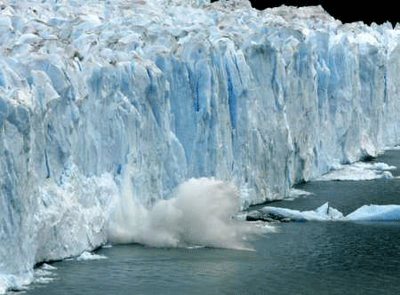
Sea level rise from ice sheets track worst-case climate change scenario, https://www. sciencedaily.com/releases/2020/08/200831112101.htm August 31, 2020
- Source: University of Leeds
- Summary:
- Ice sheets in Greenland and Antarctica whose melting rates are rapidly increasing have raised the global sea level by 1.8cm since the 1990s, and are matching the Intergovernmental Panel on Climate Change’s worst-case climate warming scenarios.
-
Ice sheets in Greenland and Antarctica whose melting rates are rapidly increasing have raised the global sea level by 1.8cm since the 1990s, and are matching the Intergovernmental Panel on Climate Change’s worst-case climate warming scenarios.
According to a new study from the University of Leeds and the Danish Meteorological Institute, if these rates continue, the ice sheets are expected to raise sea levels by a further 17cm and expose an additional 16 million people to annual coastal flooding by the end of the century.
Since the ice sheets were first monitored by satellite in the 1990s, melting from Antarctica has pushed global sea levels up by 7.2mm, while Greenland has contributed 10.6mm. And the latest measurements show that the world’s oceans are now rising by 4mm each year.
“Although we anticipated the ice sheets would lose increasing amounts of ice in response to the warming of the oceans and atmosphere, the rate at which they are melting has accelerated faster than we could have imagined,” said Dr Tom Slater, lead author of the study and climate researcher at the Centre for Polar Observation and Modelling at the University of Leeds.
“The melting is overtaking the climate models we use to guide us, and we are in danger of being unprepared for the risks posed by sea level rise.”
-
The results are published today in a study in the journal Nature Climate Change. It compares the latest results from satellite surveys from the Ice Sheet Mass Balance Intercomparison Exercise (IMBIE) with calculations from climate models. The authors warn that the ice sheets are losing ice at a rate predicted by the worst-case climate warming scenarios in the last large IPCC report.
Dr Anna Hogg, study co-author and climate researcher in the School of Earth and Environment at Leeds, said: “If ice sheet losses continue to track our worst-case climate warming scenarios we should expect an additional 17cm of sea level rise from the ice sheets alone. That’s enough to double the frequency of storm-surge flooding in many of the world’s largest coastal cities.”
-
So far, global sea levels have increased in the most part through a mechanism called thermal expansion, which means that volume of seawater expands as it gets warmer. But in the last five years, ice melt from the ice sheets and mountain glaciers has overtaken global warming as the main cause of rising sea levels.
Dr Ruth Mottram, study co-author and climate researcher at the Danish Meteorological Institute, said: “It is not only Antarctica and Greenland that are causing the water to rise. In recent years, thousands of smaller glaciers have begun to melt or disappear altogether, as we saw with the glacier Ok in Iceland, which was declared “dead” in 2014. This means that melting of ice has now taken over as the main contributor of sea level rise. ”
PARLIAMENT COVERS UP AUSTRALIA’S TRUE CARBON FOOTPRINT
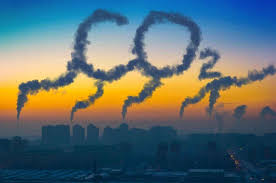 Parliament Covers Up Australia’s True Carbon Footprint, ByTasmanian Times, August 31, 2020 The House Standing Committee on the Environment and Energy today tabled its report on Andrew Wilkie MP’s National Greenhouse and Energy Reporting Amendment (Transparency in Carbon Emissions Accounting) Bill 2020 in Federal Parliament.
“Regrettably the Committee has voted to cover up Australia’s shameful role as one of the world’s biggest contributors to climate change,” Mr Wilkie said. “But the reasoning behind its recommendation for Parliament not to pass this Bill doesn’t stack up.”
Mr Wilkie’s Bill would require the Federal Government to include scope 3 emissions in reports of Australia’s carbon emissions, boosting transparency and accountability. Scope 3 emissions are the potential emissions contained in the gas and coal mined in Australia, which is then exported overseas. The Bill allows Australia to track its impact as one of the largest exporters of fossil fuels in the world, giving the public access to information about Australia’s role in very significantly contributing to global greenhouse gas emissions.
“Australia must have a clear picture of its contributions to global greenhouse gas emissions,” Mr Wilkie said. “This is essential as the world tries to limit warming to 1.5 degrees and halt catastrophic climate change. Keeping track of Australia’s scope 3 emissions is not double counting but gives a true picture of our responsibility for climate change around the globe.
The Committee can hardly argue that tracking scope 3 emissions is ‘too hard’ when the Department of Industry, Science, Energy and Resources has not even conducted an assessment of compliance costs. For goodness sake, the Committee acknowledges that more than a quarter of ASX200 companies already voluntarily report their scope 3 emissions.
“Further, the fact that this kind of tracking is not required by the Paris Agreement is beside the point. The Australian Government should be open and transparent for the sake of the community, rather than claiming that Australia can do little to influence climate change. The truth is that when the carbon in fossil fuel exports is taken into account, Australia accounts for about 5 per cent of the global total for fossil fuels.”
The full House Standing Committee on the Environment and Energy report can be found here.
2. ANALYSIS OF THE BILL………… HTTPS://TASMANIANTIMES.COM/2020/08/PARLIAMENT-COVERS-UP-AUSTRALIAS-TRUE-CARBON-FOOTPRINT/
Climate risks growing for nuclear reactors
 Analysis: Nuclear operators face growing climate risks, https://www.michiganradio.org/post/analysis-nuclear-operators-face-growing-climate-risks
In the report, analysts found the Cook, Fermi, and Palisades nuclear power plants in Michigan and the nearby Davis-Besse plant in Ohio fall into the High Risk category (although Palisades is scheduled to close in 2022).
The analysis says that means the nuclear power plants will face relatively high changes in temperature extremes compared to the global average, according to the report.
“If the temperature goes up a little bit too high, the plan would either have to lower its output for a given period or maybe shut down if things are extreme,” said David Kamran one of Moody’s analysts.
The trickiest part for the nuclear power plant operators is reacting to how quickly changes in the climate happen. Recently, some models show the planet is getting warmer faster than previously thought.
“As these entities, the plants, want to have their licenses extended over many years, they may need to make additional investments to keep up with new information regarding climate and temperature and water, that sort of thing,” Kamran said.
The nuclear power plants use massive amounts of water. While the supply is not an issue, the temperature of the water could be an issue in the future depending on how fast the climate changes.
Rooftop solar: W.A. sets new record low for grid demand, two other states set winter lows — RenewEconomy

Grid demand hit a record low in W.A. over the weekend, and set new winter lows in other states as rooftop solar continued to eat into market share. The post Rooftop solar: W.A. sets new record low for grid demand, two other states set winter lows appeared first on RenewEconomy.
Rooftop solar: W.A. sets new record low for grid demand, two other states set winter lows — RenewEconomy
GreenPower seeks to revive interest, launches refreshed brand
|
GreenPower seeks to revive interest, launches refreshed brand, RenewEconomy
Michael Mazengarb1 September 2020 Australia’s only government-backed accreditation program for renewable electricity sales, GreenPower, has unveiled new branding as it seeks to inspire renewed interest from a growing number of business looking to cut their emissions.
The GreenPower program is a voluntary way for households and businesses to purchase renewable electricity through their retailer, with the government-backed program providing a process for verifying that purchases are actually helping to grow Australia’s wind and solar sectors and cut emissions. All power purchased through the GreenPower program is in addition to the federally mandated Renewable Energy Target, ensuring that customer purchases under the voluntary program help to grow Australia’s renewable energy supplies. Around 110,000 households and 17,500 businesses currently opt-in to purchasing renewable electricity through the GreenPower program, with almost 500 wind, solar, hydro and biomass projects accredited as GreenPower generators. In addition to a refreshed logo and brand identity, the GreenPower program has launched an updated website, with new functionality that it hopes will help electricity customers identify a suitable GreenPower product……….https://reneweconomy.com.au/greenpower-seeks-to-revive-interest-launches-refreshed-brand-75246/ |
|
|
Cheaper, cleaner, more reliable: How renewables are winning energy trifecta — RenewEconomy

The switch to renewables is delivering the promised energy trifecta – lower prices, lower emissions, and grid reliability. The post Cheaper, cleaner, more reliable: How renewables are winning energy trifecta appeared first on RenewEconomy.
Cheaper, cleaner, more reliable: How renewables are winning energy trifecta — RenewEconomy
Hydrogen — John Quiggin
It’s now clear that we have the technology we need to run a completely decarbonized electricity generation system. South Australia is the world leader[1] generating more than 50 per cent of its energy from renewable sources, and aiming for 100 per cent renewables by 2030. The unit cost of renewables is now well below that…
Hydrogen — John Quiggin
August 31 Energy News — geoharvey

Opinion: ¶ “Where Will Renewable Energy Be in Five Years?” • Leading renewable energy producer NextEra Energy expects that near-firm wind and solar (ie, with a four-hour battery storage adder) will be cheaper to build than all but the most efficient natural gas power plants within the next five years. This could produce an investment […]
August 31 Energy News — geoharvey
1 This month

of the week – Australians for War Powers Reform (AWPR)
To see nuclear-related stories in greater depth and intensity
 Antinuclear