The week in climate, nuclear, (coronavirus) news
Coronavirus, climate change and weather disasters: 2020 has been a hell of a year, so far. Some world leadersat this week’s annual United Nations meeting are taking the long view, warning: If COVID-19 doesn’t kill us, climate change will.
On the nuclear scene, well, really, nothing much is happening. Except for the propaganda. Covid-19 is making the nuclear industry’s problems even worse, so their marketing propaganda is intensifying. Last week it was all about small nuclear reactors. This week, it’s still that, but as an extra push, it’s all about thorium.
Some bits of good news – Over 12 million children, caregivers and teachers reached by UNICEF and Millicom (TIGO) to strengthen child rights across Latin America during COVID 19. The Aahwahan Foundation in India works towards the eradication of poverty, while also focussing on maintaining a sustainable environment.
AUSTRALIA
NUCLEAR. From October 6, the Australian Senate will discuss the NATIONAL ISSUE of the Napandee nuclear waste dump plan. Kimba nuclear waste dump – not just a local issue, but only locals were consulted. Kimba mayor Dean Johnson shows his ignorance on nuclear wastes.
Dr Helen Caldicott and Independent Australia bust the media spin on ‘small nuclear reactors’.
CLIMATE.
Australian scientists censored on speaking about climate change. Farmers have called out the federal government’s climate change low emissions policy as selling out an industry for profit. Forget the lobbying. It’s the spin that wins on climate, report finds. Why Australia’s hydrogen industry should be renewables only.
Julian Assange dragged from embassy “on the orders of the president”. Medical experts testify to court on Julian Assange’s precarious mental health. Australia’s media disgrace – the deliberate neglect of the Julian Assange extradition hearing. The media ignores Julian Assange and the Media ‘Trial of Century’.
INTERNATIONAL
When looking at impact of coronavirus, we can’t forget the long-term health effects.
45 nations have now ratified the U.N. Treaty on the Prohibition of Nuclear Weapons.
Latest World Nuclear Industry Status Report shows high levelised cost of nuclear power. Small Nuclear Reactors look good – on paper!.
Radiation exposure on the moon is nearly three times that on the International Space Station.
Solar and battery ads blocked by Twitter and Facebook move against “political content” . Recharge’s ”must read” news of the week on the energy transition.
Nurdle alert – plastic pollution the next eco calamity for decades.
Dr Helen Caldicott and Independent Australia bust the media spin on ‘small nuclear reactors’
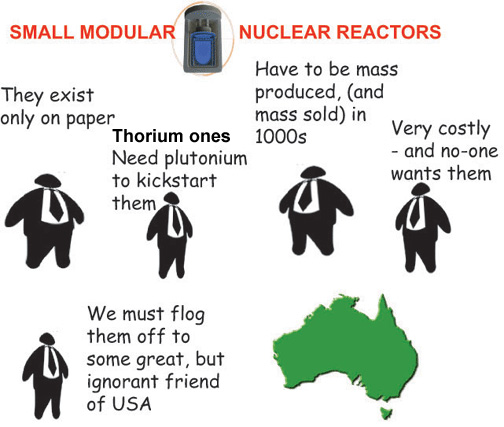
The so-called “nuclear renaissance” died following the Fukushima catastrophe when one-sixth of the world’s nuclear reactors closed. However, global nuclear corporations – Toshiba, NuScale, Babcock & Wilcox, GE Hitachi, General Atomics and the Tennessee Valley Authority – did not accept defeat.
Their new strategy has been to develop small modular nuclear reactors without the dangers inherent in large reactors — safety, cost, proliferation risks and radioactive waste. But these claims are fallacious for the reasons outlined below.
Basically, there are three types of SMRs which generate less than 300 megawatts of electricity compared with current day 1000 megawatt reactors.
Light water reactors designs
These will be smaller versions of present-day pressurized water reactors using water as the moderator and coolant, but with the same attendant problems as Fukushima and Three Mile Island. Built underground, they will be difficult to access in the event of an accident or malfunction.
Mass-produced (turnkey production) large numbers must be sold yearly to make a profit. This is an unlikely prospect because major markets – China and India – will not buy U.S. reactors when they can make their own.
If safety problems arise – as in General Motors cars – they all must be shut down which will interfere substantially with electricity supply.
SMRs will be expensive because the cost per unit capacity increases with a decrease in reactor size. Billions of dollars of government subsidies will be required because Wall Street is allergic to nuclear power. To alleviate costs, it is suggested that safety rules be relaxed, including reducing security requirements and a reduction in the 10-mile emergency planning zone to 1,000 feet.
Non-light water designs
These are high-temperature gas-cooled reactors (HTGR) or pebble bed reactors. Five billion tiny fuel kernels consisting of high-enriched uranium or plutonium will be encased in tennis-ball-sized graphite spheres which must be made without cracks or imperfections — or they could lead to an accident. A total of 450,000 such spheres will slowly and continuously be released from a fuel silo – passing through the reactor core – and then be re-circulated ten times. These reactors will be cooled by helium gas operating at very high temperatures (900 degrees Celsius).
A reactor complex consisting of four HTGR modules will be located underground, to be run by just two operators in a central control room. Claims are that HTGRs will be so safe that a containment building will be unnecessary and operators can even leave the site – “walk away safe” reactors.
However, should temperatures unexpectedly exceed 1,600 degrees Celsius, the carbon coating will release dangerous radioactive isotopes into the helium gas and at 2,000 degrees Celsius the carbon would ignite creating a fierce graphite Chernobyl-type fire.
If a crack develops in the piping or building, radioactive helium would escape and air would rush in, also igniting the graphite.
Although HTGRs produce small amounts of low-level waste they create larger volumes of high-level waste than conventional reactors.
Despite these obvious safety problems and despite the fact that South Africa has abandoned plans for HTGRs, the U.S. Department of Energy has unwisely chosen the HTGR as the “Next Generation Nuclear Plant”.
Liquid metal fast reactors (PRISM)
It is claimed by proponents that fast reactors will be safe, economically competitive, proliferation-resistant and sustainable.
They will be fueled by plutonium or highly enriched uranium and cooled by either liquid sodium or a lead-bismuth molten coolant. Liquid sodium burns or explodes when exposed to air or water and lead-bismuth is extremely corrosive producing very volatile radioactive elements when irradiated.
Should a crack occur in the reactor complex, liquid sodium would escape, burning or exploding. Without coolant, the plutonium fuel could reach critical mass, triggering a massive nuclear explosion scattering plutonium to the four winds. One-millionth of a gram of plutonium induces cancer and it lasts for 500,000 years. Extraordinarily, claims are made that fast reactors will be so safe they will require no emergency sirens and emergency planning zones can be decreased from ten miles to 1,300 feet.
There are two types of fast reactors: a simple plutonium fueled reactor and a “breeder” in which the plutonium reactor core is surrounded by a blanket of uranium 238 which captures neutrons and converts to plutonium.
The plutonium fuel, obtained from spent reactor fuel will be fissioned and converted to shorter-lived isotopes — caesium and strontium which last 600 years instead of 500,000. Called “transmutation”, the industry claims that this is an excellent way to get rid of plutonium waste. But this is fallacious because only ten per cent fissions, leaving 90 per cent of the plutonium for bomb-making etc.
Three small plutonium fast reactors will be grouped together to form a module and three of these modules will be buried underground. All nine reactors will then be connected to a fully automated central control room operated by only three operators. Potentially then, one operator could simultaneously face a catastrophic situation triggered by the loss of off-site power to one unit at full power, in another shut down for refuelling and in one in start-up mode. There are to be no emergency core cooling systems.
Fast reactors require a massive infrastructure including a reprocessing plant to dissolve radioactive waste fuel rods in nitric acid, chemically removing the plutonium and a fuel fabrication facility to create new fuel rods. A total of 10,160 kilos of plutonium is required to operate a fuel cycle at a fast reactor and just 2.5 kilos is fuel for a nuclear weapon.
Thus fast reactors and breeders will provide extraordinary long-term medical dangers and the perfect situation for nuclear weapons proliferation. Despite this, the industry is clearly trying to market them to many countries including, it seems, Australia.
You can follow Dr Caldicott on Twitter @DrHCaldicott. Click here for Dr Caldicott’s complete curriculum vitae.
Kimba mayor Dean Johnson shows his ignorance on nuclear wastes
 Kazzi Jai Fight to Stop ma Nuclear Waste Dump in South Australia
The Federal Government had NOTHING to do with either of them!
And….BOTH produce waste ON SITE – which is NOT SENT SUBSEQUENTLY INTERSTATE!
We take care of our own waste produced in our own state – not try and SHAFT it onto another state so that it becomes THAT RECEIVING state’s problem and responsibility AS THE CURRENT PROPOSAL FOR KIMBA STANDS!
Kapeesh!
Our plastic planet
|
Our plastic planet https://www.ehn.org/our-plastic-planet-2647824733.html?rebelltitem=1#rebelltitem1
While climate change remains environmental issue #1, the worries over plastic in our water, soil, food, and bodies continue to grow. Peter Dykstra 28 Sept 20, ”……… It’s hard to ignore the looming mountain of plastics problems. Plastic pollution has been hiding in plain sight as the next eco-calamity for decades. With climate change teed up as the major global environmental challenge, let’s take stock of another modern crisis.
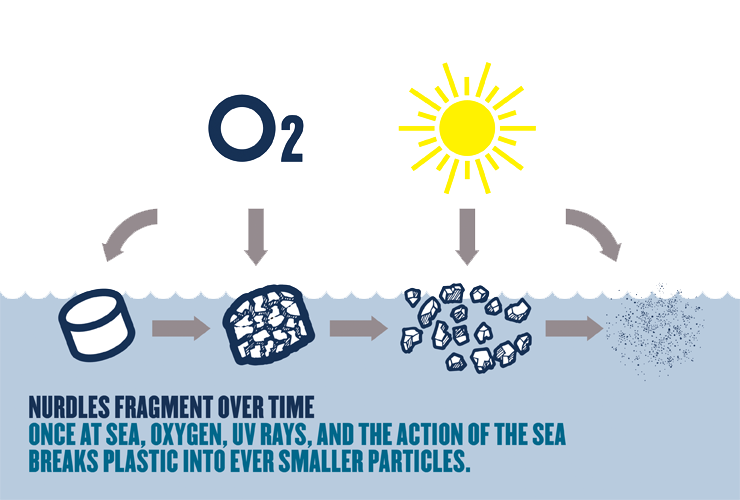
Nurdle alert! My first encounter with nurdles was on what should have been a pristine Costa Rican beach in 1986. The lentil-sized, grayish pellets spread the sands for miles, along with a stunning number of shoes. I never figured out the source of the shoe spill, but nurdles eventually became a headline-maker in the oceans world. Nurdles are the feedstock for much of the world’s production of plastics products. If plastic things were pancakes, nurdles would be the batter. They’re spilled from trucks, boxcars, and in the case of the Costa Rican beach, apparently a container ship. There are no firm statistics on how many spills there have been, or how many hundred of billions of virtually indestructible nurdles litter our beaches and seafloors. One example: in 2017, 600 volunteers scoured 279 U.K. beaches, reporting that two-thirds of them were “littered” with nurdles. We do know that nurdle pollution is the tip of the plastic pollution sh*tberg. Let’s talk recycling. For years, much of what we think of as recycled plastic was collected in communities and eventually shipped to Asia. In 2018, the People’s Republic of China formally announced that they’d officially had it. Imports of recyclable plastic had choked China’s landfills beyond reason. Early, rudimentary successes with recycled goods had run their course. But we reached Peak Flip-Flop, and China’s National Sword initiative slammed the door, barring plastic waste imports from the U.S. and about two dozen industrialized nations. Most of our plastic goes to the landfill. In 1960 the U.S. sent roughly 390 tons of plastic waste to landfills, according to the U.S. Environmental Protection Agency. In 2017, the most recent year there is data for, that number shot to 26,820 tons, which is about nine times more than was recycled. Yikes. Part of this is driven by the market to make plastics: the U.S. fracking boom caused an abundance of cheap natural gas and oil. By mid-2019, it was cheaper to make new plastic than it was to recycle the old stuff. Here are some other quick facts to put a damper on your day:
We know the problem has been building for years, and the paths to solutions are often blocked by the fossil fuel industry, which sees salvation in plastics production as its other marquee products fade. While we all rightly call for leaders to address, and in some cases just acknowledge, the climate crisis, let’s also remember to skip the straws and question those that keep |
|
Australians recorded frog calls on their smartphones after the bushfires – and the results are remarkable
Jodi Rowley, Australian Museum and Will Cornwell,
Frogs are one of the most threatened groups of animals on Earth. At least four of Australia’s 240 known frog species are extinct and 36 are nationally threatened. After last summer’s bushfires, we needed rapid information to determine which frogs required our help.
The Arctic Has Entered A New Climate State
We begin our state-of-the-glaciers talk with the sad example of the Okjökull Glacier (simple known as Ok) in Iceland. It is the first world glacier declared “dead” due to climate change. On that site is a plaque reading:
A letter to the future
Ok is the first Icelandic glacier to lose its status as a glacier.
In the next 200 years all our glaciers are expected to follow the same path.
This monument is to acknowledge that we know
what is happening and what needs to be done.
Only you know if we did it
The Arctic Has Entered A New Climate State, Radio Ecoshock 26 Sep 20, Ice is rapidly disappearing from both Poles. Two polar ice experts report latest science. From the U.S. National Center For Atmospheric Research in Colorado, Arctic scientist Laura Landrum: in 2020, the Arctic has reached a new climate state. Thomas Slater from Leeds University UK reports ice loss from glaciers has surpassed the worst case scenarios. Manhattan-size chunks falling away, other ice shelves shatter in unnatural heat and warmed-up seas.
Listen to or download this Radio Ecoshock show ………..
The new water added to the ocean runs away to every country with a sea coast. It runs up estuaries, eats away coastlines, and piles up in every hurricane, high tide and storm. Slater agrees with NASA that in some cases, there is no way to stop these mountains of ice from becoming sea water. This massive change has happened. The tipping point for a grand melting of the world’s second biggest pile of ice, Greenland, was 20 years ago. Like light from the stars, rising seas just take a while to reach us.
Hot in the cold news, this: the Arctic’s largest remaining ice shelf lost a very large chunk of ice, like the volume of mountains, broken away in North Eastern Greenland – floating off into the Atlantic are new melting ice islands twice the size of Manhattan. Continue reading
Covid-19 – the emergence of symptoms down the track
 the emergence of symptoms down the track is a reminder of why it’s important to take precautions
When looking at impact of coronavirus, we can’t forget the long-term health effects, ABC Health & Wellbeing, By health reporter Olivia Willis-28 Sept 20, It can be tempting to think of COVID-19 patients as falling into one of two categories.
Category 1: young, otherwise healthy individuals who experience mild symptoms and recover at home.
Category 2: older people and people with pre-existing health conditions who become seriously ill and go to hospital.
While it’s true that there is a spectrum of risk when it comes to severity of disease, it’s become increasingly clear that not everyone fits neatly into one of these categories.
For many people, the labels of “mild” or “severe”, “sick” or “recovered” are blurred by their experience of ongoing, sometimes debilitating symptoms weeks or months after they first were infected.
Both anecdotal reports and a growing body of research suggest persistent fatigue, breathlessness, “brain fog” and muscle aches, among other symptoms, are plaguing people some time after their infection has cleared.
So what do we know about the lingering health effects of coronavirus, and how concerned should we be?
Health effects can linger for months Continue reading
After 4 decades of Plowshares Actions, It’s Nuclear Warfare that Should Be on Trial — Not Activists
 Most of the Kings Bay Plowshares still await sentencing. Mom was sentenced to time served by video conference in June — a surreal and dislocating experience that is now more and more common in our criminal justice system. Her co-defendants opted to postpone sentencing in hopes that it could be in person, but it is unclear if that will happen.
After 4 decades of Plowshares Actions, It’s Nuclear Warfare that Should Be on Trial — Not Activists, Forty years ago, the Plowshares Eight sparked a movement of nuclear disarmers that continues to take responsibility for weapons of mass destruction.
Before him were eight activists, including two priests and a nun. As Judge Salus tried to preside over the government’s prosecution of them for their trespass onto — and destruction of — private property, the eight were trying to put nuclear warfare, nuclear weapons, nuclear policy and U.S. exceptionalism on trial.
That was 40 years ago this week — ancient history by some measures. And no one reading this will be surprised to find that the eight were found guilty and the human family is still threatened by almost 15,000 nuclear warheads. So, four decades later, why isn’t nuclear warfare on trial?
They are the crime responsible for the deaths of hundreds of thousands of Japanese civilians 75 years ago. They have littered the landscape with radioactive waste. They have cost the United States more than $5 trillion from the public coffers. They are the apocalyptic nightmare on hair-trigger alert that haunt our children’s dreams.
On September 9, 1980, my father, Philip Berrigan, along with his brother Daniel, John Schuchardt, Dean Hammer, Elmer Maas, Molly Rush, Sister Anne Montgomery, and Father Carl Kabat, gained entry into the General Electric plant in King of Prussia, Pennsylvania. Once inside the complex, they poured blood over two nuclear weapons’ nose cones, and used household hammers to dent the metal. They came to be known as The Plowshares Eight. Continue reading
Renationalise the electricity grid — John Quiggin
Despite yet another round of policy announcements from the Morrison government, energy policy in Australia is still stuck in the morass created by a combination of climate denialism and the failed reforms of the 1990s, of which privatisation was a critical element. I’ve argued for some time that the grid should be renationalised, and the…
Renationalise the electricity grid — John Quiggin
September 27 Energy News — geoharvey

Opinion: ¶ “‘Two-Headed Beast’: China’s Coal Addiction Erodes Climate Goals” • China is already the top global producer and consumer of wind turbines, solar panels and electric vehicles. Chinese factories make two-thirds of all solar cells used worldwide. But in the first half of 2020 China approved 23 GW of new coal power projects. [Yahoo […]
September 27 Energy News — geoharvey
September 26 Energy News — geoharvey

Opinion: ¶ “Electric Vehicles Have Arrived Much Faster Than Anticipated” • Bill Gates said, “Innovation is moving at a scarily fast pace.” Nowhere is that more true than in the world of electric vehicles. Technological progress in the electrification of cars, buses, bikes, scooters, and trucks has advanced and the market for them is growing […]
September 26 Energy News — geoharvey
1 This month
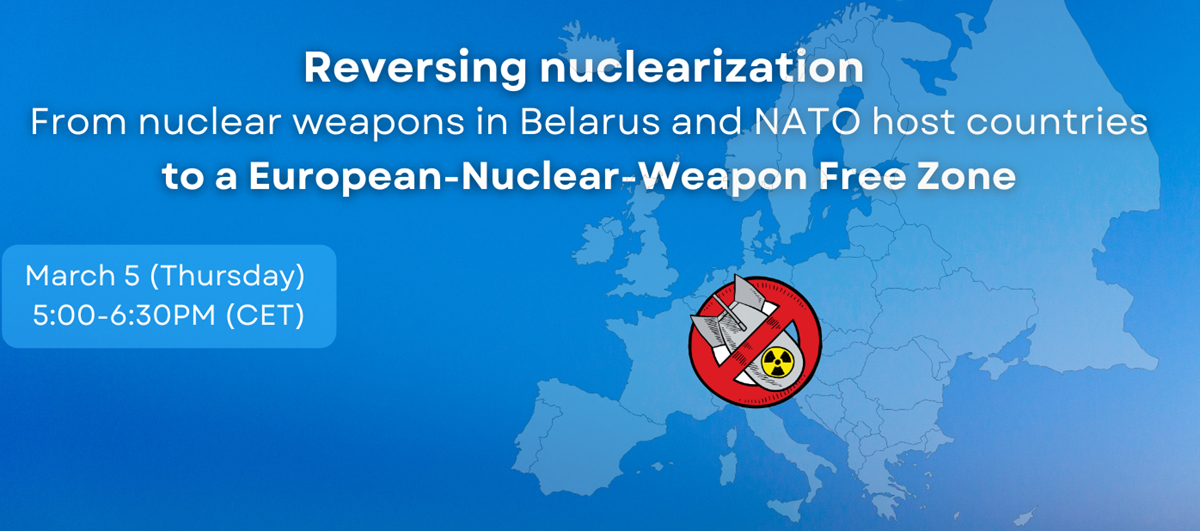
6 March -Online – Reversing nuclearization:
From nuclear weapons in Belarus and NATO host countries to a European-Nuclear-Weapon Free Zone
Mar 6, 2026 03:00 AM in Canberra, Melbourne, Sydney

of the week – Australians for War Powers Reform (AWPR)
To see nuclear-related stories in greater depth and intensity
 Antinuclear