The end of the NEM as we know it — RenewEconomy

As coal generators exit the grid, Australia is going to have to focus on flexibility in the market, and harnessing distributed resources. The post The end of the NEM as we know it appeared first on RenewEconomy.
The end of the NEM as we know it — RenewEconomy
Small Nuclesar Reactors – not all they’re cracked up to be
Small Nuclear Reactors, There has of late been a lot of promotion of the idea of Small Modular Reactors (SMRs) of a few tens or hundreds of megawatts, which it is claimed will be cheaper than conventional gigawatt scaled plants since they can benefit from economies of mass production in factories. Much has been promised for SMRs, including the delivery of power at £40-60/MWh, but there is still some way to go before any project actually goes ahead and we can see if the promises hold upon practice.
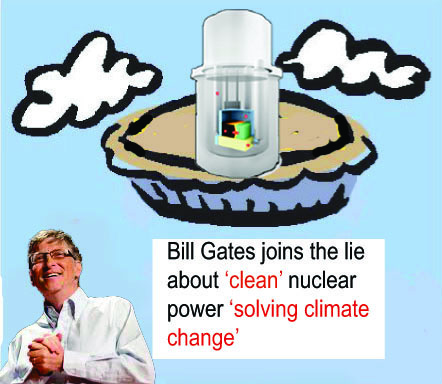 stage. But it is claimed that one of the more novel design, the Natrium fast reactor system, proposed by Terrapower and backed by Bill Gates, will be on line this decade. Given that this makes use of liquid sodium and molten salt heat storage, that is quite a claim. So is the idea, also being pursued by Terrapower, that reactors can be run with molten salt fluoride as both reactant medium and reaction coolant. It has even been claimed that reactors like this, with suitable fast spectrum neutron fluxes, can burn nuclear waste. That has yet to be proven. But certainly, if they are to use thorium as a fuel, they will need an input of plutonium or some other neutron source, since thorium is not fissile, so in that sense they do recycle something. Though we still have to have uranium reactor, possibly fast breeders, to make the plutonium.
 As can be seen, there are many possible problems ahead for SMRs. Perhaps the central one is safety. Working with high radiation fluxes in small confined spaces is not easy. Even in the case of molten salt systems, which avoid the need for control rods, the super-hot corrosive fluids have to be pumped around for heat and waste extraction. It may not be easy to design compact systems that can do this reliably long-term.
The safety issue interacts with the other key issues for SMRs- location. If they are going to be economically viable, some say that SMRs will have to be run in Combined Heat and Power ‘Cogen’ mode, supplying heat for local used, as well as power for the grid. That implies that they will have to sited in or near large heat loads i.e. in or near urban areas. Will local residents be keen to have mini-nuclear plants near by? That issue is already being discussed in the USA, with some urban resistance emerging.
A key issue in that context is that it has been argued that since they allegedly will be safer, SMRs will not need to have such large evacuation zones as is the norm for standard reactors, most of which are sited in relatively remote area. Indeed, unless that requirement was changed, operation in cities could be impossible- they could not easily be evacuated fast if there was an accident, or perhaps a security threat. On the basis of this view, SMRs will only ever be relevant for remote sites, and of course there are plenty of such locations where local power generation might be welcome, although arguably, renewable sources might be easier, safer and cheaper to use. Indeed, that might be said of all locations.
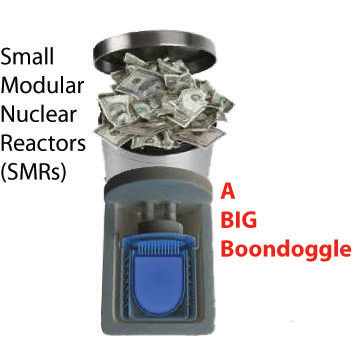 The debate over safety, security and location will continue to unfold, with folksy mini-nuke designs emerging for remote rural locations, but concerns also growing over the many unknowns, not least the costs and market potential. There are SMR programmes in the US and UK and elsewhere, but there are big doubts about whether there would be a viable market for this technology.
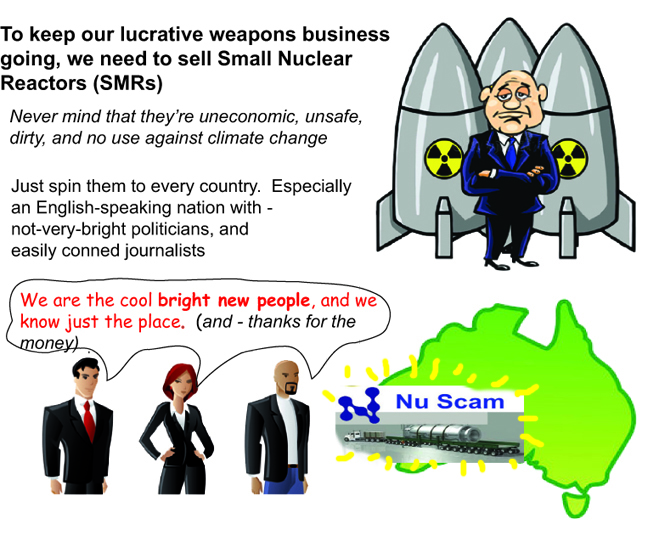
That is despite the fact that there is some dual use/expertise overlap between civil and military nuclear, and, more specifically, that mini reactors are used for submarine propulsion. While that may be one reason why companies like Rolls Royce are pushing for SMRs, on its own military submarine use is a relatively small market.
There is no shortage of promotional enthusiasm for SMRs for a variety of reasons, including, it is claimed, defence-related, and some arguably extravagant claims on comparative investment costs have been made. However, there have also been some strong critiques and gloomy prognoses. At best, they say, SMRs may have a role to play in some remote locations and, as with nuclear generally, perhaps for heat production and hydrogen production, for example for industrial purposes. It has also been claimed that SMRs could produce synthetic aircraft fuel as substitute for kerosene, although ‘at around about twice the price’.
That all seem to be a long shot, with many unknowns, and in terms of energy supply of whatever type, renewables may have the edge in most contexts. However, it is just conceivable that SMRs could be used to back up renewables. Some types of SMR may be able to run more flexibly than can large conventional reactors, so that they could play a role in balancing variable renewables. That is still very uncertain, in operational and cost terms, and there are many other arguably simpler, safer and cheaper options for grid balancing. Though, evidently keen to try their luck, a UK developer has talked of using NuScale units in a hybrid wind-SMR system.
So what’s the bottom line? For the moment, although being pushed in the US and UK and elsewhere, SMRs are some way off, with very mixed prospects. But technology can move fast, and although there will no doubt be local resistance, and they may not pop up near you for a while, we may yet see fission-based SMRs emerge for some remote applications within in a decade or two. Can the same be said for fusion? Some very optimistically are talking about the arrival soon of mini fusion! That seems unlikely, and my guess is that, if fusion SMRs are ever possible, their main use will be off-planet. Same possibly for most fission SMRs! Back on this planet, we’ve got plenty of renewables to get on with, and in that context, arguably, small nuclear, of whatever sort, does not really offer anything different from big nuclear. Just another costly distraction from getting on with renewables
Fukushima disaster: Is TEPCO nuclear plant still a safety risk? — Fukushima 311 Watchdogs

Ten years after the Fukushima nuclear disaster, the Tokyo Electric Power Co. has been criticized for failing to learn safety lessons. A seismograph at the Fukushima Daiichi plant malfunctioned during a recent earthquake Februay 26, 2021 Tokyo Electric Power Company (TEPCO), the operator of the Fukushima Dai-ichi nuclear power plant, is facing renewed criticism that it […]
Fukushima disaster: Is TEPCO nuclear plant still a safety risk? — Fukushima 311 Watchdogs
Radiation criteria sow confusion for evacuees — Fukushima 311 Watchdogs

Workers decontaminate a road in a special reconstruction district in the town of Futaba, Fukushima Prefecture, in October. | FUKUSHIMA MINPO February 26, 2021 Traffic was lighter on the Joban Expressway in the Futaba district in Fukushima Prefecture during the New Year holiday, with people avoiding traveling back to see their relatives due to the […]
Radiation criteria sow confusion for evacuees — Fukushima 311 Watchdogs
Quake shifts 53 water tanks at Fukushima plant — Fukushima 311 Watchdogs

February 26, 2021 The operator of the crippled Fukushima Daiichi nuclear power plant says it has found that 53 tanks storing radioactive wastewater were shifted from their original locations by a powerful earthquake earlier this month. But it says there have been no leaks from the tanks. Tokyo Electric Power Company inspected 1,074 tanks after […]
Quake shifts 53 water tanks at Fukushima plant — Fukushima 311 Watchdogs
Making Waves — Beyond Nuclear International

The original peace boat sets sail again
Making Waves — Beyond Nuclear International
Environmental collapse: It’s time economists put the planet on their balance sheets — RenewEconomy

Planet’s natural systems are on the verge of breakdown, after being ignored by economic theory and policies. That must change. The post Environmental collapse: It’s time economists put the planet on their balance sheets appeared first on RenewEconomy.
Environmental collapse: It’s time economists put the planet on their balance sheets — RenewEconomy
February 28 Energy News — geoharvey

Opinion: ¶ “Environmental Collapse: It’s Time Economists Put The Planet On Their Balance Sheets” • A ‘ground-sparing’ economic report on biodiversity indicates that economic practice has to change because the world is finite. Climate change results from a larger issue, the threat to our life support systems from the plunder and demise of our natural […]
February 28 Energy News — geoharvey
1 This month

of the week – Australians for War Powers Reform (AWPR)
To see nuclear-related stories in greater depth and intensity
 Antinuclear