Solar Insiders Podcast: The day the Coalition discovered solar panels — RenewEconomy

Angus Taylor visits a solar factory, the big news out of Smart Energy Expo, and the solar-coaster. Again. The post Solar Insiders Podcast: The day the Coalition discovered solar panels appeared first on RenewEconomy.
Solar Insiders Podcast: The day the Coalition discovered solar panels — RenewEconomy
May 11 Energy News — geoharvey

Opinion: ¶ “The Insanity Of Expanding Nuclear Energy” • Former nuclear regulatory top dogs from the US, France, Germany and Great Britain issued a joint statement in January strenuously opposing any expansion of nuclear power to combat climate change. There is not a single good reason to build new nuclear plants, and many reasons not […]
May 11 Energy News — geoharvey
Devious nuclear zealots at it again in Ohio – new Bill to lead to subsidising ”next-generation nuclear reactors”
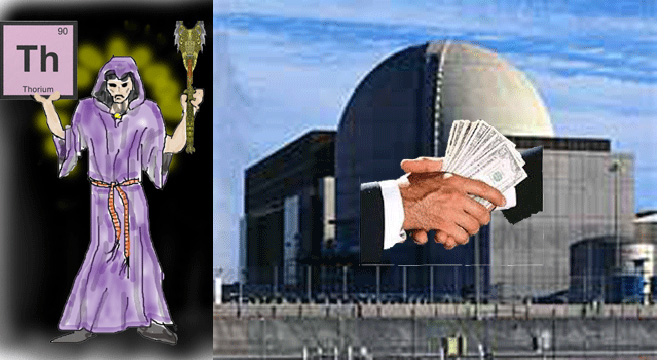
Lyman and Bradford found it odd for HB 434 to follow so soon on the heels of HB 6, the nuclear and coal bailout law at the heart of Ohio’s ongoing corruption scandal.
“You’d think after that fiasco the legislature would be a little more cautious,”
Ohio bill would open door to subsidize next-generation nuclear power work, Nuclear power critics say the legislation could amount to a blank check for private companies researching nuclear reactor technology, while supporters say it would create jobs and bring in federal contracts. Energy News Network, by Kathiann M. Kowalski 10 May 22,
Three years ago, Ohio lawmakers attempted to bail out the state’s aging nuclear power plants with a law to make utility customers pay more than $1 billion in subsidies for those former FirstEnergy plants.
The nuclear subsidies were eventually repealed, but now some lawmakers are pushing legislation to help private companies develop a type of next-generation nuclear technology in the state known as a molten salt reactor.
House Bill 434 does not include any direct funding but would establish a state nuclear development authority meant to attract federal research contracts. It would also be eligible for state economic development funding and would have the authority to acquire property.
Representatives of a Cleveland-based nonprofit organization, eGeneration [who are they?], testified for the bill and stressed the potential benefits of developing the project in Ohio. Supporters say the technology could generate carbon-free power for centuries using spent fuel depleted at conventional nuclear power plants or by converting thorium into fuel.
Critics see the bill as another attempt by Ohio lawmakers to favor a particular form of generation. They’re also concerned about the potential lack of transparency with state economic development spending, much of which is handled by a group not subject to the state’s public records law. The Ohio Nuclear Free Network calls the bill a “radioactive taxpayer subsidy.”
What the bill would do
HB 434 would set up an Ohio nuclear development authority with members appointed by the governor after a nomination process resembling that of the Public Utilities Commission of Ohio. The authority, in turn, would be within the state’s Department of Development……..
The nuclear authority set up by the current bill would seek authority from the Nuclear Regulatory Commission or Department of Energy for the research and development of advanced nuclear technology. And it would promote commercialization of that technology, ranging from the manufacture of components to treatment, storage and disposal technology for spent fuel……………………….
Sarah Spence, executive director of the Ohio Conservative Energy Forum, testified in favor of the bill. The group supports energy innovation in Ohio and aims to promote an all-of-the-above strategy, she said. Nonetheless, she said, the group would have concerns if in practice the bill were used to subsidize one or two companies at the expense of others.
An unknown price tag
Under HB 434, the newly formed state nuclear authority would perform “an essential government function [on] matters of public necessity for which public moneys may be spent and private property acquired.” But the bill doesn’t hint how much money might be spent.
Any fiscal impacts wouldn’t be known until an agreement with the Nuclear Regulatory Commission or Energy Department is in place, Stein said.
HB 434’s lack of spending limits is a red flag for critics like Connie Klein, an organizer for the Ohio Nuclear Free Network. An early version of a similar bill introduced by Stein in 2019 would have written eGeneration’s role into the law and let it spend up to $1 million per year
Meetings of the nuclear authority would be deemed public meetings. But the nuclear authority could use staff or experts at the Department of Development, which delegates many activities to JobsOhio, a statutorily created corporation that is exempt from Ohio’s public records law. Funding for JobsOhio comes from Ohio Liquor pursuant to a partnership with the Ohio Department of Commerce’s Division of Liquor Control.
The Department of Development did not return a phone call seeking clarification of what role JobsOhio might play if HB 434 is enacted.
“It’s hard to know who’s going to be more disappointed — the citizens of Ohio if that bill becomes law and they actually spend any money trying to promote a molten-salt thorium-based reactor, or the promoters of the bill if anyone takes a serious look at how much it would cost actually to incubate a thorium fuel-cycle in Ohio,” said Peter Bradford, a former Nuclear Regulatory Commissioner who has also served as utility regulator in New York.
“Nuclear power’s biggest problem is its cost,” and thorium-based molten salt reactors are more expensive than other designs, Bradford said. “Also, they are at least a decade away from being licensed and building a prototype, which would still have to prove itself to be reliable and economically competitive, which it is unlikely to be able to do.” He estimates it would take about $10 billion to build a prototype, but it probably wouldn’t be able to produce power economically.
Additionally, it’s unclear what, if anything, the bill could actually authorize without a go-ahead from the Nuclear Regulatory Commission or the Department of Energy. The nuclear authority couldn’t build a molten salt reactor on its own without a federal go-ahead. Stein said a legislative resolution had requested a delegation of authority from the federal government some years ago, but that has yet to happen.
“It’s not obvious really that [HB 434] does much more than lend comfort to the tub thumpers for thorium or small reactors generally,” Bradford said.
Simply no guardrails’
Ed Lyman, director of nuclear safety for the Union of Concerned Scientists, said that to his knowledge the Nuclear Regulatory Commission has not licensed any authority to a state for licensing a molten salt reactor.
Moreover, Lyman said, “there’s already a lot of work on the federal level” focused on small nuclear reactor designs. Although Elysium Industries has done some limited work funded by the Department of Energy, big players at that level haven’t lined up behind the Ohio bill, Lyman said.
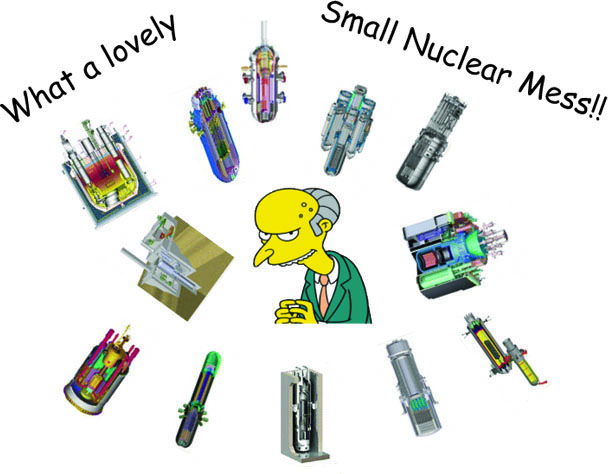
“There isn’t one technology,” for small nuclear reactors, said Jess Gehin, associate laboratory director for the Nuclear Science and Technology Directorate at Idaho National laboratory. The Department of Energy is doing research and working with companies on a range of technologies, including water-cooled and gas-cooled designs, as well as some in the molten salt arena.
But other designs are closer to coming online than the molten salt reactor envisioned by HB 434’s supporters.
“A molten salt reactor isn’t going to be the next one over the finish line,” Gehin said.
Neither Elysium Industries nor eGeneration responded to requests for comment. Meanwhile, Lyman and Bradford found it odd for HB 434 to follow so soon on the heels of HB 6, the nuclear and coal bailout law at the heart of Ohio’s ongoing corruption scandal.
“There is not even a requirement that there be board members well versed in energy economics or selecting among energy resources or consumer protection or environmental protections,” Bradford said. “There’s simply no guardrails or safeguards against any of the abuses that Ohio citizens or customers have suffered in the last five or six years, which is pretty breathtaking.”
“You’d think after that fiasco the legislature would be a little more cautious,” Lyman said.
HB 434 passed in the Ohio House at the end of March. Hearings have not yet been scheduled in the Ohio Senate’s Energy and Public Utilities Committee. https://energynews.us/2022/05/10/ohio-bill-would-open-door-to-subsidize-next-generation-nuclear-power-work/
Anti- Russian hysteria
U.S. Plays ‘Dangerous Game’ in Trying to ‘Cancel’ Russia, Ambassador Says
NewsWeek, BY TOM O’CONNOR 5/11/22 MOSCOW’S ENVOY IN WASHINGTON HAS WARNED THAT A GROWING BACKLASH AGAINST ALL THINGS RUSSIA-RELATED IN THE UNITED STATES IN RESPONSE TO THE WAR IN UKRAINE HAS SURPASSED EVEN COLD WAR-ERA LEVELS, TELLING NEWSWEEK THAT NOT ONLY DIPLOMATIC TIES BUT ALSO CULTURAL, EDUCATIONAL AND SCIENTIFIC WERE UNDER UNPRECEDENTED STRAIN.
“The United States has been swamped by a wave of Russophobia fuelled by the media at the instigation of the ruling circles,” Russia’s ambassador to the U.S., Anatoly Antonov told Newsweek. “The situation has taken the worst forms of the anti-communist paranoia and witch-hunt of the McCarthy era.”
He argued that the present state of affairs has sunken below even that of the infamous “red scare” led by late Senator Joseph McCarthy in the aftermath of World War II, as he stated that the scope of targets was now broader.
“Even during the Cold War, our nations continued cultural, educational and scientific contacts,” Antonov said. “I just hope that common sense will prevail and help end the dangerous game of canceling Russia, bordering on the ideas of racial superiority.”…….
Pointing to some recent examples, he said that “anti-Russian hysteria has quickly spread to everyday life.”
Among the more high-profile incidents has been the decision by a number of major musical institutions to drop performances by Russian conductor Valery Gergiev and pianist Denis Matsuev, both prominent supporters of Putin, shortly after the conflict in Ukraine erupted. In some cases, even classical songs have been removed from the bill, including the works of 19th-century composer Pyotr Tchaikovsky, renowned for ballets such as “Swan Lake,” “The Nutcracker” and the “1812 Overture.”
Also on the chopping block have been longstanding associations between professionals in the U.S. and Russia. The Educational Commission for Foreign Medical Graduates has suspended certification for Russian citizens and the oncology group OncoAlert has severed ties with Russian doctors, both actions taken in displays of solidarity with Ukraine………………… https://www.newsweek.com/us-plays-dangerous-game-trying-cancel-russia-ambassador-says-1705770
The Insanity Of Expanding Nuclear Energy
https://emagazine.com/the-insanity-of-expanding-nuclear-energy/ Sarah Mosko May 10, 2022
Former nuclear regulatory top dogs from the United States, France, Germany and Great Britain issued a joint statement in January strenuously opposing any expansion of nuclear power as a strategy to combat climate change. Why? There is not a single good reason to build new nuclear plants. Here are ten solid reasons not to.
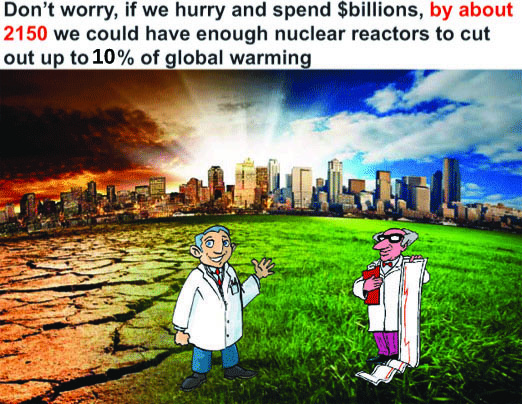
1. Nuclear is too slow to tackle climate change. The new generation of proposed commercial nuclear plants, so called Advanced and Small Modular Reactors (SMRs), are at best decades away in designing and building. The latest report from the International Panel on Climate Change makes clear that limiting global warming to 1.5°C (2.7°F) means “achieving net zero carbon dioxide emissions globally in the early 2050s.” Wind and solar farms can be up and running in just a few months or years. Renewables can power the world by 2050, according to financial think tank Carbon Tracker.

2. Nuclear energy is too costly. Renewables like wind and solar are already the world’s cheapest form of energy, and their prices continue to tumble. By 2019, utility-scale renewable energy prices had already fallen to less than half that of nuclear. Together with lower natural gas prices, there has been little momentum in the United States to construct new nuclear plants for decades. Expanding nuclear power would translate into higher energy costs for consumers.
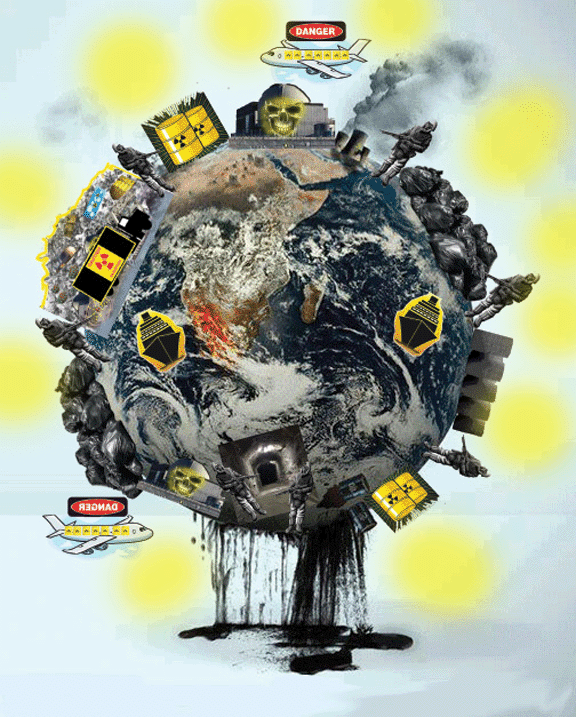

3. Nuclear is neither carbon-free nor non-polluting. While it’s true that the electricity produced by an operating nuclear plant doesn’t emit carbon dioxide, mining and enrichment of uranium are carbon intensive and pollute the air with potent greenhouse gases called chlorofluorocarbons. Radioactivity releases into air and water from nuclear plants are routine. And, the United States has already accumulated 85,000 metric tons of highly radioactive commercial spent fuel waste, the most dangerous pollutant known to man.
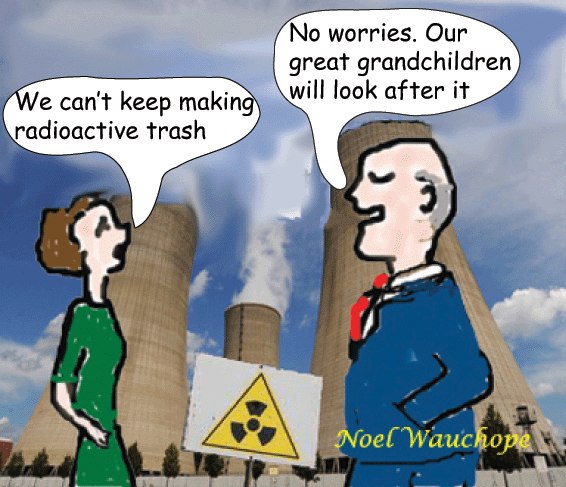
4. The problem of permanent disposal of nuclear waste remains technically unsolvable for the short or long term. Though the Nuclear Waste Policy Act of 1982 mandated construction of a permanent deep geologic repository to safely isolate nuclear waste for a million+ years, four decades hence there is literally no progress. Consequently, the nation’s commercial nuclear plants are, for the foreseeable future, de facto nuclear waste dumps.
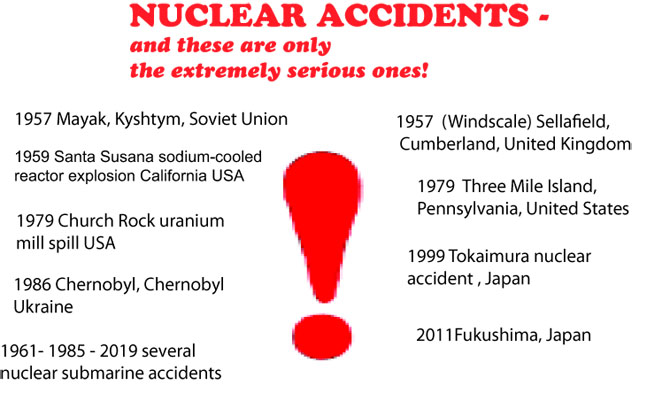
8. The nuclear meltdowns at Chernobyl, Fukushima, and Three Mile Island demonstrated there is no room for human error or natural disasters when it comes to anything nuclear. Moreover, human civilizations come and go: The Roman Empire lasted short of 1,000 years. Humanity can’t ensure the safety of even our current nuclear reactors let alone ensure that future civilizations will stay clear of nuclear waste dumps for the next million+ years.

9. Nuclear plants are sitting ducks for terrorist attacks, whether still operating or storing nuclear waste. Dry storage canisters are stored onsite in the wide open in so-called Independent Spent Fuel Storage Installations. Vulnerability to malfeasance was driven home recently by the ease with which Russia captured both the Chernobyl site and the Zaporizhzhia nuclear plant early in the invasion of Ukraine
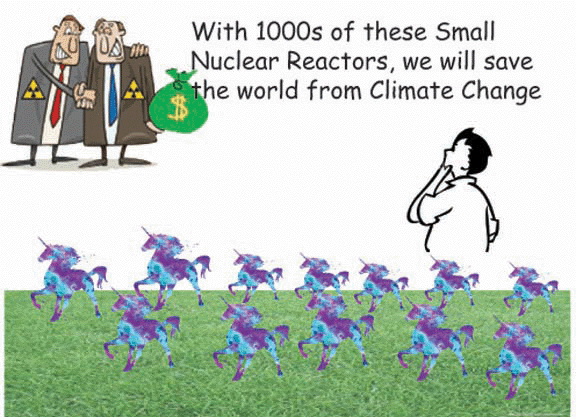
10. The idea that SMRs can save the day is magical thinking. SMRs are a completely unproven concept. On the order of ten thousand SMRs would be needed to impact climate change in time. This would create thousands more radioactive dump sites and as many opportunities for both nuclear accidents from human error or natural disasters and weapons proliferation from the plutonium generated by nuclear reactors.
Getting to net zero carbon emissions by the early 2050s requires the greatest reduction in carbon emissions in the shortest time and at the lowest cost. That nuclear can’t deliver on this and should be banned is the outspoken position of the former head of the Nuclear Regulatory commission, Gregory Jazcko.
The “all hands on deck” approach espoused by too many politicians to explain support for new nuclear is blatantly faulty, given that every dollar misspent on new nuclear is a dollar not invested in energy efficiency and faster, cheaper renewables. Expanding nuclear will actually retard progress on solving the climate crisis.
No matter what the misguided motivations of some politicians, our duty as informed citizens is to demand that they abandon the deadly pursuit of new nuclear energy and commit to shutting down our aging nuclear reactors.
COST OVERRUNS AT GEORGIA NUCLEAR REACTORS OFFER CAUTIONARY TALE

STATEMENT: COST OVERRUNS AT GEORGIA NUCLEAR REACTORS OFFER CAUTIONARY TALE https://uspirg.org/news/usf/statement-cost-overruns-georgia-nuclear-reactors-offer-cautionary-tale
Ratepayer funds would be better spent advancing efficiency, renewable energy
For immediate release
WEDNESDAY, MAY 11, 2022 ATLANTA – THE ONLY NUCLEAR REACTORS UNDER CONSTRUCTION IN THE UNITED STATES ARE NOW PROJECTED TO COST MORE THAN $30 BILLION — AND THE PRICE TAG FOR PLANT VOGTLE NEAR AUGUSTA, GEORGIA, DOESN’T EVEN INCLUDE $3.68 BILLION THAT THE PROJECT’S ORIGINAL CONTRACTOR PAID TO THE OWNERS AFTER GOING BANKRUPT.
The $34 billion total is $20 billion more than the original cost estimate of $14 billion. The two reactors under construction are now more than five years behind schedule. Contractor delays, rework projects, the inability to complete tasks on time and the bankruptcy of reactor designer Westinghouse Electric Co. LLC have more than doubled the project’s costs.
Customers of Georgia Power, which owns 46% of the project, are already paying a fee that not only covers a portion of Vogtle’s financing costs, but also feeds the utility company’s profits on the project. The average residential Georgia Power customer will have paid more than $850 in such fees before the project ever delivers power to customers.
In response to the Plant Vogtle debacle, experts from Environment Georgia Research & Policy Center, U.S. PIRG Education Fund and Environment America Research & Policy Center released the following statements:
Environment Georgia Research & Policy Center’s State Director Jennette Gayer said:
“This exercise in futility is playing out and costing our neighbors big bucks while Georgia doesn’t even need nuclear power. Georgia has been the seventh-fastest growing state for solar power since 2011. Imagine where we would be now if we’d spent the $30 billion we’ve poured into Plant Vogtle into saving energy and getting more of it from truly clean sources. Even a decade ago, it was clear that nuclear power was too slow and too expensive to be our best response to the climate crisis, and that’s even more true today. “
U.S.PIRG Education Fund’s Consumer Watchdog Teresa Murray said:
“The cost overruns and delays at Plant Vogtle should be a cautionary tale to the rest of the country when it comes to building new nuclear reactors. If a project at my house cost more than double the budget and was a half-decade behind schedule, I’d never want to go through that again. Georgia ratepayers have already dished out hundreds of dollars for this misguided project, and electrons aren’t even flowing. Evidence shows that there are cheaper, cleaner and safer ways to keep the lights on than building new nuclear plants.”
Environment America Research & Policy Center’s Senior Director of the Campaign for 100% Renewable Energy Johanna Neumann said:
“Harnessing America’s renewable energy sources is more efficient and affordable than ever. Investing in energy efficiency remains the cheapest and fastest way to meet our energy needs, and America has vast untapped solar and wind potential. It’s time to stop throwing good money after bad. Regulators and policy makers should put in place goals and drive action toward powering our future with 100% renewable energy.”
John Kerry warns a long Ukraine war would threaten climate efforts
John Kerry warns a long Ukraine war would threaten climate efforts
US presidential envoy says limiting global heating to 1.5C could be made harder by conflict
Why Finland will seek NATO membership and why I still think we shouldn’t — IPPNW peace and health blog

by Kati Juva, PSR-Finland Finland for decades has regarded itself as part of Western society, with shared values such as human rights and democracy. Step by step we have come loose from the sphere of interest of Russia and the former Soviet Union, first by ending our Agreement of Friendship, Co-operation and Mutual Assistance in […]
Why Finland will seek NATO membership and why I still think we shouldn’t — IPPNW peace and health blog
1 This month
To see nuclear-related stories in greater depth and intensity
– go to https://nuclearinformation.wordpress.com/


 Antinuclear