This week’s nuclear news

A bit of good news Sir David Attenborough urges people to unite to save ‘nature in crisis’
Premiere of this so timely movie –

The Road to War – new film premiering in Australia is just so very timely – as Australia is currently foremost in nuclear news. https://www.youtube.com/watch?v=hEU02LTJBxI&t=6s
World premiere– Melbourne at 6.30pm on 22 March at the Nova in Carlton. Then in Hobart on 23 March (not 24th as stated in trailer) at the State Cinema . Q & A panel with Bradbury and special guest, Bob Brown. Capri Theatre in Adelaide 29 March. Other cities and regional centres yet to be announced.
Christina notes. Australia’s splendid nuclear submarine goat rodeo – funny, but it’s really serious. Isn’t it wonderful how the men in opposing political parties can unite in hate and belligerence? Nuclear wastes 30 years away. So -no problem for present decision-makers – happily superannuated when the shit hits the fan.
AUSTRALIA.What the nuclear-powered submarine deal really means. Editorial Geppetto logic. AUKUS subs deal binds us to a country that can change its mind on whim. Port Kembla a nuclear submarine hub? Not such a great idea! Australian Strategic Policy Institute among the group of crooked “Think Tanks” funded by weapons companies in order to promote war. Sub-standard: AUKUS plan means more risks for Australia. Australian nuclear submarine program to cost up to $368b as AUKUS details unveiled in the US. Uncle Sam, can you target my Tomahawk, please?.
Australia hasn’t figured out low-level nuclear waste storage yet – let alone high-level waste from submarines. Australia news live: Aukus subs deal includes commitment to dispose of nuclear waste; Greens say plan is ‘mortgaging our future’. Nuclear dump to be built on Defence land. Labor Premiers’ dispute over location for AUKUS nuclear wastes, – but planned Kimba waste dump is”now dead in the water”? ‘Send it to Woomera’: Premier McGowan cold on nuclear waste being stored in Western Australia. Spent Matters: The AUKUS Nuclear Waste Problem. Aukus nuclear submarine deal loophole prompts proliferation fears. Porky pies and half-truths from our USA- captured Prime Minister Albanese . Are these wildly expensive nuclear-powered submarines really in Australia’s best interests? Paul Keating savages AUKUS nuclear submarine deal as Labor’s worst since conscription in World War 1. Why is the Labor government determined to silence the Barngarla people, at the same time as Labor promotes the indigenous Voice to Parliament ?.
CLIMATE. Wiped out: Scientist’s ‘gigantic tsunami’ warning signals ‘grave threat’ to Sizewell C.. UN Secretary-General’s video message to the 58th Session of the Intergovernmental Panel on Climate Change.
CULTURE. Permission to speak?– Who gets to talk about nuclear power should not be controlled by the nuclear lobby
ECONOMICS. Despite UK government’s enthusiasm, nuclear power is just not a good investment. UK government is urged to “come clean” over the real cost of Sizewell C nuclear power station . EDF confirms nuclear power target for 2023, despite corrosion problems, and plummeting output in 2022.
A $18 million a job? The AUKUS subs plan will cost Australia way more than that. Australia’s Productivity Commission casts doubt on the federal government’s decision to build nuclear-powered submarines.
ETHICS and RELIGION. Grief – Japan marks 12 years since Fukushima nuclear disaster as concerns grow over treated radioactive water release.
ENERGY. Taiwan phasing out nuclear power.
ENVIRONMENT. Campaigners claim permit change at Hinkley Point would kill billions of fish. UK Chancellor Jeremy Hunt wants nuclear power classified as ‘environmentally sustainable’ . But is it?
HEALTH. Life on a nuclear submarine takes its toll.
MEDIA. “Atomic Bamboozle” Probes False Hopes for the Future of Nuclear Power. https://www.youtube.com/watch?v=pUsPt_xUt7I
NUCLEAR TECHNOLOGY. Britain does not have the capacity to support Australia’s plan to build its own nuclear submarine fleet – Rear Admiral. Transparent oceans – Technologies for detection of nuclear submarines will still be all too successful by 2050. Georgia’s big new nuclear reactors could be the ‘last built in the US‘ . World’s largest nuclear fusion reactor promises clean energy, but the challenges are huge.
OPPOSITION to NUCLEAR. Japanese students’ nuclear abolition petition tops 2.5 million signatures. New Mexico says no to storing spent nuclear fuel as Biden touts nuclear energy: ‘The trouble is this is a forever decision’.
POLITICS.
- Fukushima victims feel left out.
- UK political row over ‘expensive and unnecessary ‘ spending on nuclear power stations. UK Chancellor Jeremy Hunt accused of ‘£20bn gamble’ on nuclear energy and carbon capture . UK Chancellor blocks cheap renewable energy , while promoting expensive nuclear power. Scotland’s not-so-Green Freeports: Minister’s equivocal response leaves way open to nuclear manufacturing facility. Sizewell C nuclear plan slammed, despite the UK government’s greenwashing.
- Illinois grapples with the future of nuclear power.
- Ukraine aims to produce full cycle of nuclear nuclear fuel production by 2026, exports to follow.
- The AUKUS nuclear deal “stinks” – Australia’s former environment minister Peter Garret.
POLITICS INTERNATIONAL and DIPLOMACY.
- Nuclear power eliminated from European Commission’s text on funding rules, amid heated disagreements between Europe’s nations.
- Changing dynamics of US nuclear alliances, and a brazen violation of the Nuclear Non Proliferation Treaty. Watchdog Rafael Grossi pledges ‘demanding’ oversight of nuclear sub deal. Aukus nuclear submarine deal will be ‘too big to fail’, Richard Marles says. AUKUS nuclear submarine plan brings danger as it uses a loophole in the Nuclear Non-Proliferation Treaty. Chinese official asks if Australia’s Aukus nuclear submarines intended for ‘sightseeing’. Australia needs to rethink plan to buy nuclear submarines.
- Sociologist urges Japan to stop perpetuating nuclear colonialism.
- Saudi crown prince is plotting to get US nuclear secrets by playing the White House, Russia, and China off against each other, report says.
PUBLIC OPINION. Something Is Missing From Americans’ Greatest Fears. It’s the Bomb..
SAFETY. Incident. 400,000 gallons of radioactive water leaked from a nuclear plant in Minnesota.
SECRETS and LIES. Libyan general says uranium reported missing by UN nuclear watchdog IAEA has been recovered. Tons of uranium missing from Libyan site, UN nuclear watchdog tells member states. Alarm over 10 drums of uranium missing in Libya.
SPINBUSTER. SIX WAR MONGERING THINK TANKS AND THE MILITARY CONTRACTORS THAT FUND THEM. Lesson from Fukushima: Collusion in the nuclear domain. “Great British Nuclear” launch – an eccentric fraud by the UK government.
WASTES. The (Vancouver) Columbian Editorial Board: Congress must recognize urgency at Hanford. Dumping Fukushima contaminated water is a “cheap and dirty” approach that must be stopped.
From the archives. No country in the world has worked out what to do with its old dead, radioactive, nuclear submarines. UK’s costly struggle to deal with dead nuclear submarines. The daunting, long and untested effort to deal with UK’s dead nuclear submarines. What to do with dead nuclear submarines? A cautionary tale for Australia.
WAR and CONFLICT. Some countries plan to decentralize control of nuclear weapons in a crisis. Here’s why that’s dangerous. Seymour Hersh warns of potential US plan B in Ukraine. U.S. Army launches new headquarters in Poland . North Korea’s Kim led drills ‘simulating nuclear counterattack.’
Spectre of Maralinga hangs over Aukus nuclear waste for Indigenous communities
Sarah Collard and Donna LuSun 19 Mar 2023 https://www.theguardian.com/australia-news/2023/mar/19/spectre-of-maralinga-hangs-over-aukus-nuclear-waste-for-indigenous-communities
Behind all the pomp of the Aukus submarine deal in San Diego there was a detail that could prove a much bigger obstacle than even the massive USS Missouri moored near the three leaders. Under the agreement, Australia will be responsible for storing high-level nuclear waste from the decommissioned reactors.
And that is no easy feat. The US and UK naval reactors that will power both the Virginia-class subs and the future SSN-Aukus boats are fuelled by highly enriched uranium-235.
Once removed and decommissioned, any spent fuel from naval reactors is usually reprocessed to extract usable nuclear fuel for civilian generation and the remaining radioactive waste concentrated. The Australian government has promised not to reprocess spent fuel, which means it will probably be sent offshore.
Overseas, the process typically involves extracting usable fuel such as uranium and plutonium, and then vitrification, in which radioactive waste is concentrated and melted down into a “big glass block” weighing tonnes, according to Dr Patrick Burr, a senior lecturer in nuclear engineering at the University of New South Wales. “It’s actually a very small volume, but it is extremely radioactive,” he said.
After this complicated and hugely expensive process has been completed, there remains one big question – where will this waste be stored?
Nuclear reactor fuel yields high-level waste, which is not only more radioactive. “When you have high-level waste, it is actually physically hot, so [you] need to think about thermal management as well,” Burr said.
As some experts have pointed out, Australia has not even found a permanent site to store low-level nuclear waste, let alone highly radioactive waste.
So far, the government has not given any details on that other than the defence minister, Richard Marles, saying it will be on land that is either owned by the defence department or to be acquired in future. Marles also said this won’t need to be solved until well into the 2050s.
But that is not enough to satisfy many Indigenous communities, who fear the prospect of high-level nuclear waste dumps on traditional lands, and for whom the spectre of British nuclear testing in the 1950s and 60s still looms large.
In South Australia’s Eyre Peninsula region, a proposed storage facility near Kimba for low-level nuclear waste has faced staunch opposition from traditional owners, as well as environmentalists and farmers, despite a ballot supported by about 60% of residents conducted by the Australian Electoral Commission.
The Barngarla Determination Aboriginal Corporation chair, Jason Bilney, said the Barngarla people had not been consulted, opposed the plan and had been in a legal battle with the federal government against the proposal.
He said he believed any storage of high-level nuclear waste would not be suitable in that area given the lack of granite and rock to hold the toxic waste, which could take hundreds of thousands of years to break down. “The ground is dirt,” he said. “High-level stuff needs to be stored and contained within the solid rock formation and Kimba doesn’t have that.”
Bilney said many traditional owners in the region had a deep distrust and fear of defence testing and nuclear waste after the nuclear weapons testing conducted by the UK in Maralinga.
The tests caused many of the local Anangu Pitjantjatjara people to suffer from radioactive illnesses, with elders and family sickened and the land contaminated.
Bilney said his grandfather, who was from the Maralinga area, always remembered the trauma and the fear, which has continued through the generations.
“That’s why I’m so strong and so passionate about being an advocate for my people and all Indigenous people,” he said.
“There is still a big fear that that could happen again … It’s that generational effect and even now people are still passing away of cancers.”
Bilney said while the bomb testing was not the same as storage of high-powered uranium rods, that fear remains.
“It’s that generational effect. It’s people just dying from the effects of the atomic bomb and still suffering trauma. This is going to be stored into the earth. It’s going to destroy our way of life for us.”
He said there was a real concern that storage of nuclear waste on traditional lands and any restrictions on access could harm the cultural and spiritual knowledge that had been passed down for thousands of generations.
“It’s our biggest worry. We are the oldest culture for over 60,000 years and this is going to outlast it.
“We want to pass down to the next generation and to continue this for decades to come to protect and preserve our sites and our storylines and that connection to country. And if they put it on country, we won’t be able to share that and we will lose those storylines. It will sever those ties.”
One possible location could be a defence site within the Woomera region, an area spanning 122,000 sq km about 450km north-west of Adelaide. The area has long been used for nuclear testing and as a military base.
The Woomera prohibited area takes in the traditional lands the Maralinga Tjarutja and Anangu Pitjantjatjara Yunkunytjatjara, as well as the Antakirinja Matu-Yankunytjatjara, Arabana and Kokatha.
A Kokatha traditional owner and senior lawman, Andrew Starkey, said their traditional lands took in huge swathes from Ceduna to Woomera but that was not recognised by native title.
“Our country is a huge bit of South Australia,” he said. “It starts from the Port Augusta region up to Woomera, around to Coober Pedy and through Tallaringa down around to the west coast, back around through to Whyalla – that’s traditionally Kokatha country.
“Having to fight 20 years to be recognised over a piece of country that’s now going to be targeted to be used as a radioactive waste dump, we’re very concerned about this.”
He said he was strongly against any proposed nuclear waste storage facility in any defence site in his traditional homelands.
“We don’t want it and anyone with any common sense is going to say the same thing. We don’t want that in our back yard.”
He said there were still defence testing sites in the remote desert, with unexploded ordinances, rockets and materials dating back decades – in 2021 an unexploded rocket was found near Lake Hart, a culturally significant site.
“There’s a lot of historic waste that’s still lying around in the Woomera area from the very early days of when they were testing things. It’s bad enough that when we go out to our sites that we’ve got to dodge missiles that are lying around on our heritage sites.”
The federal government has been contacted for response.
$18 million a job? The AUKUS subs plan will cost Australia way more than that
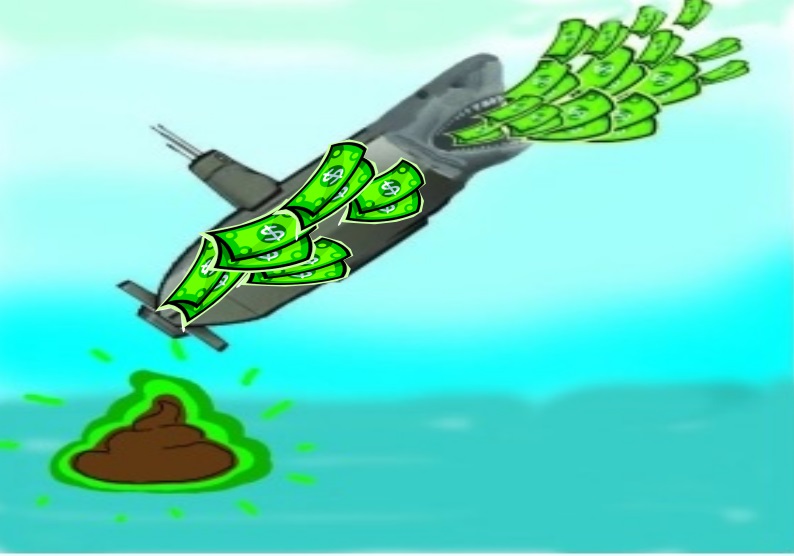
The cost could come in below $300 billion, or easily approach $500 billion.
a large element of old-fashioned pork-barrelling involved.
war with China in the next few years (over Taiwan) isn’t a persuasive argument for submarines that won’t be delivered until the 2030s.
March 17, 2023, John Quiggin, Professor, School of Economics, The University of Queensland https://theconversation.com/18-million-a-job-the-aukus-subs-plan-will-cost-australia-way-more-than-that-202026?utm_source=substack&utm_medium=email
Australian governments have a long and generally dismal history of using defence procurement, and particularly naval procurement, as a form of industry policy.
Examples including the Collins-class submarines, Hobart-class air warfare destroyers and, most recently, the Hunter-class “Future Frigates”.
The stated goal is to build a defence-based manufacturing industry. But there is also a large element of old-fashioned pork-barrelling involved.
In particular, South Australia has nursed grievances over the shutdown of local car making, centred in the state, following the withdrawal of federal government subsidies. The closure of the Osborne Naval Shipyard in north Adelaide would be politically “courageous” for any government.
So the projects roll on, despite technical problems (the six Collins-class subs were plagued by problems with their noise signature, propulsion and combat systems) and cost overruns (the three Hobart destroyers cost $1.4 billion more than the $8 billion budgeted). The $35 billion plan for nine Hunter-class frigates may yet be abandoned given budget constraints.
All these previous ventures are dwarfed by the AUKUS agreement, which involves projected expenditure of up to $368 billion.
As Richard Denniss of The Australia Institute has noted, the precision implied by this number is spurious. The cost could come in below $300 billion, or easily approach $500 billion.
Military case lacking
The case for such a massive investment in submarines has proved hard to make in a simple and convincing way. The “Red Alert” articles published this month by The Sydney Morning Herald and The Age has helped to raise alarm about China. But the warning Australia could find itself at war with China in the next few years (over Taiwan) isn’t a persuasive argument for submarines that won’t be delivered until the 2030s.
Other questions have emerged.
In different ways, former prime ministers Paul Keating and Malcolm Turnbull have questioned the sense of a renewed alliance with the United Kingdom. The UK in a state of obvious decline, and Labour leader Keir Starmer, likely to be Britain’s next prime minister, has been noticeably lukewarm in his support for AUKUS, saying: “Whatever the merits of an Indo-Pacific tilt, maintaining security in Europe must remain our primary objective.”
Then there’s the view, held by many experts, that what has made submarines such potent weapons in the past – stealth – is unlikely to endure. Underwater drones and improved satellite technology could make our subs obsolete even before they are launched.
What about the jobs?
In these circumstances, the easiest political strategy to sell the AUKUS package is to present it as a job-creation program.
This is an appealing path for the federal government, given Prime Minister Anthony Albanese’s yearning for “an Australia that make things”. Albanese’s Twitter account has published tweets extolling the economic benefits of the deal, but none about what the submarines will actually do to make Australians safer.
The obvious response is that the 20,000 jobs the government says the program will directly create over the next 30 years will cost more than $18 million apiece.
But that actually understates how bad the case is.
Where will we find the skilled workers?
Australia already has a shortage of the type of skilled workers required to build the nuclear-powered subs: scientists, technicians and trade workers. Our existing training programs are unlikely to fill the gap. So, the new jobs will mostly be filled either by diverting skilled workers from other industries or by additional immigrants.
The government is grappling with the policies that can meet this existing shortage. Our migration program, for example, allocates extra points for technical skills in short supply, putting skilled workers ahead of people whose motive for migration is to be with their families and friends.
The “Job Ready Graduates” policy introduced by the Morrison government subsidises science, technology, engineering and mathematics degrees, at the expense of humanities and social sciences. This policy is now under review, but may well be maintained in some form.
Such is the scale of the problem that the government’s pre-election commitment to deliver a White Paper on Full Employment (inspired the Chifley government’s 1945 White Paper) has been sidelined by a focus on how to increase the supply of skilled labour, through vocational education, immigration and delayed retirement. Hence the title of the “Jobs and Skills Summit” in September 2022.
There is no indication the shortage of skilled tech workers is going to be resolved any time soon. It is, then, a mistake to boast about the number of technical jobs that will be created by AUKUS.
It would be more accurate to say that, just as the massive financial cost of the submarines will come at the expense of spending on social needs, the workers required to build them will divert skills from addressing needs such as decarbonising the economy.
Perhaps, like previous submarine deals, this plan will be scrapped before consuming the stupendous sums of money now projected. But in the meantime it will divert the Australia’s government from addressing urgent domestic problems.
Jessica Wysser- Submission to Senate – Nuclear power a dangerous distraction from real climate action

To SenateCommittee on Environment and Other Legislation Amendment (Removing Nuclear Energy Prohibitions) Bill 2022 Submission 65
The ban on nuclear power in Australia must remain in place. I support the ban and ask the Senate
Standing Committees to support the continuation of this ban. I am concerned that further nuclear promotion risks delaying the action Australia needs to address the challenges, and maximise the opportunities, of meaningful climate action.
Nuclear power plants are vulnerable to threats which are being exacerbated by climate
change. These include dwindling and warming water sources, sea-level rise, storm damage,
drought, and jelly-fish swarms. Nuclear engineer David Lochbaum states: “You need to solve
global warming for nuclear plants to survive.” Australia does not want or need a nuclear
reactor under these conditions as the country is already affected by climate change and we
can see that it is progressively worsening.
Nuclear power programs have provided cover for numerous weapons programs and an
expansion of nuclear power would worsen the situation. Former US Vice President Al Gore
neatly summarised the problem: “For eight years in the White House, every weaponsproliferation problem we dealt with was connected to a civilian reactor program.
And if we ever got to the point where we wanted to use nuclear reactors to back out a lot of coal … then
we’d have to put them in so many places we’d run that proliferation risk right off the
reasonability scale.”
Nuclear reactors are pre-deployed military or terrorist targets. The
current situation in Ukraine illustrates the risks: electricity supply necessary for reactor
cooling has been repeatedly disrupted by military strikes, posing serious risks of nuclear core
meltdowns. Prior to Russia’s recent attack on Ukraine, there have been numerous military
attacks on nuclear plants. Examples include Israel’s destruction of a research reactor in Iraq in
1981; the United States’ destruction of two smaller research reactors in Iraq in 1991;
attempted military strikes by Iraq and Iran on each other’s nuclear facilities during the 1980 –
88 war; Iraq’s attempted missile strikes on Israel’s nuclear facilities in 1991; and Israel’s
bombing of a suspected nuclear reactor in Syria in 2007.
Having a nuclear reactor opens the country up to the possibility of making Australia a target. Australians would never want or desire this.
Australia needs effective climate action now but nuclear power would slow the transition to a
low-carbon economy. It would increase electricity costs and unnecessarily introduce the
challenges and risks associated with high-level nuclear waste management and the potential
for catastrophic accidents, with profound intergenerational implications for Australians.
Nuclear power is dangerous, expensive, slow and unwanted. Our energy future is renewable
not radioactive.
Thank you for this opportunity to comment.
For the only planet we have https://www.aph.gov.au/Parliamentary_Business/Committees/Senate/Environment_and_Communications/Nuclearprohibitions/Submission
Productivity Commission casts doubt on the federal government’s decision to build nuclear-powered submarines
The Productivity Commission noted that for many years, the defence sector had received effective subsidy rates for domestic production of up to 300 per cent, compared to zero for most other parts of the economy.
It said that given the large sums of money involved in defence, more scrutiny from outside the sector was needed.
Australia should reconsider building its own defence equipment, review finds https://www.theage.com.au/politics/federal/australia-should-reconsider-building-its-own-defence-equipment-review-finds-20230319-p5ctbc.html By Shane Wright, March 19, 2023,
The Productivity Commission has cast doubt over the federal government’s decision to build nuclear-powered submarines in Australia, using its major report into the nation’s economy to argue for a complete re-appraisal of how the country meets its defence needs.
In the same week Prime Minister Anthony Albanese signed off on the AUKUS submarine project with the United States and Britain, at a cost of between $268 billion and $368 billion, the commission’s five-year review of productivity found that in most cases Australia was better off not developing its own defence production capability.
The commission’s report, Advancing Prosperity, made 71 recommendations across more than 1000 pages of analysis. It follows a long-term decline in Australia’s productivity growth rate, which over the past decade has slipped to its lowest level since the 1950s.
Part of the report focused on government infrastructure spending and procurement, particularly around defence, which it noted had for years suffered from “imperfect processes” and huge cost overruns.
It found there were problems in defence spending due to the complexity of much of the equipment, the need for a high-skilled workforce and the costs associated with integrating new technologies with old. This meant in almost all cases, Australia should avoid building its own defence equipment.
“Depending on the context, buying an already proven technology from overseas and not quickly, if ever, developing a domestic production capability is likely to be optimal in many contexts,” it found.
“A sophisticated domestic capability to use, store and maintain equipment would still be required regardless of where it was sourced from but would involve lower costs than domestic production and assembly.”
Under the AUKUS deal, Australia will obtain three Virginia-class submarines from the United States – to arrive in 2033, 2036 and 2039.
In the 2040s, Australia will build a new type of submarine, the SSN AUKUS, based on an updated version of the current British Astute-class submarine and featuring American parts.
The Productivity Commission noted that for many years, the defence sector had received effective subsidy rates for domestic production of up to 300 per cent, compared to zero for most other parts of the economy.
There was also less transparency around projects as governments cited national security grounds. But the commission said these reasons did not justify “the present level of opacity”.
On Sunday, Defence Minister Richard Marles refused to be drawn on the individual cost of the submarines to be supplied under the AUKUS agreement.
Since announcing the project, the government has been at pains to talk up its benefits to the Australian economy, particularly in South Australia and Western Australia.
Last Friday, Albanese said the submarines would create 20,000 jobs directly in Australia and “many tens of thousands” more through the broader economic impact of the project.
“What this will do is highly sophisticated manufacturing will lead to a renaissance of high-value manufacturing in Australia. That money, that economic activity stays right here,” he told ABC radio.
The Productivity Commission said the focus on local industry needs had added to the cost problems around many defence projects. It said that given the large sums of money involved in defence, more scrutiny from outside the sector was needed.
“Defence procurement is ripe for deep and disinterested scrutiny of its processes. There are strong grounds for re-thinking defence procurement, drawing on advice from those outside Defence,” it found.
“The productivity and efficiency benefits of better practices are large given the $270 billion of anticipated defence spending over the next decade.”
Apart from an outside examination of defence spending, the commission also argued all government spending needed closer inspection. It backed the public release of cost-benefit analyses of public projects.
The Grattan Institute’s transport and cities program director, Marion Terrill, said the growth in the number of “mega-projects” demanded more scrutiny.
She said two-thirds of the current major infrastructure projects under way across Australia are worth more than $5 billion, which meant the potential for cost blow-outs was increasing.
The $100 billion cost range for the submarine project meant it faced the same problems as a major infrastructure project.
“The larger the projects, the bigger the contracts, the greater the chance of a cost overrun and the size of that cost overrun being larger. We’ve got to the point where a $100 million project is little more than a rounding error,” she said.
Terrill said she backed the commission’s call for more transparency around public projects.
“We need to look at these projects in terms of taxpayers being shareholders, so it’s only fair that they understand why a decision has been made on their behalf but also the underlying assumptions around the costs and benefits.”
Marles on Sunday rejected suggestions that Australia had given the United States a commitment to assist in a war over Taiwan in return for the purchase of its Virginia-class submarines.
“The answer to that is, of course not. Of course not. And nor was one sought. I’ve listened to that conjecture from a number of commentators. It is plain wrong,” he said.
“What Australia would do or not in respect of any future conflict will be a matter to be considered at that time by the government of the day.”
What to do with dead nuclear submarines? A cautionary tale for Australia.
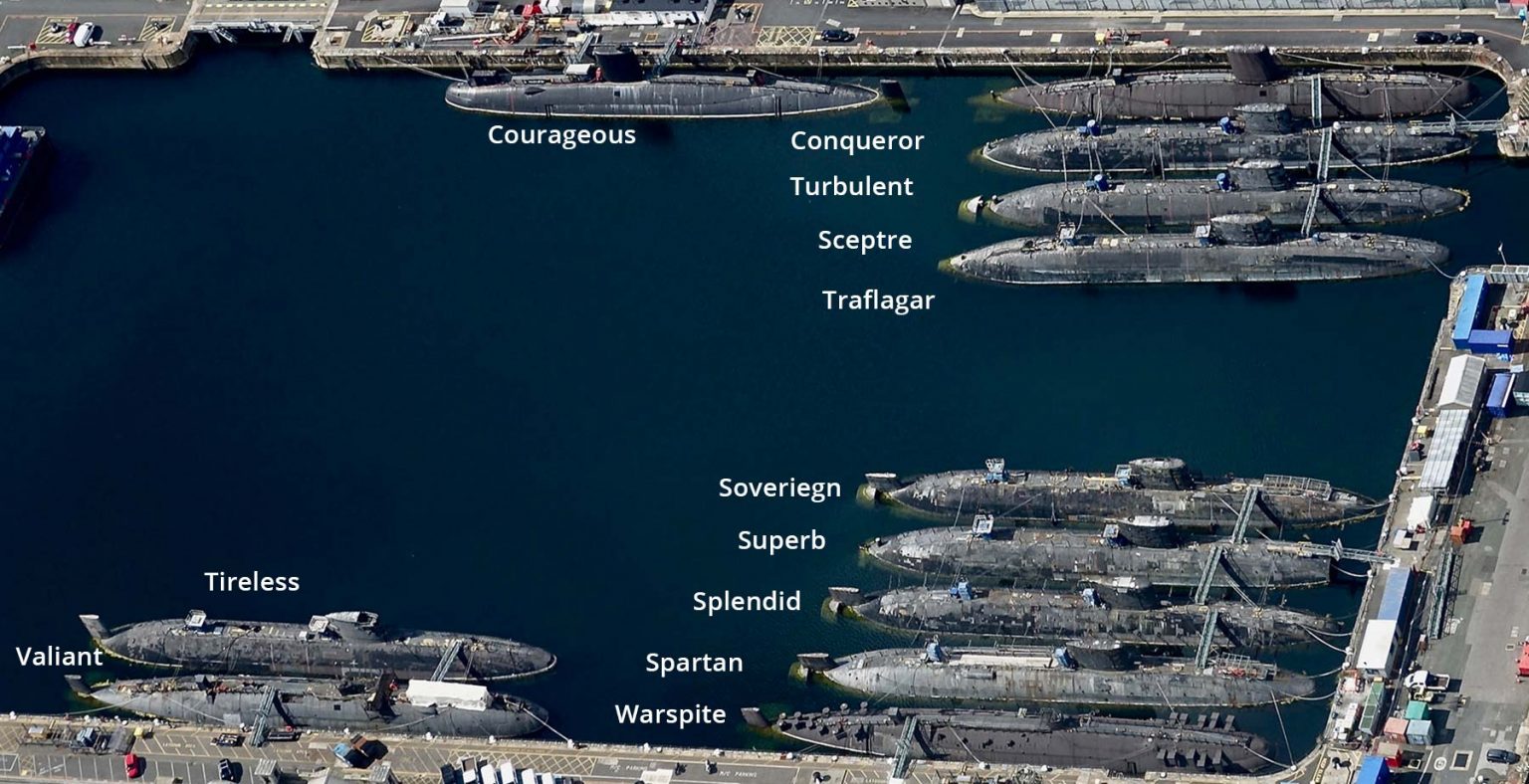
Legacy. It is unacceptable to leave waste for future generations to deal with……
End game
To some extent, the Ministry of Defence is stuck in a vicious circle whereby the cost of storing submarines eats into the budget for their disposal. ………but the glacial pace of work …. is more concerning. There are always more pressing priorities for defence expenditure and the dismantling project has been continually delayed. In the meantime the nuclear and health and safety regulatory requirements that must be met are getting stricter, adding further costs. There is almost complete reliance on Babcock for UK submarine support activity and there is a very finite number of SQEP with nuclear expertise available to recruit in the UK.
Project to dismantle ex-Royal Navy nuclear submarines inches forward, Navy Lookout, 7 Feb 22.
There are currently 21 former Royal Navy nuclear submarines awaiting disposal, 7 in Rosyth and 14 in Devonport. Here we look at the process and the modest progress in efforts to dismantle them.
Kicking the can down the road ………. Unfortunately, successive governments failed to make arrangements for the timely disposal of these boats. In a less environmentally conscious era, filling the boats with concrete and sinking them in the deep ocean was the original plan but the disposal of nuclear waste at sea was banned by the London Dumping Convention in 1983. Planning for the dismantling of these submarines should have been started at that time, but only in the last 10 years has there been a serious effort to grip the issue.
Over time the nuclear regulatory frameworks have become ever-more demanding than when the submarines were conceived. Stricter rules have added more complexity and cost to the dismantling process, ironically adding delays and increasing the amount of nuclear waste awaiting appropriate disposal. HMS Dreadnought decommissioned in 1980, has now been tied up in Rosyth far longer than she was in active service. In the civil nuclear industry, operators are required by law to put aside funds and make plans during the life of the plant to pay for decommissioning. It would be prudent if a similar principle was applied by the MoD to all new nuclear submarine construction.
Besides the attraction of deferring costs in the short-term, a major cause of delays has been the selection of a land storage site for radioactive waste. Low-Level Waste (LLW) is stored at Sellafield in concrete-lined vaults and in 2017 URENCO Nuclear Stewardship Ltd at Capenhurst in Cheshire was selected as the interim site for storing the more dangerous Intermediate Level Waste (ILW). The Reactor Pressure Vessels (RPV) removed from the submarines are classed as ILW and will temporarily be stored in purpose-built buildings above ground. They will eventually be moved to a permanent underground Geological Disposal Facility (GDF)
Afloat storage
While awaiting dismantling, decommissioned submarines are stored afloat in a non-tidal basin in the dockyard. The 7 submarines in Rosyth have all had their nuclear fuel rods removed but of the 14 in Devonport, 10 are still fuelled. This is because in 2003 the facilities for de-fuelling were deemed no longer safe enough to meet modern regulation standards and the process was halted. Submarines that have not had fuel removed have the reactor primary circuit chemically treated to guarantee it remains inert and additional radiation monitoring equipment is fitted.
Apart from regular monitoring, once every 15 years each boat has to be dry-docked for a Survey and Docking Period (SADP) which involves hull inspection and preservation work.
Reasons to accelerate disposal
Cost. The expense of afloat storage and maintenance of decommissioned boats is rising – currently costing approximately £30M per year. Every further delay adds to this and will have to be funded from a defence budget that is much smaller in real terms than when the boats were ordered and built during the Cold War. The total disposal cost will be at least £3bn over 25 years and continue into the 2040s. (This is for the 27 boats listed above – Astute-class dismantling is not yet being considered.) All this effort and expense is a drain on precious MoD resources for zero operational gain with each delay adding to the cost.
Legacy. It is unacceptable to leave waste for future generations to deal with and it is simply common sense to dispose of old equipment at around the same time their replacements come online. Responsible care of the hulks afloat means they pose minimal risk to the environment or local population, but a tiny risk does remain. This makes some people living nearby uneasy and provides another grievance for those ideologically opposed to nuclear submarines and Trident. The minimal environmental hazard they pose is sometimes exaggerated by media, politicians and campaigners to suit their own agenda. The old boats are also a rather uncomfortable reminder of the time when the RN had an SSN force approximately double the strength it is today.
Space. When HMS Trenchant is moved to 3 Basin at Devonport for storage, the basin will be at its licensed capacity. Currently, the MoD only has permission from the nuclear regulator to store 14 boats. Approval to hold 16 will be needed in order to accommodate HMS Talent and Triumph when they decommission. Storing more boats in Rosyth is not an option because of limited space in the basin which is also used for civilian vessels as well as by the aircraft carriers to access the dry dock. Once the purpose-built disposal facility at Devonport is up and running in the early 2030s, it will be more efficient (and likely deemed politically less sensitive than anything in Scotland).
Progress at Rosyth
The Submarine Dismantling Project (SDP) finally started at Rosyth in December 2016, around 15 years behind schedule. A team of around 150 people are working on the site pioneering the two-stage process to remove radioactive waste. Swiftsure was the ‘pilot’ submarine for the project and stage 1 – the removal of LLW. This work was completed and the boat was sealed up and returned to afloat storage in the basin during August 2018. So far, 129 tonnes of mainly metallic LLW have been removed from Swiftsure and Resolution. Many of the older boats have asbestos lagging around pipes, which also has to be removed with exceptional care and disposed of in sealed containers. Stage 1 work on Resolution was completed on time in March 2020 and on budget.
Stage 1 work on Revenge started in March 2020 but was suspended on the 24th due to COVID lockdown and (almost) normal working was not resumed until June 2020……………..
Disposal at Devonport
Progress at Devonport is considerably behind that of Rosyth. The unplanned refuelling of HMS Vanguard added a six-month delay as Babcock engineers were diverted from the SDP to work on the more urgent SSBN refit. ………………..
End game
To some extent, the MoD is stuck in a vicious circle whereby the cost of storing submarines eats into the budget for their disposal. The modest progress at Rosyth in the last 5 years is encouraging but the glacial pace of work in Devonport is more concerning. There are always more pressing priorities for defence expenditure and the dismantling project has been continually delayed. In the meantime the nuclear and health and safety regulatory requirements that must be met are getting stricter, adding further costs. There is almost complete reliance on Babcock for UK submarine support activity and there is a very finite number of SQEP with nuclear expertise available to recruit in the UK.
Like so many problems in defence, the failure to dispose of the boats cannot be blamed on one person, government or company, rather a series of decisions made by many individuals that seemed justifiable at the time. There must be some sympathy for those working to deal with this legacy today, although the thrust of 2019 HoC Public Accounts Committee report on submarine disposal efforts can be summarised as saying “this is simply not good enough”. https://www.navylookout.com/project-to-dismantle-ex-royal-navy-nuclear-submarines-inches-forward/
No country in the world has worked out what to do with its old dead, radioactive, nuclear submarines
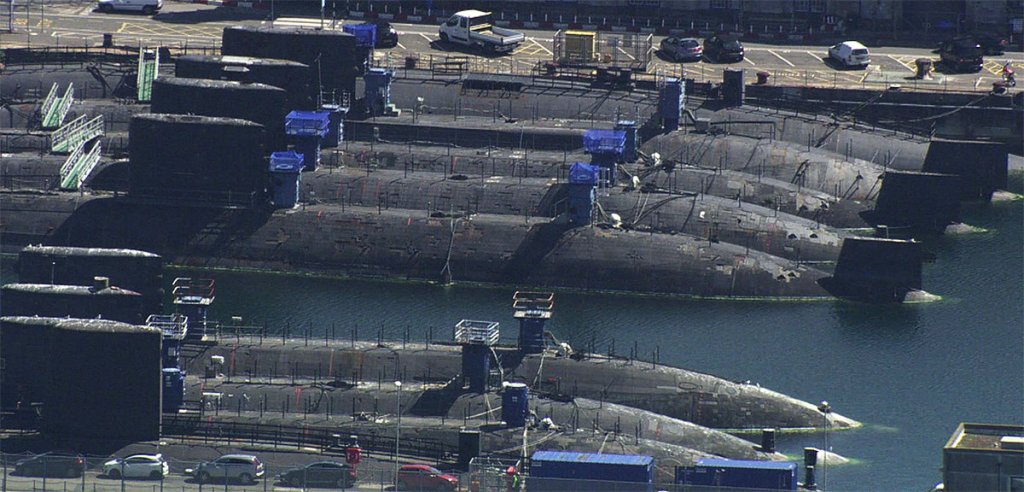
In light of Boris’s new enthusiasm for lots of Rolls-Royce’s so-called “mini-nukes” to generate electricity, it should be better known that the Ministry of Defence has not scrapped any of its 21 similarly Rolls-Royce-powered old nuclear submarines, berthed for up to 40 years.
It has made a start dismantling the hull of one, but there are still no plans for dealing with the reactors beyond burying them. Indeed, no country in the world has properly made safe a worn out mini-nuke-powered ship or submarine.
Guardian 10th April 2022
The AUKUS nuclear deal “stinks” – former environment minister Peter Garret
Former Labor environment minister Peter Garrett has lashed the Aukus
nuclear submarine deal, calling the former Coalition administration’s
decision “the most costly and risky action ever taken by any Australian
government” and saying Anthony Albanese’s decision to back it was a
departure from established ALP policy.
The Midnight Oil frontman and longtime nuclear disarmament activist claimed the $368 billion deal
“stinks”, suggesting the money could be better spent and raising
concerns about how Australia will dispose of nuclear waste from the boats.
Guardian 17th March 2023
Australia needs to rethink plan to buy nuclear submarines
If the sale goes ahead, this would be a clear violation of the Treaty on the Non-Proliferation of Nuclear Weapons, and open up a Pandora’s box
SCMP Editorial, 20 Mar, 2023
The Aukus alliance powers – Australia, the United Kingdom and the United States – have revealed details of the controversial plan to equip Australia with eight nuclear-powered submarines in coming years. This does nothing to ease growing concerns about an arms race and a threat to peace and security in the region. The three countries are parties to the Treaty on the Non-Proliferation of Nuclear Weapons (NPT).
But the plan amounts to nuclear proliferation because, unlike the other two, Australia is not presently a nuclear power and will become the first to acquire nuclear-powered submarines. The US is willing to share nuclear technology with a Pacific ally as part of its containment policy towards China.
No matter how the narrative is shaped around the defence needs of a security partner, this is proliferation. Where is the line to be drawn now? How are other nuclear powers to be restrained when it suits their geopolitical interests to export nuclear technology and weapons potential to other, non-nuclear countries?
Consider the real potential for nuclear proliferation through a loophole in the NPT that exempts fissile material for military use such as naval propulsion from scrutiny by the International Atomic Energy Agency. This raises concerns among proliferation experts about the future diversion of exempt fissile materials to weapons production. This would make it difficult to avoid a nuclear arms race in the region……….. more https://www.scmp.com/comment/opinion/article/3214086/australia-needs-rethink-plan-buy-nuclear-submarines
New Mexico says no to storing spent nuclear fuel as Biden touts nuclear energy: ‘The trouble is this is a forever decision’

Yahoo Finance, Susan Montoya Bryan, The Associated Press, Sun, March 19, 2023
New Mexico’s governor on Friday signed legislation aimed at keeping spent nuclear fuel produced by commercial U.S. nuclear power plants from being shipped to the state, just hours after the measure cleared its final legislative hurdle
Democratic Gov. Michelle Lujan Grisham wasted no time adding her signature after the New Mexico House voted 35-28 in favor of the bill following a lengthy debate. Five Democrats joined Republicans in opposition, arguing that the measure would challenge longstanding federal authority over nuclear safety matters and lead to new court challenges.
The bill from Democratic state Sen. Jeff Steinborn, of Las Cruces, will impact a proposed multibillion-dollar facility in southeastern New Mexico that would have the capacity to temporarily store up to 8,680 metric tons of used uranium fuel. Future expansion could make room for as many as 10,000 canisters of spent fuel over six decades.
The Nuclear Regulatory Commission may announce a decision soon on whether to grant a license for the project spearheaded by Holtec International, which has spent an estimated $80 million over the past eight years on the approval process.
Lujan Grisham and members of New Mexico’s congressional delegation have voiced strong opposition to building the facility along the state’s border with Texas. Both states sued the federal government over the issue, and top elected officials in Texas were unsuccessful in their efforts to stop a similar facility in neighboring Andrews County from being licensed.
If a license is granted for the complex in New Mexico, it would still need permits from the state Environment Department. That’s where critics say the state could lean on the legislation and halt the project.
Rep. Gail Chasey, an Albuquerque Democrat, argued that there has been no incentive for states with nuclear power plants to find permanent solutions for dealing with spent fuel. As long as New Mexico is seen as an option, those states won’t be concerned with the long-term effects, she said.
“The trouble is this is a forever decision. We don’t get to decide, oh, let’s not do this anymore and take it away,” Chasey said. “So think about the fact that if it were such a profitable and good thing, then the states that produced it would have it near their facilities.”
According to the U.S. Department of Energy, nuclear reactors across the country produce more than 2,000 metric tons of radioactive waste a year, with most of it remaining on-site because there’s nowhere else to put it.
Since the federal government has failed to build a permanent repository, it reimburses utilities to house the fuel. That cost is expected to stretch into the tens of billions of dollars over the next decade, according to a review by independent government auditors.
The fuel is sitting at temporary storage sites in nearly three dozen states, either enclosed in steel-lined concrete pools of water or in steel and concrete containers known as casks…………… https://finance.yahoo.com/news/mexico-says-no-storing-spent-155358959.html—
Spent Matters: The AUKUS Nuclear Waste Problem
March 19, 2023, Dr Binoy Kampmark https://theaimn.com/spent-matters-the-aukus-nuclear-waste-problem/
When Australia – vassal be thy name – assumed responsibilities for not only throwing money at both US and British shipbuilders, lending up territory and naval facilities for war like a gambling drunk, and essentially asking its officials to commit seppuku for the Imperium, another task was given. While the ditzy and dunderheaded wonders in Canberra would be acquiring submarines with nuclear propulsion technology, there would be that rather problematic issue of what to do with the waste. “Yes,” said the obliging Australians, “we will deal with it.”
The Australian Defence Department has published a fact sheet on the matter, which, as all such fact sheets go, fudges the facts and sports a degree of misplaced optimism. It promises a “sophisticated security and safety architecture” around the nuclear-powered submarine program, “building on our 70-year unblemished track record of operating nuclear facilities and conducting nuclear science activities.”
This record, which is rather more blemished than officials would care to admit, does not extend to the specific issues arising from maintaining a nuclear-powered submarine fleet and the high-level waste that would require shielding and cooling. In the context of such a vessel, this would entail pulling out and disposing of the reactor once the submarine is decommissioned.
Australia’s experience, to date, only extends to the storage of low-level waste and intermediate-level waste arising from nuclear medicine and laboratory research, with the low-level variant being stored at over a hundred sites in the country. That situation has been regarded as unsustainable and politically contentious.
The department admits that the storage and disposal of such waste and spent fuel will require necessary facilities and trained personnel, appropriate transport, interim and permanent storage facilities and “social license earned and sustained with local and regional communities.” But it also notes that the UK and the US “will assist Australia in developing this capability, leveraging Australia’s decades of safely and securely managing radioactive waste domestically”.
That’s mighty good of them to do so, given that both countries have failed to move beyond the problem of temporary storage. In the UK, the issue of disposing waste from decommissioned nuclear submarines remains stuck in community consultation. In the US, no option has emerged after the Obama administration killed off a repository program to store waste underneath Nevada’s Yucca Mountain. The reasons for doing so, sulked Republicans at the time, were political rather than technical.
Where, then, will the facilities to store and dispose of such waste be located? “Defence – working with relevant agencies including the Australian Radioactive Waste Agency – will undertake a review in 2023 to identify locations in the current or future Defence estate that could be suitable to store and dispose of intermediate-level waste and high-level waste, including spent fuel.”
The various state premiers are already suggesting that finding a site will be problematic. Both Victoria and Western Australia are pointing fingers at South Australia as the logical option, while Queensland has declared that “under no circumstances” would it permit nuclear waste to be stored. “I think the waste can go where all the jobs are going,” remarked Victorian Premier Daniel Andrews. “I don’t think that’s unreasonable, is it?”
-ADVERTISEMENT-
Western Australia’s Mark McGowan, in furious agreement, suggested that a site “somewhere remote, somewhere with very good long-term geological structure that doesn’t change or move and somewhere that is defence lands” narrowed down the options. “[T]hat’s why Woomera springs to mind.”
South Australia’s Premier, Peter Malinauskas, insists that the waste should go “where it is in the nation’s interest to put it” and not be a matter of “some domestic political tit-for-tat, or some state-based parochial thing.”
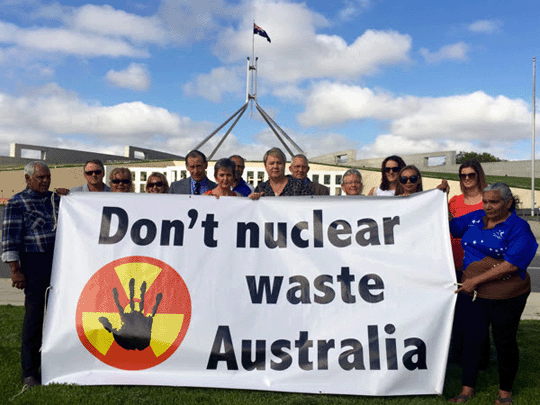
When it comes to storing nuclear waste, parochialism is all but guaranteed. The Australian government is already facing a legal challenge from traditional owners regarding a 2021 decision to locate a nuclear waste site at Kimba in South Australia. The effort to find a site for the National Radioactive Waste Management Facility intended for low and intermediate radioactive waste produced by the Australian Nuclear Science and Technology Organisation at Lucas Heights, New South Wales, took three decades.
According to members of the First Nations group opposing the decision, the proposed facility risks interfering with a sacred site for women. Dawn Taylor, a Barngarla woman and Kimba resident, told the ABC that, “The Seven Sisters is through that area.” She feared that the waste facility would end up “destroying” the stories associated with the dreaming.
The federal resources minister, Madeleine King, has stated with little conviction that a cultural heritage management plan “informed by the research of the Barngarla people” is in place. “There are strict protocols around the work that is going on right now to make sure there is no disturbance of cultural heritage.”
Local farmers, including the consistently vocal Peter Woolford, are also opposed to the project. “We just can’t understand why you would expose this great agricultural industry we have here in grain production to any potential risk at all by having a nuclear waste dump here.”
The Australian security establishment may well be glorifying in the moment of AUKUS, itself an insensibly parochial gesture of provocation and regional destabilisation, but agitated residents and irate state politicians are promising a good deal of sensible mischief.
UK’s costly struggle to deal with dead nuclear submarines.

The MoD has also been slated for the cost of maintaining the subs, £30 million a year.
Rosyth to be ‘de-nuclearised’ with removal of old submarines
https://www.dunfermlinepress.com/news/23150469.rosyth-de-nuclearised-removal-old-submarines/ By Ally McRoberts 27th November, 22
ALL of the laid-up nuclear submarines will be gone as part of a UK Government pledge to “de-nuclearise Rosyth” by 2035.
Councillors were given an update on the programme to remove radioactive waste and turn the seven boats that have been parked at the dockyard for decades into “tin cans and razor blades”.
The Ministry of Defence have faced heavy criticism for the delays in dealing with the nuclear legacy, with 27 Royal Navy subs to be scrapped in total.
Christine Bruce, from the Rosyth Submarine Dismantling Project, said most of the Low-Level Radioactive Waste (LLW) should be gone by the end of 2024.
She added: “The subs will take a bit longer but we’ve got a forward programme which definitely does remove them all by about 2035.
“It absolutely is our aim to do what we said all those years ago, to de-nuclearise Rosyth.”
One of the decommissioned subs, Dreadnought, has been in the Rosyth basin since 1980 and she admitted that it had been out of service for so long that a lot of the low-level radiation had “disappeared naturally”.
The MoD has also been slated for the cost of maintaining the subs, £30 million a year.
At the South and West Fife area committee yesterday (Wednesday), Ms Bruce acknowledged: “It’s taken a long time to get to where we are.
We started in 1998, I was part of it from the beginning, it’s taken quite a long time to come up with the policy and for good reasons.
“There were no easy answers. If it had been easy we would have done it a long time before now.
“The aim is to get rid of 27 submarines, of which seven are at Rosyth and the rest are, or will be, at Devonport.”
A facility to deal with the boats at Rosyth had to be brought up to date, to make sure it was safe to remove the radioactive material, with funding from the MoD.
Work started on Swiftsure in 2015-16 and around 52 tonnes of LLW was removed, with most of the metals recycled.
With lessons learned from the first sub, they progressed and removed 77 tonnes from Resolution and then 120 tonnes from Revenge.
The next step was a world first, the removal of the reactor from Revenge, the most radioactive part left in the sub, as well as the steam generators.
Next will be removing the rest of the LLW from Swiftsure so all that’s left is the reactor, which should be taken out around 2025.
The sub was to be recycled elsewhere but it’s cheaper, safer and more secure “to do the first one at Rosyth” and then sell it off to scrap merchants.
Gordon McAughey, head of internal assurance at Babcock Rosyth, added: “Hopefully, by 2026, the skyline change at Rosyth will occur where the first boat will be gone, it will be tin cans and razor blades.
“It’s a very challenging programme to build a facility to do all this work and to get all the permissions from regulators, but what I will say is we never compromise on safety for the sake of progress. We can’t compromise on safety.”
LLW is to be taken to a facility in Dorset, which should be completed next year, by 2024.
The reactors are to be taken to Capenhurst in Cheshire and it hasn’t yet been decided if they’ll be transported by road or sea.
Ms Bruce said safety and security would be paramount.
The daunting, long and untested effort to deal with UK’s dead nuclear submarines.
CUTTING up an old nuclear sub to turn it into “razor blades and tin cans”
will be a world first for Rosyth. Seven vessels have been laid up at the
dockyard for decades – the last one came out of service in 1996 – and
there’s finally some progress in getting rid of them.
Three subs, Swiftsure, Resolution and Revenge, have had 90 per cent of their low-level
radioactive waste removed and the next step is something no-one has tried
before. Christine Bruce, assistant head of nuclear liabilities at the
Submarine Delivery Agency (SDA), explained: “Stage two is the most
challenging and in some ways the most exciting part, when we take out
what’s left of the centre of the reactor. “It’s the reactor pressure
vessel, it’s like a giant kettle, but it’s the most radioactive part that’s
left so taking it out is key to the rest of the submarine being able to be
disposed of like a conventional ship.” Some countries with old subs have
left the reactor intact but a different approach is being taken at Rosyth.
She added: “The method we’re adopting is dismantling and no-one else has
done that.
“When we manage to cut it up by 2026 that will be a global
first. No-one else will have cut up a nuclear submarine.” Ms Bruce told
Forces News that safety was “paramount” and they expect to start work in
late 2025. She said: “Once that’s out, the rest of the vessel will be
non-radioactive, it’s scrap metal and can be put into the final stage of
disposal, which is recycling. “There’s lots of very valuable steel and
other alloys in there, there’s even some gold connectors!” It costs £30
million a year to maintain and store the subs and dismantling all 27 is
expected to cost more than £3 billion.
The Ministry of Defence has faced
heavy criticism for the delays in getting rid of the subs – Dreadnought
was retired in the 1980s and has been at Rosyth longer than she was in
service.
Dunfermline Press 18th Feb 2022
https://www.dunfermlinepress.com/news/19934615.rosyth-nuclear-sub-recycled-scrap-metal-global-first/
The worst of plans — Beyond Nuclear International

Condemnation continues over impending Fukushima radioactive water dump
The worst of plans — Beyond Nuclear International
NSW in landmark crown land tender for major solar and wind projects — RenewEconomy

NSW in innovate role reversal, offering crown land for use by major wind and solar developers after striking deal with landholder. The post NSW in landmark crown land tender for major solar and wind projects appeared first on RenewEconomy.
NSW in landmark crown land tender for major solar and wind projects — RenewEconomy
1 This month

of the week – Australians for War Powers Reform (AWPR)
To see nuclear-related stories in greater depth and intensity
 Antinuclear