The Road to War- Adelaide 6pm Wed 29 March – new Australian documentary by David Bradbury
The Road to War is a new film directed and produced by David Bradbury, one of Australia’s most respected political documentary filmmakers. Bradbury has more than four decades of journalistic and filmmaking experience having covered many of the world’s trouble spots since the end of the Vietnam war, including Southeast Asia, Iraq, East Timor, revolutions and civil war in Central and South America, India, China, Nepal and West Papua.
In The Road To War, Bradbury interviews former Australian diplomats and numerous defence experts and analysts – including John Lander, Hugh White, Richard Tanter – about AUKUS and its massive arms procurement policies, including the nuclear-powered submarines, as well as the deteriorating US relationship with China and the implications for Australia.
Michelle Fahy, who appears in the film, discusses the undue influence of the arms industry on government policy, revolving door appointments and the arms industry links of various former defence ministers, and the anti-China position of the Australian Strategic Policy Institute (ASPI) including the conflicts inherent in ASPI’s funding arrangements, which Michelle wrote about in 2021.
Bradbury, a twice Oscar-nominated filmmaker, says: “I was driven to make this film because of the urgency of the situation. I fear we will be sucked into a nuclear war with China and/or Russia from which we will never recover, were some of us to survive the first salvo of nuclear warheads.”
He continues, “We must put a hard brake on Australia joining in the current arms race as the international situation deteriorates. We owe it to our children and future generations of Australians who already face the gravest existential danger of their young lives from climate change”.
There is general shared concern among those experts Bradbury interviews in the film that Australia is being set up as a US proxy in a potential war with China.
For example:
“Basing US B52 and stealth bombers in Australia is all part of preparing Australia to be the protagonist on behalf of the United States in a war against China. If the US can’t get Taiwan to be the proxy, or its patsy, it will be Australia,” says John Lander, former deputy Ambassador to China (1974-6), first Ambassador to the Islamic Republic of Iran (1985-8) and three times head of the China section of Australia’s Department of Foreign Affairs and Trade.
Military analyst, Dr Richard Tanter, fears the US military’s spy base at Pine Gap near Alice Springs, will be the first target of any direct confrontation between the US and Russia or China.
“The US military base at Pine Gap is critical to the US military’s global strategy, especially nuclear missile threats in the region. The generals in Moscow and Beijing would have it as a top priority on their nuclear Hit List,” says Tanter, whose 40 years of ground-breaking research on Pine Gap with colleague, Dr Des Ball, has provided the clearest insight into the unique role Pine Gap plays for the US.
“Should Russia or China want to send a signal to Washington that it means business and ‘don’t push us any further’, a one-off nuclear strike on Pine Gap would do that very effectively, without triggering retaliation from the US since it doesn’t take out a US mainland installation or city,” says Dr Tanter. “It’s horrible to talk about part of Australia in these terms but one has to be a realist with what comes to us by aligning ourselves with the US.”
Next screening: Adelaide, 6pm, Wednesday 29 March
The Adelaide screening is at the Capri Theatre. 6pm for drinks, screening at 7pm, followed by Q & A. Panellists include former SA Senator Rex Patrick along with filmmaker David Bradbury. Buy tickets online here.
Further screenings are being arranged for other cities and regional centres, including Canberra. Details TBA.
Inside the AUKUS machine: scrutinising the political links to defence contracts

there has not been nearly enough scepticism about the AUKUS deal from Australia’s major media players
Led by a prime minister with a penchant for fudging reality, the $368 billion AUKUS submarine deal leaves much unexamined.
DAVID HARDAKER, MAR 28, 2023 https://www.crikey.com.au/2023/03/28/inside-aukus-submarine-deal-political-links/
This is part one in a series. For the full series, go here.
There is much about the AUKUS deal that is surprising — if not shocking.
There is the astronomical cost of $368 billion, double the most extravagant guesstimates made by experts before Prime Minister Anthony Albanese’s announcement in San Diego earlier this month.
There are the hurried circumstances in the run-up to the federal election — all done within 24 hours — in which the ALP opposition committed itself to the deal proposed by then prime minister Scott Morrison.
And there is the extreme secrecy that has surrounded AUKUS from its inception, with Morrison having orchestrated events on a need-to-know basis, only ever consulting those who had a direct interest in expanding Australia’s defence budget.
The AUKUS arrangement emerged from the final desperate days of one of Australia’s worst governments. It was led by a prime minister who had a habit of fudging reality and who secretly sought to accumulate the powers of five of his ministerial colleagues, without having a coherent rationale.
At the same time, there has not been nearly enough scepticism about the AUKUS deal from Australia’s major media players. Some have even been offended that former prime minister Paul Keating would raise serious questions, focusing more on the manner than the substance of what he said.
For these reasons, Crikey will be introducing a bit of sunlight — the best disinfectant — into the fetid corners of the AUKUS machine.
You don’t have to be a China stooge to question AUKUS, yet that is how much of the public debate has been conducted so far.
To begin our coverage, this week we report on the activities of two of the biggest political names from the Coalition’s decade in office. They are former treasurer Joe Hockey and former defence minister (and before that minister for defence industry) Christopher Pyne.
The two have one thing in common: they both leapt from public office directly into the lucrative world of defence industry and investment. In Hockey’s case, he ceased his role as Australia’s ambassador to the US on January 30 2020. ASIC records show that his consultancy, Bondi Partners (which relies on Washington contacts), was registered on January 29 2020.
In Pyne’s case, he ceased as defence minister and retired from federal Parliament in April 2019. Within a month, the Pyne & Partners business name was registered. The record shows that predecessor entities had been set up by a former Pyne staffer before Pyne retired. These moves are separate from Pyne’s work with consulting firm EY, which he began within weeks of leaving Parliament. Pyne’s work with EY, where the former defence minister advised on defence matters, led to a Senate inquiry into whether or not he had breached ministerial standards.
Pyne and Hockey aren’t the first from the political class to turn to the defence industries after leaving office. The political revolving door is well known.
Continue readingJan Wu – submission – renewables are very suitable for Australia, not dirty nuclear power.
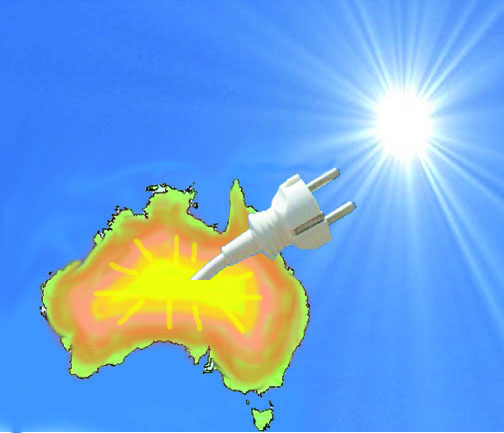
With solar and wind energy now well developed, we do not need to have
nuclear power, having one less problem of considering how to dispose the
nuclear waste one day.
the government should invest on solar power, since we have vast unused land in
the middle of the country, covered with sun, by using solar energy, we might be
also able to address our desertification problem as well. https://www.aph.gov.au/Parliamentary_Business/Committees/Senate/Environment_and_Communications/Nuclearprohibitions/Submission
AUKUS is ‘going against’ Pacific nuclear free treaty – Cook Islands leader

Cook Islands Prime Minister Mark Brown has joined a growing list of Pacific leaders to object to the $US250 billion nuclear submarine deal between Australia, United Kingdom and the United States (Aukus).
The Aukus project, which will allow Australia to acquire upto eight nuclear-powered submarines, has been widely condemned by proponents of nuclear non-proliferation.
It has also fuelled concerns that the submarine pact, viewed as an arrangement to combat China, will heighten geopolitical tensions and disturb the peace and security of the region, which is a notion that Canberra has rejected.
Brown, who is the Pacific Islands Forum (PIF) chair, told Cook Islands News he was concerned about the Aukus deal because it is “going against” the Pacific’s principal nuclear non-proliferation agreement.
We’ve all abided by the Treaty of Rarotonga, signed in 1985, which was about reducing the proliferation of nuclear weapons and nuclear vessels,” he told the newspaper.
The Treaty of Rarotonga has more than a dozen countries signed up to it, including Australia and New Zealand.
But it is what it is,” he said of the tripartite arrangement.
“We’ve already seen it will lead to an escalation of tension, and we’re not happy with that as a region.”
Other regional leaders who have publicly expressed concerns about the deal include Solomon Islands PM Manasseh Sogavare, Tuvalu’s foreign Minister Simon Kofe, and Vanuatu’s Climate Change Minister Ralph Regenvanu.
With Cook Islands set to host this year’s PIF meeting in October, Brown has hinted that the “conflicting” nuclear submarine deal is expected to be a big part of the agenda.
“The name Pacific means peace, so to have this increase of naval nuclear vessels coming through the region is in direct contrast with that,” he said.
“I think there will be opportunities where we will individually and collectively as a forum voice our concern about the increase in nuclear vessels.”
Brown said “a good result” at the leaders gathering “would be the larger countries respecting the wishes of Pacific countries.”
“Many are in opposition of nuclear weapons and nuclear vessels,” he said.
“The whole intention of the Treaty of Rarotonga was to try to de-escalate what were at the time Cold War tensions between the major superpowers.”
This Aukus arrangement seems to be going against it,” he added.
Alan Hewett submission to Senate Nuclear Inquiry- Nuclear power could only delay Australia’s transition to clean renewable energy
Environment and Other Legislation Amendment (Removing Nuclear Energy Prohibitions) Bill 2022 Submission 92
The federal Department of Industry, Science, Energy and Resources expects 69% renewable
supply to the Australian National Electricity Market by 2030. The Albanese Labor government’s
target is 82% renewable supply by 2030.
South Australia has already reached 67% renewable supply and will comfortably meet the target of 100% net renewable supply by 2030.
Nuclear power could not in any way facilitate Australia’s energy transition ‒ it could only delay the
transition and make it more expensive and contentious
Nuclear power would unnecessarily introduce risks of catastrophic nuclear accidents and military or terrorist attacks. It would inevitably bequeath future generations with streams of high-, intermediate- and low-level
nuclear waste. We urge all politicians and political parties to focus on the transition to a lowcarbon economy and to reject nuclear power because it is too slow, too expensive, too dangerous, and those promoting it are mostly the same people trying to slow and derail the transition to a low-carbon economy. https://www.aph.gov.au/Parliamentary_Business/Committees/Senate/Environment_and_Communications/Nuclearprohibitions/Submission
Michele Kwok Submission – nuclear power is not clean -it’s polluting at every stage

Environment and Other Legislation Amendment (Removing Nuclear Energy Prohibitions) Bill 2022 Submission 80
It’s concerning that nuclear energy is viewed as clean energy and as a solution to climate crisis.
Every stage of the production pollutes.
Uranium poses high risk in ground water contamination, currently a subject of concern all over the world due
to related severe health problems to humans, as groundwater is the main drinking water source in remote
communities.
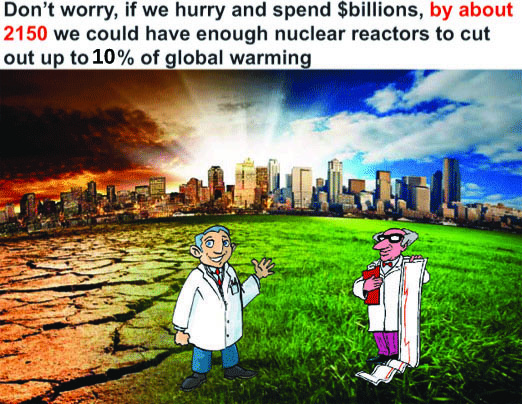
Nuclear energy is very expensive compared to wind and sun energy Every power reactor construction project in Western Europe and the US over the past decade has been a disaster: True costs have exceeded company and government estimates by $10 billion or more for all these projects, and delays range from 7 to 13 years. Unsurprisingly, few new reactors are being built.
There is no viable means to manage nuclear waste.
Overall, not economical, too risky and the negative impacts on health should be a concern for us all. https://www.aph.gov.au/Parliamentary_Business/Committees/Senate/Environment_and_Communications/Nuclearprohibitions/Submission
Unions question Labor over AUKUS nuclear submarines
Canberra Times, By Tess Ikonomou, March 28 2023
Australia’s union movement has criticised plans to acquire nuclear-powered submarines under the AUKUS partnership, declaring support for a “nuclear-free defence policy”.
Prime Minister Anthony Albanese earlier this month revealed the $368 billion pathway Australia will take to get the boats under a security pact with the US and UK.
ACTU president Michele O’Neil said unions were seeking more detail from the government so they could discuss what this meant for workers in worried communities.
“The ACTU has a long-standing policy of opposition to nuclear power, nuclear waste and proliferation,” she told the National Press Club in Canberra on Tuesday.
“We also have a long-standing policy position that supports a nuclear-free defence policy.”
Under the nuclear submarine program, US and UK boats will start rotating through Western Australia from as early as 2027.
Ms O’Neil said there had not been the chance to talk through the acquisition of nuclear-powered submarines due to a lack of information.
“There are safety issues for us,” she said…………………………….. https://www.canberratimes.com.au/story/8139050/unions-question-labor-over-aukus-nuclear-submarines/
Solar relief for social housing as four companies act to slash soaring power bills — RenewEconomy

Four solar companies partner to create a lower-cost rooftop PV package that can slash power bills for social housing tenants by up to 40%. The post Solar relief for social housing as four companies act to slash soaring power bills appeared first on RenewEconomy.
Solar relief for social housing as four companies act to slash soaring power bills — RenewEconomy
South Australia about to take another big step towards fossil free grid — RenewEconomy

The world’s most renewable grid is about to take another big step towards running truly fossil fuel free – at least on occasions. The post South Australia about to take another big step towards fossil free grid appeared first on RenewEconomy.
South Australia about to take another big step towards fossil free grid — RenewEconomy
From Coalition fig leaf to Green-teal ALP deal: A closer look at Safeguard Mechanism 3.0 — RenewEconomy

The Coalition thought of it, and the Greens, Teals and Labor got rid of most of its warts. But exactly what will the Safeguard Mechanism do? The post From Coalition fig leaf to Green-teal ALP deal: A closer look at Safeguard Mechanism 3.0 appeared first on RenewEconomy.
From Coalition fig leaf to Green-teal ALP deal: A closer look at Safeguard Mechanism 3.0 — RenewEconomy
Rooftop solar’s dominant summer: Homes and businesses outpower brown coal — RenewEconomy

New figures show that small-scale rooftop solar systems provided the biggest chunk yet of Australia’s electricity needs during the summer months. The post Rooftop solar’s dominant summer: Homes and businesses outpower brown coal appeared first on RenewEconomy.
Rooftop solar’s dominant summer: Homes and businesses outpower brown coal — RenewEconomy
Over 100 Canadian organisations oppose funding for small modular nuclear reactors in federal budget

Ottawa, Monday, March 27, 2023 – Environmental and civil society groups are giving a thumbs-down after the federal government announced new funding on Friday towards the development of small modular nuclear reactors (SMRs). The groups will be looking closely at the numbers in Tuesday’s budget.
The “Prime Minister Trudeau and President Biden Joint Statement,“ issued on Friday March 24, committed Canada to provide funding and in-kind support for a US-led program to promote SMRs.
The Canadian government’s Strategic Innovation Fund has already given close to $100 million to corporations working on experimental SMR technologies. In addition, the Canada Infrastructure Bank has committed $970 million to Ontario Power Generation’s plan for a 300-megawatt SMR at Darlington. Federal funding is benefiting US-based companies GE-Hitachi and Westinghouse, and Canada’s SNC-Lavalin, among others.
All the funded SMR projects are still in the research and development phase. Worldwide, no SMRs have ever been built for domestic use.
In addition, the federal government is giving Atomic Energy of Canada Limited $1.35 billion a year to conduct nuclear research and development and to manage its toxic radioactive waste. Nearly all this funding is transferred to a consortium of SNC-Lavalin and two US-based companies (Fluor and Jacobs) that that are heavily involved in nuclear weapons and SMR research.
Over 100 groups from all across Canada have criticized the federal government’s plan to promote SMR nuclear technology, stating that:
- SMRs are a dirty, dangerous distraction that will produce radioactive waste of many kinds. Especially worrisome are those proposed reactors that would extract plutonium from irradiated fuel, raising the spectre of nuclear weapons proliferation.
- SMRs will take too long to develop to address the urgent climate crisis in the short time frame necessary to achieve Canada’s goals.
- SMRs will be much more expensive than renewable energy and energy efficiency. Small reactors will be even more expensive per unit of power than the current large ones, which have priced themselves out of the market.
- Nuclear power creates fewer jobs than renewable energy and efficiency. Solar, wind and tidal power are among the fastest-growing job sectors in North America. The International Energy Agency forecasts that 90% of new electrical capacity installed worldwide over the next five years will be renewable.
The federal government needs to invest urgently in renewables, energy conservation and climate action, not slow, expensive, speculative nuclear technologies.
QUOTES:
“Taxpayer dollars should not be wasted on a future technology whose time is past, like nuclear reactors, when truly clean renewable solutions are up-and-running and getting more affordable all the time.” – Dr. Gordon Edwards, Canadian Coalition for Nuclear Responsibility
“Let’s compete to be world leaders in renewables. Pouring public funding into speculative reactor technologies is sabotaging our efforts to address the climate crisis.” – Dr. Ole Hendrickson, Sierra Club Canada Foundation
The SMR technologies are all at the early R&D stage, yet the funding is not following good governance practices by requiring high standards of peer review.“ – Dr. Susan O’Donnell, Coalition for Responsible Energy Development in New Brunswick
1 This month

of the week – Australians for War Powers Reform (AWPR)
To see nuclear-related stories in greater depth and intensity
 Antinuclear