The Road to War: latest film by David Bradbury
By Sandi KeaneMar 28, 2023, https://johnmenadue.com/the-road-to-war-latest-film-by-david-bradbury/?fbclid=IwAR3lvD8het8Z3qvYDpluqiSqJSvMP8KfDvzJZ26FS6xlMQ54bPTslzldOfA
As international tensions rise to a new level, with the Ukraine war passing its first anniversary and the Albanese Government set to announce its commitment of hundreds of billions of dollars to new weaponry, nuclear propelled subs, stealth bombers etc, The Road to War brings into sharp focus why it is not in Australia’s best interests to be dragged into an American-led war with China.
The Road to War is directed by one of Australia’s most respected political documentary filmmakers, David Bradbury. Bradbury has more than four decades of journalistic and filmmaking experience behind him having covered many of the world’s trouble spots since the end of the Vietnam war — SE Asia, Iraq, East Timor, revolutions and civil war in Central and South America, India, China, Nepal and West Papua.
“I was driven to make this film because of the urgency of the situation. I fear we will be sucked into a nuclear war with China and/or Russia from which we will never recover, were some of us to survive the first salvo of nuclear warheads,” says the twice Oscar-nominated filmmaker.
“We must put a hard brake on Australia joining in the current arms race as the international situation deteriorates. We owe it to our children and future generations of Australians who already face the gravest existential danger of their young lives from Climate Change,” says Bradbury.
There is general concern among the defence analysts Bradbury interviews in the film that Australia is being set up to be the US proxy in its coming war with China. And that neither the Labor nor LNP governments have learnt anything from being dragged into America’s wars of folly since World War II — Korea, Vietnam, two disastrous wars in Iraq and America’s failed 20 year war in Afghanistan which ripped that country apart, only to see the Taliban warlords return the country and its female population to feudal times.
“Basing US B52 and Stealth bombers in Australia is all part of preparing Australia to be the protagonist on behalf of the United States in a war against China. If the US can’t get Taiwan to be the proxy or its patsy, it will be Australia,” says former Australian ambassador to China and Iran, John Lander.
Military analyst, Dr Richard Tanter, fears the US military’s spy base at Pine Gap near Alice Springs, will be the first target of any direct confrontation between the US and Russia or China.
“The US military base at Pine Gap is critical to the US military’s global strategy, especially nuclear missile threats in the region. The generals in Moscow and Beijing would have it as a top priority on their nuclear Hit List,” says Dr Tanter whose 40 years of ground-breaking research on Pine Gap with colleague, Dr Des Ball, has provided us with the clearest insight to the unique role Pine Gap plays for the US. Everything from programming US drone attacks to detecting the first critical seconds of nuclear ICBM’s lifting off from their deep underground silos in China or Russia, to directing crippling nuclear retaliation on its enemy.
“Should Russia or China want to send a signal to Washington that it means business and ‘don’t push us any further’, a one-off nuclear strike on Pine Gap would do that very effectively, without triggering retaliation from the US since it doesn’t take out a US mainland installation or city,” says Dr Tanter.
“It’s horrible to talk about part of Australia in these terms but one has to be a realist with what comes to us by aligning ourselves with the US,” Tanter says.
“Studies show in the event of even a very limited nuclear exchange between any of the nuclear powers, up to two billion people would starve to death from nuclear winter,” says Dr Sue Wareham of the Medical Association for the Prevention of War.
“The Australian Government, Prime Minister, Anthony Albanese, and Minister for Defence, Richard Marles, have a serious responsibility to look after all Australians. Not just those living in cities. Were Pine Gap to be hit with even one nuclear missile, Health Minister Mark Butler would be hard pressed to find any volunteer nurses and doctors willing to risk their lives to help survivors in Alice Springs, Darwin and surrounding communities from even one nuclear missile hitting this critical US target,” says Dr Wareham.
Further information or interviews with David Bradbury: david@frontlinefilms.com.au
Media enquiries:
Sandi Keane: 0427 260 319 keanesandi@gmail.com, Twitter: @jarrapin
Omigawd! Nuclear zealot Jonathon Mead is to get his own little government department nuclear supergroup
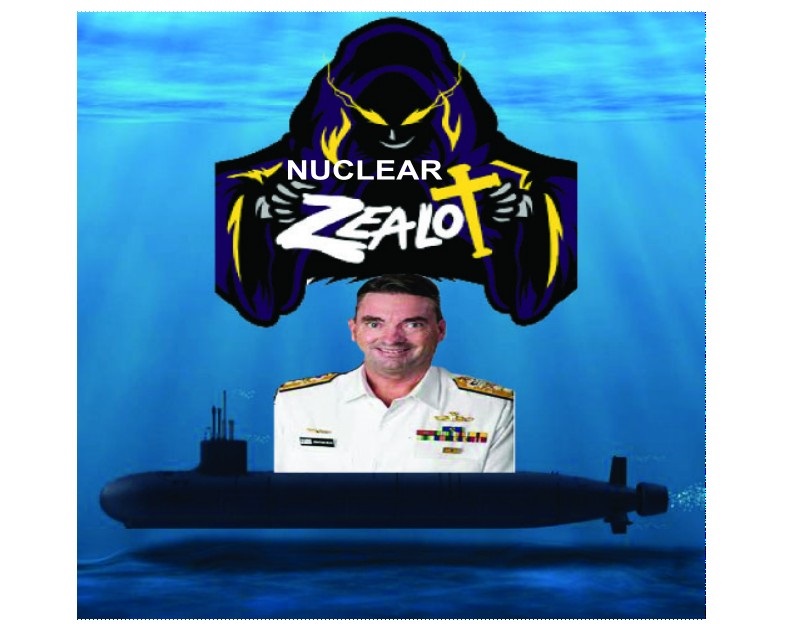
While the exact contours, structure and mandate of the group are yet to take shape, the role of this new organisational arrangement bears examination. Driven by the complexities of nuclear technology, the group’s remit reaches outside conventional defence policy domains into areas such as education and industrial policy that are usually led by domestic policy agencies at the federal and state level.
Planning for Australia’s nuclear submarine ‘supergroup’ , 30 Mar 2023, |Hugh Piper, The Strategist,
“………. With the nuclear-powered submarines to be acquired under the AUKUS partnership, Australia has set itself perhaps the most ambitious public-procurement undertaking in its history. To match the scale of this venture, according to a report in The Australian, the submarine taskforce led by Vice Admiral Jonathan Mead will evolve and grow into a new ‘a stand-alone group inside Defence that will draw personnel from across the government’.
In public-service speak, a ‘group’ is usually the largest organisational unit in a federal government department, headed by a deputy-secretary-level public servant or a three-star military officer. That the submarine acquisition is being elevated to this level reflects the magnitude of the enterprise and the fact that it will become a permanent and dominant feature of the Australian defence organisation for decades to come.
Equally interesting, though, is the scope of this new group in Defence. The Australian described it as a multiagency group ‘responsible for all elements of the program, including safety, non-proliferation and regulatory measures, international engagement, education and training, industry development and project management’. Its head will have ‘a direct reporting line to Defence Minister Richard Marles’.
While the exact contours, structure and mandate of the group are yet to take shape, the role of this new organisational arrangement bears examination. Driven by the complexities of nuclear technology, the group’s remit reaches outside conventional defence policy domains into areas such as education and industrial policy that are usually led by domestic policy agencies at the federal and state level.
Defence will have to acquire new policy capabilities to tackle these issues—but also develop networks and institutional relationships with a much wider range of domestic stakeholders. Moreover, the government will need to decide the exact limits of Defence’s policy leadership. Education and industrial policy are, for instance, intrinsically linked to labour and innovation policy.
The reported scope of the group also includes policy domains and functions that the Department of Foreign Affairs and Trade would conventionally lead, namely international engagement and non-proliferation. For Defence instead to take leadership of these areas would mark a fundamental shift in the division of labour in Australian foreign policy.
………………………… There needs to be room for proper consideration of broader foreign policy equities within a structure that is unapologetically mission-focused on delivering defence capability. As the mixed reaction in the Indo-Pacific to AUKUS has demonstrated, Australia can’t assume an overall permissive environment for its strategic policy, so diplomacy is as vital to manifesting the submarines as building a nuclear industrial base. These risks are, however, manageable through effective governance.
…………..There’s also speculation that it could have its own budget line separate from the rest of Defence https://www.aspistrategist.org.au/planning-for-australias-nuclear-submarine-supergroup/
Aukus subs deal firms China support for Asean nuclear weapon-free zone
Beijing ‘willing’ to become first nuclear-armed state to sign treaty pledging to keep the weapons out of Southeast Asia
China’s efforts to woo its neighbours is a counter to US alliance building in the region, which now includes nuclear-powered submarines for Australia
Laura Zhou SCMP, 28 Mar 23
China is willing to sign a treaty making Southeast Asia a nuclear weapons-free zone, in Beijing’s latest effort to woo its neighbours and counter Washington’s decision to speed the sale of nuclear-powered submarines and technology to Australia.
Chinese Foreign Minister Qin Gang made the pledge at a meeting with Kao Kim Hourn, secretary general of the Association of Southeast Asian Nations, in Beijing on Monday. It would make China the first major nuclear power to commit to the zone.
Asean secretary general Kao Kim Hourn (left) and Chinese foreign minister Qin Gang in Beijing on Monday. Photo: Xinhua
China is willing to sign a treaty making Southeast Asia a nuclear weapons-free zone, in Beijing’s latest effort to woo its neighbours and counter Washington’s decision to speed the sale of nuclear-powered submarines and technology to Australia.
Chinese Foreign Minister Qin Gang made the pledge at a meeting with Kao Kim Hourn, secretary general of the Association of Southeast Asian Nations, in Beijing on Monday. It would make China the first major nuclear power to commit to the zone.
“China is willing to take the lead in signing the protocol to the Southeast Asia Nuclear Weapon Free Zone treaty and advocate with Asean for solidarity and win-win cooperation to safeguard regional security and stability,” he said.
The treaty has been in force since 1997 and obliges the 10 Asean member states “not to develop, manufacture or otherwise acquire, possess or have control over nuclear weapons; station or transport nuclear weapons by any means; or test or use nuclear weapons”.
None of the five recognised nuclear-armed states – China, France, Russia, Britain and the US – has acceded to the treaty’s protocol, which implies a commitment not to use nuclear weapons within the zone or against any contracting state.
Chinese President Xi Jinping said in 2021 that Beijing was ready to sign the protocol – also known as the Bangkok Treaty – “at the earliest possible date”, just months after the US-led Aukus alliance with Australia and Britain was unveiled.
The latest pledge comes at a time when China is increasingly vigilant towards Aukus, which two weeks ago announced a pathway for Australia to acquire three, possibly five, US nuclear-powered submarines by the early 2030s.
In his meeting with Kao, Qin said China’s domestic and foreign policies had maintained “a high degree of stability and continuity”, according to a Chinese foreign ministry readout.
Qin said China’s policies would “inject more stability into regional peace and tranquillity, while providing more strong momentum for regional development and prosperity”………………….
Beijing is strongly opposed to Aukus and the Quad – a US-led partnership with Japan, India and Australia – which together form the centrepiece of Washington’s strategy of building alliances to contain China, in its view.
The Aukus announcement – which may pave the way for Canberra to eventually build its own attack submersibles – was described by Chinese foreign ministry spokesman Wang Wenbin as “nothing but selfish”. The US, Australia and Britain “had gone further down a wrong and dangerous road”, he said.
The deal also intensified regional concerns in Southeast Asia. Hours after the announcement, Malaysia said it was important for all countries to refrain “from any provocation that could potentially trigger an arms race or affect peace and security in the region”.
Indonesia, another major power in Southeast Asia, urged Australia to comply with its non-proliferation treaty obligations, saying that it was the responsibility of all countries to maintain peace and stability in the region………………………….. https://www.scmp.com/news/china/diplomacy/article/3215103/aukus-subs-deal-firms-china-support-asean-nuclear-weapon-free-zone
Russia Calls Out ‘Nuclear Weapons Hypocrisy’: US Has Tactical Nukes In 5 Non-Nuclear Weapon States

“For the last 60 years Washington has been playing a key role in NATO’s nuclear sharing missions by supporting deployment of its tactical nuclear weapons in five non-nuclear weapon states – Belgium, Germany, Italy, Netherlands, and Turkey,“
BY TYLER DURDEN, ZERO HEDGE, WEDNESDAY, MAR 29, 2023
The Kremlin has blasted what a Russian official called the United States’ “vivid example of hypocrisy” as part of the latest war of words in the wake of President Putin’s announcing he has stationed tactical nuclear weapons in neighboring Belarus.
Russian Ambassador to the United States Anatoly Antonov on Tuesday called out Washington’s “extremely short memory” – given it “has long been systematically destroying the legal basis of bilateral relations in strategic sphere,” which is a reference to the collapse of multiple nuclear treaties of late, including ‘Open Skies’ and the INF Treaty in 2019. New START is also looking to come to an end at the rate things are going.
CBS recounts of what Putin said:
Russia has ratcheted up tensions with the West amid its ongoing war against Ukraine, with President Vladimir Putin saying Moscow will deploy “tactical nuclear weapons” in Belarus. The Russian leader said 10 fighter jets capable of carrying tactical nuclear weapons — generally a reference to smaller weapons used for limited battlefield attacks, rather than larger, long-range “strategic” nuclear weapons — were already deployed in Belarus. ………..
In response, the US State Department condemned the Russian leader’s “irresponsible nuclear rhetoric,” and said that “no other country is inflicting such damage on arms control, nor seeking to undermine strategic stability in Europe.”
The scathing denunciation had been issued by US State Department representative Vedant Patel………………
Antonov underscored that the US has long stationed nuclear weapons not far from Russia: “For the last 60 years Washington has been playing a key role in NATO’s nuclear sharing missions by supporting deployment of its tactical nuclear weapons in five non-nuclear weapon states – Belgium, Germany, Italy, Netherlands, and Turkey,” he said. Putin had days ago voiced a similar rationale… https://www.zerohedge.com/geopolitical/russia-calls-out-nuclear-weapons-hypocrisy-us-has-tactical-nukes-5-non-nuclear-weapon5-non-nuclear-weapon
US-NATO proxy war in Ukraine utilises space technology
The Global Network monthly space video this time reviews how space satellites are used by the US-NATO to target Russian-ethnic regions of the Donbass in eastern Ukraine and Russian military forces.
Elon Musk’s Space X company is deploying tens of thousands of Starlink satellites in Lower Earth Orbit (LEO). The parking lots in LEO are getting dangerously crowded. Scientists fear cascading collisions as a result.
| The Pentagon is using Musk’s Starlink satellites to provide surveillance and targeting information to the Ukrainian army. Whichever nation(s) control LEO enables them to have considerable advantage on the battlefield. China is responding by announcing it will launch 13,000 satellites into LEO in order to prevent the US-NATO from totally filling up the scarce orbital parking spaces.Danger exists as major powers compete for access and/or domination in space. A new United Nations space weapons ban treaty is needed now more than ever. |
|---|
1 This month

of the week – Australians for War Powers Reform (AWPR)
To see nuclear-related stories in greater depth and intensity
 Antinuclear