Foiled Escape: UC Global, the CIA and Julian Assange

Even better will be the abandoning of the entire proceeding, the reversal of the extradition order made in June 2022 by then Home Secretary Priti Patel, and a finding by the UK authorities that the case against Assange is monstrously political, compromised from the start and emptied of legal principle.
April 30, 2023, Dr Binoy Kampmark https://theaimn.com/foiled-escape-uc-global-the-cia-and-julian-assange/
However described, the shabby treatment of Julian Assange never ceases to startle. While he continues to suffer in Belmarsh prison awaiting the torments of an interminable legal process, more material is coming out showing the way he was spied upon while staying at the Ecuadorian embassy in London. Of late, the Spanish daily El País has been keeping up its exemplary coverage on the subject, notably on the conduct of the Spanish-based security firm, UC Global SL.
There is a twist in the latest smidgens of information on the alleged bad conduct by that particular company. As luck would have it, UC Global was commissioned by Rommy Vallejo, the chief of Ecuador’s now defunct national intelligence secretariat, SENAIN, to give the London embassy premises a security and technological touch-up.
Vallejo may have sought their services, but seemed blissfully ignorant that he had granted the fox access to the chicken coop. This access involved the installation of hidden microphones throughout the embassy by UC Global at the direction of its owner, David Morales. Morales, it seems, was updating the US Central Intelligence Agency with information about Assange’s meetings with his legal team throughout.
Much of this was revealed in the trial against Assange conducted at the Central Criminal Court in 2020, though the presiding Judge Vanessa Baraitser seemed oddly unmoved by the revelations, as she was by chatter among US intelligence operatives to engineer an abduction or assassination of the WikiLeaks founder.
The link between UC Global and the CIA was the fruit of work between Morales and one of his most notable clients, the casino company, Las Vegas Sands. Morales was responsible for supplying the owner of the company, the late billionaire magnate and Republican donor Sheldon Adelson, with personal security. In the merry-go-round of this field, one of those on Adelson’s personal security detail was a former CIA officer.
On December 20, 2017, Michelle Wallemacq, the head of operations at UC Global, penned a note to two technicians responsible for monitoring security at the embassy. “Be on the lookout tomorrow to see what you can get… and make it work.” The request was related to a scheduled meeting between Assange and Vallejo. The theme of the discussion: to get the Australian publisher out of the embassy, grant him Ecuadorian citizenship and furnish him with a diplomatic passport. This had a heroic, even quixotic quality to it: the grant of a diplomatic passport would not have necessarily passed muster; and the chances of Assange being arrested could hardly be discounted.
Eleven months prior to Morales passing on the tip that scuttled Assange’s escape plans, Morales was already chasing up his staff from one of Adelson’s properties, The Venetian Resort in Las Vegas. One technician received the following: “Do you have status reports on the embassy’s computer systems, and networks? I need an inventory of systems and equipment, the guest’s [Assange] phones, and the number of networks.” He also warned his technicians to be wary “that we may be monitored, so everything confidential should be encrypted… Everything is related to the UK subject… The people in control are our friends in the USA.”
On June 12, 2017, Morales, enroute to Washington, DC, requested his contact to activate a File Transfer Protocol server and web portal from their Spanish headquarters. The portal in question: the Ecuadorian Embassy in London. Material began being collected on Assange’s guests, eclectic and of all stripes: journalists, doctors, lawyers, diplomats. Mobile phone data was also hoovered up. After his Washington stop, Morales popped into Las Vegas Sands, where he met his eager “American friends” to reveal the information so far gathered about Assange.
Over this time, it becomes clear, in Morales’s own words, that “he had gone over to the dark side” and that “they were working in the Champions League”. Emails sent on September 8 speak of offering “our information collection and analysis capability to the American client.” Discussions with a UC Global technician focus on gathering information from the microphones in the embassy. “The guest [Assange] has three rooms and uses two quite frequently… We would have all the audio from there except in one room.”
On September 21, it was clear to Morales that they had gotten sufficiently mired in the business of spying on Assange to be wary of any potential surveillance from SENAIN. “I would like my whereabouts to be kept confidential, especially my trips to the USA.” Instructions are distributed to gather data on the embassy’s Wi-Fi network, photos of the interior and furnishings of the embassy, and any data on Assange’s primary visitors, notably any members of his legal team.
The recording of one meeting would prove critical to upending plans to get Assange out of the embassy. Present Assange, his lawyer, now wife Stella Morris, Ecuadorian consul Fidel Narváez and Vallejo. The date for the getaway was slated for December 25, with the plan that Assange leave via one of the ambassador’s cars which would make its way through the Eurotunnel to Switzerland or some designated destination on the continent. “It’s very late,” wrote one of the technicians a few hours after the meeting’s conclusion to Morales. “Because it’s so big, I put the file in a shared Dropbox folder. Someone with experience in audio can make it more intelligible.” While Vallejo could be heard fairly clearly, the voices of Assange and Morris were “very muffled”.
Within a matter of hours, Morales had relayed the material to those “American friends” of his, greasing the wheels for proceedings that would culminate in Assange’s expulsion in 2019 and the indictment listing 18 charges, 17 of which are drawn from the Espionage Act of 1917. The plan to leave the embassy was never executed.
There are two significant events that also transpired before Vallejo’s visit to Assange. The first involved an advisor to the Ecuadorian Foreign Minister who is said to have had information about the plan regarding Assange’s escape. He was assaulted by a number of hooded men at Quito Airport on his return from the United States.
On December 17, 2017, it was time for hooded assailants to turn their attention to the Madrid law offices of Baltasar Garzón and Aitor Martínez. Their target: a computer server. The timing was ominous; both lawyers had just returned from meeting Assange in the London embassy. The intruders proved untraceable by the Spanish police, despite leaving prints.
In hindsight, it does seem remarkable that Vallejo and SENAIN remained ignorant of the rotten apples in UC Global. As things stand, Morales is facing a formal complaint filed by Assange in the Spanish National Court. He is also facing an investigation for alleged breaches of privacy, the violation of attorney-client confidentiality, misappropriation, bribery and money laundering. The presiding magistrate on the case, Santiago Pedraz, has requested the US House Permanent Select Committee on Intelligence to press the CIA in supplying information about the embassy spying.
Even better will be the abandoning of the entire proceeding, the reversal of the extradition order made in June 2022 by then Home Secretary Priti Patel, and a finding by the UK authorities that the case against Assange is monstrously political, compromised from the start and emptied of legal principle.
$123B Contingencies for Nuclear Subs Unveiled
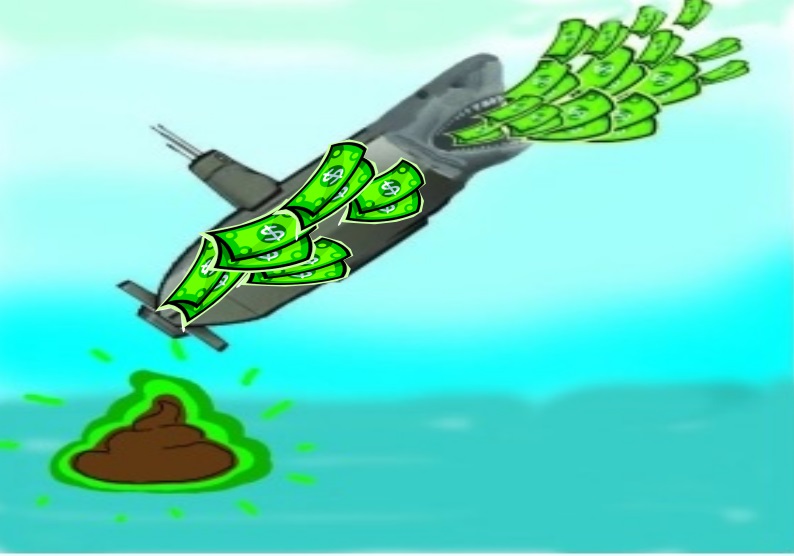
“The Albanese government is giving Defence a totally unprecedented $122 billion stuff-up fund. This is a license to fail on contract negotiations and project delivery for the AUKUS submarine deal.
“It’s extraordinary that a whopping one third of the $368 billion nuclear submarines budget comes with no strings attached.
https://www.miragenews.com/123b-contingencies-for-nuclear-subs-unveiled-996385/ 30 APR 2023
An extraordinary $122.9 billion, that’s one-third of the $368 billion dollar price tag for nuclear submarines, has been allocated to a so-called “contingency” budget, according to new figures released by the Parliamentary Budget Office, commissioned by the Greens.
The PBO analysis, which is based on Defence figures, for the first time shows that $122.9 billion dollars has been earmarked for “contingency” funding as part of the government’s projected budget. The amount of contingency funding is setting off alarm bells about the sheer scale of no-strings-attached public funding allocated to the deal.
The PBO figures also show the unfair intergenerational impact of the AUKUS subs. Hundreds of billions in costs will be heavily skewed to future budgets, forcing deep cuts to public spending for decades.
Australian Greens Defence Spokesperson Senator David Shoebridge said:
“The Albanese government is giving Defence a totally unprecedented $122 billion stuff-up fund. This is a license to fail on contract negotiations and project delivery for the AUKUS submarine deal.
“It’s extraordinary that a whopping one third of the $368 billion nuclear submarines budget comes with no strings attached.
“The scale of this contingency fund demonstrates that the government has no real idea how they will deliver these hugely expensive submarines or what the true costs of the nuclear sub deal will be.
“No serious project planner in any other industry would be allowed to have a third of the total budget as contingency – this is worse than a blank cheque, it’s an incentive for profligate Defence spending.
For the AUKUS subs deal Defence has persuaded the Albanese government to take away any restraint on future spending or project delivery. When you add in the repeated failures of Defence to deliver past projects on time or on budget this is worse than negligent.
“To help sell the deal the Albanese government is burying the most exorbitant expenditure across future budgets, in a brazen attack on future generations. This is deceptive and reckless budgeting and it means young people and future generations will inherit a savage debt.
“Babies who haven’t even been born yet will spend their lives paying for these nuclear subs rather than getting essential public services and support because Labor has signed up to this toxic deal.
“It’s grossly unjust to steal from future generations to pay for today’s political mistakes, but that’s exactly what is happening here with our children and grandchildren saddled with the bulk of the $368 billion bill, ” Senator Shoebridge said.
RWE says Australian eight hour battery win puts it on path to 3GW of storage — RenewEconomy

Germany energy giant RWE says the landmark battery storage win in Australia with its proposed eight hour storage configuration is part of a global ambition to build 3GW of battery storage capacity by 2030. RWE Renewables is to build a 50MW, eight hour battery (400MWh) next to its 249MW Limondale solar farm in south-west NSW…
RWE says Australian eight hour battery win puts it on path to 3GW of storage — RenewEconomy
Last of 66 concrete foundations laid for biggest wind farm in NSW — RenewEconomy

Last of 66 concrete foundations poured at what will be the biggest wind farm in NSW, supplying power to a gold mine. The post Last of 66 concrete foundations laid for biggest wind farm in NSW appeared first on RenewEconomy.
Last of 66 concrete foundations laid for biggest wind farm in NSW — RenewEconomy
Eight hour big battery trumps pumped hydro in NSW long duration storage tender — RenewEconomy

First big battery with eight hours storage beats pumped hydro projects to win Australia’s first long duration storage tender. The post Eight hour big battery trumps pumped hydro in NSW long duration storage tender appeared first on RenewEconomy.
Eight hour big battery trumps pumped hydro in NSW long duration storage tender — RenewEconomy
NSW gets stunning low price for wind and solar in biggest renewables auction — RenewEconomy

NSW announced results of first renewable auction, with solar prices below $35/MWh and wind below $50/MWh. The post NSW gets stunning low price for wind and solar in biggest renewables auction appeared first on RenewEconomy.
NSW gets stunning low price for wind and solar in biggest renewables auction — RenewEconomy
“We won’t be scapegoats!” — French opposition to nuclear waste dumping

“This land is our land.” French goats bleat against nuclear fuel pool threat
“We won’t be scapegoats!” — Beyond Nuclear International
Contrary to popular propaganda, nuclear reprocessing is not recycling. This has never been more evident than in the current crisis at La Hague, where the irradiated fuel pools are now full to capacity. Part of the reason is the country’s insistence on producing mixed-oxide reactor fuel from the plutonium and uranium separated at La Hague. So much of it has proven defective, that is has been returned to La Hague, filling up the fuel pools.
opposing French plans to extend the licenses of current reactors and to build new ones with, as they point out, absolutely no consideration of what will happen to the radioactive waste.
A new tongue-in-cheek rebellion has risen in France, but the cause is deadly serious
By Linda Pentz Gunter, https://beyondnuclearinternational.org/2023/04/30/we-wont-be-scapegoats/
In France, civil disobedience and defiance of authority — and authoritarianism — is in the national DNA. We have seen it most recently in the demonstrations against the raising of the retirement age, and against proposed agricultural reservoirs known as mega-basins. Before that it was the “yellow vests”, angered at a rise in fuel prices. Further back came the Resistance during World War II, and even further back, of course, the Revolution of 1789.
The French anti-nuclear movement is no exception and has engaged in protests that deliver considerable numbers and abundant creativity — and sometimes a lot of useful tractors as well.
It’s no surprise then to learn that such continued defiance has now spread: to goats.
Before continuing, it’s necessary to explain what a ZAD is. In French, it stands for Zone À Défendre (zone to defend.) ZADs are usually occupations or blocades created by citizens protecting something they deem precious from development or destruction. There are scores of ZADs across France, deemed illegal by French authorities. ZADs have sometimes won, most notably at Notre-Dame-des-Landes, where an unpopular airport project was stopped.
But raids on ZADs can sometimes turn violent, and authorities can over-react as they did in February 2018 at Bure, when 500 gendarmes went in to remove just 15 anti-nuclear activists occupying and attempting to protect the forested site targeted to become the country’s high-level radioactive waste dump.
Dressed in riot gear, the gendarmes used bulldozers, trucks, helicopters, drones and chainsaws to confront the occupiers, self-described “owls” who had been living in tree houses and lookout towers for the past 18 months.
Now, activists around the La Hague nuclear reprocessing site on the northern Cherbourg peninsula, have redefined the ZAD acronym to stand for Zone À Déchets (Waste Zone), and specifically radioactive waste.
Contrary to popular propaganda, nuclear reprocessing is not recycling. This has never been more evident than in the current crisis at La Hague, where the irradiated fuel pools are now full to capacity. Part of the reason is the country’s insistence on producing mixed-oxide reactor fuel from the plutonium and uranium separated at La Hague. So much of it has proven defective, that is has been returned to La Hague, filling up the fuel pools.
A slowdown in reprocessing due to technical failures has also hastened the overcrowding of La Hague’s four spent fuel pools with excess irradiated fuel rods. These pools risk saturation by 2030 and the French safety authority has criticized La Hague owner, Orano’s suggestion that it could pack the pools more densely as this raises safety risks.
The owner of the French nuclear fleet, EDF, is responsible for managing the waste fuel their reactors produce. Its solution to the overcrowding at La Hague is to build a new fuel pool at the site, at a cost of $1.37 billion.
And that has locals up in arms — and hooves.
Normandy, the province in which La Hague is located, is strongly agricultural. Cows — and dairy products — abound. As do goats. While those still domesticated produce cheese, there is also a significant and famous wild goat population, known as les chèvres des fossés, that ranges freely on the coastal cliffs.
Accordingly, a new La Hague opposition group, Piscine Nucléaire Stop (Stop the Nuclear Fuel Pool), found a way to communicate the threat a new fuel would pose to agriculture and the environment by recruiting some goats to their cause.
In an amusing action that was posted on Facebook and was covered in the press, the activists placed an array of artistic — and realistic — cut-out goats at an intersection in the town of Jobourg, one of the communities that would be affected by the health and environmental risks of a new nuclear fuel pool. The town gives its name to the famous wild Jobourg goats and has erected a statue in their honor.
Then the goats put out their own statement. It read:
“We nanny and billy goats of Jobourg, claim our right to decide the fate of our land, and affirm today our opposition to the EDF spent fuel storage pool project.
Continue readingApril 30 Energy News — geoharvey

Opinion: ¶ “Volkswagen Has A Huge Avenue For US Market Expansion – If It Takes It” • In the first quarter of 2023, Volkswagen accounted for less than 2% of the US auto market. It doesn’t have a big US presence. But it could. A significant change in a market provides an opportunity for companies […]
April 30 Energy News — geoharvey
Sensitive files on nuclear submarine found in English pub restroom
kk/kb 30.04.2023 British services have launched an investigation into the alleged finding of Royal Navy documents marked “official sensitive” in a Wetherspoons pub restroom in Barrow-in-Furness, England, media reported. The files reportedly concerned HMS Anson, the most recent of the navy’s cutting-edge nuclear-powered submarines.
According to “The Sun” daily, the files showed the inner workings of the torpedo-loaded vessel, including key details regarding its hydraulics, which control torpedo hatches.
They were reportedly found with a Royal Navy lanyard from the new GBP 1.3 bn (USD 1.63 bn) submarine……………………………… https://tvpworld.com/69544839/sensitive-files-on-nuclear-submarine-found-in-english-pub-restroom
‘New Zealand should say sorry’ – sailors posted to watch nuclear tests
RNZ Jimmy Ellingham, Manawatū reporter, jimmy.ellingham@rnz.co.nz 1 May 23
New Zealand sailors exposed to British nuclear tests in the Pacific in the 1950s remain unhappy they have never had a government apology for being placed in harm’s way.
On the weekend the veterans, now aged at least in their 80s, held a reunion in Palmerston North.
For many of them it could be their last chance to catch up with their mates from Operation Grapple, which happened in 1957 and 1958, when New Zealand vessels HMNZS Pukaki and Rotoiti observed tests near Christmas Island, now part of Kiribati……………………………….
In the mid-1990s, Tahi and fellow veteran, the late Roy Sefton, organised the first reunion in Palmerston North, which revealed four decades of suffering.
“They stood up and spoke about the defects they had with their children, and that was terrible.
“A guy stood up and said, ‘How come I lost my two boys? They were 18 years old. They had cancer.’ He was carrying the genes, you see.”
Sefton and Tahi led the veterans’ association and have lobbied successive governments for an apology for being exposed to radiation, to no avail……………
The lack of acknowledgement from New Zealand’s government was particularly frustrating for the veterans, given the effects the tests had on them were confirmed by a scientific study.
It was done by now-retired Massey University associate professor Dr Al Rowland.
“I conducted a big research programme on the nuclear test veterans and I discovered alarming evidence of long-term genetic damage.”
This damage was a consequence of Operation Grapple, he said.
Rowland is the veterans’ association patron and he said it saddened him that they still had not received an apology.
“What we are looking for is recognition of the research, from the government.
“The international scientific community have accepted the work and I’ve received a lot of plaudits. In fact, I received an ONZM for the research from John Key’s government.”
Despite that, he said the veterans’ association had regular meetings with ministers, but was making no progress.
Roy Sefton died two years ago, but down the years he fought for pensions for veterans and their families, said his daughter, Anu……………………………………… https://www.rnz.co.nz/news/national/489021/new-zealand-should-say-sorry-sailors-posted-to-watch-nuclear-tests
1 This month

of the week – Australians for War Powers Reform (AWPR)
To see nuclear-related stories in greater depth and intensity
 Antinuclear