TODAY. Nuclear power is SO IRRELEVANT – to climate! It’s almost funny, -but it’s NOT funny.

Today, Australia’s Prime Minister is in Germany, to joining several counties, including other big carbon polluters, in a “Climate Club” to preach about “zero carbon emissions by 2050”.
2050? It’s too late – big boys!
The Australian big boys, like those of USA – will pay lip service to a worthy principle – but it’s pointless, because Climate Change – better named as Global Heating – is upon us NOW.
The job now is to slow the Global Heating process down – by energy conservation, truly renewable energy. The job is also justice, fairness, global effort to help those most affected by the heat, floods, fires – now raging.
Oh and what about nuclear power? And those stupid little “small modular nuclear reactors (SMRs)”?
Well, one or two of them might be working commercially by 2050, having no effect on climate change.
But of course, that’s not the point, is it? Small nuclear reactors are for weaponry, for nuclear submarines etc. Those powerful blokes, (and a few token women) – they love weaponry, high-technology for killing people – war is such fun!
So they just lie about “SMRs to solve climate change”

Australia needs a nuclear power school to develop AUKUS capability: Navy chief.

Australian Navy Vice Admiral Mark Hammond says a nuclear power school should be developed out of Adelaide or Perth if Australia is serious about developing its sovereign AUKUS capability.
Mr Hammond believes a nuclear power school would help our nation reduce reliance on the US, according to Sky News host Amanda Stoker.
Failed Fukushima Fixes Falling Like Dominoes
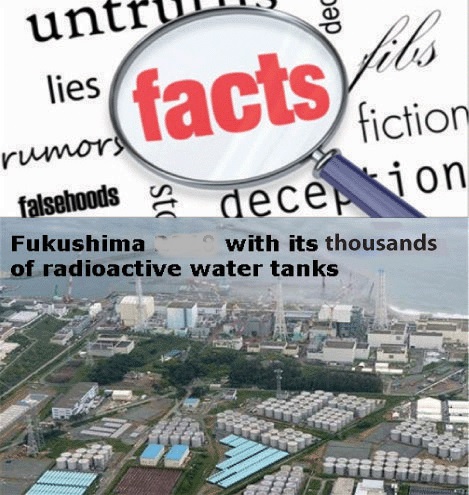
CounterPunch BY JOHN LAFORGE, 6 July, 23
“……………………………………………………………………Tepco’s cost-avoidance on its sea wall was only the first in a string of failures that have followed like dominos. The corruption led in July 2022 to convictions of four top Tepco executives for negligence and a fine of $95 billion.
In the 12 years since the meltdowns, Tepco’s disaster response efforts, always heralded as fixes, have been a series of hugely expensive failures: the “advanced” wastewater filter system “ALPS” has failed; the buried “ice wall” groundwater barrier has failed; containers made for the radioactive sludge produced by ALPS have failed; and plans to deal with millions of tons of collected debris — now kept in plastic bags — are being fiercely resisted by Japanese citizens.
Tons of cooling water is still being poured every day into Fukushima’s triple reactor wrecks to keep the hot melted fuel from again running amok. Additionally, groundwater gushes through the reactors’ foundations’ countless cracks and breaks caused by the staggering earthquake into what’s left of the structures’ sub-floors. All this water becomes highly radioactive as it passes over and through three giant masses — totaling at least 880 tonnes — of melted and mangled uranium and plutonium fuel.
You read that right. Fukushima’s destroyed reactor No. 3 was using fuel made partly of plutonium (see below), and so plutonium contaminates not just the ground and cooling water running over the melted fuel, but the ALPS apparatus, its filters, the containers used to store the radioactive sludge extracted by ALPS, and of course the sludge itself. You would think that the word plutonium would appear occasionally in news coverage of this ongoing disaster.
Failed ALPS means million-tonne do-over
Tepco’s jerry-rigged system dubbed Advanced Liquid Processing System or ALPS has never worked as planned. As early as 2013 the machinery was stalled. “The ALPS system failed to reduce radioactive elements, as claimed by the owner,” Power Technology, reported June 2, 2021.
Tepco has repeatedly said ALPS would remove 62 radioactive materials — all but tritium and carbon-14 from the continuously expanding volume of wastewater. Documents on a government committee’s website show that of 890,000 tonnes of water held at Fukushima, 750,000 tonnes, or 84 percent, contain higher concentrations of radioactive materials than legal limits allow, according to Reuters, Oct. 11, 2018. Among the long-lasting and deadly isotopes picked up by the water runs that through melted fuel wreckage are cesium, strontium, cobalt, ruthenium, carbon-14, tritium, iodine, plutonium, and at least 54 others.
In a June 14 op/ed for the China Daily, Shaun Burnie, the Senior Nuclear Specialist at Greenpeace East Asia, reported that the ALPS “has been a spectacular failure” and noted that:
“About 70 percent or 931,600 cubic meters of the wastewater needs to be processed again (and probably many more times) by the ALPS to bring the radioactive concentration levels below the regulatory limit for discharge. Tepco has succeeded in reducing the concentration levels of strontium, iodine, and plutonium in only 0.2 percent of the total volume of the wastewater, and it still requires further processing. But no secondary processing has taken place in the past nearly three years. Neither Tepco nor the Japanese government [have] said how many times the wastewater needs to be processed, how long it will take to do so, or whether the efforts will ever be successful. Greenpeace reported on these problems and why the ALPS failed nearly five years ago, and none of these issues has been resolved.”
Consequently, Tepco says it will re-filter over 70 percent of the 1.37 million tonnes of wastewater stored in giant tanks on site. Approximately 875,000 tons of contaminated water must be put through the system again, a process that will leave behind more of the highly radioactive and corrosive waste sludge.
Hoping to slow the rush to dumping, Ryota Koyama, a professor at Fukushima Univ. in Japan, said in an interview with China Media Group last May, “If the Japanese government or the Tokyo Elec Power Co really wants to discharge contaminated water into the sea, they need to explain in more detail whether the nuclides have really been removed.”
Ice wall also melts
Tepco intended to reduce the volume of groundwater gushing into the reactor building foundations by digging a $350 million “ice wall” into the earth between the destroyed reactors and the mountains behind. The company placed 1,568 heavy pipes filled with coolant 90 feet deep. It was to freeze the ground to form a deep impenetrable barrier, diverting groundwater to either side of the destroyed six-reactor Fukushima complex and prevent it seeping inside. It has failed to do so, The Guardian reported. In 2016, the Times of London reported that the scheme had only a “minor impact” on the volume of groundwater rushing in, which at the time still averaged 321 tonnes a day. Tepco announced then that it would retrofit the system and fix the leaks, but Science/The Wire reported in January 2022 that the company had admitted that its ice wall was “partially” melting. About 150 tonnes per day still gushes in.
Filtered sludge burning through containers
The ALPS filter has produced over 4,000 large containers filled with highly radioactive slurry and sludge left from the treatment.
Like the use of the word “advanced” in the name of the failed ALPS machinery, the cylinders used for the caustic, highly radioactive sludge are called “High Integrity Containers” or HICs, but in fact they are made of plastic and have degraded far faster than Tepco anticipated.
By March 2, Tepco had filled 4,143 containers, according to the daily Asahi Shimbun. At 30 cubic feet each, the cylinders now store a total of about 124,290 cubic feet of the highly radioactive sludge that will soon require expensive repackaging and, eventually, isolation from the biosphere for thousands of years.
Over two years ago, on June 8, 2021, Japan’s Nuclear Regulation Authority (NRA) announced that 31 of the containers had “exceeded their lifespans” and were corroded badly enough by the harsh toxic material that they must be replaced. The NRA also warned that another 56 cylinders would need replacing within two years.
Japan’s Mainichi newspaper reported that the government regulators blamed Tepco for “underestimating the radiation the 31 plastic cylinders were exposed to.” The company then claimed it would start moving the contents to new containers.
The Asahi Shimbun reported April 27, 2023, that the HICs must be stored in concrete boxes that can block radiation evidently being emitted by the HICs. https://www.asahi.com/ajw/articles/14883115
Rad waste to be dumped, deregulated
As early as next month, Japan intends to begin dispersing 1.37 million tonnes of contaminated wastewater into the Pacific Ocean. The government has steadfastly ignored fierce local and international opposition to the plan from the fishing community, marine scientists, Pacific Island nations, environmentalists, South Korea, and China. So far only South Korean politicians have suggested bringing international legal action against the dumping.
Since the 2011 meltdowns spewed radioactive materials broadly across Japan’s main island, some 14-million tonnes of cesium-contaminated soil, leaves, and debris have been scraped from the ground and stored in one-tonne bags. Citizens are struggling desperately prevent authorities from using the radioactive waste in road building or burning it in incinerators. The bags are currently stacked in tens of thousands of piles all over the region.
Even more protest was raised last February 10 when the NRA said it would allow Tepco to severely weaken its monitoring of the wastewater’s radioactivity. The NRA said would but the number of radioactive elements to be measured from 64 to 34.
The environment minister of Hong Kong — a coastal metropolis of 7.5 million people — charged in June that Japan is “violating its obligations under international law and endangering the marine environment and public health.” Minister Tse Chin-wan wrote in the daily Ta Kung Pao that Hong Kong would “immediately prohibit imports of seafood caught off the coast of Fukushima prefecture.”
Plutonium Spread Long Distances from Fukushima
Very few reports of the Fukushima catastrophic releases of radiation have mentioned plutonium contamination. Yet plutonium was used in fuel rods in Fukushima’s reactor number 3 which was destroyed by meltdown and several hydrogen explosions. Plutonium is one of the most toxic substances known to science, and fine particles are far more biologically hazardous than larger particles.
Following the March 14, 2011 explosion, experts worried about the release of extremely dangerous radioactive substances, and then a week later, on March 21 and 22, Tepco announced that it had detected plutonium in soil collected from its compound. (Fukushima Meltdown: The World’s First Earthquake-Tsunami-Nuclear Disaster, Takashi Hirose, Asahi Shimbun Publications, 2011, p. 51)
Now, studies published in the journals Science of the Total Environment, Nov. 15, 2020, and Chemosphere, July 2023, report that researchers found that cesium and plutonium “were transported over long distances,” and that deposits of them were recorded in “downtown Tokyo,” about 142 miles from the meltdowns.
According to the authors, very high concentrations of radioactive cesium were released during the accident as particles referred to as “cesium-rich micro-particles” (CsMPs). The researchers say CsMPs they found are mainly composed of silicon, iron, zinc, and cesium, and minor amounts of radioactive tellurium, technetium, molybdenum, uranium, and plutonium.
The studies, involving scientists from six countries and led by Associate Professor Satoshi Utsunomiya, a researcher at Kyushu University, found that “plutonium was included inside cesium-rich micro-particles that were emitted from the site.”
Radioactive CsMPs released from Fukushima are a potential health risk through inhalation. “Given the small size of the particles, they could penetrate into the deepest parts of the lung, where they could be retained,” Utsunomiya wrote. “The route of exposure of greatest concern is inhalation,” the authors reported, because plutonium, lodged in the lungs, can “remain for years.”
Utsunomiya summed up his team’s work saying, “It took a long time to publish results on particulate [plutonium] from Fukushima … but research on Fukushima’s environmental impact and its decommissioning are a long way from being over.”
John LaForge is a Co-director of Nukewatch, a peace and environmental justice group in Wisconsin, and edits its newsletter. https://www.counterpunch.org/2023/07/06/failed-fukushima-fixes-falling-like-dominoes/
Heatwaves: Why this (Northern) summer has been so hot
It is hot. Very hot. And we are only a few weeks into summer. Texas and
part of the south-west of the US are enduring a searing heatwave. At one
point, more than 120 million Americans were under some form of heat
advisory, the US National Weather Service said. That is more than one in
three of the total population.
In the UK, the June heat didn’t just break
all-time records, it smashed them. It was 0.9C hotter than the previous
record, set back in 1940. That is a huge margin. There is a similar story
of unprecedented hot weather in North Africa, the Middle East and Asia. No
surprise, then, that the European Centre for Medium-Range Weather forecasts
said that globally, June was the hottest on record. And the heat has not
eased. The three hottest days ever recorded were in the past week,
according to the EU climate and weather service, Copernicus.
These highs are in line with what climate models predicted, says Prof Richard Betts, climate scientist at the Met Office and University of Exeter.
“We should not be at all surprised with the high global temperatures,” he says. “This is all a stark reminder of what we’ve known for a long time, and we will see ever more extremes until we stop building up more greenhouse gases in the atmosphere.”
When we think about how hot it is, we tend to think about the air temperature, because that’s what we experience in our daily lives.
But most of the heat stored near the surface of the Earth is not in the atmosphere, but in the oceans. And we’ve been seeing some record ocean temperatures this spring and summer.
The North Atlantic, for example, is currently experiencing the highest surface water temperatures ever recorded.
That marine heatwave has been particularly pronounced around the coasts of the UK, where some areas have experienced temperatures as much as 5C above what you would normally expect for this time of year……………………………………………………………
Most of the extra heat trapped by the build-up of greenhouse gases has gone into warming the surface ocean, he explains. That extra heat tends to get mixed downwards towards the deeper ocean, but movements in oceans currents – like El Niño – can bring it back to the surface.
“When that happens, a lot of that heat gets released into the atmosphere,” says Prof Lenton, “driving up air temperatures.”
It’s easy to think of this exceptionally hot weather as unusual, but the depressing truth is that climate change means it is now normal to experience record-breaking temperatures.
Greenhouse gas emissions continue to increase year on year. The rate of growth has slowed slightly, but energy-related CO2 emissions were still up almost 1% last year, according to the International Energy Agency, a global energy watchdog.
And the higher the global temperature, the higher the risk of heatwaves, says Friederike Otto, a climatologist at the Grantham Institute of Climate Change at Imperial College London.
“These heatwaves are not only more frequent, but also hotter and longer than they would have been without global warming,” she says.
Experts are already predicting that the developing El Niño is likely to make 2023 the world’s hottest year.
They fear it is likely to temporarily push the world past a key 1.5C warming milestone.
And that is just the start. Unless we make dramatic reductions to greenhouse gas emissions, temperatures will continue to rise.
The Met Office said this week that record June temperatures this year were made twice as likely because of man-made climate change.
These rising temperatures are already driving fundamental and almost certainly irreversible changes in ecosystems across the world………………………………….
The world is effectively in a race.
It is clear we are speeding towards an ever hotter and more chaotic climate future, but we do have the technologies and tools to cut our emissions.
The question now is whether we can do so rapidly enough to slow the climate juggernaut and keep the impacts of global warming within manageable boundaries.
BBC 9th July 2023https://www.bbc.com/news/science-environment-66143682
Terrible truths about nuclear energy exposed
“We are all seeing a global political agreement centred in the UN organisations, tie IAEA [International Atomic Energy Agency], the World Health Organisation… All the international agencies are whitewashing what is happening in Fukushima.
By Karl Grossman | 11 July 2023 https://independentaustralia.net/environment/environment-display/terrible-truths-about-nuclear-energy-exposed,17704
A NEW documentary titled The Fukushima Disaster: The Hidden Side of the Story is a powerful, moving, informative film that is superbly made. Directed and edited by Philippe Carillo, it is among the strongest ever made on the deadly dangers of nuclear technology.
Australians featured in the film are Dr Helen Caldicott, former president of Physicians for Social Responsibility, and John Keane, professor of politics at the University of Sydney. Carillo is a resident of the nation of Vanuatu, 1,750 kilometres northeast of Australia.
The documentary begins with the words of U.S. President John F Kennedy from 1961:
“Every man, woman and child lives under a nuclear sword of Damocles, hanging by the slenderest of threads, capable of being cut at any moment by an accident, or miscalculation or by madness.”
It then goes to the March 2011 disaster at the Fukushima Daiichi nuclear power plant in Japan after it was struck by a tsunami. Its backup diesel generators kicked in but “did not run for long,” notes the documentary. That led to three of the six plant reactors exploding – and there’s video of this – “releasing an unpreceded amount of nuclear radiation into the air”.
“Fukushima is the world’s largest ever industrial catastrophe,” then says Professor John Keane. He says there was no emergency plan and, as to the owner of Fukushima, Tokyo Electric Power Company (TEPCO), with the accident its CEO “for five nights and days… locked himself inside his office”.
Meanwhile, from TEPCO, there was “only good news” with two Japanese government agencies also “involved in the cover-up” — the Nuclear Industry Safety Agency and the Ministry of Economy, Trade and Industry.
“Japanese media was ordered to censor information. The Japanese Government failed to protect its people,” the documentary relates.
Yumi Kikuchi of Fukushima, since a leader of the Fukushima Kids Project, recalls:
“On TV, they said that ‘it’s under control’ and they kept saying that for two months. The nuclear power plant had already melted and even exploded but they never admitted the meltdown until May. So, people in Fukushima during that time were severely exposed to radiation.”
Arnie Gundersen, a nuclear engineer and now a principal of Fairewinds Energy Education in Burlington, Vermont in the United States, speaks of being told by Naoto Kan, the Prime Minister of Japan at the time of the accident, that “our existence as a sovereign nation was at stake because of the disaster at Fukushima Daichi”.
Kan then appears in the documentary and speaks of “manmade” links to the disaster.
The documentary tells how Kan, following the accident, became “an advocate against nuclear power… ordered all nuclear power plants in Japan to shut down for safety” and for the nation “to move into renewable energy”.
Subsequently, “a nuclear advocate”, Shinzo Abe, became Japan’s Prime Minister.
Yoichi Shimatsu, a former Japan Times journalist, appears in the film and speaks of “the cruelty, the cynicism of this government”. He speaks of how in the accident’s aftermath, “nearly every member of Parliament and leaders of the major political parties”, along with corporate executives, “moved their relatives out of Japan”.
He says:
“Shanghai is the largest Japanese community outside Japan now… while these same people [had been] telling the people of Fukushima ‘go home’, ten kilometres from Fukushima, ‘go home, it’s safe’, while their families are overseas in Los Angeles, in Paris, in London and in Shanghai.”
“If it’s safe, why they left?” asks Kikuchi.
Gundersen says:
At Fukushima Daichi, the world is already seeing deaths from cancer related to the disaster…There’ll be many more over time. [There has been a] huge increase in thyroid cancer in the surrounding population.
Unfortunately, the Japanese Government is not telling us all the evidence. There’s a lot of pressure on the scientists and the medical community to distort the evidence so there’s no blowback against nuclear power.
There is a section in the documentary on the impacts of radioactivity which includes Dr Caldicott discussing the impacts of radiation on the body and how it causes cancer.
She states:
There is no safe level of radiation. I repeat, there is no safe level of radiation. Each dose of radiation is cumulative and adds to your risk of getting cancer and that’s absolutely documented in the medical literature.
The nuclear industry says, well, there are ‘safe doses’ of radiation and even says a little bit of radiation is good for you and that is called the theory of hormesis. They lie and they lie and they lie.
Maggie Gundersen, who was a reporter and then a public relations representative for the nuclear industry and, like her husband Arnie, became an opponent of nuclear power, speaks of how nuclear power derives from the World War II Manhattan Project program to develop atomic weapons and post-war so-called “Atoms for Peace” push.
Gundersen says in becoming a nuclear industry spokesperson, “the things I was taught weren’t true”. The notion, for example, that what is called a containment at a nuclear plant is untrue because radioactivity “escapes every day as a nuclear power plant operates” and in a “calamity” is released massively.
As to economics, she cited the claim decades ago that nuclear power would be “too cheap to meter”.
The president of Fairewinds Energy Education says:
Regarding the radioactive waste produced by nuclear power, she says “there is literally no technology” to safeguard it for the many years it remains lethal. “It does not exist.”
As to international oversight, the documentary presents the final version of the Report of the United Nations Scientific Committee on the Effects of Atomic Radiation issued in 2014 which finds that the radiation doses from Fukushima ‘to the general public during the first year and estimated for their lifetimes are generally low or very low… The most important effect is on mental and social well-being’.
Shimatsu says it is not only in Japan but on an international level that the consequences of radioactive exposure have been completely minimised or denied:
“We are all seeing a global political agreement centred in the UN organisations, tie IAEA [International Atomic Energy Agency], the World Health Organisation… All the international agencies are whitewashing what is happening in Fukushima. We take dosimeters and Geiger counters in there, we see a much different story.”
In Germany, says Maggie Gunderson, “the politicians chose” to do a study to substantiate that no health impacts “happened around nuclear power plants… But what they found was the radiation releases cause significant numbers of childhood leukemia”.
A summary of that 2008 study comes on the screen. The U.S. followed up on that research, she says, but recently “the [U.S.] Nuclear Regulatory Commission said it was not going to do that study,” that “it doesn’t have enough funding; it had to shut it down”. She said the real reason was that it was producing “data they don’t want to make public”.
Beyond the airborne releases of radiation after the Fukushima accident, now, says the documentary, there is the growing threat of radioactivity through water that has and still is leaking from the plant as well as more than a million tons of radioactive water stored in a thousand tanks built at the plant site.
After the accident, TEPCO released 300,000 tons of radioactive water into the Pacific Ocean. Now there is no land for more tanks, so the Japanese Government, the documentary relates, has decided, starting this year, to dump massive amounts of radioactive water over a 30-year period into the Pacific.
Arnie Gundersen speaks of the cliché that “the solution to pollution is dilution,” but with the radiation from Fukushima being sent into the Pacific, there will be “bio-accumulation” — with vegetation absorbing radiation, little fish eating that vegetation and intensifying it and bigger fish eating the smaller fish, further bio-accumulating the radioactivity. Already, tuna off California have been found with radiation traced to Fukushima. With this planned further and yet greater dispersal, thousands of people “in the Pacific basin will die from radiation,” he says.
Andrew Napuat, a member of the Parliament of Vanuatu, an 83-island archipelago in the Pacific, says in the documentary:
“We have the right to say no to the Japan solution. We can’t let them jeopardise our sustenance and livelihood.”
Vanuatu, along with 13 other countries, has signed and ratified the South Pacific Nuclear Free Zone Treaty.
As the documentary nears its end, Arnie Gundersen says that considering the meltdown at the Three Mile Island nuclear plant in Pennsylvania in 1979, the meltdown at the Chernobyl nuclear plant in Ukraine in 1986, and now the three Fukushima meltdowns in 2011, there has been “a meltdown every seven years roughly”.
He says:
“Essentially, once every decade the world needs to know that there might be an atomic meltdown somewhere.”
And, he adds:
“The nuclear industry is saying they want would like to build as many as 5,000 new nuclear power plants.”
(There are 440 in the world today.)
Meanwhile, he says:
“Renewable power is no longer alternative power. It’s on our doorstep. It’s here now and it works and it’s cheaper than nuclear.”
The cost of producing energy from wind, he says, is three cents a kilowatt hour, for solar, five cents and for new nuclear power plants, 15 cents. Nuclear “makes no nuclear economic sense”.
Maggie Gundersen says, with tears in her eyes:
“I’m a woman and I feel it’s inherent for us as women to protect our children, our grandchildren, and it’s our job now to raise our voices and have this madness stop.”
Philippe Carillo, who worked for 14 years in Hollywood and who since 2017 has lived in Vanuatu, has worked on several major TV documentary projects for the BBC, 20th Century Fox and French National TV as well as doing independent productions. He says he made The Fukushima Disaster: The Hidden Side of the Story to “expose the nuclear industry and its lies”.
His previous award-winning documentary, Inside the Garbage of the World, has made changes regarding the use of plastic.
The Fukushima Disaster, The Hidden Side of the Story can be viewed at Amazon (UK and U.S.), Apple TV, iTunes, Google Play and Vimeo on demand.
Safe or septic – Japan’s nuclear wastewater dumping
RNZ, From The Detail, Tom Kitchin, co-host of The Detail @inkitchnz tom.kitchin@rnz.co.nz 11 July 23
There are diplomatic headaches and heated scientific debates after Japan revealed plans to dump the wastewater it’s been using to cool the Fukushima nuclear power plant – in the Pacific.
…………………………… Sea and ground water has been used to cool the damaged reactors, and now there’s about 1.3 million tonnes of that sitting in tanks while the Japanese government and plant operator Tokyo Electric Power Company (TEPCO) figure out what to do with it.
They want to release the wastewater into the ocean – diluting all the cancer-causing nuclear fission products out of it – such as caesium, which can build up in muscles, strontium-90 which can build up in bones and iodine-129 which can build up in the thyroid.
…………………………………………. journalist Nic Maclellan, a Melbourne-based correspondent with Islands Business Magazine, tells The Detail.
“The Pacific Islands Forum has been especially critical, and appointed an independent scientific panel to investigate safety issues around the proposed dumping,” he says.
“The panel has raised a series of issues around the quality of the sampling, the cost of the sampling, the cost of the programme over decades, the maintenance of safety sampling and the fact that they really don’t know whether Japan can maintain the quality that will stop other radioactive isotopes being released into the ocean.”
There are also questions over whether the wastewater dump is a breach of the Treaty of Rarotonga, signed in 1985, which created a South Pacific nuclear-free zone.
It was largely about nuclear weapons, but article seven talks about preventing nuclear waste dumping.
“Japan has been acting as if these safety concerns are not serious and it’s taken a lot of pressure for Japan to be dragged kicking and screaming into addressing questions, many of which are still unresolved,” Maclellan says.
AUKUS is also a factor now – a security pact between Australia, the United Kingdom and United States. The main news out of that is the US and UK will help Australia get nuclear-powered submarines.
“The nuclear submarines are a breach of the spirit of the Rarotonga treaty. There’s going to be interesting debates about a technical definition of whether this is… a breach of the letter as well as the spirit,” Maclellan says. https://www.rnz.co.nz/programmes/the-detail/story/2018897817/safe-or-septic-japan-s-nuclear-wastewater-dumping
Bowen: “Australia will be renewable energy superpower, not a nuclear backwater”
ReNewEconomy, Giles Parkinson 7 July 2023
Federal energy minister Chris Bowen has slammed Opposition leader Peter Dutton’s call for nuclear power in Australia, saying they are slow to build, impossible expensive and not needed in Australia.
“Here we go again,” Bowen told reporters after a meeting of state and federal climate and energy ministers in Tasmania on Friday, where the main topics of discussion were the new capacity investment scheme to help storage and a fast connections process for wind and solar.
“Mr. Dutton shows he does not understand renewable energy,” Bowen said.
“He did not get the memo from the Australian people last year, when they threw out his climate denying government.
“He has not changed and I say this. Peter Dutton as prime minister would be worse for the climate than Scott Morrison. And that takes him doing. The man who carried a lump of coal into the House of Representatives was better on climate than Peter Dutton. That’s the low bar that Peter Dutton has managed to get below.”
Bowen mocked Dutton’s reference of both “small” nuclear reactors and “micro” nuclear reactors, neither of which exist in commercial form anywhere in the world.
“The nuclear for Australia committee called for 80 of these things … where will they go? What will the cost be?
“Some of his own party have acknowledged they cost $10 billion each. The only thing small about a small modular reactor is its output. nothing small about its cost.
“:His deputy Mr. Littleproud, the leader of the National Party, said it wouldn’t cost a cent which will come as a considerable surprise surprise to the nuclear industry that they’re going to build them for free.
“We’ve had 10 years of denial and delay. And now we have an attempt at a distraction. I’ll tell you what the future of Australia is, a renewable energy superpower, not a nuclear backwater. https://reneweconomy.com.au/bowen-australia-will-be-renewable-energy-superpower-not-a-nuclear-backwater/
1 This month

of the week – Australians for War Powers Reform (AWPR)
To see nuclear-related stories in greater depth and intensity
 Antinuclear