USA cannot sell nuclear submarines to Australia
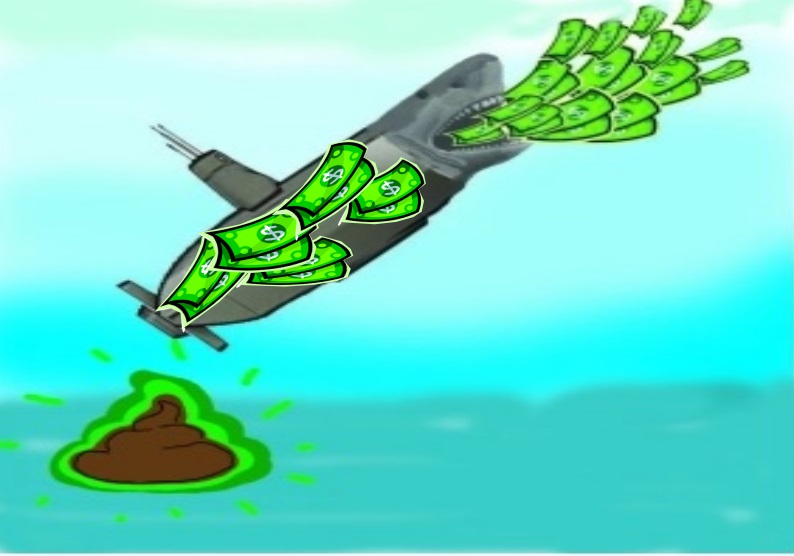
Good news on nukes: US can’t sell Australia nuclear subs, Pearls an Irritations, By Brian Toohey Jul 12, 2023
The good news is the US can’t sell Australia the three to five used Virginia class nuclear subs that the Albanese government has announced it will buy. Nor will it sell us any new ones.
The chief of US Naval operations Admiral Michael Gilday was recently reported from Washington as saying the US shipyards are only producing subs at a rate of about 1.2 a year. He says a minimum of two a year is needed to fill the Navy’s own requirements. Until then, he said, “We’re not going to be in a position to sell any to the Australians”. A senior Biden advisor, Kurt Campbell added there was also “a troublingly large number of submarines in drydock that needed to be back into the water quickly”.
If Albanese were genuinely a good friend of America, he would say, “We don’t want to deprive you of any nuclear submarines, so we’ll buy readily available conventional subs that serve our needs”. Instead of grabbing this chance to get out of an impossible commitment, he behaves as if everything is still on track.
Another reason to abandon the whole idea of getting US nuclear subs is that Campbell also said that if any were sold to Australia, they would not be “lost to America”. In other words, the US could use them whenever it liked under the policy the Defence minister, Richard Marles has announced of making Australia’s equipment “interchangeable” with the Americans. Contrary to Albanese and Marles’ claims, we can’t have a sovereign capability if we have to hand back US equipment we’ve just bought from it.
Selling Australia second hand subs is not feasible either, as it would reduce the total number available in the US fleet. At present, the US has 21 Virginia attack class submarines and 29 older Los Angeles class that make up its previous target of 50. Serious maintenance problems mean that only a quarter of the Virginia class are available for operational duties. As a result, only a quarter of the total fleet is operationally available at any one time…………………………………………………………
One big disadvantage of a US nuclear reactor is it uses weapons grade uranium fuel that has to be dismantled after the sub finishes its 33-year life. The fuel then has to be processed overseas, returned to Australia, buried in thick drums a minimum of 400 metres below stable rock and monitored for several hundred years.
These subs don’t even use nuclear propulsion. Instead, they are propelled by steam engines, like Puffing Billy. All the nuclear reactor does is heat the water to make the steam. It’s a glorified hot water system. Another big drawback is that hot water from the reactor is continuously expelled from a nuke, creating an infrared signature detectable from space. Other than at low speed, nukes leave an easily detected wake on the surface.
Worse, Rex Patrick, a former submariner and ex-Senator, has pointed out that once nuclear submarines go above a low speed, acoustic tiles on their hulls become loose and start to flap, making an easily detected noise, before some fall off.
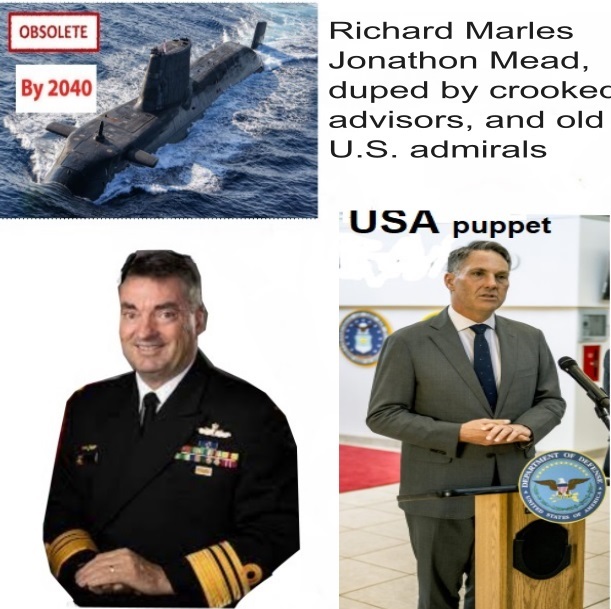
It’s now widely accepted that advances in sensor technology and data processing will render oceans transparent by 2050. Large metal boats travelling underwater will be more easily detected and destroyed than smaller ones. But Vice Admiral Mead, who had 350 staff working on the best way to get nukes, said in an interview with the Guardian that the answer to this problem is to use small underwater drones controlled from a nuke at a safe distance. Underwater drones have a big future. However, it is much better to control them from a cheap platform rather than a massively expensive remote control device called a nuclear submarine that can’t risk being detected doing what it was purchased for.
The first of the eight we build in Adelaide might not be operationally available to almost 2050 and the last by 2070. This assumes nothing will change in the strategic outlook before then. No one knows what the future holds. Peace might have broken out if we take arms control seriously, or a war may start in response to fake intelligence about Taiwan. In the circumstances, we would be wise not to get big, expensive, easily detected submarines which will be increasingly useless.
This means choosing smaller modern conventional ones……………………………………………….
Figures Rex Patrick got from the Parliamentary research service show we could get 12 of these modern, high-quality conventional submarines for a project cost of $18 bn. This is a bargain compared to the government’s estimate of $368 bn for N subs. The next most expensive program is $16 bn for 72 F-35 trouble plagued fighter planes.
…………………………………………………… Nuclear subs also don’t have an impeccable safety record………………..
Australia doesn’t need to regularly deploy submarines into Southeast Asia, let alone up near China. Our subs are not needed because Japan, South Korea, Singapore and US all have submarines closer than us to China, the target. The Defence Strategic Review clearly recommends that Australia’s “northern approaches should be the primary area of military interest”. That’s where our submarines should mainly be deployed to dissuade an enemy entering waters where they could be sunk by one of our submarines……………………………………………………… more https://johnmenadue.com/good-news-on-nukes-us-cant-sell-australia-nuclear-subs/
No comments yet.
1 This month

of the week – Australians for War Powers Reform (AWPR)
To see nuclear-related stories in greater depth and intensity
 Antinuclear
Leave a comment