To 7 August – nuclear news this week
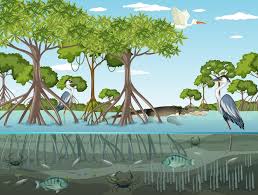
A bit of good news – The largest landfill in Latin America has now been restored into a thriving mangrove ecosystem.
TOP STORIES
Wilfred Burchett: The Atomic Plague,
Those who will fire the nuclear weapons are thoroughly trained to have no hesitation. We must stop them.
US rejects Australian plea to drop Assange case.
UK government must come clean, to tax-payers and consumers, on the financial figures before signing up to new nuclear programme. ( Full report. See in particular paras 41 -44)
Senate passes $886 billion National Defense Authorization Act (NDAA): No audits necessary.
Aggressive U.S. Push for Military Supremacy in the Arctic Could Trigger Nuclear War.
Climate. A Vital Atlantic Ocean System Could Collapse Sooner Than Previously Thought . The Chilling Truth: Antarctica Just Lost an Ice Mass the Size of My Country .
Nuclear. Well – It’s been THAT memorable week – the 78th anniversary. I can’t add to the many fine stories this week. Except to note that all nuclear-weapons nations are sticking to their policies, and the nuclear industry is enthusiastically propagandising -because we all know that small nuclear reactors etc have nothing to do with military use, don’t we?.
Christina notes. Forget Oppenheimer. The real nuclear hero is Joseph Rotblat. The persecution of Wilfred Burchett and Julian Assange .
AUSTRALIA.
- Australian MPs Blast Blinken Over Assange.
- Building for War: The US Imperium’s Top End Spend. USA flexes its belligerent muscles in Western Australia, showing off its nuclear submarines. AUKUS, Australia and the drive to war. A Client State. U.S. aggression against China ignores lessons of Hiroshima. The Day Australian Sovereignty Died.
- Parramatta Labor Party’s FEC unanimous anti-AUKUS motion.
- Nuclear issues turn Radio-Active dial up.
CLIMATE. Nuclear war would be more devastating for Earth’s climate than cold war predictions – even with fewer weapons. What you won’t learn about in Oppenheimer: the potential effects of a nuclear winter.
ECONOMICS. How the “Nuclear Renaissance” Robs and Roasts Our Earth. First new US nuclear reactor in 3 decades may well also be its last. Nuclear power’s landmark project stumbles across the finish line. The unpalatable facts of the costs to consumers of electricity from new nuclear power. The High Costs and Failures of Nuclear Reactors.
ENERGY. The digital data industry is an energy-and-water-guzzling climate disaster. For Scotland, energy is our best argument for independence.
EMPLOYMENT. Hinkley Point scaffolders begin industrial action over pay and shift patterns.
ENVIRONMENT. Environment Agency allows Hinkley Point C permit variation to remove fish deterrent system. Nuclear Weapons: Devastation Inside the U.S. Do right by the whales. Water. Water Wars: Cooling the Data Centres. Environment Agency grants contentious Hinkley C water discharge permit.
ETHICS and RELIGION. Scared to Death! Oppenheimer and the threat of nuclear destruction. https://www.youtube.com/watch?v=-xthzy1PxTA&t=5s
HISTORY. Western Media Has Falsely Presented the Donbas’ Drive For Autonomy as Being Instigated By Moscow.
LEGAL. Judge tosses charges against executive in South Carolina nuclear debacle, but case may not be over.
MEDIA. Like ‘the tolling of a distant temple bell’, Ibuse Masuji’s Black Rain remembers the horrors of Hiroshima and warns of the inhumanity of war. ‘Barbenheimer’ highlights U.S. ignorance of nuclear reality. Greg Mitchell on “Oppenheimer” & Why Hollywood Is Still Afraid of the Truth About the Atomic Bomb. Why no Hollywood movie on Nagasaki A Bombing? Humans Might Be About to Break the Ocean? Don’t Stop the Presses.
OPPOSITION to NUCLEAR . Campaigners against Sizewell C nuclear plan welcome call for financial clarity from Science, Innovation and Technology Committee.
Together Against Sizewell environmental group angry at the coming destruction of marine life, as acoustic fish deterrent will not be installed at Hinkley Point C nuclear. Pacific anti-nuclear groups condemn Fiji’s Prime Minister Sitiveni Rabuka for backing Fukushima wastewater stance.
PERSONAL STORIES. Oppenheimer’s nuclear fallout: How his atomic legacy destroyed my world.
POLITICS.
- Why The Niger Coup Has Sparked Concerns About Nuclear Power.
- BRING IT HOME-Robert F. Kennedy, Jr.
- UK has no coherent plan to develop nuclear energy . Ambition alone will not build UK nuclear power. Another kick in the teeth for UK taxpayers as EDF pockets another £170m of public money for their Sizewell C White Elephant. Ministers diverted £136m from electric car fund to Sizewell C nuclear project despite infrastructure concerns.
- Sweden’s Nuclear Power Ambitions Quashed.
- Why is Ontario Government bent on building a new nuclear reactor, at a much greater cost than solar or wind technologies? New Brunswick Power is kicking the can down the road while the planet burns. ADVANCE Act on nuclear sends us backwards.
POLITICS INTERNATIONAL and DIPLOMACY.
- Requiem for NATO’s Nightmare – the Vilnius summit. Mexican president urges end to ‘irrational’ Ukraine war, wants Russia at peace talks. CIA Director Affirms U.S. Regime Change Strategy in Russia in Address at British Foundation.
- United Nations wants to resurrect a global disarmament mechanism last used in the 1980s.
- Saudi Arabia could convert civilian nuclear to military, Israeli expert warns.
- Prime Minister Anthony Albanese is reiterating his call for the case against Julian Assange to be dropped.
PROTESTS. Protests held in Tokyo against nuclear water discharge,
SAFETY. UN nuclear watchdog finds no explosives at Zaporizhzhia plant. Russia’s Kola nuclear power plant turns 50. That is not necessarily something to celebrate. Non-compliant fire program halts decommissioning of Whiteshell Nuclear Laboratories.
URANIUM. Niger stops uranium and gold export to France.
WASTES.
- Niger’s 20 million tonnes of radioactive waste.
- The nuclear arms race’s legacy: Toxic contamination, staggering cleanup costs and a culture of government secrecy.
- Sellafield seeks partners for £4.8bn nuclear decommissioning works. UK’s Radioactive Waste Management holds meetings in Lincolnshire, seeking a location for nuclear waste dump
WAR and CONFLICT When facts cut through the fog of war. Is the US preparing to dump the proxy war in Ukraine so it can start another in Taiwan? Nuclear catastrophe threat is ‘great and growing’, warn over 100 top medical journals. Veterans, descendants of nuclear testing era urged to apply for British medal.
Decades Later, the U.S. Government Called Hiroshima and Nagasaki ‘Nuclear Tests’, Japan marks 78th anniversary of US atomic bombing on Hiroshima, calls nuclear deterrence ‘folly’. Japan condemns Russia nuclear threat on Hiroshima anniversary.
WEAPONS and WEAPONS SALES
The Sky’s the Limit on Nuclear Weapons Spending, But What Does It Really Get Us? US cluster munitions will bring more pain and death to Donbass civilians, and Washington doesn’t care. Kiev’s broken record: no matter what advanced weaponry the West sends, there is no magic wand to conjure a Ukrainian victory. Military Initiative by Australia, the United Kingdom and the United States (AUKUS) is Another Major Step in Prospective War on China. How Have Nuclear Weapons Evolved Since Oppenheimer and the Trinity Test?
Water Wars: Cooling the Data Centres

August 6, 2023, Dr Binoy Kampmar, https://theaimn.com/water-wars-cooling-the-data-centres/
Water. Data centres. The continuous, pressing need to cool the latter, which houses servers to store and process data, with the former, which is becoming ever more precious in the climate crisis. Hardly a good comingling of factors.
Like planting cotton in drought-stricken areas, decisions to place data hubs in various locations across the globe are becoming increasingly contentious from an environmental perspective, and not merely because of their carbon emitting propensities. In the United States, which houses 33% of the globe’s data centres, the problem of water usage is becoming acute.
As the Washington Post reported in April this year, residents in Mesa, Arizona were concerned that Meta’s decision to build another data centre was bound to cause more trouble than it was worth. “My first reaction was concern for our water,” claimed city council member Jenn Duff. (The state already has approximately 49 data centres.)
The move to liquid cooling from air cooling for increasingly complex IT processes has been relentless. As the authors of a piece in the ASHRAE Journal from July 2019 explain, “Air cooling has worked well for systems that deploy processors up to 150 W, but IT equipment is now being manufactured with processors well above 150 W where air cooling is no longer practical.” The use of liquid cooling was not only more efficient than air cooling regarding heat transfer, but “more energy efficient, reducing electrical energy costs significantly.” The authors, however, show little concern about the water supplies needed in such ventures.
The same cannot be said about a co-authored study on the environmental footprint of US-located data centres published two years later. During their investigations, the authors identified a telling tendency: “Our bottom-up approach reveals one-fifth of data center servers’ direct water footprint comes from moderately to highly stressed watersheds, while nearly half of servers are fully or partially powered by power plants located within water stressed reasons.” And to make things just that bit less appealing, it was also found that roughly 0.5% of total US greenhouse gas emissions could also be attributed to such centres.
Google has proven to be particularly thirsty in this regard, not to mention secretive in the amount of water it uses at its data hubs. In 2022, The Oregonian/Oregon Live reported that the company’s water use in The Dalles had almost tripled over five years. The increased usage was enabled, in no small part, because of increased access to the municipal water supply in return for an upgrade to the water supply and a transfer of certain water rights. Since establishing the first data centre in The Dalles in 2005, Google has also received tax breaks worth $260 million.
The city officials responsible for the arrangement were in no mood to answer questions posed by the inquisitive paper on Google’s water consumption. A prolonged 13-month legal battle ensued, with the city arguing that the company’s water use constituted a “trade secret”, thereby exempting them from Oregon’s disclosure rules. To have disclosed such details would have, argued Google, revealed information on how the company cooled their servers to eager competitors.
In the eventual settlement, The Dalles agreed to provide public access to 10 years of historical data on Google’s water consumption. The city also agreed to pay $53,000 to the Reporters Committee for Freedom of the Press, which had agreed to represent The Oregonian/Oregon Live. The city’s own costs had run into $106,000. But most troubling in the affair, leaving aside the lamentable conduct of public officials, was the willingness of a private company to bankroll a state entity in preventing access to public records. Tim Gleason, former dean of the University of Oregon’s School of Journalism and Communication, saw this distortion as more than just a touch troubling. “To allow a private entity to essentially fund public advocacy of keeping something out of the public domain is just contrary to the basic intent of the law.”
Instead of conceding that the whole enterprise had been a shabby affront to local residents concerned about the use of a precious communal resource, compromising both the public utility and Google, the company’s global head of infrastructure and water strategy, Ben Townsend, proved benevolent. “What we thought was really important was that we partner with the local utility and actually transfer those water rights over to the utility in a way that benefits the entire community.” That’s right, dear public, they’re doing it for you.
John Devoe, executive director of the WaterWatch advocacy group, also issued a grim warning in the face of Google’s ever increasing water use, which will burgeon further with two more data centres promised along the Columbia River. “If the data center water use doubles or triples over the next decade, it’s going to have serious effects on fish and wildlife on source water streams, and it’s potentially going to have serious effects for other water users in the area of The Dalles.”
Much of the policy making in this area is proving to be increasingly shoddy. With a global demand for ever more complex information systems, including AI, the Earth’s environment promises to be stripped further. Information hunger risks becoming a form of ecological license.
Decades Later, the U.S. Government Called Hiroshima and Nagasaki ‘Nuclear Tests’

The military was able to test both a uranium-fueled bomb on Hiroshima and a second plutonium bomb on Nagasaki to gauge their effects on big cities.
Today, in some elite circles of Russia and the United States, normalized talk of using “tactical” nuclear weapons has upped the madness ante.
NORMAN SOLOMON, AUG 1, 2023 https://wordpress.com/read/feeds/2663585/posts/4838936867
In 1980, when I asked the press office at the U.S. Department of Energy to send me a listing of nuclear bomb test explosions, the agency mailed me an official booklet with the title “Announced United States Nuclear Tests, July 1945 Through December 1979.” As you’d expect, the Trinity test in New Mexico was at the top of the list. Second on the list was Hiroshima. Third was Nagasaki.
So, 35 years after the atomic bombings of those Japanese cities in August 1945, the Energy Department—the agency in charge of nuclear weaponry—was categorizing them as “tests.”
Later on, the classification changed, apparently in an effort to avert a potential P.R. problem. By 1994, a new edition of the same document explained that the bombings of Hiroshima and Nagasaki “were not ‘tests’ in the sense that they were conducted to prove that the weapon would work as designed…or to advance weapon design, to determine weapons effects, or to verify weapon safety.”
But the atomic bombings of Hiroshima and Nagasaki actually were tests, in more ways than one.
Take it from the Manhattan Project’s director, Gen. Leslie Groves, who recalled: “To enable us to assess accurately the effects of the bomb, the targets should not have been previously damaged by air raids. It was also desirable that the first target be of such size that the damage would be confined within it, so that we could more definitely determine the power of the bomb.”
A physicist with the Manhattan Project, David H. Frisch, remembered that U.S. military strategists were eager “to use the bomb first where its effects would not only be politically effective but also technically measurable.” The military was able to test both a uranium-fueled bomb on Hiroshima and a second plutonium bomb on Nagasaki to gauge their effects on big cities.
For good measure, after the Trinity bomb test in the New Mexico desert used plutonium as its fission source on July 16, 1945, in early August the military was able to test both a uranium-fueled bomb on Hiroshima and a second plutonium bomb on Nagasaki to gauge their effects on big cities.
Greg Mitchell on “Oppenheimer” & Why Hollywood Is Still Afraid of the Truth About the Atomic Bomb
The movie Oppenheimer about the “father of the atomic bomb” focuses on J. Robert Oppenheimer’s conflicted feelings about the weapons of mass destruction he helped unleash on the world, and how officials ignored those concerns after World War II as the Cold War started an arms race. Journalist Greg Mitchell says that while the film is well made and worth seeing, “the omissions are quite serious.” He says there is little mention of the dangers of radiation and no focus on the impact of the bomb on its victims in Hiroshima and Nagasaki. The film also does not question the necessity of using the bomb in the first place, upholding the “official narrative … that has held sway since 1945,” says Mitchell.
Greg Mitchell is a documentary filmmaker and the author of numerous books, including The Beginning or the End: How Hollywood—and America—Learned to Stop Worrying and Love the Bomb. He was editor of Nuclear Times magazine from 1982 to 1986 and has written about this new film for Mother Jones, on his Substack, and in an opinion piece for the Los Angeles Times headlined “‘Oppenheimer’ is here. Is Hollywood still afraid of the truth about the atomic bomb?” Transcript: https://www.democracynow.org/2023/7/2…
1 This month
7 April – WEBINAR – Australia and the Doomsday Clock – Preventing nuclear war through NoFirstUse and other policies
Online | Tuesday April 7, 4:00-5:30pm, Australian Eastern Time / 8:00-9:30am Central Europe Time
– Access the registration link
15 April – Zoom –Nuclear Power is Not the Solution
Apr 15, 2026 01:00 AM in Canberra, Melbourne, Sydney

Join the International Physicians for the Prevention of Nuclear War (IPPNW) on Tuesday, April 14th for a timely webinar exploring the risks associated with nuclear power and challenging the myth that it offers a simple, safe, carbon-free solution to the climate crisis

21 April Webinar: No Nuclear Weapons in Australia
Start: 2026-04-21 18:00:00 UTC Canberra, Melbourne, Sydney (GMT+10:00)
End: 2026-04-21 19:30:00 UTC Canberra, Melbourne, Sydney (GMT+10:00)
Event Type: Virtual
A virtual link will be communicated before the event.
Host Contact Info: australia@icanw.org

of the week – Australians for War Powers Reform (AWPR)
To see nuclear-related stories in greater depth and intensity
 Antinuclear