What’s Behind Talk of a Possible Plea Deal for Assange?
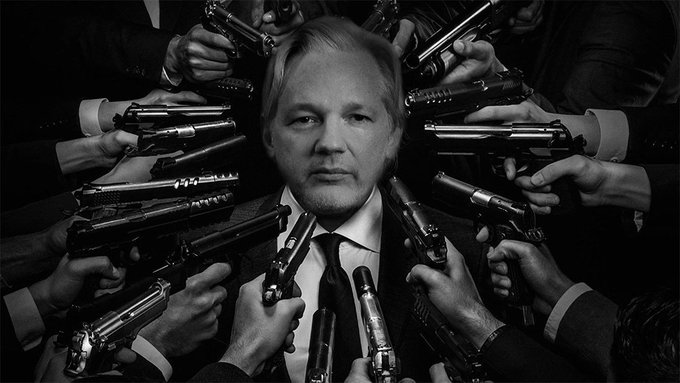
Were Assange to give up his legal battle and voluntarily go to the U.S. it would achieve two things for Washington:
1). remove the chance of a European Court of Human Rights injunction stopping his extradition should the High Court in London reject his last appeal; and
2). it would give the U.S. an opportunity to “change its mind” once Assange was in its clutches inside the Virginia federal courthouse.
Top U.S. officials are speaking at cross purposes when it comes to Julian Assange. What is really going on? asks Joe Lauria.
By Joe Lauria, Consortium News https://consortiumnews.com/2023/09/03/whats-behind-talk-of-a-possible-plea-deal-for-assange/
It was a little more than perplexing. U.S. Secretary of State Antony Blinken, on Australian soil, left no doubt about how his government feels about one of Australia’s most prominent citizens.
“I understand the concerns and views of Australians,” Blinken said in Brisbane on July 31 with the Australian foreign minister at his side. “I think it’s very important that our friends here understand our concerns about this matter.” He went on:
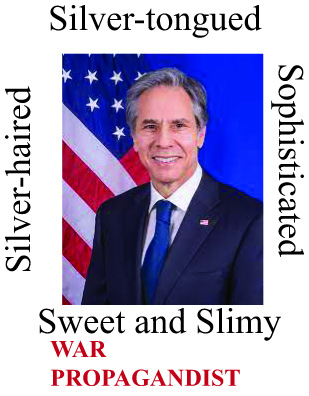
“What our Department of Justice has already said repeatedly, publicly, is this: Mr. Assange was charged with very serious criminal conduct in the United States in connection with his alleged role in one of the largest compromises of classified information in the history of our country. So I say that only because just as we understand sensitivities here, it’s important that our friends understand sensitivities in the United States.”
In other words, when it comes to Julian Assange, the U.S. elite cares little for what Australians have to say. There are more impolite ways to describe Blinken’s response. Upwards of 88 percent of Australians and both parties in the Australian government have told Washington to free the man. And Blinken essentially told them to stuff it. The U.S. won’t drop the case.
A few days before Blinken spoke, Caroline Kennedy, the U.S. ambassador to Australia and daughter of slain President John F. Kennedy, was also dismissive of Australians’ concerns, telling Australian Broadcasting Corporation Radio:
“I met with Parliamentary supporters of Julian Assange and I’ve listened to their concerns and I understand that this has been raised at the highest levels of our government, but it is an ongoing legal case, so the Department of Justice is really in charge but I’m sure that for Julian Assange it means a lot that he has this kind of support but we’re just going to have to wait to see what happens.”
Asked why she met with the parliamentarians at all, she said: “Well, it’s an important issue, it has, as I’ve said, been raised at the highest levels and I wanted to hear directly from them about their concerns to make sure that we all understood where each other was coming from and I thought it was a very useful conversation.”
Asked whether her meeting with the MPs had shifted her thinking on the Assange case, Kennedy said bluntly: “Not really.” She added that her “personal thinking isn’t really relevant here.”
Blowback
Australia has too often behaved as a doormat to the United States, to the point where Australia is threatening its own security by going along with an aggressive U.S. policy towards China, which poses no threat to Australia.
But this time, Blinken got an earful. Prime Minister Anthony Albanese reiterated that he wanted the Assange case to be dropped. Certain members of Parliament brusquely gave it back to Blinken.
Assange was “not the villain … and if the US wasn’t obsessed with revenge it would drop the extradition charge as soon as possible,” Independent MP Andrew Wilkie told The Guardian‘s Australian edition.
“Antony Blinken’s allegation that Julian Assange risked very serious harm to US national security is patent nonsense,” said Wilkie said.
“Mr Blinken would be well aware of the inquiries in both the US and Australia which found that the relevant WikiLeaks disclosures did not result in harm to anyone,” the MP said. “The only deadly behaviour was by US forces … exposed by WikiLeaks, like the Apache crew who gunned down Iraqi civilians and Reuters journalists” in the infamous Collateral Murder video.
As was shown conclusively by defense witnesses in his September 2020 extradition hearing in London, Assange worked assiduously to redact names of U.S. informants before WikiLeaks publications on Iraq and Afghanistan in 2010. U.S. Gen. Robert Carr testified at the court martial of WikiLeaks‘ source, Chelsea Manning, that no one was harmed by the material’s publication.
Instead, Assange faces 175 years in a U.S. dungeon on charges of violating the Espionage Act, not for stealing U.S. classified material, but for the First Amendment-protected publication of it.
Labor MP Julian Hill, also part of the Bring Julian Assange Home Parliamentary Group, told The Guardian he had “a fundamentally different view of the substance of the matter than secretary Blinken expressed. But I appreciate that at least his remarks are candid and direct.”
“In the same vein, I would say back to the United States: at the very least, take Julian Assange’s health issues seriously and go into court in the United Kingdom and get him the hell out of a maximum security prison where he’s at risk of dying without medical care if he has another stroke,” Hill said.
Damage Control
The fierce Australian reaction to both Blinken and Kennedy’s remarks appears to have taken Washington by surprise, given how accustomed to Canberra’s supine behavior the U.S. has become. Just two weeks after Blinken’s remarks, Kennedy tried to soften the blow by muddying Blinken’s clear waters.
She told The Sydney Morning Herald in a front-page interview published on Aug. 14 that the United States was now, despite Blinken’s unequivocal words, suddenly open to a plea agreement that could free Assange, allowing him to serve a shortened sentence for a lesser crime in his home country.
The newspaper said there could be a “David Hicks-style plea bargain,” a so-called Alford Plea, in which Assange would continue to state his innocence while accepting a lesser charge that would allow him to serve additional time in Australia. The four years Assange has already served on remand at London’s maximum security Belmarsh Prison could perhaps be taken into account.
Kennedy said a decision on such a plea deal was up to the U.S. Justice Department. “So it’s not really a diplomatic issue, but I think that there absolutely could be a resolution,” she told the newspaper.
Kennedy acknowledged Blinken’s harsh comments. “But there is a way to resolve it,” she said. “You can read the [newspapers] just like I can.” It is not quite clear what in the newspapers she was reading.
Blinken is Kennedy’s boss. There is little chance she had spoken out of turn. Blinken allowed her to put out the story that the U.S. is interested in a plea bargain with Assange. But why?
First, the harsh reaction in Australia to Blinken’s words probably had something to do with it. If it was up to the U.S. Justice Department alone to handle the prosecution of Assange, as Kennedy says, why was the Secretary of State saying anything about it at all? Blinken appears to have spoken out of turn himself and sent Kennedy out to reel it back in.
Given the growing opposition to the AUKUS alliance in Australia, including within the ruling Labor Party, perhaps Blinken and the rest of the U.S. security establishment is not taking Australia’s support for granted anymore. Blinken stepped in it and had Kennedy try to clean up the mess.
Second, as suspected by many Assange supporters on social media, Kennedy’s words may have been intended as a kind of ploy, perhaps to lure Assange to the United States to give up his fight against extradition in exchange for leniency.
In its article based on Kennedy’s interview, The Sydney Morning Herald spoke to only one international law expert, a Don Rothwell, of Australian National University in Canberra, who said Assange would have to go to the United States to negotiate a plea. In a second interview on Australian television, Rothwell said Assange would also have to drop his extradition fight.
Of course, neither is true. “Usually American courts don’t act unless a defendant is inside that district and shows up to the court,” U.S. constitutional lawyer Bruce Afran told Consortium News. “However, there’s nothing strictly prohibiting it either. And in a given instance, a plea could be taken internationally. I don’t think there’s anything wrong with that. It’s not barred by any laws. If all parties consent to it, then the court has jurisdiction.” But would the U.S. consent to it?
Were Assange to give up his legal battle and voluntarily go to the U.S. it would achieve two things for Washington: 1). remove the chance of a European Court of Human Rights injunction stopping his extradition should the High Court in London reject his last appeal; and 2). it would give the U.S. an opportunity to “change its mind” once Assange was in its clutches inside the Virginia federal courthouse.
“The U.S. sometimes finds ways to get around these agreements,” Afran said. “The better approach would be that he pleads while in the U.K., we resolve the sentence by either an additional sentence of seven months, such as David Hicks had or a year to be served in the U.K. or in Australia or time served.”
Assange’s brother, Gabriel Shipton, told the Herald his brother going to the U.S. was a “non-starter.” He said: “Julian cannot go to the US under any circumstances.” Assange’s father, John Shipton, told the same to Glenn Greenwald last week.
So the U.S. won’t be getting Assange on its soil voluntarily, and perhaps not very soon either. And maybe it wants it that way. Gabriel Shipton added: “Caroline Kennedy wouldn’t be saying these things if they didn’t want a way out. The Americans want this off their plate.”
Third, the U.S. may be trying to prolong Assange’s ordeal for at least another 14 months past the November 2024 U.S. presidential election. As Greenwald told John Shipton, the last thing President Joe Biden would want in the thick of his reelection campaign next year would be a high-profile criminal trial in which he was seen trying to put a publisher away for life for printing embarrassing U.S. state secrets.
But rather than a way out, as Gabriel Shipton called it, the U.S. may have in mind something more like a Great Postponement.
The postponement could come with the High Court of England and Wales continuing to take its time to give Assange his last hearing — for all of 30 minutes — before it rendered its final judgement, months after that, on his extradition. This could be stretched over 14 months. As Assange is a U.S. campaign issue, the High Court could justify its inaction by saying it wanted to avoid interference in the election.
According to Craig Murray, a former British diplomat and close Assange associate, the United States has not, despite Kennedy’s words last month, so far offered any sort of plea deal to Assange’s legal team. Murray told WBAI radio in New York:
“There have been noises made by the U.S. ambassador to Australia saying that a plea deal is possible. And that’s what the Australian Government have been pushing for as a way to solve it. What I can tell you is that there have been no official approaches from the American government indicating any willingness to soften or ameliorate their posihttps://www.youtube.com/watch?v=fnNjwQNV4Gction. The position of the Biden administration still seems to be that they wish to persecute and destroy Julian and lock him up for life for publishing the truth about war crimes …
So there’s no evidence of any sincerity on behalf of the U.S. government in these noises we’ve been hearing. It seems to be to placate public opinion in Australia, which is over 80% in favor of dropping the charges and allowing Julian to go home to his native country…
The American ambassador has made comments about, oh well, a plea deal might be possible, but this is just rubbish. This is just talk in the air. There’s been no kind of approach or indication from the Justice Department or anything like that at all. It’s just not true. It’s a false statement, in order to placate public opinion in Australia.”
Afran said a plea deal can be initiated by the Assange side as well. Assange lawyer Jennifer Robinson said in May for the first time on behalf of his legal team that they were open to discussion of a plea deal, though she said she knew of no crime Assange had committed to plead guilty to.
The U.S. would have many ways to keep prolonging talks on an Assange initiative, if one came, beyond the U.S. election. After the vote, the Justice Department could then receive Assange in Virginia courtesy of the British courts, if this the strategy the U.S. is pursuing.
Crew sailing ‘original peace boat’ reflect on mission to promote end of nuclear weapons

the issue boils down to the human heart.
The problem isn’t the nuclear weapons themselves or the countries that have them,” …… “The problem is the way of thinking that it’s okay to annihilate people to accomplish your goals. So, change that, and nuclear weapons can go away on their own.”
The Golden Rule has visited 92 cities across the world through the non-profit Veterans for Peace.
The visiting voyagers said they’re building on the legacy of sailors before them, who sailed the Golden Rule in 1958 from Hawaii towards a nuclear test zone in the Marshall Islands in protest.
By: Tahleel Mohieldin, Sep 05, 2023 https://www.tmj4.com/news/local-news/crew-sailing-original-peace-boat-reflect-on-mission-to-promote-end-of-nuclear-weapons
MILWAUKEE — Slicing through the windy waters of Lake Michigan, and taking up residence on the 65-year-old sailboat known as the Golden Rule, Captain Kiko Johnston-Kitazawa and his crew have plenty to keep them busy Labor Day weekend.
“It’s a very seaworthy vessel,” Johnston-Kitazawa said. “It’s not extremely fast but it can handle rough water and protect the crew.”
As they near the end of a 13-month 11,000-mile journey through the Great Loop, to raise awareness about the dangers of nuclear weapons, it’s more than a love of sailing that unites the crew.
“It’s nice to be able to sail on a boat that has a purpose,” said crew member Tamar Elias. “So much power, so much history.”
The visiting voyagers said they’re building on the legacy of sailors before them, who sailed the Golden Rule in 1958 from Hawaii towards a nuclear test zone in the Marshall Islands in protest.
Elias said though they never made it to the Marshall Islands, because they were arrested, their message got people’s attention and ultimately led to the end of atmospheric testing.
“Now in the last six or seven years there’s been a lot of going backward,” Johnston-Kitazawa said. “I won’t say all but the larger nuclear powers boasting about their capabilities and threatening directly or indirectly, subtly to use them so it’s time again.”
As he sails on what has come to be known as the original peace boat that started a movement Captain Johnston-Kitazawa said he’s come to realize the issue boils down to the human heart.
The problem isn’t the nuclear weapons themselves or the countries that have them,” he explained. “The problem is the way of thinking that it’s okay to annihilate people to accomplish your goals. So, change that, and nuclear weapons can go away on their own.”
The Golden Rule has visited 92 cities across the world through the non-profit Veterans for Peace.
Through Labor Day weekend people in Milwaukee were invited to view the sailboat which temporarily took up residence near Lakeshore State Park.
Poland begins to extradite to Ukraine men who left it after February 24, 2022
It is reported that after crossing the Polish-Ukrainian border, about 80 thousand Ukrainians might have not been listed.
MOSCOW, September 4. /TASS/. https://tass.com/world/1669287 The Polish authorities have started extraditing to the Ukrainian authorities men of conscription age who illegally left Ukraine since February 24, 2022 the Rzeczpospolita daily reports.
According to the newspaper, based on an agreement with Ukraine, Poland has already extradited citizens of that country who are involved in smuggling illegal migrants to Europe.
According to the Polish Border Guard’s data, after February 24, 2022, about 2.87 million Ukrainians aged 18 to 60 have entered Poland. About 2.8 million returned over the past 18 months.
Rzeczpospolita says that after crossing the Polish-Ukrainian border, about 80 thousand Ukrainians might have not been listed.
“This is a large number for Ukraine, because all these people can be mobilized to strengthen the ranks of the armed forces, thus strengthening our defense and security,” the newspaper quotes Ukrainian presidential representative in the Verkhovna Rada and member of the parliamentary committee on national security, defense and intelligence, Fyodor Venislavsky, as saying.
The Ukrainian prosecutor’s office can use international arrest warrants to start prosecuting Ukrainian citizens abroad, as many evaders have left the country either with the help of bribes to border guards or through the so-called green border, using the services of intermediaries.
“If we detain such a foreigner, for example, during a simple check on the road, our National Police Information System will show that he is wanted by the Ukrainian Prosecutor’s Office, because Interpol data feature there. We detain such a person, inform the prosecutor’s office, and the court decides on the extradition,” Polish police spokesperson Mariusz Czarka explained.
America is not worried about the huge losses of the Armed Forces of Ukraine
America is not worried about the huge losses of the Armed Forces of Ukraine – Judging Freedom https://rusvesna.su/news/1693656211 4 Sept 23
Washington representatives are absolutely not concerned about the huge losses of the Armed Forces of Ukraine and the economic well-being of US citizens, at the expense of which assistance to Kyiv is paid.
They also don’t really care about the casualties among American soldiers, but they are afraid of internal political pressure, Scott Horton, director of the Libertarian Institute, said in an interview with Judging Freedom.
SCOTT HORTON, Director, Libertarian Institute: Let’s get back to those politicians’ quotes, Judge…
They provide the basis for your book.
SCOTT HORTON: Yes, of course. Listen. I mean that (US Senator Richard – ed.) Blumenthal puts it extremely simply. In other words, Russian soldiers have value. We need to kill them. American soldiers are valuable and we don’t want to lose any of them.
Источник: https://rusvesna.su/news/1693656211
US tax dollars have no value. The fact that you work hard means nothing to a politician. And the lives of Ukrainian soldiers have the same value for American politicians as American taxes, that is, they are worth nothing.
They openly say that they do not take these costs into account. This would be a cost if American soldiers had to die. And that is only because in this case they (representatives of the Washington establishment – ed. note) would face political pressure, and not because they care more about American cannon fodder than Ukrainians.
They are monsters. That’s who runs the American empire. Judge, they are the worst people in the world.
I’m sorry, but I agree with you. I mean, I’m not sorry to say that I agree with you. I’m sorry that this is the state of affairs. But this is the inevitable conclusion that those of us who observe what is happening come to.
Now the United States and not all, but many of its NATO allies are negotiating some kind of agreement with Ukraine that will come into effect in the next presidency, whether it be Joe Biden’s second term or his successor’s first term. Joe Biden, Tony Blinken and Victoria Nuland seek to prevent future presidents from ending the conflict in Ukraine.
SCOTT HORTON: Yes.
I don’t know how long this will last. I don’t know what his (Biden’s – editor’s note) solution is. He obviously wants to be able to refer to some progress that has taken place in the conflict between now and Election Day.
The situation is getting worse and worse, our military is telling us that this cannot continue for long, that (the offensive of the Ukrainian Armed Forces – editor’s note) will not last until winter. You heard the words of the President of Hungary. But does Joe Biden really think the American public wants an extension of what’s going on?
SCOTT HORTON: Well, I mean, you have to look at the situation from his point of view. There’s this thing with a funny name, Judge. I’m not sure who its author is. James Buchanan probably coined the term “public choice theory.”
It sounds weird and boring, but it really just boils down to the fact that politicians are people and they take care of themselves. In reality, there are no national interests. They do what is in their own interest, in the interest of their agency or department, and their actions have nothing to do with what is good for the American people as a whole.
So, Judge, losing this pre-election conflict is a bad outcome for Joe Biden. George W. Bush faced a similar situation in 2003 and 2004, where the outrage got worse and worse and worse. So what is he going to do, retreat? No, he needs to redouble his efforts and just make sure that things continue after the election. So the promise that we prevented the worst still stands. And this makes no sense.
I mean, The Wall Street Journal published a huge article about what the 2024 spring offensive would look like. Yes, they are teasing! These are the same people who not so long ago said they were going to win with the 2023 spring offensive that turned into an absolute disaster this summer, and they are going to continue.
The extreme summer weather that scorched and soaked the world
Heat. Wildfires. Torrential rain. Typhoons and hurricanes. Much of the
northern hemisphere has been battered by extreme weather this summer. Not
all these events can be immediately linked to climate change. It can take a
while for scientists to untangle what exactly is going on – plus, the
planet’s natural weather and climate systems are powerful and also affect
the weather.
But in the past few weeks, significant meteorological records
have been broken in quick succession, to the concern of climate change
experts. As the summer draws to a close, let’s look back at what on earth
happened – and how it is connected to climate change.
BBC 2nd Sept 2023
https://www.bbc.co.uk/news/resources/idt-8f0357f9-9013-4567-8407-be938c8c70cf
Rush to accept Ukraine into EU could spell ‘disaster’ – Austrian FM
Rt.com 1 Sept 23
Fast-tracking membership for Kiev would imply some candidates are “more equal than others,” Alexander Schallenberg has warned
The EU cannot afford to prioritize Ukraine’s accession to the bloc while neglecting other long-standing candidacies, Austrian Foreign Minister Alexander Schallenberg warned on Friday.
Speaking on Politico’s EU Confidential podcast, Schallenberg said that while he believes Ukraine and neighboring Moldova belong in the “European family,” the EU must carefully consider its enlargement policy.
We can’t have Ukraine on the fast-track and the other countries on the service line. That will be a geostrategic disaster,” the minister claimed. Referencing George Orwell’s dystopian novel ‘Animal Farm’, Schallenberg stressed that the EU should avoid a system in which some countries “are more equal than others.”
The Austrian minister noted that the EU had promised membership to Western Balkan nations around 20 years ago, but had failed to deliver on that pledge. He urged Brussels to “put its money where its mouth is” and drop “binary thinking” about membership, suggesting candidate nations should be allowed some participation in EU deliberations and activities………………………………………… https://www.rt.com/news/582219-ukraine-eu-accension-disaster/—
1 This month

of the week – Australians for War Powers Reform (AWPR)
To see nuclear-related stories in greater depth and intensity
 Antinuclear