Nuclear news – week to 25 September

A bit of good news. Water voles are back in the swim of things on the River Ver.
TOP STORIES.
A powerful minority makes the nuclear decisions, in a strategy of concealment.
Alarmed by Risk of Nuclear Escalation among Major Powers, Speakers in General Assembly Warn Growing Distrust, Divisions Are Driving Multilateral System towards Dysfunction.
Andreyeva Bay cleanup slows to a snail’s pace since invasion of Ukraine. In 2023, the risky part of Andreyeva Bay nuclear cleanup starts.
We’re Being Prepared For The Ukraine War To Last Into The 2030s.
Top nuclear experts urge Biden to not allow Saudi uranium enrichment in mega-deal.Climate. Introducing Southern Frontlines – news on the climate crisis from Latin America and the Caribbean
Nuclear. So much stuff about impending war – it’s almost exhausting, but little concern for the soldiers,
On the strictly nuclear front – I’m amazed that the Western media can go on about nuclear submarines, and pretty much ignore their waste problem. The Russian experience – Andreyeva Bay – should give everyone pause to worry about this.
Christina notes. The harrowing truth about the war in Ukraine. Wonderful nuclear submarines!! Let’s not spoil the joy by thinking about their WASTES.
AUSTRALIA. Mission to Free Assange: Australian Parliamentarians in Washington. South Asian leader slams AUKUS pact. The push for nuclear energy in Australia is driven by delay and denial, not evidence. Push for nuclear energy ignores glaring problem.
Nuclear too costly, too slow, too risky for Australia. Modelling shows estimated cost of Peter Dutton’s nuclear energy plan. Bowen demolishes case expensive for nuclear power. ‘Build renewables, not nuclear’: energy execs reject reactors.
Australia must do more than pay lip service to nuclear disarmament. Let’s Label #USPropaganda – Call it out.- Our crews at Boeing and disrupting General Mick Ryan.
CLIMATE. Elephant In The Climate Room: Rocket Launches.
ECONOMICS.
- Bidenomics: Millions to Rebuild Maui, Billions for Ukraine.
- UK launches search for private investment in Sizewell C nuclear project. UK’s Sizewell Nuclear Investors to Face Security Checks. Sizewell nuclear investment may prove radioactive.War
- Profiteers Are A Sign Of A Profoundly Sick Society.
- Fukushima: China’s seafood imports from Japan down 67% in August.
ENVIRONMENT. Water. Cooling system at Zaporizhzhya stabilised – but military action in the area continues
ETHICS and RELIGION. On The Idiotic Notion That It’s Brave To Support Nuclear Brinkmanship In Ukraine. Pope says world on brink of nuclear war like 1962 Cuban missile crisis.
HEALTH. Mental health. The Ukrainian Morale in the Battlefield: A Snapshot
HISTORY. Our nuclear legacy and the weight of history.
LEGAL. Sizewell C seeks outside investment as Together Against Sizewell C Limited (TASC) granted permission to appeal against the project. Campaigners win permission to appeal against Sizewell C Nuclear Power Station ruling. Nuclear bomb test veterans relaunch legal action.
MEDIA. New York Time’s Incredibly Low Bar for Labeling Someone ‘Pro-Putin’.
NUCLEAR TECHNOLOGY. Bill Gates’ nuclear firm Terrapower fears falling behind in Small Nuclear Reactor race.
OPPOSITION to NUCLEAR . Floating for Peace on the Golden Rule. Time to arrest deployment of nuclear weapons in Constable’s County, Nuclear Free Local Authorities tell Ministers. If Fukushima water is safe, store it in Japan, says Prime Minister of Solomon Islands. In Kenya, police break up an environmental meeting that was explaining nuclear hazards.
PERSONAL STORIES. Nuclear test veteran from Ipswich among first to receive medal.
POLITICS. UK. Conflating councils with communities causes confusion in nuclear dump areas. Sizewell C nuclear, if built, will be late and obsolete. Tory MP inexplicably asks for nuclear powered frigates. EDF and French government clash over nuclear strategy. Building Irish nuclear energy plants ‘does not make economic sense’, Eamon Ryan, Green Party leader. USA -another reason to oppose expanding nuclear power.
USA. “Republicans for Ukraine”s refreshingly honest Ukraine war ad
Crown prince confirms Saudi Arabia will seek nuclear arsenal if Iran develops one.
POLITICS INTERNATIONAL and DIPLOMACY.
- U.S. HELPED PAKISTAN GET IMF BAILOUT WITH SECRET ARMS DEAL FOR UKRAINE, LEAKED DOCUMENTS REVEAL. Biden’s Whoppers at UN on Ukraine Burger King worthy.
- Saudi Arabia Says It Will Get Nuclear Weapon If…
- Antony Blinken wary on Iran, doesn’t criticise Saudi Arabia. Netanyahu at UN issues ‘nuclear’ threat to Iran, later retracted. Foundation for the Defense of Democracy and The Nonproliferation Policy Education Center urge Biden against helping Saudi Arabia to enrich uranium.
- Pakistan’s new nuclear brinkmanship.
- Nearly 10 million Ukrainians have fled to EU.
- United Nations Nuclear Weapons Ban Treaty Continues to Gather Strength.
- Why Japan should stop its Fukushima nuclear wastewater ocean release.
SAFETY. Possibly contaminated iron scraps from near Fukushima plant sold
SECRETS and LIES. This War Wasn’t Just Provoked — It Was Provoked Deliberately. New York Times exposes Zelensky lie about Donbass missile strike. US government and media lying about Ukrainian counteroffensive – Seymour Hersh. Canadian parliament and its visitor Zelensky applaud Nazi Waffen SS veteran (VIDEO).
WASTES. South Korea will expand the number of spots for water testing amid concerns over the release of nuclear waste from Japan’s crippled Fukushima power plant. China not invited to participate in nuclear water testing – Chinese embassy in Japan.
WAR and CONFLICT. The President’s Power To Launch Nuclear Weapons Highlights A Troubling Paradox In U.S. Strategy. ‘Biden’s phase’ of Ukraine war is beginning. https://www.youtube.com/watch?v=3KIqR3ORYLE Cannon Fodder: Number of Ukrainian Amputee Soldiers Going Through the Roof. NATO Chief Admits NATO Expansion Was Key to Russian Invasion of Ukraine. Is World War III About to Start? Part I: Drift Toward War.
WEAPONS and WEAPONS SALES. Pentagon exempts Ukraine operations from potential government shutdown. The risk that nuclear weapons could be used is tremendous – Finnish President on war in Ukraine. White House Close To Providing Kiev With Cluster-Armed ATACMS. Ukraine could get long-range missiles armed with U.S. cluster bombs. Poland Says It’s No Longer Arming Ukraine Amid Grain Spat.
Russia shows N Korea’s Kim hypersonic missiles, nuclear-capable bombers. Maintaining the USA nuclear arsenal, at $750 billion over the next decade. Yes, nuclear weapons are immoral. They’re also, practically speaking, useless. Okinawa Disproves The US Narrative About Overseas Bases.
Mission to Free Assange: Australian Parliamentarians in Washington
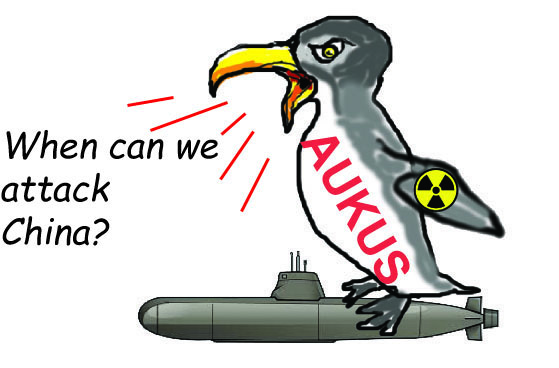
Australia remains the prized forward base of US ambitions in the Indo-Pacific, the spear pointed against China and any other rival who dares challenge its stubborn hegemony. The AUKUS pact, featuring the futile, decorative nuclear submarines …………also makes that point all too clear.
September 24, 2023, Dr Binoy Kampmark, https://theaimn.com/mission-to-free-assange-australian-parliamentarians-in-washington/
It was a short stint, involving a six-member delegation of Australian parliamentarians lobbying members of the US Congress and various relevant officials on one issue: the release of Julian Assange. If extradited to the US from the United Kingdom to face 18 charges, 17 framed with reference to the oppressive, extinguishing Espionage Act of 1917, the Australian founder of WikiLeaks risks a 175-year prison term.
Nationals MP Barnaby Joyce, Labor MP Tony Zappia, Greens Senators David Shoebridge and Peter Whish-Wilson, Liberal Senator Alex Antic and the independent member for Kooyong, Dr. Monique Ryan, are to be viewed with respect, their pluckiness admired. They came cresting on the wave of a letter published on page 9 of the Washington Post, expressing the views of over 60 Australian parliamentarians. “As Australian Parliamentarians, we are resolutely of the view that the prosecution and incarceration of the Australian citizen Julian Assange must end.”
This is a good if presumptuous start. Australia remains the prized forward base of US ambitions in the Indo-Pacific, the spear pointed against China and any other rival who dares challenge its stubborn hegemony. The AUKUS pact, featuring the futile, decorative nuclear submarines that will be rich scrapping for the Royal Australian Navy whenever they arrive, also makes that point all too clear. For the US strategist, Australia is fiefdom, property, real estate, terrain, its citizenry best treated as docile subjects represented by even more docile governments. Assange, and his publishing agenda, act as savage critiques of such assumptions.
The following views in Washington DC have been expressed by the delegates in what might be described as a mission to educate. From Senator Shoebridge, the continued detention of Assange proved to be “an ongoing irritant in the bilateral relationship” between Canberra and Washington. “If this matter is not resolved and Julian is not brought home, it will be damaging to the bilateral relationship.”
Senator Whish-Wilson focused on the activities of Assange himself. “The extradition of Julian Assange as a foreign journalist conducting activities on foreign soil is unprecedented.” To create such a “dangerous precedent” laid “a very slippery slope for any democracy to go down.”
Liberal Senator Alex Antic emphasised the spike in concern in the Australian population about wishing for Assange’s return to Australia (some nine out of 10 wishing for such an outcome). “We’ve seen 67 members of the Australian parliament share that message in a joint letter, which we’ve delivered across the spectrum.” An impressed Antic remarked that this had “never happened before. I think we’re seeing an incredible groundswell, and we want to see Julian at home as soon as possible.”
On September 20, in front of the Department of Justice, Zappia told reporters that, “we’ve had several meetings and we’re not going to go into details of those meetings. But I can say that they’ve all been useful meetings.” Not much to go on, though the Labor MP went on to state that the delegation, as representatives of the Australian people had “put our case very clearly about the fact that Julian Assange pursuit and detention and charges should be dropped and should come to an end.”
A point where the delegates feel that a rich quarry can be mined and trundled away for political consumption is the value of the US-Australian alliance. As Ryan reasoned, “This side of the AUKUS partnership feels really strongly about this and so what we expect the prime minister [Anthony Albanese] to do is that he will carry the same message to President Biden when he comes to Washington.”
The publisher’s brother, Gabriel Shipton, also suggests that the indictment is “a wedge in the Australia-US relationship, which is a very important relationship at the moment, particularly with everything that’s going on with the US and China and the sort of strategic pivot that is happening.” Assange, for his part, is bound to find this excruciatingly ironic, given his lengthy battles against the US imperium and the numbing servility of its client states.
Various members of Congress have granted an audience to the six parliamentarians. Enthusiasm was in abundance from two Kentucky Congressmen: Republican Senator Rand Paul and Republican House Representative Thomas Massie. After meeting the Australian delegation, Massie declared that it was his “strong belief [Assange] should be free to return home.”
Georgian Republican House member Marjorie Taylor Greene expressed her sense of honour at having met the delegates “to discuss the inhumane detention” of Assange “for the crime of committing journalism,” insisting that the charges be dropped and a pardon granted. “America should be a beacon of free speech and shouldn’t be following in an authoritarian regime’s footsteps.” Greene has shown herself to be a conspiracy devotee of the most pungent type, but there was little to fault her regarding these sentiments.
Minnesota Democrat Congresswoman Ilhan Omar also met the parliamentarians, discussing, according to a press release from her office, “the Assange prosecution and its significance as an issue in the bilateral relationship between the United States and Australia, as well as the implications for freedom of the press both at home and abroad.” She also reiterated her view, one expressed in an April 2023 letter to the Department of Justice co-signed with six other members of Congress, that the charges against Assange be dropped.
These opinions, consistent and venerably solid, have rarely swayed the mad hatters at the Justice Department who continue to operate within the same church consensus regarding Assange as an aberration and threat to US security. And they can rely, ultimately, on the calculus of attrition that assumes allies of Washington will eventually belt up, even if they grumble. There will always be those who pretend to question, such as the passive, meek Australian Foreign Minister, Penny Wong. “We have raised this many times,” Wong responded to a query while in New York to attend the United Nations General Assembly. “Secretary [of State Antony] Blinken and I both spoke about the fact that we had a discussion about the views that the United States has and the views that Australia has.”
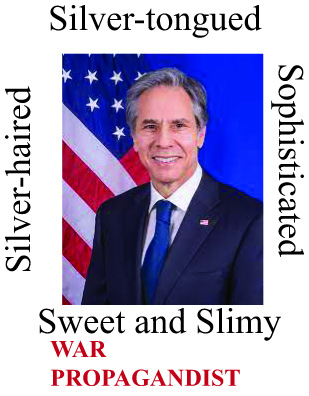
Not that this mattered a jot. In July, Blinken stomped on Wong’s views in a disingenuous, libellous assessment about Assange, reminding his counterpart that the publisher had been “charged with very serious criminal conduct in the United States in connection with his alleged role in one of the largest compromises of classified information in the history of our country.” The libel duly followed, with the claim that Assange “risked very serious harm to our national security, to the benefit of our adversaries, and put named sources at grave risk – grave risk – of physical harm, and grave risk of detention.” That gross falsification of history went unaddressed by Wong.
Thus far, Blinken has waived away the concerns of the Albanese government on Assange’s fate as passing irritants at a spring garden party. However small their purchase, six Australian parliamentarians have chosen to press the issue further. At the very least, they have gone to the centre of the imperium to add a bit of ballast to the effort.
A Powerful minority makes the nuclear decisions, in a strategy of concealment

“Without civilian nuclear energy there is no military use of this technology – and without military use there is no civilian nuclear energy,” Macron said during a visit to Framatome’s Le Creusot facility in December 2020.
The French nuclear mullahs are at the heart of this international lobby. In particular, they are engaged in a communication strategy that consists of underestimating, trivializing or denying the effects of radiation, and insisting that it is possible to live with radiation in contaminated areas. In other words, a strategy of concealment.
By Kolin Kobayashi, https://beyondnuclearinternational.org/2023/09/24/a-strategy-of-concealment/—
This year marks the 13th year since the Fukushima accident began, yet the path to a conclusion is by no means clear. The declaration of a state of emergency still cannot be lifted because of the various dangers and difficulties that have arisen. Despite this, Prime Minister Kishida’s government is doing more than ever to promote nuclear power as a basic energy source. This approach is similar to that of the French administration, which is also trying to promote nuclear energy as a dual-use nuclear weapon.
The international nuclear lobby, which represents only a minority, has the influence and money to dominate the world’s population with immense power and has now united the world’s minority nuclear community into one big galaxy. Many of the citizens who have experienced the world’s three most serious civil nuclear accidents have clearly realized that nuclear energy is too dangerous. These citizens are so divided and conflicted that they feel like a helpless minority.
The current situation with the Fukushima accident
Let’s start with the total amount of radiation that the Fukushima-Daiichi nuclear power plant still contains today. The spent fuel at the site contains 85 times more cesium-137 than Chornobyl and 50,000 to 100,000 times more than the Hiroshima bomb.
The fuel is still stored in pools on the top floor of the reactor buildings (30 metres above ground), with the exception of Unit 3, the removal of which was completed in 2019.
Now, although 12 years have passed, the precise program for future decommissioning is unclear. While the approximate overall radiation levels are known, the buildings and reactors themselves, where the decommissioning and dismantling work will take place, are highly radioactive and cannot be easily penetrated by workers.
The true extent of the accident is not known, nor is the exact state of dispersion of the corium (the molten magma from the nuclear fuel rods in the reactor core). In Unit 1, for example, it is clear from the images taken by a robot that many parts of the circular concrete foundation supporting the pressure vessel have been damaged by the high heat of the corium. There is a significant risk of collapse in the event of a strong earthquake, and if the 440-tonne vessel collapses, it could hit the storage pool next to it. If this pool is damaged, even partially, another major disaster could occur.
Release of contaminated water

The amount of contaminated water is increasing all the time, as water continues to flow to cool the corium. Currently, around 90 tonnes of contaminated water are being added to the tanks every day. There are currently more than 1,000 tanks, and TEPCO says they will be full by February next year.
TEPCO had promised not to release water without the consent of local communities and fishermen, but this promise was not kept. The International Atomic Energy Agency (IAEA) dispatched a team of experts to investigate whether the radioactivity levels of the contaminated water treated by TEPCO met the international safety standards set by the IAEA, and the final report was submitted to the government on July 4. On the basis of this report, the Japanese government decided to release the water and began discharging water into the Pacific Ocean on August 24, releasing 7,800 tons in 17 days.
However, the IAEA does not have the scientific authority to make reference to the ecological impact of this water discharge, nor has it carried out such a long-term assessment. It is more of a political decision than a scientific one.
TEPCO and the Japanese government have said that releasing contaminated water is essential for decommissioning work, but there are still places to build storage facilities. There are also methods other than releasing the water into the ocean, such as solidifying it in mortar and storing it on the surface.
However, the regulatory committee and study group said they had considered five solutions: geological injection, hydrogen release, underground burial, steam release and ocean release. In the end, they chose the cheapest method.
What is the international nuclear lobby?
Today, the nuclear issue is globally interwoven. The raw material needed — uranium — as well as nuclear technology and radiation protection standards, cannot be managed by a single country.
First of all, nuclear energy is the dark side of the atomic bomb. Nuclear reactors designed to produce electricity were originally machines designed to produce plutonium for the manufacture of atomic bombs. So it was only natural that French president, Emanuel Macron, should advocate the complementary nature of civil nuclear energy and nuclear weapons. “Without civilian nuclear energy there is no military use of this technology – and without military use there is no civilian nuclear energy,” Macron said during a visit to Framatome’s Le Creusot facility in December 2020.
The realpolitik of the atomic bomb led to the creation of the IAEA in 1948. The five nuclear-weapon states on the UN Security Council promoted nuclear energy for peace and encouraged its development in order to monopolize nuclear weapons, and they made the IAEA a nuclear supervisory agency to ensure that no other country produced atomic bombs. The UN Member States were deceived by Eisenhower’s fine-sounding words “Atoms for Peace” to the UN General Assembly on 8 December 1953.
The IAEA controls nuclear energy throughout the world. But this international organization is neither objective nor impartial, nor does it conform absolutely to scientific truth. It is a highly political institution.
Ordinary citizens trust international organizations simply because they hear about them in UN reports. But the IAEA is constantly working to promote nuclear energy. The effects of radiation are trivialized or denied, as if they were not a problem, merely a manageable danger for nuclear power plants.
The effects of radiation are grossly underestimated. The data base on which the IAEA relies is that of Hiroshima and Nagasaki, collected by the Atomic Bomb Casualty Commission. These data are totally incomplete. They do not take into account people who were exposed to radiation more than 2 km from the hypocenters, people who entered the cities after the bombs were dropped, and people who were exposed to radiation from black rain in distant areas. In other words, low-dose radiation exposure is completely ignored.
The French nuclear mullahs are at the heart of this international lobby. In particular, they are engaged in a communication strategy that consists of underestimating, trivializing or denying the effects of radiation, and insisting that it is possible to live with radiation in contaminated areas. In other words, a strategy of concealment.
The famous Ethos project, which ran in Belarus from 1996 to 2001, ten years after the Chornobyl accident, seemed to be helping the population, but in fact it was consolidating the theory of acceptance of radiation. Jacques Lochard, former director of the CEPN (Centre d’étude sur l’Evaluation de la protection dans le domaine Nucléaire) in France, who carried out this project, quickly showed up in Fukushima in November 2011 and implemented the same strategy in a different form.
Lochard is the perfect example of the constantly revolving door among individuals from organizations that promote nuclear power and those involved in radiation protection. These circumstances are totally unknown to ordinary citizens.
The CEPN is an association with only four members: the CEA (Commissariat à l’énergie atomique et aux énergies alternatives), EDF (Électricité de France), Areva/Orano and the IRSN (Institut de radioprotection et de sûreté nucléaire). In other words, it is the embodiment of the French nuclear lobby and manages the French nuclear lobby’s communication on radiation protection.
The Chornobyl Ethos project and the CORE and SAGE projects that followed it, were organized and carried out by Lochard, now retired but appointed as a visiting professor at the Institute of Atomic Bomb Disease at Nagasaki University, and his right-hand man, Thierry Schneider. They have become respectable points of reference for the European Commission as a means of dealing with a nuclear accident.
The methods initiated by this minority of promoters will be imposed, with authority and money, on those who are victims of a future serious nuclear accident in Europe. According to this philosophy, there is no need to evacuate. We can live happily with radiation, even in contaminated areas.
In this way, the French nuclear lobby, in cooperation with the International Commission on Radiological Protection, the IAEA-UNSCEAR (United Nations Scientific Committee on the Effects of Atomic Radiation) and others, can assure us that we can overcome a serious nuclear accident, by simply adapting to radiation exposure. The phrase “let’s hope people have the strength to bounce back” is repeated. The word “resilience” has become a key word in this milieu.
But in Belarus and Ukraine, 37years after the Chornobyl nuclear disaster, 60% to 80% of children are still ill from the radiation resulting from Chornobyl. In Fukushima too, there are those 300 or more cases of thyroid cancer. The Japanese authorities still insist that in the case of Fukushima, the causal relationship between cancer and radiation is not yet known. This is despite the fact that this was admitted in the case of Chornobyl. It can therefore be said that at Chornobyl, as at Fukushima, the reality of the effects of radiation caused by the accidents is still not officially recognized.
France has clearly stated that nuclear weapons and nuclear power are the two wheels of the car, and President Macron has insisted that a total of 15 nuclear power plants will be built by 2050. Japan has also declared that it will continue to develop nuclear power plants in collaboration with France.
However, it is clear from the outset that if we continue to develop nuclear power plants, nuclear waste will continue to accumulate. At present, the storage pools at every nuclear power plant site — whether in Japan or France — are approaching the limit of their full capacity. However, no reliable method for the final disposal of high-level nuclear waste has yet been established.
In this way, the lessons of Chornobyl and Fukushima are not being applied at all, but rather, the actual health hazards are being covered up. Any so-called cleanup projects are being carried out for the sake of immediate interests only. In the end, they are forcing the victims to endure radiation exposure and ultimately abandoning them. This is because of the cover-up strategy of the international nuclear lobby in the background.
Kolin Kobayashi is a Tokyo-born France-based anti-nuclear activist and retired freelance journalist. He is president of the non-profit organization, Echo-Echanges.
Is World War III About to Start? Part I: Drift Toward War

We have now come full circle. Warnings from Washington continue that Putin had better not go nuclear, which can be read as inviting him to do so. This is obviously a new phase of brinkmanship that could give the U.S. a pretext for themselves moving to nuclear war.
Nuke rattling from both sides over Ukraine.
SCHEERPOST, By Richard C. Cook September 23, 2023
It is likely that billions of people around the world view the conflict in Ukraine as a proxy war being waged by the U.S. against Russia. US President Joe Biden has pledged to aid Ukraine’s pursuit of victory “for as long as it takes,” without defining what the end state might be. Russian President Vladimir Putin has interpreted U.S. intentions to mean a fight “to the last Ukrainian.”
Anyone with a discernible pulse is aware of the danger that the conflict could escalate into a conflagration large and destructive enough to morph into World War III. The threshold would likely be crossed once nuclear weapons were unleashed. The military doctrines of all nuclear powers stipulate that such an attack would justify an in-kind response, though without always ruling out the same for lesser provocations of a potentially existential nature.
President Biden has said “the world faces the biggest risk of nuclear Armageddon since the 1962 Cuban Missile Crisis.” The context of Biden’s statement came a month earlier on September 21, 2022, when Putin warned the West he was not bluffing when he said he would be ready to use nuclear weapons to defend Russia against what he said was “nuclear blackmail.” Earlier, in an April 21, 2021, speech, Putin said:
We really do not want to burn bridges. But if someone mistakes our good intentions for indifference or weakness and intends to burn or even blow up these bridges, they must know that Russia’s response will be asymmetrical, swift, and tough. Those behind provocations that threaten the core interests of our security will regret what they have done in a way they have not regretted anything for a long time.
Another to speak of nuclear war has been former Russian president and prime minister Dmitry Medvedev, now deputy head of the Russian Security Council and one of Putin’s top advisers. Commenting on Ukraine’s highly touted but now failed 2023 “spring offensive,” Medvedev said in July 2023 that if Ukraine succeeded in taking Russian sovereign territory—including Crimea plus the four Donbass oblasts (regions) annexed by Russia last year—Russia “would have to use nuclear weapons by virtue of the Russian Presidential Decree.” This decree stated that any assault on Russian territory justified a nuclear response.
On Hiroshima Day, August 6, 2023, UN Secretary General Antonio Guterres said, “The drums of nuclear war are beating once again. Mistrust and division are on the rise. The nuclear shadow that loomed over the Cold War has re-emerged.” One who has predicted world war has been UK Defense Minister Ben Wallace. On May 19, 2023, he warned “that the UK could enter a direct conflict with Russian and China in the next seven years and has called for an increase in military spending to counter the potential threat.” Speaking to London’s Financial Times, Wallace said “a conflict is coming with a range of adversaries around the world.”
More recently, independent commentator Tucker Carlson, who has said the U.S. is intentionally seeking war with Russia, remarked in a September 2023 interview on The Adam Corolla Show that the Biden administration would attempt to stay in power by starting a “hot war” with Russia before the 2024 election. Carlson argued that the U.S. was “already at war” with Russia in Ukraine. He added, “I don’t think we’ll win it.”
………………………………………………………………… Nor are proxy wars anything new. They began with the Korean War. Of course, there were U.S. “boots on the ground,” but North and South Korea also fought against each other with Russia/China and the U.S./UN having the backs of each respectively. The Vietnam War was fought with U.S. troops and weapons aiding the South Vietnamese against the Russian-backed Hanoi regime and its ally, South Vietnam’s Viet Cong. The Korean conflict became a stalemate; Vietnam, a debacle. ……………………………………………………………
Purporting to be offended by the U.S.-Soviet nuclear standoff, whereby peace was assured only by the logic of “Mutually-Assured Destruction,” Reagan proposed an armada of “defensive” weapons in space. The military-industrial complex seized on Star Wars as a cornucopia of lucrative research and development projects that ended when space shuttle Challenger blew up. The space shuttle was being converted to a testing platform for space weaponry, as I saw personally at NASA when I worked there in 1985-1986…………………………………………………………………………………………………………………………………………………..
9/11, the Neocons’ “new Pearl Harbor,” produced the “War on Terror,” the Patriot Act, the Department of Homeland Security, the military doctrine of Full-Spectrum Dominance, and the assaults on Afghanistan, Iraq, and later Libya. The ideological focal point was demonization of all things Islam. The rationale? “They hate our freedoms.”
………………………………………………………………………………………………………………………………..UKRAINE — THE CROSSROADS
Now the U.S., with the Neocons firmly entrenched in the State Department and elsewhere, surrounded Russia with military bases………………………………………………………………………………………………….
Finally, after eight years of Ukrainian provocations, the death from Ukrainian shelling of more than 10,000 Donbass civilians, and the treachery of Germany and France in failing to uphold the Minsk agreements they had guaranteed, Russia entered Ukraine with its military forces in February 2022. The conflict was on, a conflict that Russia is winning. U.S.-led sanctions against Russia failed to bring down its economy or force regime change against Putin. But each Ukrainian setback on the battlefield has been followed by more weapons and money supplied to the Volodymyr Zelensky regime by the U.S., UK, Germany, France, and other NATO members.
But who was calling the shots? In March 2022, Russian and Ukrainian negotiators reached agreement on a tentative settlement at meetings in Istanbul. UK prime minister Boris Johnson then rushed to Kiev to induce Zelensky to tear up the agreement and continue the war. Western escalation has included billions of dollars worth of heavy tanks and other weapons to Ukraine, along with cluster munitions and depleted uranium projectiles. There have been drone attacks on Russia itself and on Crimea. But the Ukrainian counteroffensive has collapsed, with speculation increasing of a major Russian counterattack, possibly even cutting Ukraine off from the Black Sea.
We have now come full circle. Warnings from Washington continue that Putin had better not go nuclear, which can be read as inviting him to do so. This is obviously a new phase of brinkmanship that could give the U.S. a pretext for themselves moving to nuclear war. Meanwhile, the U.S. understands that it could in no way challenge Russia in a conventional war even with the entire NATO alliance being activated. Even then, divisiveness within NATO and the absence of sufficient military force anywhere in Europe make this impossible at present. Veteran military analyst Scott Ritter writes in Sputnik News on September 21, 2023, that even were the U.S. to activate its entire military force stationed in Europe against Russia, it would be defeated within one to two weeks of intensive combat. The only alternative would then be to activate a gigantic airlift of additional forces into Europe with U.S. cargo planes sitting ducks for destruction en route. Impossible.
There are now signs that the U.S. may be pressuring Ukraine to agree to a cease-fire, with a “freeze” along the lines of the decades-old Korean settlement. But all this would do would be to “kick the can down the road”—possibly until after the 2024 U.S. presidential election, likely to be preceded by elections in Ukraine in March. There are no signs that the U.S. is ready to concede a Russian victory involving the redrawing of the European security apparatus with Russia a respected party. The Ukrainian government speaks of a “long-term” conflict lasting decades. So there is no way to aver that the war in Ukraine is ending or to speculate about the next phase.
So, is a nuclear World War III a possibility? https://scheerpost.com/2023/09/23/is-world-war-iii-about-to-start-part-i-drift-toward-war/
1 This month

of the week – Australians for War Powers Reform (AWPR)
To see nuclear-related stories in greater depth and intensity
 Antinuclear