TODAY. The international political system of nuclear bullying must change, or it will kill us all

The normalisation of mass killing of civilians really got underway in February 1945, with the fire-bombing of Dresden. This normalisation was re-authorised in August 1945 with the atomic bombing of Hiroshima and Nagasaki.
Mass killing can be done in other ways – “normal” bombing, starvation, … and behind all that, the threat that nuclear weapons can be used if the victims resist.
Ray Acheson has beautifully explained this. So – we all live under that threat – at any time a so-called political leader might decide to use nuclear weapons.
So we live under the “international rules-based order” – which is backed up by this nuclear threat.
*******************************************
It all doesn’t make sense.
Not only do we have to accept that it’s OK for our side to massacre civilians of the other side. We’re also agreeing to the massacre of our own civilians, because the USA has set up numerous missile bases as targets ,so that some of them will attract the nuclear bombing by the enemy. That’s supposed to “dilute” the power of the enemy’s nuclear attack across the nation.
That’s just one bit of the craziness of an international relationship system that is based on nuclear bullying.
********************************
Further insanity, illogic of the system – Ray Acheson quotes Martin Amis:
What is the only provocation that could bring about the use of nuclear weapons? Nuclear weapons. What is the priority target for nuclear weapons? Nuclear weapons. What is the only established defence against nuclear weapons? Nuclear weapons. How do we prevent the use of nuclear weapons? By threatening to use nuclear weapons. And we can’t get rid of nuclear weapons, because of nuclear weapons.
They call it “deterrence”, but as Acheson points out – the possession of nuclear weapons does not deter war and violence. In fact it enables war. The nation possessing nuclear weapons (and there are more of such nations now) can intimidate others – cower them into not standing up to aggression and war crimes.
*****************************
Not to be forgotten in our consumer society, with its gospel of eternal growth, and profit as the most virtuous goal – the success of the nuclear business. Financial investments in nuclear weapons provide profits for weapons manufacturers that also build conventional bombs, missiles, guns, fighter jets, and other technologies of war.
********************************
Can the world change from this madness?
Surely so. Let’s remember the conclusion of Anne Frank, 13 year old victim of the Nazi death chambers- “I still believe that people are really good at heart “
The Second Meeting of States Parties (2MSP) to the Treaty on the Prohibition of Nuclear Weapons (TPNW) will take place from 27 November to 1 December 2023 at UN Headquarters in New York City.
Independents pressure Australia on nuclear ban treaty ahead of UN meeting
November 24th, 2023
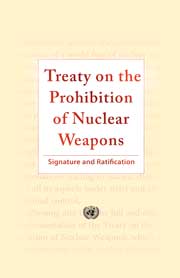
11 independent parliamentarians have issued a public call on the Prime Minister to keep Labor’s promise to sign and ratify the UN Treaty on the Prohibition of Nuclear Weapons, ahead of the treaty’s Second Meeting of States Parties on 27 November – 1 December in New York.
The letter, which is signed by Kate Chaney MP, Zoe Daniel MP, Dr. Helen Haines MP, Senator David Pocock, Dr. Monique Ryan MP, Dr. Sophie Scamps MP, Allegra Spender MP, Zali Steggall OAM MP, Senator Lidia Thorpe, Kylea Tink MP, and Andrew Wilkie MP, states that “nuclear weapons do not promote security, they undermine it. We don’t accept the everlasting presence of these weapons.” They “urge the Government to advance its signature and ratification of the Ban Treaty without delay, to bring Australia in line with our South-East Asian and Pacific island neighbours.”
In regards to the letter, Federal Member for Goldstein, Zoe Daniel MP, said: “Voters supported Labor at the election, believing in good faith that they would implement their platform.
“Signing and ratifying was Labor Party policy before the election and has been reaffirmed since.
“In the most perilous times since the height of the Cold War this treaty is needed more than ever; voters want it and so do the vulnerable nations of the Pacific whose backyards were used for nuclear testing without their permission.
“Look at what Labor does, not what it says.”
Australia will attend the Second Meeting of States Parties as an observer, with a parliamentary head of delegation, after attending the first Meeting of States Parties in June 2022. It is expected that several states, including Indonesia, will ratify the treaty during the meeting, bolstering universalisation efforts. Around 100 countries will attend, along with over 400 civil society delegates.
Gem Romuld, ICAN Australia Director, welcomed the independents’ statement and Australia’s attendance at the meeting, but said the Albanese Government must do more, in line with their policy platform to sign and ratify the treaty.
“We welcome the Australian government’s engagement with the Treaty on the Prohibition of Nuclear Weapons, but observing meetings isn’t enough. There is clearly broad support for signing on to this treaty in the Australian Parliament, as indicated by the independents’ statement to the PM.
“Labor needs to make good on their promise to join the majority of our South East Asian and Pacific neighbours and sign and ratify the TPNW. We hope that Australia’s attendance at this meeting will spur efforts towards this urgent goal.”
Romuld is joining the international ICAN delegation at the meeting, including Yankunytjatjara-Anangu woman and second-generation nuclear test survivor Karina Lester, and current ICAN Executive Director, former Labor MP Melissa Parke.
Malaysian Govt urged to halt Australian company Lynas’ thorium extraction plan

https://www.thestar.com.my/news/nation/2023/11/24/govt-urged-to-halt-lynas-thorium-extraction-plan
SEVERAL DAP lawmakers have urged the government to review Lynas Malaysia’s license and stop the plan for thorium extraction from the waste produced at the factory of the rare earth producer.Chow Yu Hui (PH-Raub) said that he remains unconvinced that Lynas Malaysia was capable of extracting thorium.
“Let us not forget that the amount of waste from the Lynas plant was as large as five hills behind its factory. Will the new thorium extraction technology and Lynas be able to manage the radioactive waste which is expected to reach 1.2 million metric tonnes?” he asked reporters at the parliament media centre yesterday.
Oct 24, Science, Technology and Innovation Minister Chang Lih Kang announced that Lynas Malaysia would be allowed to import lanthanide concentrates until its licence expires in March 2026.
He also said that the Atomic Energy Licensing Board (AELB) decided to amend Lynas Malaysia’s license conditions after the company made a proposal to the licensing board about its thorium extraction technology.
With this, Chang said radioactive waste will not be produced after extraction and cracking and leaching activities are carried out on the lanthanide concentrate.
Khoo Poay Tiong (PH-Kota Melaka) said the Science, Technology and Innovation Ministry had announced on May 10 regarding the renewal of Lynas Malaysia’s license until Dec 31.
However, Khoo said that within a period of five months, the government, via AELB, had reviewed Lynas’ licence conditions.
“This matter has raised many concerns regarding the radioactive pollution and safety of locals,” said Khoo, who also wanted to know the parties that came up with the idea of thorium extraction.“We also want clarification from the government on what the possible market for thorium is,” he said.
Tan Hong Pin (PH-Bakri) also pointed out that thorium extraction technology was still in its initial phases, even at the international level.
“To what extent can thorium be extracted, used and commercially extracted? What are the effective measures that can be taken by the government to address the issue and ensure that Lynas will adhere to all the international standards in managing radioactive waste?” asked Tan.
On Nov 16, Chang promised that AELB will closely monitor the thorium extraction process from Lynas Malaysia’s waste material.
The Shape of Nuclear Abolition

Nuclear Ban Daily, Vol. 4, No. 1 https://reachingcriticalwill.org/disarmament-fora/nuclear-weapon-ban/2msp/reports/17072-nuclear-ban-daily-vol-4-no-1
Editorial: The Shape of Nuclear Abolition
24 November 2023, By Ray Acheson
Writer Martin Amis describes nuclear weapons as instruments of blood and rubble. These days, blood and rubble seems to be everywhere, most of all, for the moment, in Gaza. Thousands of bombs dropped on apartment buildings, hospitals, bakeries. And still, this is apparently not enough blood or rubble. The genocidal bombing continues, as do the shipments of weapons to continue the genocidal bombing. And in the midst of all this bombing, an Israeli minister found it appropriate to muse about dropping a nuclear weapon on Gaza. His remarks have been condemned by many governments, but are they surprising, when the practice of nuclear-armed states is to commit massive amounts of violence wherever and whenever they desire?
Nuclear weapons are part of the spectrum of violence—at the possibly-world-ending end of the spectrum. Daniel Ellsberg recognised this, describing how the firebombing of Dresden, London, and Tokyo in World War II led to the atomic bombings of Hiroshima and Nagasaki, normalizing the concept of cities on fire, of civilians as targets. In this world of blood and rubble, every day that nuclear weapons exist is a day that they might be detonated, dropped on a city or a missile silo, tested on an island or in a desert, unleashing terrible forces of blast, heat, fire, and radiation on people’s bodies, into the land, water, and air. Every day that nuclear weapons exist is a day that a so-called political leader might decide to use them.
Blood and rubble are policy choices. Blood and rubble are planned for by all of those who shape and propagate the dangerous doctrine of nuclear deterrence. In his introduction to Einstein’s Monsters, Amis writes:
What is the only provocation that could bring about the use of nuclear weapons? Nuclear weapons. What is the priority target for nuclear weapons? Nuclear weapons. What is the only established defence against nuclear weapons? Nuclear weapons. How do we prevent the use of nuclear weapons? By threatening to use nuclear weapons. And we can’t get rid of nuclear weapons, because of nuclear weapons.
This is the relentless circular (il)logic of deterrence, the principal tenant of which is that the possession of nuclear weapons makes their use impossible and thus prevents war. But whether it is the United States attacking Iraq, Russia invading Ukraine, or Israel committing genocide in Palestine, it should be clear to all that nuclear weapons do not prevent war. They enable it.
Whether nuclear weapons are used or not, they facilitate other forms of violence. They are the backbone of a mentality that security can best be achieved through building up the capacity to commit mass destruction, and by committing mass destruction. Nuclear weapons are used as shields to prevent others from standing up to their possessors’ acts of aggression, to their war crimes. Financial investments in nuclear weapons provide profits for weapons manufacturers that also build conventional bombs, missiles, guns, fighter jets, and other technologies of war. Nuclear weapons provide sustenance to the war machine, and exist as the overarching, final threat of that machine.
The possession of nuclear weapons drives the development of self-destructive plans masquerading as national security. Governments willfully put people and the planet in harm’s way, arrogantly asserting that this is the best way to protect them. One example is the land-based missile silos in the United States, which are intended to serve as targets for enemy nuclear weapons with no concern for the communities or land upon which they are based. As part of his new ground-breaking project examining the US government’s plan to modernise its nuclear forces, Sébastien Philippe of Princeton University’s Program on Science and Global Security writes in Scientific American, “a key argument for the continued existence—and now the replenishment—of the land-based missiles is to provide a large number of fixed targets meant to exhaust the enemy’s resources.” Yet the most recent, 3000-page report from US government on these silos does not mention what happens if the missiles are attacked. But as Philippe’s modelling of these “sacrifice zones” shows:
A concerted nuclear attack on the existing U.S. silo fields—in Colorado, Wyoming, Nebraska, Montana and North Dakota—would annihilate all life in the surrounding regions and contaminate fertile agricultural land for years. Minnesota, Iowa and Kansas would also probably face high levels of radioactive fallout. Acute radiation exposure alone would cause several million fatalities across the U.S.—if people get advance warning and can shelter in place for at least four days. Without appropriate shelter, that number could be twice as high. Because of great variability in wind directions, the entire population of the contiguous U.S. and the most populated areas of Canada, as well as the northern states of Mexico, would be at risk of lethal fallout—more than 300 million people in total. The inhabitants of the U.S. Midwest and of Alberta, Saskatchewan, Manitoba and Ontario in Canada could receive outdoor whole-body doses of radiation several times higher than the minimum known to result in certain death.
“Higher than the minimum known to result in certain death.” How can anyone read these words and think, “No, this is not relevant for a study on the impacts of our weapon systems.” Or, more broadly, that “No, this is not relevant for our consideration of the possession and deployment of these weapons at all. In fact, we will base our security strategy on the possibility of mass death and unspeakable suffering, and this is normal and fine for us and a few select others—this is how we will dominate. This is how we ‘win’.”
The irrationality of basing national security on the ability to execute or absorb catastrophic events like genocide is not lost on states parties and signatories to the Treaty on the Prohibition of Nuclear Weapons (TPNW). These governments understand that security must be provided for through other means. That it is both immoral and illogical to threaten to melt people, to turn them into shadows, or to subject them to a protracted, painful death from radiation poisoning, in order to—what, exactly? Exercise dominance within the so-called world order? Be able to wage wars of aggression against whomever one wants, whenever one wants?
The governments that join the TPNW are not just pledging against acquiring nuclear weapons themselves—they are also committed to achieving the abolition of all nuclear weapons, and to building a world that does not rely on massive nuclear violence for security. When these governments gathered with activists and others in 2017 to prohibit nuclear weapons, they changed the world. Not just rhetorically, but materially. The creation of a legally binding treaty outlawing the possession, use, and threat of use of atomic bombs has enabled unprecedented financial divestment and political stigmatisation of these weapons. It has changed discourse, even if it has not yet changed doctrines. But one follows the other.
Six years after the adoption of the TPNW, the nuclear-armed states and nuclear-supportive allies are still clinging to their arsenals of mass destruction. But the horrors these governments have collectively wrought upon the world are clearer—and more condemned—than ever. The masks are off, the wizards are no longer behind the curtain. Political leaders that condone mass death are being denounced; global inequalities are being exposed and opposed. The tide may not yet have fully turned, but the wave of opposition to permanent war and violent aggression is growing every single day. People are organising and getting organised. There is no time to waste, not when it comes to genocide and not when it comes to nuclear weapons.
This meeting of TPNW states parties is an opportunity to advance collective action against the bomb. The governments that have signed and ratified this treaty must adopt a strong declaration condemning nuclear deterrence and the continued possession and modernisation of nuclear arsenals. They must continue to implement last year’s action plan and work to get more countries onboard the treaty, especially those still trying to hide behind the false security promised by nuclear-armed states in exchange for sharing the economic and political burdens of nuclearism. The governments that aid and abet nuclear-armed states must relinquish this immoral space and join the rest of the world in renouncing the policies and practices of mass death.
But this meeting of states parties is not just about governments, it’s about people. It’s about the Indigenous Peoples upon whose bodies and lands nuclear weapons have been detonated, again and again and again. It’s about the communities who have been forced, without their consent or knowledge, to host uranium mines, nuclear laboratories, missile silos or bomber and submarine fleets, radioactive waste dumps. It is about all of us living with radiation from nuclear testing in our bodies, contaminated for generations by the hubris of political and corporate leaders who put their profits and sense of power above everything else. This meeting will be filled with people from affected communities, activist organisations, scientific groups, academic institutions, and more. Nuclear weapons have never just been about states. Nuclear weapons, fundamentally, are about human life, about all life. The nuclear-armed states have refused to acknowledge, let alone include, most people in conversations or policy making about their bombs. But the TPNW is a space for everyone to have a voice, to participate, and to determine how we fight for nuclear abolition, together.
“Nuclear weapons are mirrors in which we see all the versions of the human shape,” writes Amis. What shape do we want to reflect?
Second Meeting of State Parties to Treaty on Prohibition of Nuclear Weapons to Be Held at Headquarters, 27 November–1 December

NEW YORK, 24 November (Office for Disarmament Affairs) — The second Meeting of States Parties to the Treaty on the Prohibition of Nuclear Weapons will be held at the United Nations Headquarters from 27 November-1 December 2023. Juan Ramón de la Fuente (Mexico) was elected as President of the Meeting.
The Treaty, the first multilateral nuclear disarmament treaty to be negotiated in more than two decades, was adopted on 7 July 2017 at the United Nations and entered into force on 22 January 2021. United Nations Secretary-General António Guterres has called the Treaty “an important step towards the goal of a world free of nuclear weapons and a strong demonstration of support for multilateral approaches to nuclear disarmament.”
The second Meeting of States Parties is expected to hold a thematic debate on the humanitarian impact of nuclear weapons. States parties will also consider the status and operation of the Treaty, addressing issues that include universality; the total elimination of nuclear weapons; and victim assistance, environmental remediation and international cooperation and assistance. Other topics will include scientific and technical advice for the effective implementation of the Treaty, the complementarity of the Treaty with the existing nuclear disarmament and non-proliferation regime and implementing the gender provisions of the Treaty.
The Meeting is expected to adopt a political declaration. The period since the conclusion of the first Meeting of States Parties in April 2022 saw the appointment of a Scientific Advisory Group, which will present its initial reports at the second Meeting of States Parties. Since the first Meeting of States Parties, seven States signed the Treaty, three ratified it and one acceded to it.
The Treaty contains, inter alia, a comprehensive set of prohibitions on participating in any nuclear-weapon-related activities. This includes undertakings not to develop, test, produce, acquire, possess, stockpile, use or threaten to use nuclear weapons. The Treaty also prohibits the deployment of nuclear weapons on national territory as well as the provision of assistance to any State in the conduct of prohibited activities.
The Treaty requires States parties to assist individuals affected by the use or testing of nuclear weapons, as well as to take environmental remediation measures in areas under their jurisdiction or control that have been contaminated due to the testing or use of nuclear weapons. States parties are required to cooperate with one another to facilitate the Treaty’s implementation.
To date, 69 States have ratified or acceded to the Treaty and 93 have signed it.
Media contacts for the second Meeting of States Parties to the Treaty on the Prohibition of Nuclear Weapons: Suzanne Oosterwijk, United Nations Office for Disarmament Affairs, UN Secretariat, S-30FW, telephone: +1 917-367-2556, email: suzanne.oosterwijk@un.org.
Nuclear waste bags Fukushima – slowly falling apart
“Contaminated soil bags in Fukushima prefecture. The life span of these bags is about 5 years. No government plan to do anything with these so they are slowly falling apart.”
Arkadiusz Podniesinski was in Fukushima Prefecture.

1 This month
7 April – WEBINAR – Australia and the Doomsday Clock – Preventing nuclear war through NoFirstUse and other policies
Online | Tuesday April 7, 4:00-5:30pm, Australian Eastern Time / 8:00-9:30am Central Europe Time
– Access the registration link
15 April – Zoom –Nuclear Power is Not the Solution
Apr 15, 2026 01:00 AM in Canberra, Melbourne, Sydney

Join the International Physicians for the Prevention of Nuclear War (IPPNW) on Tuesday, April 14th for a timely webinar exploring the risks associated with nuclear power and challenging the myth that it offers a simple, safe, carbon-free solution to the climate crisis

of the week – Australians for War Powers Reform (AWPR)
To see nuclear-related stories in greater depth and intensity
 Antinuclear