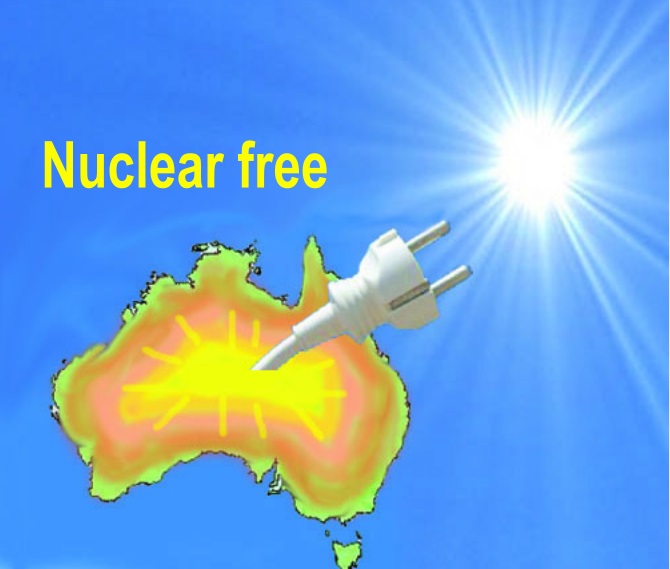
Nuclear energy is not viable for Australia, for a number of reasons
By John Grimes, Saul Griffith, Tim Buckley, Blair Palese, Janaline Oh, John Hewson, Mara Bun, https://www.canberratimes.com.au/story/8456455/debating-viability-of-nuclear-power-in-australia/ December 13 2023
The prospect of nuclear power generation in Australia is now a live debate. There are a number of barriers that make nuclear unviable as a solution for Australia’s energy transition in a timeframe necessary to respond to the climate, energy and cost-of-living crisis. We outline these below.
We need energy, decarbonisation and cost of living solutions this decade. The Intergovernmental Panel on Climate Change recommends a 50 per cent emissions reduction by 2030. As former Chief Scientist Dr Alan Finkel has noted, It is hard to imagine first operation of small modular reactor (SMR) technology before 2040.
SMR technology, advocated by proponents of nuclear energy in Australia, is not commercial. There are no SMRs in operation outside of Russia and China, and none under construction in Europe or North America, meaning there is no evidence of their safe and consistent operation, or viability. In November, the only SMR development in the US was terminated.
Nuclear power is prohibited in Australia under federal legislation, with similar legislation in the states and territories.
To overturn these bans and establish the new regulatory and compliance regime would take years and would only be the start of the process of developing a nuclear industry. Sites for reactors would need to be identified, and social licence secured. Rigorous approvals processes would need to run their course. A skilled specialist local workforce would need to be trained and deployed. Robust arrangements would need to be made to manage waste and to mitigate risk. Legal challenges and civic protest would arise.
All of the above means nuclear would not be ready to deploy in a climate-necessary timeframe in Australia.
Therefore, we must continue to deploy the commercially viable and proven zero-emissions technologies of firmed solar and wind power as rapidly as possible.
Further, the cost of nuclear power generation is much higher than its low-cost alternatives.
The 2022 World Nuclear Industry Status Report (WNISR) notes that between 2009 and 2021, unsubsidised costs for solar PV declined from US$359 to US$36 per megawatt hour (MWh), a fall of 90 per cent, and for wind from US$135 to US$38 per MWh, a 72 per cent fall, while nuclear power costs rose from US$123 to US$167 per MWh, up 36 per cent. This gap is widening.
The CSIRO/Australian Energy Market Operator May 2023 GenCost report found that: “A review of the available evidence makes it clear that nuclear power does not currently provide an economically competitive solution in Australia – or that we have the relevant frameworks in place for its consideration and operation within the timeframe required.”
The Investor Group on Climate Change, which represents investors with $30 trillion in assets under management, says there is no interest among investors in nuclear, when nuclear has “project time blowouts of anything from seven to 15-plus years and cost blowouts in the tens of billions, and lowest-cost technologies, renewables, batteries and so on, are available to deploy now”.
The 2023 WNISR notes that in 2022, “total investment in renewable electricity capacity reached a new record all-time high of US$495 billion (up 35 per cent), 14 times the reported global investment decisions for the construction of nuclear power plants”.
The climate and energy price crises require Australia to accelerate the decarbonisation of its electricity system and economy toward zero-emissions this decade.
Australia enjoys the global advantage of superabundant solar and wind resources.
Unlike some economies where nuclear energy is established, Australia also has available landmass for renewables infrastructure and the opportunity to share the benefits with communities.
We urge the federal government to maintain its policy and investment focus on the proven technology of low-cost, deflationary firmed renewables and “electrification of everything”, and to accelerate deployments, as it has done with its recent landmark boost to the Capacity Investment Scheme (CIS) bolstered by its pledge at COP28 to triple renewables by 2030.
When announced last year, the federal government said the first iteration of its CIS would drive around $10 billion of investment in clean dispatchable power.
Climate Energy Finance estimates the recently announced turbocharging of the CIS will see a four-fold lift in firmed clean energy investment across Australia.
The fastest-to-deploy and most popular renewable energy option for Australia is rooftop solar, the world’s cheapest energy source, because it eliminates transmission and distribution costs.
Mass solar electrification of households should be central to our clean energy transition plans.
Electrification of communities and commercial operations in Renewable Energy Zones will improve equity and build social licence for large-scale energy infrastructure, as it enables decarbonisation of industry.
These complementary actions will permanently reduce greenhouse emissions and energy prices, enable Australia to deliver on its climate commitments, and catalyse our generational opportunity to position Australia as a zero-emissions trade and investment leader.
Australia has no time to lose. The rise of renewables offers us a chance to reinvent Australia’s economy.
We can ill afford the opportunity cost of delay to our renewables transformation.
John Grimes is CEO of the Smart Energy Council. Dr Saul Griffith is co-founder and chief scientist of Rewiring Australia. Tim Buckley is a director of Climate Energy Finance. Blair Palese is founder of the Climate Capital Forum. Janaline Oh is executive director of Diplomats for Climate and a former senior diplomat. Dr John Hewson AM is a professor at the ANU Crawford School of Public Policy. Mara Bun is a company director and former president of the Australian Conservation Foundation.
Coalition delivers the same old tired nuclear talking points at COP28

With a heavy sigh, Crikey once again delves into the most pointless ritual in Australian public policy — the nuclear energy ‘debate’.
CHARLIE LEWIS, DEC 11, 2023, https://www.crikey.com.au/2023/12/11/coalition-nuclear-energy-australia/
“Today I am happy to announce that a reelected Coalition government will, at its first COP after being returned to office, sign the nuclear pledge and return Australia to where it belongs, standing alongside its friends and allies,” opposition climate change and energy spokesman Ted O’Brien told world climate summit/increasingly dark joke at humanity’s expense COP28 on Saturday.
He pledged that a reelected Coalition government would triple nuclear energy output and overturn Australia’s nuclear energy moratorium, insisting “no nuclear, no net zero”.
And so, with a heavy sigh, Crikey once again delves into what our politics editor Bernard Keane has described as “the single most boring and ossified ritual in Australian public policy”.
A ‘sensible’ debate
It always starts with a demand for a “sensible” debate around the topic. Going back to John Howard’s years as prime minister (he called for this not once but twice) and to pick a handful of examples since: Then-foreign minister Julie Bishop in 2014, the then-assistant science minister Karen Andrews in 2015 and then-candidate Warren Mundine in 2019. Just last week, troublemaking former Labor minister Joel Fitzgibbon called on the Albanese government to end the ban on nuclear energy. This is not to mention a swathe of conservative media figures adding their voices to the choir over the years.
With dreary inevitability, Opposition Leader Peter Dutton reached for the old hymn book in his budget reply this year, arguing (all together now): “Any sensible government must consider small modular nuclear as part of the energy mix.”
Time is money and also money is money
As we’ve long reported — long, long reported — there are several barriers to nuclear power in Australia, primarily that the whole thing is incredibly expensive because Australia doesn’t have any nuclear infrastructure. As clean energy investor and man with a zeal for the teal Simon Holmes à Court, who was at O’Brien’s address, puts it, “it is a pretty easy pledge to sign because three times zero is zero”.
Nuclear power plants take a very long time to build — as Australia’s former chief scientist Alan Finkel told the Nine papers in August, it’s highly unlikely Australia could open a nuclear power plant before the early 2040s, a delay the country can ill afford if it is to dramatically reduce emissions as quickly as it needs to.
On top of this is the eye-watering price. According to research from the Department of Climate Change and Energy released in September this year, the cost of replacing coalmine sites with small nuclear reactors would be $387 billion.
Even former chair of the Australian Nuclear Science and Technology Organisation Dr Ziggy Switkowski, who undertook a review on the viability of nuclear power for the Howard government in 2007 and is a very big fan of nuclear energy, conceded in 2018 “the window for gigawatt-scale nuclear has closed”:
With requirements for baseload capacity reducing, adding nuclear capacity one gigawatt at a time is hard to justify, especially as costs are now very high (in the range of $5 billion to $10 billion), development timelines are 15+ years, and solar with battery storage are winning the race.
The tax that is not to be named
There is and always has been only one way, in the eyes of Australia’s most credible nuclear spruikers, for nuclear energy to compete with existing energy sources: impose a carbon price.
Switkowski’s 2007 review probably didn’t greatly please Howard, given it found that nuclear became viable compared with coal and gas only if there was a carbon price. Economist and Crikey contributor John Quiggin has also previously argued in favour of nuclear energy in Australia only if it is backed by a carbon price.
Oxfam welcomes Prime Minister Albanese’s call for a “sustainable ceasefire” and Australian vote for immediate ceasefire at UNGA
December 13, 2023, The AIM Network https://theaimn.com/oxfam-welcomes-prime-minister-albaneses-call-for-a-sustainable-ceasefire-and-australian-vote-for-immediate-ceasefire-at-unga/
Oxfam Australia has welcomed a joint statement signed by Prime Minister Albanese and the Prime Ministers of New Zealand and Canada calling for “urgent international efforts towards a sustainable ceasefire”, as well as Australia’s vote in support of an immediate ceasefire at the UN General Assembly.
The PMs’ statement calls for Israel to respect international law and describes Israeli settlements and settler violence in the West Bank as “serious obstacles to a negotiated two-state solution”.
Oxfam Australia Chief Executive Lyn Morgain said the statement and the successful vote were important steps.
“It is clear that this carnage has gone on for far too long and, as the statement says, 18,000 lives is far too high a price to pay. Civilians, including children, should never be punished for crimes committed by their leaders.
“For months now, Australians in their many thousands have been taking to the streets, signing petitions and actively campaigning for our leaders and government to do what it can to put an end to this senseless humanitarian catastrophe.
“The Prime Minister must continue to do all in his power to ensure this ceasefire happens, and that these issues aren’t forgotten once the fighting ends, so Palestinians have a real chance to live in a sustainable peace in their own state.”
The UN Nuclear Ban Treaty is Leading Resistance to Nuclear Autocracy.

Robert Rust, December 13, 2023 Union of Concerned Scientists
During the week of November 27th, under a cloud of international conflict and unease, delegates, politicians, activists and academics convened for the Second Meeting of States Parties (2MSP) to the Treaty on the Prohibition of Nuclear Weapons (TPNW) at the UN Headquarters in New York. Attendees came together to examine the global state of disarmament and harm-reduction work and call for more states to sign the nuclear ban treaty and join the stand against nuclear weapons.
The TPNW is a broad coalition of nation states committed to building that framework through changing attitudes toward and the culture around nuclear weapons; currently, there are 93 signatories and 69 states parties. Unsurprisingly, none of the five nuclear-weapon states recognized by the Nuclear Non-Proliferation Treaty (United States, Russia, China, United Kingdom, and France) have signed, and only seven of 38 OECD countries (Austria, Chile, Colombia, Costa Rica, Ireland, Mexico, and New Zealand) have signed or ratified. Clearly, this is a movement by those who have less to demand better behavior from those who have more. Nuclear weapons harm and threaten the many for the benefit of the few; the many are working to end that.
Speaking at a session on the treaty’s obligations within victim assistance and remediation, Governor Hidehiko Yuzaki of Hiroshima made a key point about the way we think about security. Nuclear deterrence, he said, is an idea become dogma, not a hard truth; relying on it for security locks us into a system with inherent massive risks. We must stop thinking of security in these “narrow nationalistic frames”, and work to build a “collective, sustainable security framework.”
Voices from the frontline
The most important participants at the 2MSP were members of frontline communities directly impacted by mining, bombing, testing and storage across the world. The hibakusha, survivors of the atomic bombings of Hiroshima and Nagasaki, have experienced the horrors of nuclear weapons like no one else. The 2MSP heard how post-war US secrecy around the atomic bomb fostered significant discrimination towards hibakusha in Japan. Indeed, victim testimony at the museums dedicated to the bombings in Hiroshima and Nagasaki describes how US scientists and military personnel arrived to test and observe the bomb’s impact on the local environment, including its inhabitants.
That dehumanization and disregard for human life was also central in nuclear testing across the world. Just as they are among the first and most seriously impacted by the effects of climate change, indigenous communities have historically been on the front lines of nuclear testing and uranium mining.

Speaking at the 2MSP, Karina Lester, who is from the Anangu Pitjantjatjara Yankunytjatjara Lands (APY Lands) in the far Northwest of South Australia, spoke of her father and grandmother’s experiences of British nuclear testing in the area. She described how her father heard the ground shake and felt the “black smoke” move over their lands. The TPNW, she said, must continue to center the voices of those who have experienced the harm of nuclear weapons; the weapons must be made illegal, but governments must also work with those impacted to redress the harm caused.
The TPNW should act as both a forum and a tool for those countries and communities who have been harmed. Powerful states have to respect the sovereignty of smaller states, honor their obligations through international treaties and respect the decisions of multilateral organizations. They have a history of failing to do so.
For example, discussing the work towards a nuclear-free Pacific, one speaker pointed out that after Christmas Island (Kiribas) was selected as a site for the United Kingdom’s nuclear testing, Samoa, which was a trust territory of New Zealand at the time, petitioned the UN Trusteeship Council to halt the 1957 test, but the United Kingdom did not listen. Indeed, examination of British military reports prior to the test show racist attitudes that were callously dismissive of harm to local “primitive” populations. The United Kingdom, United States and France saw the Pacific and Australia as “empty space”, erasing local populations entirely. ……………………………………………………………. more https://blog.ucsusa.org/robert-rust/the-un-nuclear-ban-treaty-is-leading-resistance-to-nuclear-autocracy/
Gaza Is Deliberately Being Made Uninhabitable

CAITLIN JOHNSTONE, DEC 13, 2023 https://www.caitlinjohnst.one/p/gaza-is-deliberately-being-made-uninhabitable?utm_source=post-email-title&publication_id=82124&post_id=139740561&utm_campaign=email-post-title&isFreemail=true&r=1ise1&utm_medium=email
Infectious diseases are tearing through Gaza, whose healthcare system has been rendered almost nonexistent, and people are beginning to starve in massive numbers. All of this is due to concrete policy decisions made by Israel in its horrific assault on the Gaza Strip.
In an article titled “Gaza’s health system is ‘on its knees’ as Israel pushes into Khan Younis,” The Washington Post reports that the mass displacement of nearly two million Palestinians in Gaza has led to overcrowding and unsanitary living conditions that are rapidly giving rise to disease.
“Meanwhile, the Gaza Health Ministry and other medical workers said they were recording new cases of acute hepatitis, scabies, measles and upper respiratory infections, mostly among children,” the Post reports. “Infectious diseases are spreading fast, said Imad al-Hams, a physician at the Kuwaiti Hospital in Rafah, as people crowd into tiny slivers of land to escape advancing Israeli forces.”
In a recent interview with CNN, Doctors Without Borders emergency coordinator Marie-Aure Perreaut described conditions in Gaza as “apocalyptic”, saying living conditions at the Al-Aqsa Hospital she’s working from “can barely be described as living conditions anymore.”
“The healthcare system is completely collapsed at the moment,” Perreaut told Al Jazeera.
The UN World Food Programme reports that half of Gaza’s population is now starving due to Israeli siege warfare and the collapse of civilian infrastructure. In northern Gaza that figure goes up to nine in ten.
All of this aligns perfectly with Israeli policies of massive forced evacuations, attacking healthcare facilities, and laying complete siege to the Gaza Strip.
A doctor named Hafez Abukhoussa writes the following in a new article for Time titled “What I’ve Seen Treating Patients in Gaza’s Remaining Hospitals”:
Gaza’s health care system has almost completely collapsed as a result of Israel’s ongoing bombardment. Hospitals and ambulances have been repeatedly attacked. According to Gaza’s Ministry of Health, more than 250 medical workers have been killed so far, including two of my colleagues from Doctors Without Borders, who died while performing their duties in Al-Awda hospital in northern Gaza. Of Gaza’s 36 hospitals, only 11 are still functioning in any capacity, according to the World Health Organization. Hospitals in the north like Al-Shifa are barely functioning at all, as basic medicines and fuel have run out. My colleagues have been performing amputations by flashlight and without anesthesia. When Israeli soldiers raided Al-Shifa a few weeks ago — a move the head of the WHO called ‘totally unacceptable’ — doctors and staff were forced to abandon patients too sick or injured to evacuate. Some of those who refused to leave, including the hospital’s director, were arrested, alongside dozens of others. At Al-Nasr Children’s hospital, soldiers ordered staff to leave the patients, including four premature babies who required oxygen, who were later found dead.”
This all also aligns perfectly with the Netanyahu government’s reported agenda to “thin” the Palestinian population in the Gaza Strip “to a minimum,” and with all the other calls for ethnic cleansing we keep seeing pushed by Israeli officials and thought leaders over and over again.
It also aligns perfectly with the suggestions made last month by an influential Israeli national security leader named Giora Eiland, a retired major general for the IDF.
“The international community warns us of a humanitarian disaster in Gaza and of severe epidemics,” Eiland wrote. “We must not shy away from this, as difficult as that may be. After all, severe epidemics in the south of the Gaza Strip will bring victory closer and reduce casualties among IDF soldiers.”
Eiland was completely dismissive of the idea that there are innocent people in Gaza, a sentiment we’re seeing pushed harder and harder as Israel draws nearer and nearer to a very, very dark chapter in the history of human civilization.
“They are not only Hamas fighters with weapons, but also all the ‘civilian’ officials, including hospital administrators and school administrators, and also the entire Gaza population that enthusiastically supported Hamas and cheered on its atrocities on October 7th,” Eiland wrote, adding, “Who are the ‘poor’ women of Gaza? They are all the mothers, sisters or wives of Hamas murderers.”
“Behind every terrorist stand dozens of men and women, without whom he could not engage in terrorism,” Eiland adds. “Now this also includes the mothers of the martyrs, who send them to hell with flowers and kisses. They should follow their sons, nothing would be more just. They should go, as should the physical homes in which they raised the snakes. Otherwise, more little snakes will be raised there.”
When people talk about genocide in Gaza, they’re not just talking about the thousands of civilians who’ve been killed in Israeli airstrikes. The policies Israel has been deliberately putting in place have the potential to kill many, many more people than that in the coming months, and if Netanyahu and his goons get their way, that’s exactly what will happen.
Wins, losses and participation trophies for US nuclear power in 2023
From the long-awaited commissioning of Vogtle 3 to the NuScale pilot’s collapse, here are the biggest wins and losses for nuclear from this year.
By Eric Wesoff, 12 December 2023, https://www.canarymedia.com/articles/nuclear/wins-losses-and-participation-trophies-for-us-nuclear-power-in-2023
With this bumpy year for nuclear coming to a close and the world’s energy stakeholders having just gathered for the most nuclear-focused COP meeting ever, it’s a good time to assess the state of atomic power in the U.S.
Government pledges and consumer support for nuclear power in the U.S. have surged in recent years. Armed with this newfound policy support and financing, the relatively stagnant U.S. nuclear industry now has to start executing on its ambitious plans if the fuel is to play a meaningful role in decarbonizing the energy system.
So how did the U.S. nuclear sector fare in 2023? Here’s a list of its major wins and its losses.
A win on the world stage: Dubai hosts the first “nuclear COP”

More than 20 countries including the U.S., France, Japan and the U.K. pledged to triple global generation from nuclear energy by 2050 during this year’s COP28 global climate meeting in Dubai. Hitting that goal would require the world to install an average of 40 gigawatts of nuclear every year through 2050; presently, that annual installation figure is closer to 4 gigawatts.
Nuclear has received scant attention at previous COP meetings due to its financial challenges and the thorny issue of managing spent fuel, so the pledge is a marked departure from the policy status quo. All of this was enough to make this the year of the “nuclear COP.”

And although it’s a global pledge, President Biden’s climate envoy John Kerry helped spearhead the declaration, indicating the increasing embrace of nuclear power at the highest echelons of U.S. climate policy. Kerry said that the science has proven “you can’t get to net-zero 2050 without some nuclear.”
Participation trophy for Georgia Power: Vogtle 3 connects to the grid
It’s a bit of a stretch calling Vogtle 3’s long-awaited connection to the grid a “win” after a $16 billion cost overrun and a six-year overshoot of the target launch date, but the Department of Energy was looking forward to a new commercial reactor coming online this year, and the department ultimately did get its wish.
As of July 31, Georgia Power’s 1,100-megawatt Plant Vogtle Unit 3 nuclear reactor is supplying power to the grid — making it the first reactor to enter service since Tennessee’s Watts Bar Unit 2 began operating in 2016. Vogtle 4, a second 1,100-megawatt reactor, is nearing the finish line as well, with operations expected to start in early 2024, according to Georgia Power.

Thanks to then-Secretary Rick Perry, in 2019 the Department of Energy’s Loan Programs Office provided up to $12 billion in loan guarantees to help complete the Vogtle expansion amid a spate of spending freezes and lawsuits. The project generated more than 9,000 jobs during peak construction and will provide an additional 800 permanent jobs at the facility once fully operational.
Dan Yurman, publisher of Neutron Bytes, a blog on nuclear power, offered Canary Media this explanation for Vogtle’s major cost and schedule overruns: “The utility and the vendor kicked off a massive infrastructure project with major unaddressed risks in terms of supply chain, labor force skills, regulatory compliance and a 30-year gap in know-how to build large nuclear power plants. It is no surprise that the first-of-a-kind AP1000s came in at twice the cost and double the estimated time to complete them.”

The nuclear industry can call this a win — if it can learn from Vogtle and begin to remedy the missteps called out by Yurman.
A financial win: Nuclear funding and government support

The U.S. government is putting its money where its mouth is when it comes to supporting nuclear power: The (barely) Bipartisan Infrastructure Law added $3.2 billion for development of modular and advanced nuclear reactors, and the U.S. Department of Energy’s Loan Programs Office has devoted $11 billion in loan-making authority for advanced reactors and supply chains. What’s more, the epochal Inflation Reduction Act devotes $700 million to the HALEU Availability Program to support the development of a non-Russian supply of high-assay low-enriched uranium.
Additionally, the IRA offers a preposterously generous $15 per megawatt-hour production tax credit meant to keep today’s existing nuclear fleet competitive with gas and renewables, as well as a similarly generous investment tax credit to incentivize new plant construction.
Losing the global nuclear crown: China is sprinting ahead of the U.S. on nuclear
America has the world’s biggest nuclear power fleet at 93 reactors, but it’s on its way to losing that distinction.
China has built 37 new reactors over the last decade for a total of 55, according to the International Atomic Energy Agency. America has added a grand total of two reactors during that same period. China also aims to double its nuclear energy capacity by 2035, and it is well on its way; it has 22 nuclear plants currently under construction with more than 70 in the planning stages.
Outside of Vogtle 4, it’s unclear when — or if — another nuclear reactor will be connected to the U.S. grid.
And despite small modular reactors being held up as a cure-all to the U.S. nuclear industry’s significant challenges, the only country in the world that has actually built an SMR is China. It demonstrated a pair of smallish high-temperature, gas-cooled reactor units using a “pebble-bed” design and a more concentrated fuel format last year.
Notably, China is not a participant in the COP28 nuclear pledge — an ironic development as it’s the only country with any real chance of meeting the goal of tripling its capacity by 2050.
Huge win, disappointing loss for SMRs: NuScale’s ups and downs

The nuclear gods are fickle creatures. Small modular reactor pioneer NuScale Power made history in January 2023 when it scaled the highest regulatory peak in the U.S.: The Nuclear Regulatory Commission certified the design of its 50-megawatt module, the first small modular reactor and only the seventh reactor design ever approved for use in the U.S.
This was a long-fought victory for NuScale and advocates of SMRs: Utilities and developers can now reference NuScale’s SMR design when applying for a license to construct and operate a reactor. NuScale and the DOE spent more than 10 years and hundreds of millions of dollars to reach this regulatory milestone.
Armed with this historic design certification, NuScale landed a promising inaugural customer in the Utah Associated Municipal Power Systems and began working on a deployment near the Department of Energy’s national laboratory in Idaho. Project plans had called for one 77-megawatt unit to begin operation in 2029.
The Idaho project was once widely predicted to be not only the first small module reactor completed in the U.S., but the next nuclear reactor to be built in the country, period. However, it was not to be so.
The project was ultimately scrapped in November because it couldn’t secure enough subscriptions from utilities in the Western U.S. to make the project work financially.
The innovative SMR aspirant still has a pipeline of tentative agreements to deploy reactors across North America, Europe and the Middle East.
Win for domestic HALEU fuel: Bringing uranium enrichment capabilities back to the U.S.

Call this one a win because, for the first time in 70 years, America is home to a U.S.-owned enrichment facility producing the concentrated fuel needed by the many advanced reactors now in development.
Centrus, a company with roots in the Manhattan Project, began demonstration-scale enrichment operations at its facility in Piketon, Ohio in October. It marks the potential rebirth of a once-strong American enrichment industry. America was once the only source of uranium enrichment outside of the Soviet bloc, but over the last 30 years, it has surrendered that role to Russia and other countries.
The HALEU produced in Centrus’ centrifuges will be used to test new fuels and reactor designs, as well as to fuel the cores of the two demonstration reactors funded through the Bipartisan Infrastructure Law and supported by DOE’s Advanced Reactor Demonstration Program.
The U.S. currently depends on Tenex, part of Russian state-owned nuclear supplier Rosatom, to supply the low-enriched uranium fuel that’s used in our civilian fleet. And Russia (which is not blockaded on nuclear fuel exports) supplies all of America’s high-assay low-enriched uranium, the more concentrated material required by the new generation of advanced reactors.
It is a precarious situation for U.S. national and energy security.
The DOE is looking to jump-start the domestic market by directing IRA funding toward enrichment and fuel-processing facilities like Centrus’ plant in Ohio, as well as by acting as the initial customer, creating an inventory and providing a reliable customer and price.
It’s a win for the U.S., but it comes after years of stepping on rakes.
A win for preserving the existing nuclear fleet: Diablo Canyon lives on

Pacific Gas & Electric, one of the three large investor-owned utilities in California, decided to decommission both of the reactors at California’s Diablo Canyon Nuclear Power Plant in 2017.
But public outcry, political pressure and worries about grid failures seem to have helped get the plant’s operations extended an additional five years with the help of a state loan and up to $1.1 billion through the federal Civil Nuclear Credit Program designed to support economically ailing plants. It’s a win for California nuclear advocates and the emissions of the state’s grid.
PG&E has now filed an application with the Nuclear Regulatory Commission for a 20-year operating extension for the two 1,150-megawatt reactors at Diablo Canyon, which will trigger a review process expected to take a minimum of two years.
The U.S. nuclear fleet is the largest in the world, but it’s also one of the oldest: The average age of an American nuclear reactor is 42 years, compared to a world average of 31 years.
The majority of nuclear plant operators in the country have expressed interest in extending their operating licenses to allow operation up to 80 years, according to a poll of member utilities of Nuclear Energy Institute, a trade organization.
But even with such extensions, these older plants would all need to be replaced by around 2060, and nuclear power’s long lead times mean that decisions will have to be made about replacing their generation capacity in the late 2030s.
Neither a win nor a loss: Action in advanced reactors and microreactors

Encouraged by government funding, shifting societal sentiment and a cornucopia of new reactor designs, 2023 witnessed a raft of startups and established vendors making deals in the U.S. and abroad to build next-generation nuclear reactors.
Microreactors like Oklo’s 15-megawatt fast breeder reactor, Aalo Atomics’ 20-megawatt thermal design based on the Marvel reactor at Idaho National Labs, and Westinghouse’s 5MWe eVinci design are intended to provide electrical power and heat in remote or behind-the-meter industrial applications. Ultra Safe Nuclear has plans to construct a microreactor facility in Gadsden, Alabama. The Department of Defense’s Strategic Capabilities Office’s Project Pele program is looking to build and demonstrate a 1–5 MWe mobile, high-temperature, gas-cooled microreactor capable of powering U.S. military bases.
But none of these designs are approved by the Nuclear Regulatory Commission.
For its part, the DOE is betting big on TerraPower and X-energy, with the agency’s Advanced Reactor Demonstration Program providing initial funding of $80 million to each, along with future cost-sharing funds. These two demonstration projects are poised to use HALEU from Centrus’ newly commissioned 16-centrifuge cascade.
TerraPower, founded by Microsoft co-founder Bill Gates, is developing a 345-megawatt sodium-cooled fast reactor coupled with a molten salt energy storage system. The company has raised $750 million to build its operating demonstration reactor in Wyoming.
X-energy is developing its high-temperature gas-cooled advanced small modular reactor and plans the initial deployment at a Dow Chemical facility in Texas.
These reactor designs also are not approved by the NRC.
Despite the proliferation of tentative agreements, memorandums of understanding and handshake deals, all of these planned reactors — with the possible exception of NuScale’s — fall into the famous “paper reactor” category — meaning they are simple, light, small, cheap and quick to build. Importantly, they are also never actually going to be built.
TODAY. The demise of Vladimir Zelensky – when will the USA throw him under a bus?

The augurs are not good for Ukraine’s President Zelensky .
Menacing clouds gather: Zelensky in his latest trip to Washington failed to get more $billions from USA – the Ukraine counter-offensive against Russia has failed – European support for Ukraine is faltering- huge losses of soldiers and civilians – continuing corruption in Ukraine – shutting down of Orthodox churches in closed trials, alienation of all except fascist and nazi -connected political parties – unhappiness of oppressed Russian-speaking citizens.
With complete disregard for Ukraine’s history, – its experiences during World War 2, the Minsk agreement, the 8 years of war against the Donbass region, and then disregard of Zelensky’s promises pre-election, – USA and the West swallowed the whole magical myth of Zelensky as messiah for Ukraine, saving the world from the satanic Putin.
It might have been wise to consider just who is this person they are choosing to lead Ukraine, USA, NATO into this super-expensive murderous mess. The comedic background sounds like fun - the clown who once pretended to play the piano with his penis. But not only did Zelensky lack a background in politics: he was really out of his depth in the complicated and corrupt world of Ukraine’s business and political system
What Zelensky did have was an inflated ego, a narcissistic personality, and a superb ability to charm, con and persuade people. So he’s brave, energetic, etc. But it has been a disastrous two-way street - Zelensky conning the West and the West conning Zelensky. into Ukraine’s suicidal aim to humiliate Russia, re-acquire Crimea and the Donbass, and become a NATO bastion.
In the meantime, the Ukrainian death toll mounts, and the USA weapons manufacturers profits mount.
But hey! – now we’ve got the Israel-Gaza crisis. That all needs USA weapons, too, to keep that massacre going. The spotlight is off Ukraine.
There must be many who resent Zelensky – to put it mildly. Perhaps there will be a negotiated way out of the Ukraine mess, and Zelensky might safely slide off to quiet retirement overseas.
Vladimir Zelensky has been very useful to the USA. But it’s time to discard him.
1 This month

of the week – Australians for War Powers Reform (AWPR)
To see nuclear-related stories in greater depth and intensity
 Antinuclear