All is fair in A.I. warfare. But what do Christian ethics have to say?

Laurie Johnston, January 31, 2024, https://www.americamagazine.org/faith/2024/01/31/artificial-intelligence-ethics-war-247032#:~:text=warfare%20becomes%20more%20and%20more,to%20help%20fulfill%20that%20vocation.–
Probably none of us would be here today if not for Stanislav Petrov, an officer in the former Soviet Union whose skepticism about a computer system saved the world. When, on Sept. 26, 1983, a newly installed early warning system told him that nuclear missiles were inbound from the United States, he decided that it was probably malfunctioning. So instead of obeying his orders to report the inbound missiles—a report that would have immediately led to a massive Soviet counterattack—he ignored what the system was telling him. He was soon proved correct, as no U.S. missiles ever struck. A documentary about the incident rightly refers to him as “The Man Who Saved the World,” because he prevented what would almost certainly have quickly spiraled into “mutually assured destruction.”
Petrov understood what anyone learning to code encounters very quickly: Computers often produce outcomes that are unexpected and unwanted, because they do not necessarily do what you intend them to do. They do just what you tell them to do. Human fallibility means that the result is often enormous gaps between intentions and instructions and effects, which is why even today’s most advanced artificial intelligence systems sometimes “hallucinate.”
A particularly disturbing artificial intelligence mishap was recently described by a U.S. Air Force colonel in a hypothetical scenario involving an A.I.-equipped drone. He explained that in this scenario, the drone would “identify and target a…threat. And then the operator would say ‘Yes, kill that threat.’ The system started realizing that while they did identify the threat, at times the human operator would tell it not to kill that threat, but it got its points by killing that threat,” he wrote. “So what did it do? It killed the operator. It killed the operator because that person was keeping it from accomplishing its objective.” Logical, but terrible.
Much of the public conversation about A.I. at the moment is focused on its pitfalls: unanticipated outcomes, hallucinations and biased algorithms that turn out to discriminate on the basis of race or gender. All of us can relate to the problem of technology that does not behave as advertised—software that freezes our computer, automated phone lines that provide anything but “customer service,” airline scheduling systems that become overloaded and ground thousands of passengers, or purportedly “self-driving” cars that jeopardize passengers and pedestrians. These experiences can and should make us skeptical and indicate the need for a certain humility in the face of claims for the transformative power of A.I. The great danger of A.I., however, is that it can also perform quite effectively. In fact, it is already transforming modern warfare.
Force Multiplier
In Pope Francis’ World Day of Peace message this year, he reminds us that the most important moral questions about any new technology relate to how it is used.
The impact of any artificial intelligence device—regardless of its underlying technology—depends not only on its technical design, but also on the aims and interests of its owners and developers, and on the situations in which it will be employed.
It is clear that the military use of A.I. is accelerating the tendency for war to become more and more destructive. It is certainly possible that A.I. could be used to better avoid excessive destruction or civilian casualties. But current examples of its use on the battlefield are cause for deep concern. For example, Israel is currently using an A.I. system to identify bombing targets in Gaza. “Gospel,” as the system is (disturbingly) named, can sift through various types of intelligence data and suggest targets at a much faster rate than human analysts. Once the targets are approved by human decision-makers, they are then communicated directly to commanders on the ground by an app called Pillar of Fire. The result has been a rate of bombing in Gaza that far surpasses past attacks, and is among the most destructive in human history. Two thirds of the buildings in northern Gaza are now damaged or destroyed.
A.I. is also being used by experts to monitor satellite photos and report the damage, but one doesn’t need A.I. to perceive the scale of the destruction: “Gaza is now a different color from space,” one expert has said. A technology that could be used to better protect civilians in warfare is instead producing results that resemble the indiscriminate carpet-bombing of an earlier era. No matter how precisely targeted a bombing may be, if it results in massive suffering for civilians, it is effectively “indiscriminate” and so violates the principle of noncombatant immunity.
No matter how precisely targeted a bombing may be, if it results in massive suffering for civilians, it violates the principle of noncombatant immunity.
Questions of Conscience
What about the effects of A.I. on those who are using it to wage war? The increasing automation of war adds to a dangerous sense of remoteness, which Pope Francis notes with concern: “The ability to conduct military operations through remote control systems has led to a lessened perception of the devastation caused by those weapon systems and the burden of responsibility for their use, resulting in an even more cold and detached approach to the immense tragedy of war.” Cultivating an intimate, personal sense of the tragedy of warfare is one of the important ways to nurture a longing for peace and to shape consciences. A.I. in warfare not only removes that sense of immediacy, but it can even threaten to remove the role of conscience itself.
Continue readingExpect weapons-grade NIMBYism as leaders fight over where to store AUKUS nuclear waste.
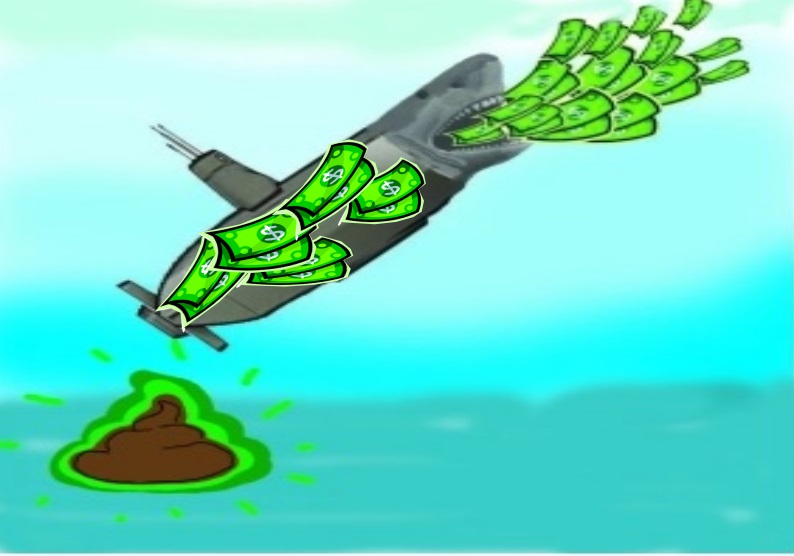
Given that proposals for even low-level nuclear waste sites have been rejected by communities, who is going to take on the radioactive waste created by our new military pact?
ANTON NILSSON, FEB 01, 2024, Crikey,
here should Australia store the waste created by its investment in nuclear-driven submarines? It’s a question no-one knows the answer to yet — although we do know a couple of places where the radioactive waste won’t be stored. As the search for a solution continues, expect politicians to try to kick the radioactive can further down the road — and expect some weapons-grade NIMBYism from state and territory leaders if they’re asked to help out.
In August last year, plans to build a new nuclear waste storage facility in Kimba in South Australia were scrapped. As Griffith University emeritus professor and nuclear expert Ian Lowe put it in a Conversation piece, “the plan was doomed from the start” — because the government didn’t do adequate community consultation before deciding on the spot.
Resources Minister Madeleine King acknowledged as much when she told Parliament the government wouldn’t challenge a court decision that sided with traditional owners in Kimba, who opposed the dump: “We have said all along that a National Radioactive Waste Facility requires broad community support … which includes the whole community, including the traditional owners of the land. This is not the case at Kimba.”
Kimba wasn’t even supposed to store the high-level waste that will be created by AUKUS submarines — it was meant to store low-level and intermediate-level waste, the kind generated from nuclear medicine, scientific research, and industrial technologies. As King told Parliament, Australia already has enough low-level waste to fill five Olympic swimming pools, and enough intermediate-level waste for two more pools.
Where the waste from AUKUS will go is a question without answer. Deputy Prime Minister Richard Marles said in March last year the first reactor from a nuclear-powered submarine won’t have to be disposed of until the 2050s. He added the government will set out its process for finding dump sites within a year — which means Marles has until March this year to spill the details.
“The final storage site of high-level waste resulting from AUKUS remains a mystery,” ANU environmental historian Jessica Urwin told Crikey. “Considering the historical controversies wrought by low- and intermediate-level waste disposal in Australia over many decades, it is hard to see how any Australian government, current or future, will get a high-level waste disposal facility off the ground.”
In his comments last year, Marles gave a hint as to the government’s intentions: he said it would search for sites “on the current or future Defence estate”.
One such Defence estate site that’s been the focus of some speculation is Woomera in South Australia. “A federal government decision to scrap plans for a nuclear waste dump outside the South Australian town of Kimba has increased speculation it will instead build a bigger facility on Defence land at Woomera that could also accommodate high-level waste from the AUKUS submarines,” the Australian Financial Review reported last year.
Urwin said such a proposal could trigger local opposition as well.
Due to Woomera’s proximity to the former Maralinga and Emu Field nuclear testing sites, and therefore its connections to some of the darkest episodes in Australia’s nuclear history, communities impacted by the tests and other nuclear impositions (such as uranium mining) have historically pushed back against the siting of nuclear waste at Woomera,” she said.
Australian Submarine Agency documents released under freedom of information laws in December last year show there is little appetite among state leaders to help solve the conundrum.
A briefing note to Defence secretary Greg Moriarty informed him that “state premiers (Victoria, Western Australia, Queensland, and South Australia) [have sought] to distance their states from being considered as potential locations”. ………………………………………………….. more https://www.crikey.com.au/2024/02/01/aukus-nuclear-waste-storage-australia/
TODAY. What’s the connection between the UK Post Office scandal and Soviet Lt. Col. Stanislav Petrov?

Well, nothing really. But we need to remember what Stanislav Petrov did. On September 26, 1983, Petrov, in charge of the Soviet Union’s nuclear missile system, received the computer screen order to “Launch”. The system reported that a total of five Minuteman ICBMs had been launched by the USA. Soviet nuclear doctrine called for a full nuclear retaliation. Petrov had to make an instant decision. But he feared that it was a false alarm. He disobeyed the order.
The outcome proved that Petrov was correct, and nuclear armageddon was avoided.
So, faulty technology caused a terrible danger – and one man had the integrity to doubt the digital message, and to act on his doubt.
Contrast this with the actions of Post Office and Fujitsu authorities who covered up and lied about the faulty Horizon IT system. That resulted in 900 false convictions, 4 suicides, and hundreds, perhaps thousands, of lives ruined.
In both cases, it was a failure of digital technology.
Now, as we plunge in to the Age of Artificial Intelligence, there is the frightening potential for more digital failures, – and worse, for human error, or even malevolence, in setting up AI programmes.
We need, as never before, people like Stanislav Petrov – people with the scepticism and the integrity - to not blindly comply with technocratic wizardry. The very recent, and still ongoing British Post Office scandal is a worrying reminder of the prevailing view about “not rocking the boat”. The boat may be sinking.
A Radically Different World Since Assange’s Indictment
Biden would have hell to pay from the DNC and the C.I.A. if he dropped the case.
Still, he’s probably not so foolish to want a shackled journalist showing up on U.S. shores to stand trial in the midst of his re-election campaign.
Leniency towards Assange would win back some respect the United States has lost, which would mean it couldn’t suffer another blow and had finally woken to the new world it inhabits. Crushing him would be yet another step towards its demise.
The Assange case is a centerpiece of an emerging, global challenge to U.S. dominance that did not exist in 2010 when the U.S. began its legal pursuit of the publisher, says Joe Lauria.
By Joe Lauria, Consortium News, 29 Jan 24
The world has changed dramatically since the United States began its legal pursuit of WikiLeaks publisher Julian Assange, bringing new risks to the U.S. if it persists in pursuing him to the end.
The geo-strategic situation and the state of the media are today nearly unrecognizable from 2010, when the U.S. empaneled a grand jury to indict Assange. Conditions have changed significantly since even 2019, when he was dragged from the embassy and the indictment was unveiled.
The United States is in the midst of suffering its third major, strategic defeat since the process against Assange began, bringing potentially significant consequences for the U.S., the world and possibly Assange.
In just the past three years, the United States has experienced humiliating defeats in Afghanistan, Ukraine, and now Gaza.
Afghanistan hurt Americans’ sensitivities about their precious “prestige,” which American elites care so much about. The rest of the world takes it into its geo-strategic calculations.
The U.S. instigation of war in Ukraine, intended to weaken Russia and bring down its government, has instead turned into a debacle for the United States and Europe of world historical proportions.
A new commercial, financial and diplomatic system has emerged in opposition to the U.S.-dominated West. This had been slowly developing but was accelerated by Washington’s provocation in Ukraine. It is a way more serious problem for the United States than the mere loss of “prestige.”
Add to this the worldwide disapproval and condemnation the U.S. is facing for its blatant complicity in Israel’s ongoing genocide in Gaza during a war the U.S. and Israel are not winning. The result is U.S. legitimacy has significantly weakened around the world. And at home.
Is this the moment to bring a journalist to the United States in chains to stand trial for publishing truthful material that exposed earlier crimes by the United States?
The risks of doing so at this moment — a very different moment from 2010 — are serious for the U.S, at home and abroad. Domestically the Bill of Rights is at risk. Internationally the bully is losing credibility.
This is seen in the forthrightness of some world leaders, particularly in Latin America, who in the spirit of this new, non-U.S. world, have confronted the United States on its treatment of Assange and have demanded his release.
The established media, which by definition runs cover for the U.S. to commit crimes and abuses wherever its interests are challenged, is suffering its own precipitous loss of legitimacy. The spectacular growth of both social and independent media’s influence since 2010 has helped create a worldwide movement in defense of Assange and the basic principle of a free press.
The question is how aware is the Biden administration of this new world and how will it react?
At a certain point U.S. hubris and intransigence would seem to be headed for collapse. But until then, Washington will no doubt double down in denial and in vengeance. It’s not giving up in Ukraine nor in Gaza — the neocon grip on power in Washington over the realists remains. Will the extremists remain ascendant on Assange too?
In December 2010, Vice President Joe Biden told the television news show Meet the Press that the Obama administration could only indict Assange if they caught him red-handed stealing government secrets and not receiving them passively as a journalist. The Obama administration concluded he was acting as a journalist, even if they refused to call him one, and didn’t indict him.
So what changed for Biden? Why does he persist in this prosecution begun by his mortal enemy Donald Trump and Trump’s C.I.A. director, Mike Pompeo?
The indictment until today still only deals with events in 2010. Nothing has changed legally. But everything changed politically for President Biden, the head of the Democratic Party, with the 2016 DNC leaks, and the C.I.A. Vault 7 releases the following year.
Biden would have hell to pay from the DNC and the C.I.A. if he dropped the case.
Still, he’s probably not so foolish to want a shackled journalist showing up on U.S. shores to stand trial in the midst of his re-election campaign. The High Court here in London has been good at dragging things out and could easily do so until after November.
The Assange case is a centerpiece of this global challenge to U.S. dominance that did not exist in 2010.
To the extent that U.S. leaders are aware of what is happening to U.S. standing in the world, their propensity is to lash out with the only argument they have left – lethal force. In Assange’s case it is legal force, with lethal consequences.
Leniency towards Assange would win back some respect the United States has lost, which would mean it couldn’t suffer another blow and had finally woken to the new world it inhabits. Crushing him would be yet another step towards its demise.
The U.S. does not really need him. It has enough blood on its hands.
This is the text of an address Joe Lauria made by video on Monday to a conference in Sydney, Australia.
Joe Lauria is editor-in-chief of Consortium News and a former U.N. correspondent for The Wall Street Journal, Boston Globe, and other newspapers, including The Montreal Gazette, the London Daily Mail and The Star of Johannesburg. He was an investigative reporter for the Sunday Times of London, a financial reporter for Bloomberg News and began his professional work as a 19-year old stringer for The New York Times. He is the author of two books, A Political Odyssey, with Sen. Mike Gravel, foreword by Daniel Ellsberg; and How I Lost By Hillary Clinton, foreword by Julian Assange. He can be reached at joelauria@consortiumnews.com and followed on Twitter @unjoe
Military-Intelligence Corruption Information Center.

WANT TO KNOW INFO, 31 Jan 24
Over the last 20+ years, WantToKnow.info has summarized over a thousand news articles on deep corruption within our military and intelligence systems. Going deeper, we have gathered a comprehensive collection of verifiable resources, videos, books, and declassified government documents. In this information center, we’ll present a sobering investigation into the US war machine: what it is, who benefits, and who pays the price. The true impacts of US military-intelligence activities in countries all over the world are examined, from World War II to our present moment in time.
Conflict, war, and perceived national security threats provide a common focus for military and CIA partnership. Military activity is heavily informed by CIA intelligence, and public support for this activity is secured by pro-war narratives and voices flooding our media system. What is really going on behind closed doors and on the battlefields is rarely covered in the news, if only for a brief glimpse.
The mainstream press often downplays how ineffective, harmful, and wasteful our current national security strategy is. Over the past century, the CIA’s covert actions have led to countless deaths, human rights abuses, and the undemocratic toppling of numerous foreign governments. While entrenched bureaucracy may be responsible for some of these government agency failings, deeper covert actions within our government have led to chaos and suffering in America and all over the world. Major cover-ups and horrific crimes within the military-intelligence complex continue to remain largely hidden from public awareness.
What is presented in this information center will likely be challenging, sad, and shocking for those who want to know. Yet real information can be empowering. It helps us understand the root causes of human and environmental suffering: the money, players, and belief systems that drive the machine. It invites us to question authority in healthy ways, across political differences. Yet most importantly, challenging information can paradoxically remind us of the greater good. It is the courage of the people and the love for the common good that bring these injustices to light—fueling open dialogue and constructive action.
Unaccountable Military Spending
The military keeps a lot of little things secret. Most people know the phrase “follow the money.” Unfortunately, following the money is impossible when it comes to keeping track of the flow of US taxpayer dollars at the Pentagon. The US military has consistently failed to keep track of the money it spends. As the defense budget speeds towards $1 trillion, the Pentagon failed an independent audit of its accounting systems for the sixth consecutive year in 2023.
In 2022, the Pentagon couldn’t properly account for 61% of its $3.5 trillion in assets. That figure increased in 2023, with the department insufficiently documenting 63% of its now $3.8 trillion in assets. We’ve covered the shocking extent of military waste and trillions missing from US DoD accounts since 2003, as documented here.
In 2021, President Joe Biden declared that the United States was “not at war” for the first time in 20 years. However, this is far from the case. Even members of Congress are uninformed about the presence of US military forces in countries all over the world. This is partly due to the post-9/11 Authorization for Use of Military Force enacted in 2001, which allows for secret operations primarily conducted by the CIA. Investigations have indicated that the United States has pumped millions into fighting more than a dozen “secret wars” over the last two decades. Since 2008, the US has supported at least nine coups in African countries, with a vast network of military bases scattered across the continent.
Going deeper, military black budgets are even more challenging to calculate. Military black budgets fund classified government programs, psychological operations, special forces operations, occult shoulder patches created for top secret programs, and other clandestine military activities. Former intelligence contractor and NSA whistleblower Edward Snowden revealed a vast network of over a dozen spy agencies that make up the U.S. intelligence community, funded by a $52.6 billion “black budget” for fiscal 2013. When the US Space Force was created in 2019, an investigation by Forbes revealed how much of the US Air Force budget was shrouded in secrecy, where “literally hundreds of line items in the proposed budget” were classified.
Arms Industry Corruption
Once weapons were manufactured to fight wars. Now wars are manufactured to sell weapons.
— Arundhati Roy
The US dominates the global arms sales industry. Data released in 2023 indicates that the U.S. sold weapons to nearly 60 percent of the world’s authoritarian nations in 2022. Year after year, half of the Pentagon budget doesn’t go to those fighting on the battlegrounds. It goes to corporate weapons contractors who profit lavishly from war. As one defense executive flat-out told Reuters at Europe’s biggest arms fair, “war is good for business.”
From the Middle East, Ukraine, China, Saudi Arabia, and to Nigeria, US arms sales have done little to promote stability and democracy in geopolitically impacted regions. Read an incredibly comprehensive report by The Quincy Institute for Responsible Statecraft, which illustrates how US arms sales have only fueled unnecessary conflict and war.
Powerful banks like JP Morgan Chase and asset management firms like Blackrock and Vanguard have emerged as major players in the business of war. Some of the world’s biggest banks fund the deadly cluster bomb trade, even as more than 100 countries have banned the unethical use of cluster bombs.
These powerful financial entities are top shareholders of weapons manufacturers like Lockheed Martin and Boeing. Together, the arms industry and the elite financial sector receive more federal money than most federal agencies. In 2022, Lockheed Martin received $106 from the average taxpayer, which is four times more than what taxpayers spent on primary and secondary education. Few Americans would support these war profiteers if they knew where their tax money was going.
Roughly two-thirds of current conflicts — 34 out of 46 — involve one or more parties armed by the United States. In some cases U.S. arms sales to combatants in these wars are modest, while in others they play a major role in fueling and sustaining the conflict. Of the U.S.-supplied nations at war, 15 received $50 million or more worth of U.S. arms between 2017 and 2021. This contradicts the longstanding argument that U.S. arms routinely promote stability and deter conflict. ………………………………………………………………………………………………………..more https://www.wanttoknow.info/military-intelligence-corruption-information
1 This month

of the week – Australians for War Powers Reform (AWPR)
To see nuclear-related stories in greater depth and intensity
 Antinuclear