TODAY. Oh for a bit of sanity and genuine leadership!

I couldn’t resist this facebook comment. It encapsulates the madness of what America and its allies – the Anglosphere and Europe, are doing about the Israeli genocide in Gaza.
Does the “West” – slavish followers of the USA – understand that they are observing and apparently accepting a repeat of genocidal atrocities, as they did in the 1930s about Nazi Germany? (At least there was some excuse in the 30’s. that “they didn’t know about it”)
We all know about it now. We know that Joe Biden and co are supplying Israel with the weapons and know-how for its mass murder of Gazans, while mouthing pious statements about humanitarian aid, and about ending the atrocity that they are in fact prolonging.
That lovely word “zeitgeist” – I’m not sure what it means really. But I think it’s time to change the zeitgeist that says that the important goal for human beings is the individualistic one, to make ever-increasing profit. You see, making and selling weaponry is America’s big export industry – and it provides ever-increasing shareholders’ profits, – and jobs and industry and pride and blah blah blah.
So – the Israeli’s disastrous genocide in Gaza is after all – good for business.
And so is the interminable war in Ukraine – in which “negotiation” “diplomacy” “agreement” are dirty words, never to be contemplated. Ukraine is being steadily destroyed militarily, environmentally, humanly, under the messianic Zelenksy cult. The Raytheon, Norhrop Grumman, Lockheed Martin, Boeing, Halliburton etc etc celebrations party on…………

Who knows how much money from these, and many other corporations, goes to the USA’s Republican and Democratic parties? Does any politician get in, without that backing? At the moment – all the USA fuss about Biden versus Trump. It is irrelevant. Whoever gets to be president will be the puppet of the corporations and especially of the military-industrial-nuclear complex.
All of which means that getting a decent leader in the USA is an impossible task – as he or she must always be beholden to big business.
It is probably a pretty difficult task anywhere, with the power of corporate lobbies to influence politicians, and the USA’s history of CIA-backed removal of leaders in other countries.
Still – we’d better try. If we can’t change from the paradigm of individualism, and ever-increasing profit – to a paradigm of collective action for human and environmental good, – well, we’ve had it!
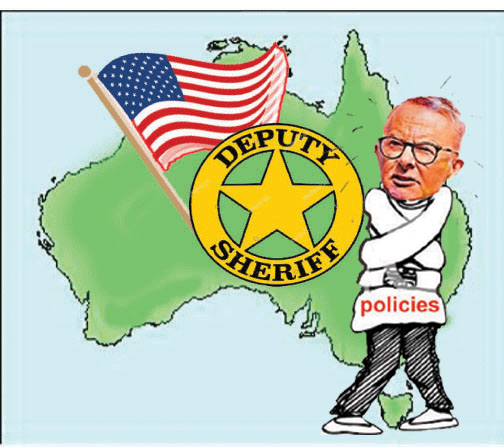
Prime Minister of Australia, and Henchmen, Referred to International Criminal Court for Support of Gaza Genocide
By Birchgrove Legal, March 5, 2024, https://worldbeyondwar.org/prime-minister-of-australia-and-henchmen-referred-to-international-criminal-court-for-support-of-gaza-genocide/
Australian Prime Minister Anthony Albanese has been referred to the International Criminal Court as an accessory to genocide in Gaza, making him the first leader of a Western [Western?] nation to be referred to the ICC under Article 15 of the Rome Statute.
A team of Australian lawyers from Birchgrove Legal, led by King’s Counsel Sheryn Omeri, have spent months documenting the alleged complicity and outlining the individual criminal responsibility of Mr Albanese in respect to the situation in Palestine.
The 92-page document, which has been endorsed by more than one hundred Australian lawyers and barristers, was yesterday submitted to the Office of ICC Prosecutor, Karim Khan KC.
The document sets out a number of actions taken by the PM and other ministers and members of parliament, including Foreign Minister Wong and the Leader of the Opposition, for the Prosecutor to consider and investigate. These include:
- Freezing $6 million in funding to the primary aid agency operating in Gaza – UNRWA – amid a humanitarian crisis based on unsubstantiated claims by Israel after the International Court of Justice had found it plausibly to be committing genocide in Gaza.
- Providing military aid and approving defence exports to Israel, which could be used by the IDF in the course of the prima facie commission of genocide and crimes against humanity.
- Ambiguously deploying an Australian military contingent to the region, where its location and exact role have not been disclosed.
- Permitting Australians, either explicitly or implicitly, to travel to Israel to join the IDF and take part in its attacks on Gaza.
- Providing unequivocal political support for Israel’s actions, as evidenced by the political statements of the PM and other members of Parliament, including the Leader of the Opposition.
Ms Omeri KC said the case was legally significant because it focused exclusively on two modes of accessorial liability.
“The Rome Statute provides four modes of individual criminal responsibility, two of which are accessorial,” Omeri said.
“In relation to accessorial liability, a person may be criminally responsible for a crime set out in the Rome Statute if, for the purpose of facilitating the commission of that crime, that person aids, abets or otherwise assists in the commission of the crime, or its attempted commission, including by providing the means for its commission.
“Secondly, if that person in any other way contributes to the commission of the crime or its attempted commission by a group, knowing that the group intends to commit the crime.”
Ms Omeri KC said the Article 15 communication had been carefully drafted by those instructing her and was now a matter for the Prosecutor to consider.
“The Office of the Prosecutor of the ICC is already pursuing an ongoing investigation into the situation in the State of Palestine, which it has been conducting since March 2021,” Omeri said.
“That includes investigating events which have occurred since 7 October 2023. This Article 15 communication will add to the evidence available to the Prosecutor in relation to that situation.
“The Article 15 communication is of a piece with recent domestic legal cases brought against Western leaders in a number of countries such as in the US, against President Biden, and most recently, in Germany, against, among other senior government ministers, Chancellor Scholz.
“These cases demonstrate a growing desire on the part of civil society and ordinary citizens of Western countries to ensure that their governments do not assist in the perpetration of international crimes, especially in circumstances where the ICJ has found a plausible case of genocide in Gaza.”
Principal solicitor at Birchgrove Legal, Moustafa Kheir, said his team had twice written to Mr Albanese, putting him on notice and seeking a response on behalf of the applicants who make up a large consortium of concerned Australian citizens, including those of Palestinian ethnicity.
Mr Kheir said communications were ignored on both occasions.
“Since October we have attempted communications with our Prime Minister as we reasonably believe that he and members of his cabinet are encouraging and supporting war crimes committed by Israel against Palestinian civilians through their political and military assistance,” Kheir said.
“The Prime Minister has ignored our concerns and given the limited avenues we have for recourse under national law, we have been left with little option but to pursue this Article 15 communication to the International Criminal Court.
“Our communication has been endorsed by King’s Counsel Greg James AM and well over 100 senior counsel and barristers, retired judges, law professors and academics from around Australia who wish to test the strength of international law to hold their own democratic leaders accountable given the barriers we face to do it nationally.
“As lawyers and barristers, it is impossible to sit back and watch sustained breaches of international law while Albanese continues to refer to the perpetrator as “a dear friend.”
A copy of the application can be viewed here: ICC-Referral-Australian-Government-Ministers-and-Opposition-Leader-04032024_BLG.pdf
Or here.
Nuclear slow and expensive, renewables fast and cheap: Bowen slaps down Coalition “fantasy”
Giles Parkinson, Mar 7, 2024, https://reneweconomy.com.au/nuclear-slow-and-expensive-renewables-fast-and-cheap-bowen-slaps-down-coalition-fantasy/—
Federal climate and energy minister Chris Bowen has again slammed the federal Coalition’s “nuclear fantasy”, describing it as a deliberate distraction and the latest “desperate effort” to keep the culture war over energy and climate alive.
“(They say) renewable energy is all too hard, we’ll just have to go nuclear,” Bowen said in comments at the Smart Energy Council conference in Sydney, adding that the technology is “utterly uneconomic.”
Bowen was asked why the government would not support a lifting of the ban against nuclear power and allow – as the Coalition and others suggest – to let the “market decide.” He pointed to the fact that it would take a decade to develop a regulatory regime, and three states also had their own bans in place.
“They say ‘lift the ban’ and the market will sort it,” Bowen said.
“Well, the market hasn’t sorted it out anywhere else in the world, there is not a market in the world where nuclear isn’t subsidised substantially by government. So this idea that we lift the ban and all these foreign investors are going to suddenly come to help Australia’s nuclear sector is just fantasy.”
Bowen said three states would also have to lift their bans, and only then could a regulatory process be put in place which he said would require at least 10 years, before deciding on location, environmental approvals and the question of subsidies.
“It would be a massive distraction,” Bowen said. “And it would send the signal somehow to the market that Australia and the Australian Government are interested in nuclear, when we’re not because it uneconomic, utterly uneconomic.
Coalition leader Peter Dutton and energy spokesman Ted O’Brien had favoured small modular reactors, and dismissed large “Soviet era” reactors, but appear to have now changed their mind and flipped back towards large scale nuclear after the only prospective SMR in the western world was cancelled because of soaring costs.
Bowen says the push to nuclear is simply an extension of the culture war over climate and energy issues.
“We know the sorts of arguments they run. It’s a desperate effort to keep the culture war alive. Renewable energy is all too hard. We’ll just have to go nuclear.”
Federal Labor has adopted a target to reach 82 per cent renewables by 2030, and most energy experts suggest all remaining coal fired power stations would be closed by around 2035.
Nuclear is seen as impossible to deliver in Australia before 2040, notwithstanding its costs, and energy experts question how an essentially “baseload” energy supply can be jammed into what will by then be a grid dominated by wind and solar, and particularly rooftop solar, which will require storage and flexible capacity.
The federal government’s Capacity Investment Scheme is likely to seek 10 GW of new wind and solar capacity in a series of auctions in 2024, and likely a similar amount in 2025, along with at least 3 GW of long durations storage in each of the next three years.
Bowen said a formal announcement is expected soon. He said the result of the first CIS auction, for 600 MW of long duration storage (defined as a minimum four hours) had elicited a very good response and the results would be announced in coming months.
Market has ‘made its decision’ about nuclear energy being too expensive
Labor MP Andrew Charlton says the market has “made its decision” about nuclear energy being too expensive.
Mr Charlton joined Sky News Australia to discuss the latest developments in nuclear energy across the world.
“We saw recently the small nuclear reactor in Idaho was cancelled because of rising costs – that was a market decision to say no to nuclear,” he said.
“Let’s remember, this small nuclear reactor in Idaho is the one that the Liberal Opposition called the future of clean energy – it’s now being cancelled, it’s being scrapped.
“The truth is that the market has made its decision about nuclear energy; it knows that nuclear energy is by far the most costly type of new energy that we could add into the grid, and that’s why it’s not part of the government’s plan.”
Top scientist explains nuclear process and risks: Sunshine Coast previously considered for facility
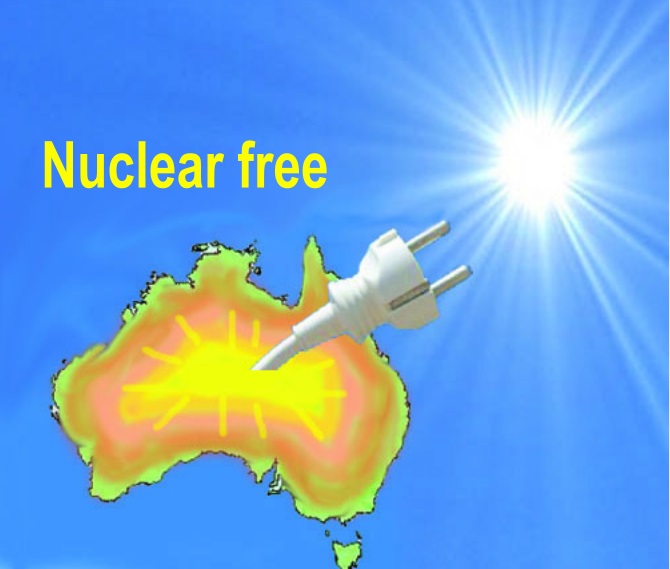
Sunshine Coast News, STEELE TAYLOR, 6 MARCH 2024
A leading local academic has detailed the risks posed by nuclear power, amid revelations the Sunshine Coast was, in 2007, put on a shortlist of possible sites for a facility.
Emeritus Professor Ian Lowe says there are multiple problems with nuclear energy, including high costs, lengthy builds, health threats and international tension.
Professor Lowe explained the process of nuclear energy production, and the potential for accidents.
“In a nuclear reactor, the process of fission (breaking up of unstable large atoms like uranium) releases heat energy, which is used to boil water,” he said.
“It is basically just a more complicated way of boiling water than burning coal or gas.
“The steam produced by the boiling water is used to turn a turbine and generate electricity.
“In normal operation, nuclear reactors have a good safety record but there have been a series of large-scale accidents like the Windscale fire, the Three Mile Island meltdown, the Chernobyl explosion and the destruction of the Fukushima reactor by a tsunami.
Those accidents have made people nervous about living near a nuclear power station.
“In the cases of Chernobyl and Fukushima, whole regions have been made permanently uninhabitable because the radiation levels are not safe for people to live there.
“As well as the small but non-zero risk of serious accidents, nuclear reactors produce radioactive waste that will need to be safely stored for thousands of years.
“This is a problem that is causing real headaches for all the countries that have nuclear power stations, with only one – Finland – being on the path to a solution.”
Professor Lowe says nuclear energy production has multiple requirements, and locations for power plants have been considered.
“If we were to build a nuclear power station in Australia, the need for massive amounts of cooling water would demand a coastal site,” he said.
“It would also need to be connected to the electricity grid and ideally be near a major power user like a capital city.”
The Australia Institute used a checklist of the needs to produce a shortlist of possible sites for nuclear power plants, for a research paper that was produced in late 2006 and released in early 2007.
The Sunshine Coast, where Professor Lowe has lived for the past 20 years, was among the locations named.
“In a nuclear reactor, the process of fission (breaking up of unstable large atoms like uranium) releases heat energy, which is used to boil water,” he station.
“In the cases of Chernobyl and Fukushima, whole regions have been made permanently uninhabitable because the radiation levels are not safe for people to live there.
“As well as the small but non-zero risk of serious accidents, nuclear reactors produce radioactive waste that will need to be safely stored for thousands of years.
“This is a problem that is causing real headaches for all the countries that have nuclear power stations, with only one – Finland – being on the path to a solution.”
Professor Lowe says nuclear energy production has multiple requirements, and locations for power plants have been considered.
“If we were to build a nuclear power station in Australia, the need for massive amounts of cooling water would demand a coastal site,” he said.
“It would also need to be connected to the electricity grid and ideally be near a major power user like a capital city.”
The Australia Institute used a checklist of the needs to produce a shortlist of possible sites for nuclear power plants, for a research paper that was produced in late 2006 and released in early 2007.
The Sunshine Coast, where Professor Lowe has lived for the past 20 years, was among the locations named.
“It is worth adding that the tsunami of panic among sitting members of parliament when that list was released had to be seen to be believed,” he said.
“But we do now have a local member (Fairfax MP Ted O’Brien), promoting nuclear energy with great enthusiasm.”
There is no indication that the Sunshine Coast is on a current shortlist of possible sites………..
Mr O’Brien has previously said, via ABC Radio National, that he would welcome a nuclear facility in his electorate or any other electorate, “where it is proven to be technologically feasible, has a social licence and is going to get prices down”.
But he also told Sunshine Coast News that a nuclear facility would probably be better placed somewhere other than the Coast………………..
Legalities and history
Professor Lowe says there would be legal hoops to jump through to make nuclear power production possible in the country.
“Nuclear power is not legal in Australia. To get support for its Environmental Protection and Biodiversity Conservation Act in 1999, the Howard government included clauses that specifically prohibit uranium enrichment, fuel fabrication and the building of power reactors,” he said.
“So, any proposal for nuclear power would require repealing that prohibition.
“The current government has no interest in doing that; neither did the Coalition at any point in their nine years in office.
“Since the 2007 report, no Australian government – national or state, Coalition or ALP – has shown any serious interest in nuclear power………… there is certainly enough opposition to make any politician very nervous about the chances of the community supporting it.”…………………………………………….. https://www.sunshinecoastnews.com.au/2024/03/06/academic-outlines-risks-of-nuclear-power-coast-on-shortlist/?fbclid=IwAR2I76u7tz5tjM31QVgAq3P_UBlTk8qySjV7dflzmrLmWai10-bUq65Cq9Q—
New York Times: Nuclear Risks Have Not Gone Away

The overriding question is how to reduce the risk of nuclear war, a topic that will no doubt be addressed as the Times series continues to be rolled out
William Hartung, https://www.forbes.com/sites/williamhartung/2024/03/06/new-york-times-nuclear-risks-have-not-gone-away/?sh=1a2848863efe
For most Americans, nuclear weapons are a relic of the Cold War, out of sight and out of mind. But a surge of attention over the past year may put these world-ending weapons on the public agenda again, in a way that has not been seen since the rise of the disarmament movement of the 1980s.
First came the announcement that the Doomsday Clock of the Bulletin of the Atomic Scientists – which expresses the view of a panel of experts of how close we are to ending life as we know it through a nuclear conflagration or the accelerating impacts of climate change – was maintained at an uncomfortably close 90 seconds to midnight.
Then came the release a few months later of Christopher Nolan’s biopic Oppenheimer, which told the story of the man pundits of his time called “the father of the atomic bomb.” The film followed the arc of Oppenheimer’s life and career, including his support for the dropping of the bombs on HIroshima and Nagasaki because he thought that once their sheer destructive power was understood, the human race would abandon war as a way of resolving disputes. He was tragically wrong, but the success of Oppenheimer and its prominent place in Hollywood’s awards season offers an opportunity to reflect anew on the history and consequences of the bomb, including issues that were largely ignored in the film, like the plight of the people exposed to lethal radiation from bomb tests in the U.S. and the Pacific, the devastating health problems of uranium miners, and, most terribly of all, the bombing of Hiroshima and Nagasaki, with a death toll estimated by independent experts of over 140,000 people.
In the wake of these reminders of the nuclear danger, The New York Times NYT +1.2% has come out with a timely and urgently important series called At the Brink, which looks at current day nuclear risks based on nearly a year of reporting and research. It is a much needed corrective to our false sense of security regarding the continued presence and costly “modernization” of the world’s nuclear arsenals.
The opening essay of the series, written by longtime national security journalist and current New York Times opinion writer W.J. Hennigan, notes up front that “In the fall of 2022, a U.S. intelligence assessment put the odds at 50-50 that Russia would launch a nuclear strike to halt Ukrainian forces if they breached its defense of Crimea.” He later notes that the risk of nuclear escalation in Ukraine is now relatively low, but that the overall state of the world has created the greatest risk of the use of nuclear weapons since the height of the Cold War. Hennigan also gives a graphic presentation of the devastating impact of even a relatively small nuclear weapon – the exact kind of sobering depiction that was omitted from Oppenheimer.
The Times piece reminds us of the vast scope of the Cold War nuclear arms race, as well as the current one among the U.S., Russia, and China – a competition that is all the more dangerous because the last U.S.-Russia nuclear arms control treaty, New START, is hanging by a thread, set to expire in February 2026.
The overriding question is how to reduce the risk of nuclear war, a topic that will no doubt be addressed as the Times series continues to be rolled out. The only way to be truly safe from nuclear weapons is to eliminate them altogether, as called for in the Treaty on the Prohibition of Nuclear Weapons, which entered into force in January 2021 and has been ratified by 70 nations. Conspicuously missing from that list are the world’s nuclear weapons states, which still hold onto the illusion that a nuclear balance of terror can be sustained indefinitely. As wars proliferate from Ukraine to Gaza to Sudan and beyond, the added risk posed by nuclear weapons underscores the need to move beyond outmoded rationales for continuing to build and deploy these devastating weapons. As the issue of nuclear weapons returns to public consciousness after years of denial, there is an opportunity to have a serious debate about whether and how to eliminate them before they eliminate us. We can’t afford to miss that chance.
The West’s over-involvement in Ukraine

at the same summit those present joined to support sending long-range missiles to the Ukrainians, weapons fully capable of reaching cities, power grids, industrial plants and other targets deep inside Russia. So: No troops, plenty of offensive hardware.
Scholz confirmed what everyone already knows, that NATO officers and trained personnel are in Ukraine operating weapons such as the Patriot and NASAM air defense system, the HIMARS multiple launch rocket system, the British–French Storm Shadow cruise missile (SCALP–EG in France), and many other complex weapons provided to Ukraine.”
Consortium News, PATRICK LAWRENCE: The Russians in Ukraine, March 6, 2024
Recent disclosures provide an incomplete inventory of the West’s covert activities in Ukraine. There is more than we have been told, surely.
You may have read or heard about the freakout that ensued after Emmanuel Macron convened a summit of European leaders in Paris last week. At a press briefing afterward, the French president allowed that NATO may at some point send troops to Ukraine to join the fight against Russian military forces.
The Paris gathering precipitated a significant moment of truth, if we can call it such. Scholz, who is on a knife’s edge politically in part for his government’s support for Ukraine, immediately asserted that Germany would not send its Taurus long-range missiles to Ukraine because German troops would have to go with them, as the Ukrainians could not operate them on their own.
Look at the British, Scholz added indelicately. When they send their Storm Shadow missiles (and I must say I love the names the West’s arsenal minders come up with for these things) British personnel have to go with them.
Yikes! Such indiscretion.
As Stephen Bryen reported in his Weapons and Strategy newsletter, “The British cried foul and accused Scholz of ‘flagrant abuse of intelligence.’” Abuse of intelligence is a new one on me, but never mind. Bryen, who follows these matters closely as a former Defense Department official, continued:
“Scholz confirmed what everyone already knows, that NATO officers and trained personnel are in Ukraine operating weapons such as the Patriot and NASAM air defense system, the HIMARS multiple launch rocket system, the British–French Storm Shadow cruise missile (SCALP–EG in France), and many other complex weapons provided to Ukraine.”
There we have it — or there we have had it, if covertly, for a long time.
Before I go further, let me suggest a couple of thoughts readers can tuck somewhere in the corners of their minds for later consideration.
One, Russia’s intervention in Ukraine two years ago last month was unprovoked. Two, all the Kremlin’s talk about the threat of NATO hard by its southwestern border is nothing more than the distortion and paranoia of “Putin’s Russia,” as we must now refer to the Russian Federation.
It went this way in Paris last week. At the presser following the summit Macron was asked whether Ukraine’s Western backers were considering deploying troops in Ukraine. The French president replied that while European leaders had not reached any kind of agreement, the idea was certainly on the table when they gathered at Elysée Palace.
And then this:
“Nothing should be ruled out. We will do anything we can to prevent Russia from winning this war.”
Instantly came the vigorous objections. The Brits, the Spanish, the Italians, the Poles, the Slovakians, the Hungarians: They all said in so many words, “No way.” Even Jens Stoltenberg, NATO’s war-mongering sec-gen, objected to Macron’s assertion.
No one was more vehement on this point than Olaf Scholz. “What was agreed among ourselves and with each other from the very beginning also applies to the future,” saith the German chancellor, “namely that there will be no ground troops, no soldiers on Ukrainian soil sent there by European countries or NATO states.”
Plenty of Offensive Hardware
O.K., but at the same summit those present joined to support sending long-range missiles to the Ukrainians, weapons fully capable of reaching cities, power grids, industrial plants and other targets deep inside Russia. So: No troops, plenty of offensive hardware.
Last week The New York Times published a long takeout on the Central Intelligence Agency’s presence and programs in Ukraine, which extend back at least a decade and almost certainly much further……………………………………………………………………………………………………………………………..
“If NATO is so much against sending troops to Ukraine,” he asks, “why doesn’t NATO demand that the soldiers already there be sent home?”
Over-Invested in the Conflict
Excellent question. My answer: The Western powers, radically over-invested in Ukraine’s confrontation with Russia, are panicking as the Armed Forces of Ukraine retreat in the face of Russian advances and as support for this folly wanes on both sides of the Atlantic.
If anything, the covert presence of Western personnel in Ukraine may increase.
It is obvious that Ukraine is losing its war against Russia, and at a faster pace than most analysts seem to have anticipated even last autumn. I am reading reports now that the final collapse of the AFU may prove three or so months away. …………………………………………………………………….
The Ukraine crisis is merely the latest phase of the West’s long campaign to surround the Russian Federation up to its borders, destabilize it and finally subvert it. Regime change in Moscow was and remains the final objective.
This is not a war in defense of “Ukrainian democracy” — a phrase that causes one either to laugh or do the other thing. It is the West’s proxy war, start to finish, Ukrainians cynically cast as cannon fodder, expendable stooges.
Russia had no choice when it intervened two years ago, this after eight years’ patience as the Europeans — Germany and France, this is to say — broke every promise they made by way of supporting a settlement. The Americans didn’t break any promises because they never made any — and no one would take them seriously if they had.
I come to the judgment I offered when the war that began in 2014 erupted into open conflict two years ago. The Russian intervention was regrettable but necessary. I took some stick for this view back in 2022. I learn lately it is recorded in some European intelligence files as if it were a major transgression.
It is as true now as then. All we learn in drips and drops about the Western powers’ various covert doings in the sad, failed state they have done much to ruin, confirms this.
https://consortiumnews.com/2024/03/06/patrick-lawrence-the-russians-in-ukraine/?eType=EmailBlastContent&eId=c61faf77-5689-491d-afa5-bc607e7454cf
1 This month

of the week – Australians for War Powers Reform (AWPR)
To see nuclear-related stories in greater depth and intensity
 Antinuclear