Peter Dutton in standoff with state Liberal leaders over federal Coalition’s nuclear plan
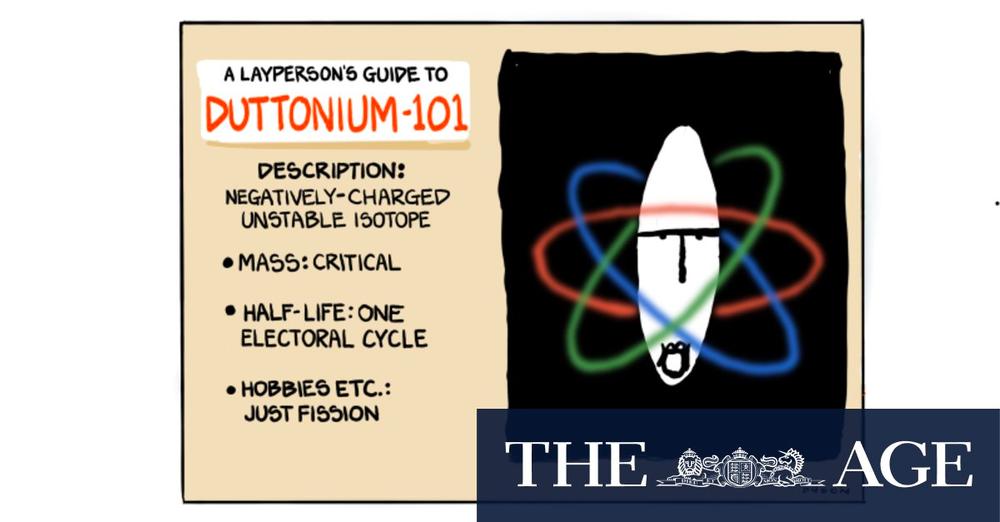
The federal opposition leader’s calls to include nuclear power in Australia’s energy mix has so far failed to win support from his state colleagues
Guardian, Tamsin Rose, Catie McLeod and Tory Shepherd, Sun 24 Mar 2024
The federal Coalition faces a battle with the states on its proposal for nuclear power stations at the sites of decommissioned coal power plants, with state premiers and opposition leaders alike largely against Peter Dutton’s proposal.
Labor governments and Coalition oppositions in Queensland, New South Wales, Victoria and South Australia are either outright opposed to the plan or have failed to endorse it.
Most of those states have their own bans on nuclear that would need to be lifted in addition to the federal ban if Dutton’s plan were to progress.
Despite this, the federal opposition leader has repeatedly called for nuclear to be considered as part of the future energy mix for Australia.
Here’s how the debate is playing out around Australia.
Queensland
It is illegal to run any forms of nuclear facilities in Queensland, including power stations and radioactive waste dumps. Any change to this would need to be passed by parliament.
David Crisafulli, the Liberal National party leader, is the bluntest in his opposition to Dutton’s plan.
When asked if he supported the federal Liberal leader and fellow Queenslander’s energy campaign earlier in the week, the opposition leader said: “No, we don’t.”
“Until both sides of Canberra agree, that will never happen because there won’t be investment,” Crisafulli said.
The state’s deputy opposition leader, Jarrod Bleijie, said debate was “many years” away and the party was focused on the cost of living in the immediate future.
“People are hurting, they need to see their electricity bills reduced now and that has to be our priority,” he told Sky News.
New South Wales
Similarly, in NSW there is a ban on uranium mining and nuclear power for electricity generation.
The state’s shadow energy minister, James Griffin, said he supported a “rational discussion about nuclear energy” but stopped short of endorsing the federal Coalition’s proposal……………………………….
The premier, Chris Minns, has dismissed any nuclear energy strategy that uses modular reactors for NSW………………………………………
Victoria
A number of nuclear-related activities, including exploration for uranium and construction or operation of a nuclear reactor, are banned in Victoria.
Like its northern counterparts, the Victorian opposition has failed to endorse the federal Coalition’s nuclear plans.
The shadow energy minister, David Davis, said “the Victorian Liberals and Nationals support a commonsense transition to renewables that ensures affordability and security of supply”.
South Australia
There are no state-level bans on nuclear power in place in South Australia and the premier, Peter Malinauskas, has repeatedly said he is open to or neutral towards the idea of nuclear power, but that the economics do not stack up.
SA is something of a nuclear state thanks to uranium mining and the prospect of building nuclear submarines, but Malinauskas does not think nuclear should be part of the power mix, not least because he has pledged that SA’s power will be fully sourced from renewables by 2027.
The energy minister, Tom Koutsantonis, said: “While we have nothing in principle against nuclear power, this current debate is nothing but a distraction because it is not economically feasible or viable for Australia.”
The opposition leader, David Speirs, said “all options should be on the table in the pursuit of an affordable, reliable and clean energy future”.
“That includes looking at new generation nuclear energy as a possible addition to our energy mix,” he said.
Coalition yet to produce costed nuclear energy policy
Last week, Dutton claimed the annual report from science agency CSIRO that had included estimates of costs for small modular reactors – which are not yet available commercially – was “discredited” because it “doesn’t take into account some of the transmission costs, the costs around subsidies for the renewables”.
CSIRO rejected Dutton’s claim that its estimates were unreliable, with its chief executive, Douglas Hilton, warning that maintaining trust “requires our political leaders to resist the temptation to disparage science”.
The most recent GenCost report estimates a theoretical small modular reactor built in 2030 would cost $382 to $636 per MWh. It says this is much more expensive than solar and wind, which it puts at between $91 and $130 per MWh even once integration costs are included.
The federal Coalition is yet to produce a costed energy policy, despite arguing for a lift to Australia’s ban on nuclear energy and suggesting it will nominate six potential sites for nuclear reactors around Australia – likely to be close to current or retiring coal-fired power stations.
With additional reporting by Benita Kolovos, Paul Karp, Graham Readfearn and Andrew Messenger https://amp.theguardian.com/australia-news/2024/mar/24/peter-dutton-liberal-leaders-nuclear-power-ban
No comments yet.
1 This month

of the week – Australians for War Powers Reform (AWPR)
To see nuclear-related stories in greater depth and intensity
 Antinuclear
Leave a comment