TODAY. UK High Court caving in before USA’s power, leaving decision on Julian Assange’s future up to USA’s “kindness”?

Well, well, what better example of America’s dominance over the anglophone world could you find?
The UK High Court was charged with making a decision on whether or not Julian Assange could appeal against the British government’s decision to extradite him to the USA on charges of ” complicity in illegal acts to obtain or receive voluminous databases of classified information and for agreeing and attempting to obtain classified information through computer hacking”, under the rarely used Espionage Act of 1917
This High Court case is the latest in the series of legal cases around the issue of extradition.
Julian Assange has languished for almost five years, in solitary confinement, in the notorious Belmarsh prison, Britain’s “Guantanamo Bay” for the worst criminals. Now he has to endure this for more weeks. Talk about death by a thousand cuts. ( Perhaps Russia is kinder – they just poison their problem people, or crash them in a plane – it’s quicker)
All this because Assange revealed and published the truth about America’s military atrocities.
So – now we know.
If a journalist anywhere in the world should have the temerity to reveal inconvenient facts about the USA military, then look out!
Not only are the Western political leaders, and especially in the anglophone countries, subservient to their master – the USA, but now we know that even their legal systems are subservient too.
Dame Victoria Sharp, took 66 pages to explain why the High Court couldn’t actually make a decision, without the blessing of the USA government.
So – the High Court will reconvene in three weeks, after receiving “assurances” from the USA government – about no death penalty (on the present charges, they could make new ones?), that he is permitted to rely on the First Amendment, – he is not ‘prejudiced at trial’ .
Of course the USA government will come up with kindly phrases – not worth the paper they are written on.
It’s a sad day for justice.
UK Court to Decide Tuesday If Julian Assange Can Appeal Extradition
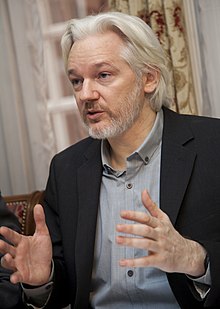
The decision will be issued at 10:30 am London time
by Dave DeCamp March 25, 2024, https://news.antiwar.com/2024/03/25/uk-court-to-decide-if-julian-assange-can-appeal-extradition/
London’s High Court will rule on Tuesday whether WikiLeaks founder Julian Assange can appeal his extradition to the United States, where he would face trial for exposing US war crimes.
According to WikiLeaks, the written ruling is due to be delivered by 10:30 am London time.
Last month, Assange’s legal team presented its case for the appeal. His lawyers also introduced new evidence, including a bombshell report from Yahoo News that revealed the CIA in 2017, under Mike Pompeo at the time, considered kidnapping and even discussed assassinating Assange over WikiLeaks publishing detailed the CIA’s hacking tools, known as Vault 7.
Assange did not attend the two-day hearing due to his poor health, and he remains in London’s Belmarsh Prison, where he’s been held since 2019. Assange’s family and legal team believe he will die if extradited to the US.
The news of the High Court’s impending decision comes after The Wall Street Journal reported that the US was considering offering a plea deal to Assange and that Justice Department officials had preliminary talks with his legal team. However, Assange’s lawyer, Barry Pollack, said in response to the report that the US has “given no indication” that the US will take a deal.
Assange faces 17 counts under the Espionage Act and one charge for conspiracy to commit a computer intrusion for obtaining and publishing documents from a source, a standard journalistic practice. If Assange is convicted, it would set a grave precedent for press freedom in the US and around the world. A plea deal that criminalizes the journalist-source relationship could also set a dangerous precedent.
WikiLeaks has been asking Americans to put pressure on the Biden administration to stop its pursuit of Assange by contacting their House representatives and telling them to support H.Res.934, a bill introduced by Rep. Paul Gosar (R-AZ) that calls for the US to drop the charges against Assange.
UN Security Council ceasefire resolution a turning point in Gaza war
March 26, 2024, by: The AIM Network, m https://theaimn.com/un-security-council-ceasefire-resolution-a-turning-point-in-gaza-war/
Australian Council for International Development Media Release
Australia’s peak body for international humanitarian organisations welcomes the United Nations Security Council’s resolution calling for an immediate ceasefire in Gaza and release of all hostages as a crucial turning point in the war.
Australian Council for International Development (ACFID) CEO Marc Purcell said it marked a significant breakthrough despite the United States’ decision to abstain from voting.
“This passage of this binding resolution, following four failed attempts since the start of the war, shows global leaders are no longer willing to accept the deaths of tens of thousands of civilians, many of them children, as collateral,” he said.
“The US’ decision to abstain is disappointing, particularly since it put forward its own failed proposal for a ceasefire just days ago. It is essential the US use its influence and relationship with Israel to obtain a permanent ceasefire.
“We are hopeful the passage of this resolution overnight marks a crucial turning point in the war that has killed nearly 32,000 civilians through bombing, starvation and dehydration.
“It is vital that both the state of Israel and militant groups immediately lay down arms to allow for the passage of humanitarian assistance, which is still being blocked from entry into Gaza, and the release of all hostages.”
ACFID is urging the Australian government to commit additional and ongoing funding for the humanitarian response in Gaza and the West bank, including for Australian non-government organisations providing lifesaving assistance.
BASE study: Alternative reactor concepts do not solve the repository problem

A new scientific study commissioned by the Federal Office for the Safety of Nuclear Waste Management (BASE) indicates that the market launch of alternative reactor concepts (also known as “Generation IV”) is currently not on the horizon.
“Despite some intensive advertising by manufacturers, we currently see no development that would make the construction of alternative reactor types on a large scale likely in the coming years. On the contrary: “From a safety perspective, we should expect the potential advantages of these reactor concepts to be outweighed by the disadvantages and the questions that remain unresolved,” says BASE President Christian Kühn, and emphasises that “The concepts solve neither the need to find a repository for radio-active waste nor the pressing issues of climate protection.”
The alternative reactor concepts, which include SMRs, are also often linked to the hope that they can minimise or even resolve the safety risks and disposal problems associated with nuclear power. To examine these claims, BASE commissioned the “Analysis and evaluation of the development status, the safety and the regulatory framework for so-called novel reactor concepts” study. The scientific work was carried out by the Öko-Institut, the Technical University of Berlin and the Physikerbüro Bremen.
“No alternative reactor type would make a repository superfluous”
The study analysed seven technology lines for alternative reactor concepts, which have been discussed internationally for many years, and are sometimes referred to as “fourth-generation reactors”. These include, for example, so-called lead and gas-cooled reactors, molten salt reactors and accelerator-driven systems. “Anyone who is euphoric about alternative reactor concepts today is ignoring unanswered questions and safety risks. As far as the safety of nuclear waste management is concerned, one thing is clear: no alternative reactor type makes the construction of a repository superfluous,” thus BASE President Kühn.
According to their developers, the reactors of the generation IV reactors will offer advantages over today’s nuclear power plants in terms of fuel utilisation, safety and reliability, economic efficiency and nuclear non-proliferation. Another advantage is said to be that less high-level radioactive waste is produced or that even existing waste can be disposed of with the help of these reactors.
The study compared the reactor concepts in terms of their safety, efficiency, proliferation resistance and fuel consumption.
“Individual technology lines could – with a systematic design – achieve potential advantages over today’s light water reactors regarding some of the criteria. However, none of the technology lines can be expected to have an overall advantage; in some areas, disadvantages compared to today’s light water reactors are also possible,” says Christoph Pistner of the Öko-Institut.
An analysis of six countries revealed as follows: “Even in an international context, alternative reactor concepts neither call into question the current trend towards light water reactors, nor do they represent a feasible, economical option for future energy supply,” says Christian von Hirschhausen of TU Berlin. “The study explains this on the basis of six detailed country studies (USA, Russia, China, South Korea, Poland, Belgium). Especially the United States, who are often the subject of public discussion, have not achieved any breakthroughs in the development of non-light water reactors, and have even cancelled previously announced inventions (“travelling wave reactor”).”
Findings of the study
The BASE-funded research project draws the following conclusions:
- State of development: All the concepts that are currently being discussed as belonging to the term “Generation IV” have been under development for decades, in some cases since the 1950s, and have not yet reached market maturity. There is still a considerable need for research and development. If the technical hurdles and safety issues can be resolved, further development would most likely take several decades. Against this background, we cannot assume that such reactor concepts will be used on a relevant scale by the middle of this century. In particular, individual country studies show that a system change from light water reactors to alternative reactor concepts ready for series production is not in sight.
- Waste generation: The alternative reactors would still generate high-level radioactive waste, some of which would be very different to the waste from light water reactors, for example because it would not be present as solid fuel elements but as molten salt. This would make waste treatment much more difficult, as current repository plans are generally not designed for this kind of waste. The volume of high-level radioactive waste could be reduced in conjunction with reprocessing technologies, but the volume of intermediate and low-level radioactive waste would increase significantly.
Transmutation properties: Some of the reactor concepts studied could, in theory, be used to split (transmute) individual parts of the existing high-level radioactive waste. This would involve a great deal of effort over a long period of time. However, the foreseeable effect of these measures would only make a comparatively small contribution to reducing the space requirements of a repository and to its long-term safety. This is due, in particular, to the fact that the substances with the greatest impact on safety (long-lived fission products) are difficult to transmute, and are therefore not intended for this purpose.- Regulations: The regulations of international organisations (e.g. IAEA) and national regulations (USA, Canada and the UK) examined in this study sometimes make very detailed, technology-specific provisions based on decades of operating experience with light water reactors. These regulations are, therefore, not directly applicable to the alternative reactor concepts studied. Revisions are currently underway, but due to a significantly lower level of operating experience, the time required to produce a similarly well-founded set of rules is likely to be very long.
Transmutation properties: Some of the reactor concepts studied could, in theory, be used to split (transmute) individual parts of the existing high-level radioactive waste. This would involve a great deal of effort over a long period of time. However, the foreseeable effect of these measures would only make a comparatively small contribution to reducing the space requirements of a repository and to its long-term safety. This is due, in particular, to the fact that the substances with the greatest impact on safety (long-lived fission products) are difficult to transmute, and are therefore not intended for this purpose.- Regulations: The regulations of international organisations (e.g. IAEA) and national regulations (USA, Canada and the UK) examined in this study sometimes make very detailed, technology-specific provisions based on decades of operating experience with light water reactors. These regulations are, therefore, not directly applicable to the alternative reactor concepts studied. Revisions are currently underway, but due to a significantly lower level of operating experience, the time required to produce a similarly well-founded set of rules is likely to be very long.
Conclusion: The expectation expressed both in public debate and by developers that the alternative reactor concepts can make a significant contribution to solving today’s problems in nuclear technology cannot be considered realistic in view of the current state of development of these systems and the actually proven and expected advantages and disadvantages of the individual technology lines.
The summary of the study results (in German only)
Conclusion: The expectation expressed both in public debate and by developers that the alternative reactor concepts can make a significant contribution to solving today’s problems in nuclear technology cannot be considered realistic in view of the current state of development of these systems and the actually proven and expected advantages and disadvantages of the individual technology lines
1 This month

of the week – Australians for War Powers Reform (AWPR)
To see nuclear-related stories in greater depth and intensity
 Antinuclear