Push-polling goes nuclear

Dr Jim Green , 18th April 2024 https://theecologist.org/2024/apr/18/push-polling-goes-nuclear
Conservative political parties in Australia actually believe that nuclear power is popular – based on biased push-polling.
A Newspoll survey led to a page-one article in the Australian, the Murdoch national newspaper, under the following headline: “Powerful majority supports nuclear option for energy security”.
The Australian’s political editor Simon Benson wrote in February: “Labor is now at risk of ending up on the wrong side of history in its fanatical opposition to nuclear power.” The party “ignores this community sentiment potentially at its peril”, he added. The story was prominent across the Murdoch owned press and on Murdoch’s Sky News.
The Newspoll question was as follows: “There is a proposal to build several small modular nuclear reactors around Australia to produce zero-emissions energy on the sites of existing coal-fired power stations once they are retired. Do you approve or disapprove of this proposal?”
Push-polling
The results: 55 per cent approval, 31 per cent disapproval and 14 per cent ‘don’t know’. However the poll was a crude example of push-polling designed to generate pro-nuclear results and headlines. Its many faults were identified by polling experts Kevin Bonham and Murray Goot and by economist Professor John Quiggin.
To give just one example of the bias, replacing Australia’s 21,300 megawatts of coal-fired power generation capacity with small modular reactors (SMRs) would require a large number of reactors, not ‘several’ as Newspoll asserted. If, for example, NuScale Power’s 77-megawatt reactors were chosen, 277 reactors would be required.
In broad terms, the tricks used by pro-nuclear push-pollers involve swaying opinions with biased preliminary comments, biased questions, limited response options, and misreporting the findings. Specific tricks include the following:
* Presenting or implying a narrow or false choice – as with the implication in the Newspoll survey that Australians could choose between nuclear reactors or coal.
* Asking respondents if nuclear power should be “considered” or if they support an “informed and balanced conversation”, and then conflating support for those bland propositions with support for nuclear power itself.
* Linking nuclear power to climate change abatement without mention of the downsides or expense of nuclear power, or alternative and arguably better ways to address climate change.
* Asking respondents if they support ‘advanced’ nuclear power or ‘the latest nuclear energy technologies’ without noting that ‘advanced’ nuclear power reactors are few in number, they aren’t really ‘advanced’ in any meaningful sense, and in some cases they are used to power fossil fuel mining or pose increased weapons proliferation risks.
* Reporting on poll results without clearly stating what the actual survey questions were.
* Avoiding the word ‘nuclear’ by referring to small modular reactors, or avoiding the word reactors by using phrases such as ‘the latest nuclear energy technologies’.
* Using the word ‘small’, as in ‘small modular reactors’: expect to see more of this, it seems to work well despite the spectacular implosion of the most advanced SMR project in the US, the NuScale project in Idaho.
* Reporting self-selecting, online polls as if the results mean anything. For example Australian academic Oscar Archer is impressed by a meaningless ABC poll, a meaningless Murdoch tabloid poll, and a meaningless Channel 7 Sunrise poll.
Australia’s conservative parties fall for push-polling
Partly because of the Murdoch media’s promotion of nuclear power and its push-polling, the federal Liberal-National Coalition opposition has “pledged” to introduce nuclear power to Australia by the mid-2030s if it wins and forms a government at the election to be held no later than May next year.
The Coalition believes that most Australians support nuclear power, that younger Australians are particularly enthusiastic, and that local communities will welcome a nuclear power reactor. The problem is that those views are underpinned by nothing other than biased push-polling.
Unbiased polls find that support for nuclear power in Australia falls short of a majority; that Australians support renewables to a far greater extent than nuclear power and nuclear power is among the least popular energy sources; that a majority do not want nuclear reactors built near where they live; and that most Australians are concerned about nuclear accidents and nuclear waste.
Even the push-polling results should raise red flags for the Coalition. A 2019 Roy Morgan poll preceded the poll question with this highly dubious assertion: “If the worries about carbon dioxide are a real problem, many suggest that the cleanest energy source Australia can use is nuclear power.”
Even with that blatant attempt to sway respondents, only a bare 51 per cent majority expressed support for nuclear power.
Locals are ‘hostile’
The Coalition hasn’t even formally released its nuclear power policy yet ‒ that will happen in the coming weeks. But already the policy has been disastrous for the Coalition with near-zero support beyond the far-right of the Coalition and the far-right media, in particular the Murdoch-Sky echo chamber.
Opposition to locally-built nuclear power reactors has been clearly and consistently demonstrated in Australian opinion polls for 20 years or more. A 2019 Essential poll was typical of the others: 28 per cent of respondents “would be comfortable living close to a nuclear power plant” while 60 per cent would not.
The Coalition proposes replacing retiring coal power plants with nuclear reactors and expects an enthusiastic response from local communities. A ‘Coalition source’ told the Murdoch press that Coalition MPs “had convinced themselves that people would be queuing up” for nuclear reactors.
But recent focus group research carried out in the Hunter Valley in NSW and the Latrobe Valley in Victoria ‒ two of the coal regions that might be targeted ‒ found that voters are “hostile” to plans for reactors in their areas.
Local hostility is just one of the problems facing the Coalition’s nuclear policy. Coalition MPs have said on countless occasions that the development of nuclear power in Australia would require bipartisan support. But nuclear power isn’t supported by the Labor Party and it faces strong resistance even from within the Coalition.
Indeed there is bipartisan opposition to nuclear power in most of the four states with operating coal plants that are likely to be targeted in a coal-to-nuclear program ‒ Victoria, Queensland, New South Wales, and Western Australia. Labor state governments in those four states are opposed to nuclear power in their states, and Liberal/Coalition opposition leaders are opposed to nuclear power or have failed to endorse it.
Colourful commentary
Tony Barry ‒ a former deputy state director and strategist for the Victorian Liberal Party, and now a director at the research consultancy RedBridge ‒ describes the Coalition’s decision to make nuclear power the centrepiece of its energy and climate policy as “the longest suicide note in Australian political history”.
On the strength of a detailed RedBridge analysis of Australians’ attitudes to nuclear power, Barry says that just 35 per cent of Australians support nuclear power and that only coal is less popular. If the Coalition is to have any chance of winning the next election it will not be with nuclear power, he says.
Colourful commentary has also been offered to Murdoch journalists by Coalition MPs under cover of anonymity. One Coalition MP says the nuclear policy is “madness on steroids”, another says the Liberal and National Party rooms are “in a panic” about the nuclear policy and “they don’t know what to do”, and another says the nuclear policy is “bonkers”,
Former Liberal prime minister Malcolm Turnbull also describes the nuclear policy as “bonkers”. He says nuclear power’s only utility is “as another culture war issue for the right-wing angertainment ecosystem, and a means of supporting fossil fuels by delaying and distracting the rollout of renewables”, and that nuclear power “is exactly what you don’t need to firm renewables.” Turnbull describes ultra-conservative Coalition leader Peter Dutton as a “thug” who says “stupid things” about nuclear power. With friends like that…
Matt Kean, the NSW Liberal MP and former deputy premier, states: “I not only regard advocacy for nuclear power as against the public interest on environmental, engineering and economic grounds, I also see it as an attempt to delay and defer responsible and decisive action on climate change in a way that seems to drive up power prices in NSW by delaying renewables.”
John Hewson, the former federal Liberal leader, says the Dutton opposition has become “ridiculous” with its pro-nuclear, anti-renewables stance which is economic “nonsense”, and that Dutton may be promoting nuclear “on behalf of large fossil-fuel donors knowing nuclear power will end up being too expensive and take too long to implement, thereby extending Australia’s reliance on coal and natural gas”.
Nuclear power a ‘dog whistle to climate denialists’
The cynicism reflects concerns about the Coalition’s opposition to the federal Labor government’s target of 82 per cent renewables by 2030 and the Coalition’s plans to expand gas and prolong the use of coal. The Nationals are calling for a moratorium on the rollout of large-scale renewables.
Professor John Quiggin, an economist, notes that, in practice, support for nuclear power in Australia is support for coal and he has described nuclear advocacy in Australia as a dog whistle to climate denialists.
Even in the Murdoch-Sky right-wing echo-chamber, splits are emerging. A Murdoch media editor says the Coalition’s nuclear policy is “stark raving mad” and “madness…total madness”.
Australia’s big private electricity generators ‒ AGL Energy, Alinta, EnergyAustralia and Origin Energy ‒ have dismissed nuclear energy as a viable source of power for their customers. One senior executive says that power bills would triple if the nuclear path was pursued. Industry isn’t interested, and trade unions are overwhelmingly opposed.
The Australian chief scientist opposes to the introduction of nuclear power to Australia, as do at least two former Australian chief scientists and the NSW chief scientist.
A recent survey by the Investor Group on Climate Change asked big institutional investors with $37 trillion under management which energy and climate solutions they believed had good long-term returns. Nuclear power was ranked last of the 14 options, renewable energy first.
History repeating itself
In the mid-2000s, John Howard as the Liberal prime minister promoted nuclear power and conservatives hoped the policy would create splits within the Labor Party and the environment movement.
Labor wasn’t split, nor was the environment movement, but at least 22 Coalition candidates publicly distanced themselves from the Howard government’s nuclear policy during the 2007 election campaign. Howard lost his seat, the Coalition lost the election, and the nuclear policy was ditched immediately.
We could be seeing history repeating itself with Peter Dutton’s ill-advised promotion of nuclear power.
Labor MPs can’t believe their luck. Speaking in parliament, prime minister Anthony Albanese compared Peter Dutton to a nuclear reactor: “One is risky, expensive, divisive and toxic; the other is a nuclear reactor. The bad news for the Liberal Party is that you can put both on a corflute, and we certainly intend to do so.”
This Author
Dr Jim Green is the national nuclear campaigner with Friends of the Earth Australia and a member of the Nuclear Consulting Group.
The fantasy of reviving nuclear energy

Tripling the World’s Nuclear Energy Capacity Is a Fantasy: Stephanie Cooke.
World leaders are not unaware of the nuclear industry’s long history of
failing to deliver on its promises, or of its weakening vital signs. Yet
many continue to act as if a “nuclear renaissance” could be around the
corner even though nuclear energy’s share of global electricity generation
has fallen by almost half from its high of roughly 17 percent in 1996.
In search of that revival, representatives from more than 30 countries
gathered in Brussels in March at a nuclear summit hosted by the
International Atomic Energy Agency and the Belgian government.
Thirty-four nations, including the United States and China, agreed “to work to fully
unlock the potential of nuclear energy,” including extending the lifetime
of existing reactors, building new nuclear power plants and deploying
advanced reactors.
Yet even as they did so, there was an acknowledgment of
the difficulty of their undertaking. “Nuclear technology can play an
important role in the clean energy transition,” Ursula von der Leyen, the
president of the European Commission, told summit attendees.
But she added that “the reality today, in most markets, is a reality of a slow but
steady decline in market share” for nuclear power. The numbers underscore
that downturn. Solar and wind power together began outperforming nuclear
power globally in 2021, and that trend continues as nuclear staggers along.
Solar alone added more than 400 gigawatts of capacity worldwide last year,
two-thirds more than the previous year. That’s more than the roughly 375
gigawatts of combined capacity of the world’s 415 nuclear reactors, which
remained relatively unchanged last year.
At the same time, investment in
energy storage technology is rapidly accelerating. In 2023, BloombergNEF
reported that investors for the first time put more money into stationary
energy storage than they did into nuclear.
New York Times 18th April 2024
Faulty Assurances: The Judicial Torture of Assange Continues
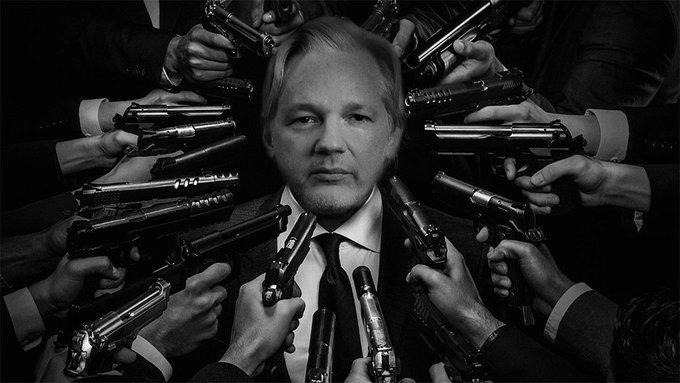
April 17, 2024, Dr Binoy Kampmark, https://theaimn.com/faulty-assurances-the-judicial-torture-of-assange-continues/
Only this month, the near comatose US President, Joe Biden, made a casual, castaway remark that his administration was “considering” the request by Australia that the case against Julian Assange be concluded. The WikiLeaks founder has already spent five gruelling years in London’s Belmarsh prison, where he continues a remarkable, if draining campaign against the US extradition request on 18 charges, 17 incongruously and outrageously based on the US Espionage Act of 1917.
Like readings of coffee grinds, his defenders took the remark as a sign of progress. Jennifer Robinson, a longtime member of Assange’s legal team, told Sky News Australia that Biden’s “response, this is what we have been asking for over five years. Since 2010 we’ve been saying this is a dangerous precedent that’s being set. So, we certainly hope it was a serious remark and the US will act on it.” WikiLeaks editor-in-chief Kristinn Hrafnsson found the mumbled comment from the president “extraordinary”, hoping “to see in the coming days” whether “clarification of what this means” would be offered by the powerful.
On April 14, the Wall Street Journal reported that Canberra had asked their US counterparts whether a felony plea deal could be reached, enabling the publisher to return to Australia. “Prosecutors and a lawyer for Assange have discussed a range of potential deals, including those that include pleading guilty to a felony under the espionage law under which he was indicted, and those of conspiring to mishandle classified information, which would be a misdemeanor, people familiar with the matter have said.”
Last month, the UK High Court gave what can only be regarded as an absurd prescription to the prosecution should they wish to succeed. Extradition would be unlikely to be refused if Assange was availed of protections offered by the First Amendment (though rejecting claims that he was a legitimate journalist), was guaranteed not to be prejudiced, both during the trial and in sentence on account of his nationality, and not be subject to the death penalty. That such directions were even countenanced shows the somewhat delusionary nature of British justices towards their US counterparts.
On April 16, Assange’s supporters received confirmation that the extradition battle, far from ending, would continue in its tormenting grind. Not wishing to see the prospect of a full hearing of Assange’s already hobbled arguments, the US State Department, almost to the hour, filed the assurances in a diplomatic note to the Crown Prosecution Service (CPS). “Assange,” the US Embassy in London claimed with aping fidelity to the formula proposed by the High Court, “will not be prejudiced by reason of nationality with respect to which defenses he may seek to raise at trial and at sentencing.”
Were he to be extradited, “Assange will have the ability to raise and seek to rely upon at trial (which includes any sentencing hearing) the rights and protections given under the First Amendment of the Constitution of the United States.” An obvious caveat, and one that should be observed with wary consideration by the High Court judges, followed. “A decision as to the applicability of the First Amendment is exclusively within the purview of the US Courts.”
The US embassy also promised that, “A sentence of death will neither be sought nor imposed on Assange. The United States is able to provide such assurance as Assange is not charged with a death-penalty eligible offense, and the United States assures that he will not be tried for a death-eligible offense.” This undertaking does not dispel the threat of Assange being charged with additional offences such as traditional espionage, let alone aiding or abetting treason, which would carry the death penalty.
In 2020, Gordon Kromberg, the chief Department of Justice prosecutor behind the case, told the Central Criminal Court of England and Wales that the US “could argue that foreign nationals are not entitled to protections under the First Amendment, at least as it concerns national defense information.” There was also the likelihood that Assange, in allegedly revealing the names of US intelligence sources thereby putting them at risk of harm, would also preclude the possibility of him relying on such protections.
-ADVERTISEMENT-
That the zealous Kromberg will be fronting matters should Assange reach US shores is more than troubling. Lawyers and civil rights activists have accused him of using the Eastern District Court of Virginia for selective and malicious prosecutions. As Murtaza Hussain of The Intercept observed with bleak accuracy in July 2021, “[r]ather than being pushed into obscurity by these efforts, today he is serving as a key figure in one of the most important civil liberties cases in the world.”
The High Court also acknowledged Kromberg’s views at trial regarding the possibility that the First Amendment did not cover foreign nationals. “It can fairly be assumed that [Kromberg] would not have said that the prosecution ‘could argue that foreign nationals are not entitled to protections under the First Amendment’ unless that was a tenable argument that the prosecution was entitled to deploy with real prospect of success.” These latest assurances do nothing to change that fact.
A post from Assange’s wife, Stella, provided a neat and damning summary of the embassy note. “The United States has issued a non-assurance in relation to the First Amendment, and a standard assurance in relation to the death penalty. It makes no undertaking to withdraw the prosecution’s previous assertion that Julian has no First Amendment rights because he is not a US citizen. Instead, the US has limited itself to blatant weasel words claiming that Julian can ‘seek to raise’ the First Amendment if extradited.”
Small reactors don’t add up as a viable energy source

Nuclear energy has been declining in importance as a source of power and SMRs will not reverse that.
M. V. Ramana, The University of British Columbia, Sophie Groll, The University of British Columbia, EditorsS. Vicknesan
Senior Commissioning Editor, 360info Southeast Asia 15 Apr 24 https://360info.org/small-reactors-dont-add-up-as-a-viable-energy-source/
The nuclear industry has been offering so-called Small Modular Reactors (SMRs) as an alternative to large reactors as a possible solution to climate change.
SMRs are defined as nuclear reactors with a power output of less than 300 megawatts of electricity, compared to the typically 1000 to 1,500 megawatts power capacity of larger reactors.
Proponents assert that SMRs would cost less to build and thus be more affordable.
However, when evaluated on the basis of cost per unit of power capacity, SMRs will actually be more expensive than large reactors.
This ‘diseconomy of scale’ was demonstrated by the now-terminated proposal to build six NuScale Power SMRs (77 megawatts each) in Idaho in the United States.
The final cost estimate of the project per megawatt was around 250 percent more than the initial per megawatt cost for the 2,200 megawatts Vogtle nuclear power plant being built in Georgia, US.
Previous small reactors built in various parts of America also shut down because they were uneconomical.
The high cost of constructing SMRs on a per megawatt basis translates into high electricity production costs.
According to the 2023 GenCost report from the Australian Commonwealth Scientific and Industrial Research Organisation (CSIRO) and the Australian Energy Market Operator, the estimated cost of generating each megawatt-hour of electricity from an SMR is around AUD$400 to AUD$600.
In comparison, the cost of each megawatt-hour of electricity from wind and solar photovoltaic plants is around AUD$100, even after accounting for the cost involved in balancing the variability of output from solar and wind plants.
Building SMRs has also been subject to delays. Russia’s KLT-40 took 13 years from when construction started to when it started generating electricity, instead of the expected three years.
Small reactors also raise all of the usual concerns associated with nuclear power, including the risk of severe accidents, the linkage to nuclear weapons proliferation, and the production of radioactive waste that has no demonstrated solution because of technical and social challenges.
One 2022 study calculated that various radioactive waste streams from SMRs would be larger than the corresponding waste streams from existing light water reactors.
The bottom line is that new reactor designs, such as SMRs, will not rescue nuclear power from its multiple problems. Any energy technology that is beset with such environmental problems and risks cannot be termed sustainable.
Nuclear energy itself has been declining in importance as a source of power: the fraction of the world’s electricity supplied by nuclear reactors has declined from a maximum of 17.5 percent in 1996 down to 9.2 percent in 2022. All indications suggest that the trend will continue if not accelerate.
The decline in the global share of nuclear power is driven by poor economics: generating power with nuclear reactors is costly compared to other low-carbon, renewable sources of energy and the difference between these costs is widening.
Nuclear reactors built during the last decade have all demonstrated a pattern of cost and time overruns in their construction.
The Vogtle nuclear power plant being built in Georgia, involving two reactors designed to generate around 1,100 megawatts of electricity each, is currently estimated to cost nearly USD$35 billion.
In 2011, when the utility company building the reactor sought permission from the American Nuclear Regulatory Commission, it projected a total cost of USD$14 billion, and ‘in-service dates of 2016 and 2017’ for the two units.
In France, the 1,630-megawatt European Pressurised Reactor being built in Flamanville was originally estimated to cost 3 billion euros and projected to start in 2012, but the cost has soared to an estimated 13.2 billion euros and is yet to start operating as of March 2024.
These cost increases and delays confirm the historical pattern identified in a study published in 2014: of the 180 nuclear power projects around the world it studied, 175 had exceeded their initial budgets, by an average of 117 percent, and took 64 percent longer than initially projected.
However, the recent projects are even more extreme in the magnitude of the disconnect between expectations and reality.
These reactor projects, and the Hinkley Point C project under construction in the United Kingdom, also confirm another historical pattern: costs of nuclear power plants go up with time, not down. This is unlike other energy technologies, such as solar and wind energy, where costs have declined rapidly with experience.
The climate crisis is urgent. The world has neither the financial resources nor the luxury of time to expand nuclear power. As physicist and energy analyst Amory Lovins argued: “… to protect the climate, we must save the most carbon at the least cost and in the least time.”
Expanding nuclear energy only makes the climate problem worse.
The money invested in nuclear energy would save far more carbon dioxide if it were instead invested in renewables.
And the reduction in emissions from investing in renewables would be far quicker.
Is the possibility of a World War real?

Ultimately, all the nuclear powers have no intention of firing first, as this would undoubtedly lead to their destruction. The exception is Israel, which seems to have adopted the “Samson doctrine” (“Let me die with the Philistines”). It would thus be the only power to imagine the ultimate sacrifice, the “Twilight of the Gods”, dear to the Nazis.
The military atom was never envisaged as a classic form of deterrence, but as an assurance that Israel would not hesitate to commit suicide to kill its enemies rather than be defeated. This is the Masada complex [3]. This way of thinking is in line with the “Hannibal Directive”, according to which the IDF must kill its own soldiers rather than let them become prisoners of the enemy [4].
Atomic war is possible. World peace hangs on the finger of the United States, blackmailed by Ukrainian “integral nationalists” and Israeli “revisionist Zionists”. If Washington doesn’t deliver weapons to massacre the Russians and Gazans, they won’t hesitate to launch Armageddon.
VOLTAIRE NETWORK | PARIS (FRANCE) | 9 APRIL 2024 by Serge Marchand , Thierry Meyssan, https://www.voltairenet.org/article220708.html
The wars in Ukraine and Gaza have led several leading politicians to compare the current period with the 1930s, and to raise the possibility of a World War. Are these fears justified, or are they just fear-mongering?
To answer this question, we’re going to summarize events that are unknown to everyone, though well known to specialists. We shall do so dispassionately, at the risk of appearing indifferent to these horrors.
First, let’s distinguish between the conflicts in Eastern Europe and the Middle East. They have only two things in common:
They represent no significant stakes in themselves, but a defeat for the West, which, after its defeat in Syria, would mark the end of its hegemony over the world.
They are fueled by a fascist ideology, that of Dmytro Dontsov’s Ukrainian “integral nationalists” [1] and that of Vladimir Ze’ev Jabotinsky’s Israeli “revisionist Zionists” [2]; two groups that have been allies since 1917, but went underground during the Cold War and are unknown to the general public today.
There is, however, one notable difference between them:
The same fury is visible on both battlefields, but the “integral nationalists” sacrifice their own fellow citizens (there are hardly any able-bodied men under thirty left in the Ukraine), while the “revisionist Zionists” sacrifice people who are foreign to them, Arab civilians.
Is there a risk that these wars will become more widespread?
This is the will of both groups. The “integral nationalists” are constantly attacking Russia inside its territory and in Sudan, while the “revisionist Zionists” are bombing Lebanon, Syria and Iran (more precisely, Iranian territory in Syria, since the Damascus consulate is extra-territorialized). But no one responds: not Russia, Egypt or the Emirates in the first case, nor Hezbollah, the Syrian Arab Army or the Revolutionary Guards in the second.
All of them, including Russia, anxious to avoid a brutal retaliation from the “collective West” that would lead to a World War, prefer to take the blows and accept their deaths.
If war were to become widespread, it would no longer be simply conventional, but above all nuclear.
While we all know each other’s conventional capabilities, we are largely unaware of each other’s nuclear capabilities. The most we know is that only the USA used strategic nuclear bombs during the Second World War, and that Russia claims to have hypersonic nuclear launchers with which no other power can compete. However, some Western experts question the reality of these prodigious technical advances. Behind the scenes, what is the strategy of the nuclear powers?
In addition to the five permanent members of the Security Council, India, Pakistan, North Korea and Israel have strategic atomic bombs. All except Israel see them as a means of deterrence.
The Western media also present Iran as a nuclear power, which Russia and China officially deny.
During the Yemen war, Saudi Arabia bought tactical nuclear bombs from Israel and used them, but it does not seem to have them permanently at its disposal, nor to have mastered the technique.
Only Russia regularly conducts Nuclear War exercises. During last October’s exercises, Russia admitted to losing a third of its population in the space of a few hours, then simulated combat and emerged victorious.
Ultimately, all the nuclear powers have no intention of firing first, as this would undoubtedly lead to their destruction. The exception is Israel, which seems to have adopted the “Samson doctrine” (“Let me die with the Philistines”). It would thus be the only power to imagine the ultimate sacrifice, the “Twilight of the Gods”, dear to the Nazis.
Two critical works have been devoted to the Israeli military atom: The Samson Option: Israel’s Nuclear Arsenal and American Foreign Policy by Seymour M. Hersh (Random House, 1991) and Israel and the Bomb by Avner Cohen (Columbia University Press, 1998).
The military atom was never envisaged as a classic form of deterrence, but as an assurance that Israel would not hesitate to commit suicide to kill its enemies rather than be defeated. This is the Masada complex [3]. This way of thinking is in line with the “Hannibal Directive”, according to which the IDF must kill its own soldiers rather than let them become prisoners of the enemy [4].
During the Six-Day War, the Israeli Prime Minister, the Ukrainian Levi Eshkol, ordered one of the two bombs Israel had at its disposal at the time to be prepared and detonated near an Egyptian military base on Mount Sinai. This plan was not carried out, as the IDF quickly won the conventional war. Had it gone ahead, the fallout would have killed not only Egyptians, but Israelis too [5].
During the October 1973 war (known in the West as the “Yom Kippur War”), the Defense Minister, the Ukrainian-born Israeli Moshe Dayan, and the Prime Minister, the Ukrainian Golda Meir, again considered the use of 13 atomic bombs [6].
In 1986, a nuclear technician from the Dimona power plant, the Moroccan Mordechai Vanunu, revealed Israel’s secret military nuclear program to the Sunday Times [7]. He was kidnapped by Mossad in Rome, on the orders of the Israeli Prime Minister and father of the atomic bomb, Shimon Peres of Belarus. He was tried in camera and sentenced to 18 years in prison, 11 of which were spent in total isolation. He was again sentenced to 6 months’ imprisonment for daring to speak to the Voltaire Network.
In 2009, Martin van Creveld, Israel’s chief strategist, declared: “We have several hundred atomic warheads and rockets and can reach our targets in all directions, even Rome. Most European capitals are potential targets for our air force (…) The Palestinians must all be expelled. The people fighting for this goal are simply waiting for “the right person at the right time” to come along. Only two years ago, 7 or 8% of Israelis thought this would be the best solution, two months ago it was 33%, and now, according to a Gallup Poll, the figure is 44% in favor
So it’s reasonable to assume that no nuclear power, except Israel, will dare commit the irreparable.
This is precisely what Heritage Minister Amichai Eliyahu (Otzma Yehudit/Jewish Force) envisaged on Radio Kol Berama on November 5. Referring to atomic weapons against Gaza, he declared: “It’s a solution… it’s an option”. He then compared the residents of the Gaza Strip to “Nazis”, assuring that “there are no non-combatants in Gaza” and that this territory does not deserve humanitarian aid. “There are no uninvolved people in Gaza”.
These remarks provoked indignation in the West. Only Moscow was surprised that the International Atomic Energy Agency did not take up the matter [8].
It is very likely that this is the reason why Washington continues to arm Israel, even though it is calling for an immediate ceasefire: if the United States no longer supplies Tel Aviv with weapons to massacre the Gazans, the latter could use nuclear weapons against all the peoples of the region, including the Israelis.
In Ukraine, the “integral nationalists” planned to blackmail the United States with the same argument: the threat of nuclear or, failing that, biological weapons [9]. In 1994, Ukraine, which had a vast stockpile of Soviet atomic bombs, signed the Budapest Memorandum. The United States, the United Kingdom and Russia guaranteed Ukraine’s territorial integrity in exchange for the transfer of all its nuclear weapons to Russia and signature of the Treaty on the Non-Proliferation of Nuclear Weapons (NPT). However, after the overthrow of elected president Viktor Yanukovych in 2014 (EuroMaidan), the “integral nationalists” worked to re-nuclearize the country, which they saw as essential to eradicating Russia from the face of the earth.
On February 19, 2022, Ukrainian President Voloymyr Zelensky announced at the annual Munich Security Conference that he would challenge the Budapest Memorandum in order to rearm his country with nuclear weapons. Five days later, on February 24, 2022, Russia launched its special operation against the Kiev government to implement Resolution 2202. Its top priority was to seize Ukraine’s secret and illegal reserves of enriched uranium. After eight days of fighting, the civilian nuclear power plant at Zaporijjia was occupied by the Russian army.
According to Argentina’s Rafael Grossi, head of the International Atomic Energy Agency, who spoke three months later on May 25 at the Davos Forum, Ukraine had secretly stored 30 tons of plutonium and 40 tons of uranium at Zaporijjia. At market prices, this stockpile was worth at least $150 billion. Russian President Vladimir Putin declared: “The only thing [Ukraine] lacks is a uranium enrichment system. But that’s a technical question, and for Ukraine it’s not an insoluble problem”. However, his army had already removed a large part of this stock from the plant. Fighting continued for months. If the integral nationalists had still had them, they would have done what the “revisionist Zionists” are doing today: they would have demanded more and more weapons and, if refused, threatened to use them, i.e. to launch Armageddon.
Back to today’s battlefields. What are we seeing? In Ukraine and Palestine, the West continues to provide the “integral nationalists” and, to a lesser extent, the “revisionist Zionists” with an impressive arsenal. However, they have no reasonable hope of getting the Russians to back down, or of massacring all the Gazans. At worst, they can lead their allies to empty their arsenals, sacrifice all Ukrainians of fighting age and diplomatically isolate the puppet-state of Israel. As Moshe Dayan once said, “Israel must be like a mad dog, too dangerous to control”.
Let’s imagine that these apparently catastrophic consequences are in fact their goal.
The world would then be divided in two, as it was during the Cold War, except that Israel would have become uninviting. In the West, the Anglo-Saxons would still be the masters, especially as they would be the only ones with weapons, their allies having exhausted theirs in Ukraine. Israel, isolated as it was in the late 70s and early 80s when it was only really recognized by the apartheid regime of South Africa, would still be fulfilling the mission it was originally entrusted with: to mobilize the Jewish diaspora in the service of the Empire, fearing a new wave of anti-Semitism.
References…………………………. https://www.voltairenet.org/article220708.html
Japan starts 5th ocean discharge of Fukushima nuclear-tainted wastewater despite opposition

(Xinhua) Web editor: Zhang Kaiwei, Liang Jun, April 19, 2024
TOKYO, April 19 (Xinhua) — Japan on Friday started the fifth-round of release of nuclear-contaminated wastewater from the crippled Fukushima Daiichi Nuclear Power Plant into the Pacific Ocean.
Despite opposition among local fishermen, residents as well as backlash from the international community, Tokyo Electric Power Company (TEPCO), the plant’s operator, started discharging the radioactive wastewater in the morning, the first round in fiscal 2024.
Similar to the previous four rounds, about 7,800 tons of the wastewater, which still contains tritium, a radioactive substance, will be discharged until May 7.
TEPCO analyzed the water stored in the tank scheduled for release, and found that the concentrations of all radioactive substances other than tritium were below the national release standards, while the concentration of tritium that cannot be removed will be diluted with seawater, Japanese newspaper Asahi Shimbun reported.
TEPCO will measure the concentration of radioactive substances such as tritium in the surrounding waters every day during the period to investigate the effects of the release, it added.
The Fukushima nuclear-contaminated water release began in August 2023, and a total of about 31,200 tons of the water was released in four rounds in fiscal 2023, which ended in March.
In fiscal 2024, TEPCO plans to discharge a total of 54,600 tons of contaminated water in seven rounds, which contains approximately 14 trillion becquerels of tritium.
Swiss ruling could pave way for more climate activist cases.
The decision that Switzerland had failed in its duty to mitigate climate change raises
questions about the Strasbourg court overstepping the mark. Victory for a
group of Swiss women who challenged their government’s inaction over
climate change will encourage activists “to try their luck”, one City
law firm partner warns.
The European Court of Human Rights last week ruled
for the first time that signatory states to the convention are obliged to
protect their citizens from the effects of the evolving “climate
crisis”. The judges said that the Swiss government had failed to comply
with its duties to mitigate climate change, and that violated the right to
respect for private and family life.
Times 18th April 2024
TODAY. Israel v Iran – religious fanaticism or common sense in the atomic age.
Decision to use nuclear bombs could be made for religious reasons, not military strategy.

Trying to understand the culture of other nations, looking from the outside, is a tricky task.
But – as I attempt this, about Israel and Iran, I find some remarkable similarities
Israel is supposed to be a democracy. But the fact that they call it “The Jewish State” immediately sheds doubt on that claim. It is a technocratically advanced state – but with a prevailing religious culture which is quite counter to the ideas of modern secular states. With the current war on Gaza , Israel now functions as a brutal fascism.
Iran makes no pretense of being a democracy. Under the veneer of genuine Islam, the clerics and mullahs run an oppressive, vengeful, misogynist dictatorship.
Yet in both cases, the rulers have twisted religion to suit their cruel aims.
ZIONISM. Jewish tradition abhors violence and reinterprets war episodes, plentiful in the Hebrew Bible, in a pacifist mode. Tradition clearly privileges compromise and accommodation. Albert Einstein was among the Jewish humanists who denounced Beitar, the paramilitary Zionist youth movement, today affiliated with the ruling Likud. He deemed it to be“ as much of a danger to our youth as Hitlerism is to German youth”.
The first Zionist congress in 1897 had to be moved from Germany to Switzerland because German Jewish organizations objected to holding a Zionist event in their country. The Zionist argument that the homeland of the Jews is not the country, where they have lived for centuries and for which many have spilled their blood in wars, but in a land in Western Asia. For many Jews, this message bears disconcerting resemblance to that of the antisemites who resent their social integration.
ISLAMIC FUNDAMENTALISM IN IRAN.
From Prophet Muhammad: “Kindness is a mark of faith, and whoever is not kind has no faith.” “Do good to others, and goodness will come back to you.” “He who does not show mercy to others will not be shown mercy.”
The Quran places great emphasis on the dignity of human beings regardless of their gender or race or even status. The dignity also means that human beings have a right to life, right to freedom of religion, right to freedom of lifestyle, right to labor, right to security and right to family
In Iran, The crux of the fundamentalist conflict is not between Islam and Christianity. Nor is it between Islam and the West, and nor between the Shia and the Sunni. The conflict is over freedom versus subjugation and dictatorship, between equality on the one hand and oppression and misogyny on the other.
When it comes to the nuclear bomb – these forms of religious extremism become a critical danger to the world. The idea of martyrdom becomes important – sacrificing oneself, and one’s people become a value, a virtue even. It has been prominent in many wars – a notable example – Japan’s Kamikaze airmen in World War 2.
Martyrdom has been a value for some extremist Islamists. I don’t think it would be so for the mullahs of Iran.
But – when it comes to Israel – there’s a definite strand of martyrdom in Israeli military thinking.

Ultimately, all the nuclear powers have no intention of firing first, as this would undoubtedly lead to their destruction. The exception is Israel, which seems to have adopted the “Samson doctrine” (“Let me die with the Philistines”). It would thus be the only power to imagine the ultimate sacrifice, the “Twilight of the Gods”, dear to the Nazis.
The military atom was never envisaged as a classic form of deterrence, but as an assurance that Israel would not hesitate to commit suicide to kill its enemies rather than be defeated. This is the Masada complex [3]. This way of thinking is in line with the “Hannibal Directive”, according to which the IDF must kill its own soldiers rather than let them become prisoners of the enemy [4].
1 This month
15 April – Zoom –Nuclear Power is Not the Solution
Apr 15, 2026 01:00 AM in Canberra, Melbourne, Sydney

Join the International Physicians for the Prevention of Nuclear War (IPPNW) on Tuesday, April 14th for a timely webinar exploring the risks associated with nuclear power and challenging the myth that it offers a simple, safe, carbon-free solution to the climate crisis

of the week – Australians for War Powers Reform (AWPR)
To see nuclear-related stories in greater depth and intensity
 Antinuclear