TODAY. Time to rise above the tit-for-tat mentality – “Turning Point: the Bomb and the Cold War” (and this is not an ad)
This is a Netflix series. And I’m sorry to be looking as if I am advertising. But the thing is – life is too serious, too important – to worry about this.
To me, the important thing about this series is that it rises above political and national loyalties. Produced by Luminant Media and director Brian Knappenberger, this really is the definitive documentary on the Cold War and the Atomic Bomb.
I didn’t know that Americans were capable of creating an unbiased factual history of nuclear weapons – that didn’t justify all American actions, and demonise all Russian’s. But this is it.
I find this lengthy detailed comprehensive study quite gripping, and also believable – authentic. I’m actually now only halfway through it, but I feel so reassured – that there exists such a visual media – that sees all sides as made up of human beings, that respects our common humanity, – while it still sets out the stupidities and atrocities done , and makes no excuses for them.
In this era of short, snappy, unreliable media of all types, there is a desperate need for longer, thoughtful, thorough, properly researched studies on our troubled world situation. We need to be getting past those lofty myths of “honour” “patriotism” “loyalty” – to try to see clearly what is actually happening now, and how we got to the crises of today.
Federal election 2025: Peter Dutton’s nuclear plans worry voters in Nationals-held seat of Gippsland.
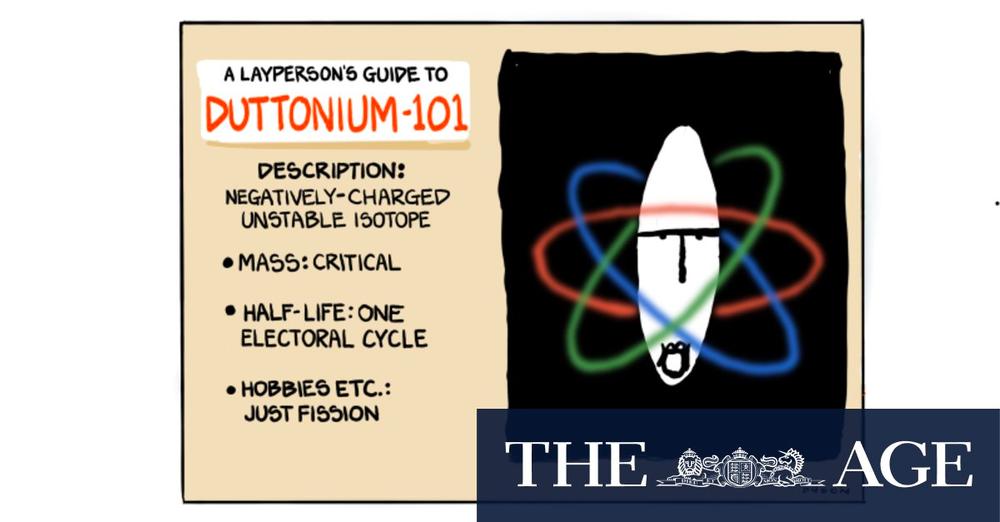
‘A big risk’: Voters wary of nuclear replacing coal-fired power Tom McIlroy Political correspondent, AFR 7 May 24
Voters in Victoria’s Latrobe Valley have raised the Chernobyl and Fukushima nuclear disasters when asked about Peter Dutton’s plan to build large-scale reactors near them, suggesting strong reservations about the energy plan.
As the Coalition finalises a policy for coal-fired power station sites to host nuclear energy – and for small modular reactor technology to be deployed in other places – focus group research in the federal electorate of Gippsland showed voters had safety concerns about living near a reactor.
Mr Dutton wants nuclear to provide baseload power to firm renewable energy and ensure Australia achieves net-zero emissions by 2050.
Communities near coal plants would be called on to host nuclear facilities, with at least six sites expected to be named before the next election.
Mr Dutton says nuclear must stack up on four key criteria: safety, waste disposal, location and cost.
But a focus group of Coalition-leaning voters questioned by polling firm Redbridge last week revealed doubts in the seat held by Nationals MP Darren Chester.
One male participant said he was opposed to nuclear replacing coal-fired power at sites like Loy Yang A, Loy Yang B and Yallourn.
“I know there’s a lot of safeguards with nuclear but it is still a very big risk if something does happen,” he said.
“It uses up a lot of resources and at the end of the day, once it has used up all its radioactiveness, we have to go bury it in the desert somewhere because we can’t do anything with it.”
A woman told the group she did not know much about the plan but had strong concerns.
“The thought of it makes me want to move. I’ve got kids. I don’t want them to be exposed to something that could affect them.”
Another woman said future generations would suffer if Australia lifted the ban on nuclear power.
“We’ve seen in the past with Chernobyl. Obviously, the situation has got better and people have learnt from things but mistakes happen and it’s a risk that you have to weigh up when considering putting something into an area with population.”
Another male participant cited the 2011 accident at Japan’s Fukushima power plant. He said Australia could face the risk of a similar disaster if nuclear was developed here. Another suggested that carp in local waters would “be huge” in the event of a nuclear spill………………………………………………………..
Fellow director Tony Barry said there was “intense” opposition in Gippsland.
“There is some limited opportunity for the Coalition to leverage a perception that a nuclear reactor in the region might produce local economic benefits.
“However, the problem for the Coalition is that to overcome these wide and deep concerns and to successfully leverage the perceived benefits they will need to spend millions of campaign dollars on messaging.”…………………………………… https://www.afr.com/politics/federal/a-big-risk-voters-wary-of-nuclear-replacing-coal-fired-power-20240506-p5fp9d
The End of the World as We Know It

and Democratic presidents, in particular, are often worried about appearing soft on defence—they are easily swayed by their military advisors.
Most of the US public thinks that America has renounced the optional first use of nuclear weapons. But while many presidential candidates have promised to do so, no one in office has ever made it an official policy.
Far from enhancing American national security, or the security of the world, nuclear weapons will lead us to the edge of destruction.
Lawrence M. Krauss 6 May 24, https://quillette.com/2024/05/06/the-end-of-the-world-nuclear-war-weapons-apocalypse

A review of Nuclear War: A Scenario by Annie Jacobsen; 400 pages; New York: Dutton (March 2024)
As Chair of the Board of Sponsors of the Bulletin of the Atomic Scientists from 2008–2018, I helped unveil the Doomsday Clock every year for a decade. That meant that each year, I sat down with my colleagues for several days and seriously contemplated how close we might be to the end of civilisation. But even that sombre preparation could not prepare me for the grim realities unveiled in the recent book, Nuclear War: A Scenario, by veteran national security journalist Annie Jacobsen
Jacobsen details the events that would take place, minute by minute, in the 72 minutes from the launch of a rogue intercontinental ballistic missile (ICBM) by North Korea to the destruction of modern civilization and the death of up to five billion people.
Jacobsen imagines the following scenario:
0 min) A lone ICBM is launched from North Korea.
(19 min) The US launches 50 ballistic missiles at targets in North Korea and instructs submarines to launch 32 additional missiles.
(21 min) Most of Southern California becomes uninhabitable due to a North Korean submarine-launched ballistic missile (SLBM) attack on the Diablo Canyon nuclear reactor.
(33 min) Washington DC, together with almost all its 6 million inhabitants, is vaporized by the impact and explosion of the North Korean ICBM.
(49 min) Fearing they are under attack from the US missiles heading toward North Korea, Russia launches 1,000 missiles at US targets. On detection of these, the US launches an ICBM and SLBM attack on 975 Russian targets.
(51 min) NATO pilots launch an aerial nuclear attack on the Russian targets.
(52 min) North Korea is effectively wiped off the map, following the impact of 32 SLBM and 50 ICBM missiles.
(57 min) All land-based US military bases are destroyed by Russian SLBMs.
(58 min) Much of Europe is destroyed by a Russian SLBM attack on NATO bases. (59 min) The US launches the remainder of its stock of SLBMs at Russia.
(72 min) 1,000 locations in the United States are hit by Soviet ICBMs. A large fraction of the US population is killed immediately and most of the rest have little or no means of survival. A similar fate befalls Russia several minutes later.
Meanwhile, 52 minutes into this apocalyptic exchange, a nuclear device explodes in space high above the US, producing an electromagnetic pulse that renders almost all communication systems in the continental US inoperative, destroying much of the country’s infrastructure and causing widespread floods and fires, thus further complicating life for the few remaining survivors.
Whether or not one finds the specific scenario Jacobsen outlines plausible, it is clear that any major nuclear confrontation would have apocalyptic consequences. As Soviet Chairman Nikita Khrushchev said shortly after the Cuban Missile Crisis, in such a situation, “the survivors would envy the dead.”
Military planners have been preparing for scenarios like this since at least 1960, when the first comprehensive nuclear war planning exercise was carried out in the US.
As Jacobsen describes, in 1949, experts estimated that as few as 200 fission-type weapons of the kind that destroyed Hiroshima and Nagasaki would have been sufficient to essentially wipe out the Soviet Union. But despite this, both the US and the Soviets continued to amass weapons. By 1967, the US and USSR had around 30,000 nuclear and thermonuclear warheads each. While their arsenal has since been reduced, the US still has over 1,700 warheads on hair-trigger, launch-on-warning alert. Russia has only slightly fewer. Both countries have over 3,000 additional nuclear weapons stockpiled and available for use.
For the past 79 years, we have been living under the Damoclean sword of mutually assured destruction (MAD), the basis of modern nuclear deterrence. It is argued that since any act of nuclear aggression would lead to the annihilation of most of the world, no rational leader would launch a first strike. What is less frequently stressed, however, is that for this to work, deterrence must never, ever fail. Because once it does, the world as we know it will end.
The madness of having almost 2,000 nuclear weapons on hair-trigger alert, capable of being irretrievably launched on their missions of destruction at the mere warning of an incoming nuclear attack—before a single nuclear explosion has even occurred—has not been lost on US presidential candidates from both parties. Both George W. Bush, and Barack Obama vowed to take us back from the razor’s edge while running for president, but neither made good on this promise while in the White House. I was on Obama’s science policy team during his first run for the presidency. I was gratified when he won because I thought he would fix this lunacy. I was profoundly disappointed when he didn’t.
Most of the US public thinks that America has renounced the optional first use of nuclear weapons. But while many presidential candidates have promised to do so, no one in office has ever made it an official policy.
I have often wondered why successful presidential candidates change their tune once they get into the Oval Office. I suspect that the generals who advise the President and the Secretary of Defence have lived with the idea of launch-on-warning throughout their whole careers and cannot even imagine that a US president might allow a nuclear weapon to explode on American soil without having already launched a response. Since most presidents have no experience with war game planning—and Democratic presidents, in particular, are often worried about appearing soft on defence—they are easily swayed by their military advisors.
The maddening ramping-up of nuclear arsenals is a real-world example of the well-known game theory scenario called The Prisoner’s Dilemma, in which two prisoners, who cannot communicate with either other, are motivated by mistrust to make choices that are in neither party’s best interests. Likewise, each of the superpowers assumes that its adversary will stockpile ever more nuclear weapons, so it seems logical to stockpile more themselves.
There is a simple way out of this dilemma. Unlike in the game theory example, the prisoners here can talk to each other and, through diplomacy, can jointly arrive at a win-win strategy. The problem is that there are currently almost no front-door communications between either Russia and the US or China and the US on strategic nuclear issues. The resulting perils are clear—especially at this time, with the continuing war in Ukraine, tensions between China and Taiwan, and the brewing catastrophe in the Middle East.
The American public has been misinformed about the gravity of this threat because of a false narrative regarding anti-ballistic missile (ABM) defence. Having witnessed Israel’s recent success in defending itself against conventional missiles launched from Iran, many people assume that the US has a working ABM system (a false claim first touted by George W. Bush in around 2004). We don’t—despite having spent almost 176 billion dollars trying to create such a system. As Jacobsen emphasizes in her book, we have only 44 ABM interceptors in place. Moreover, in carefully controlled tests that did not realistically reproduce the many uncertainties inherent in an actual nuclear exchange—including the possible use of decoys—the prototypes of those interceptors have failed more than 50 percent of the time. We have essentially no defences against nuclear weapons. All we can do is try to ensure that they are never used.
For the arms industry, however, nuclear weapons—as horrifying as they are—are the gift that keeps on giving. The Biden administration’s $850 billion defence budget for 2025 allocates $69 billion to nuclear weapons operations and modernisation. Plans for 400 new ICBMs, new nuclear submarines and bombers, and upgrades to existing warheads are currently in the works, at a projected cost of three quarters of a trillion dollars over the next decade. MAD isn’t mad enough, it seems. Defence contractors, lobbyists, and right wing think tanks are concerned that 1,700 nuclear weapons are not enough and that “America’s enemies will become even more emboldened… while facing a hobbled and undersized American nuclear deterrent.”
Almost all the nuclear war games that military strategists have engaged in have invariably escalated to the point of Armageddon. Spending further billions to produce weapons whose sole purpose is to lead to nuclear annihilation will not make us safer. Far from enhancing American national security, or the security of the world, nuclear weapons will lead us to the edge of destruction.
I was proud to take the helm of the group established in 1947 by Albert Einstein and Robert Oppenheimer to warn the world of the dangers of nuclear weapons, in part through the annual setting of the Doomsday Clock. But, sadly, that effort has been an abject failure. Perhaps Jacobsen’s new book, reportedly soon to be adapted for the big screen, may bring people to their senses. For the past 79 years, we have been lucky, but our luck may not hold forever. Even a single ICBM launch could lead to a war that abruptly ends over 400,000 years of modern hominid evolution, leaving little or no trace of human existence and of our other technological achievements—all in less time than it took me to write these words.
Lawrence M. Krauss
Lawrence M. Krauss, a theoretical physicist, is President of the Origins Project Foundation. His most recent book is “The Edge of Knowledge: Unsolved Mysteries of the Cosmos.”
Small reactors don’t add up as a viable energy source

By M.V. Ramana and Sophie Groll. 6 May 24, https://cosmosmagazine.com/science/engineering/small-reactors-dont-add-up/
The nuclear industry has been offering so-called Small Modular Reactors (SMRs) as an alternative to large reactors as a possible solution to climate change.
SMRs are defined as nuclear reactors with a power output of less than 300 megawatts of electricity, compared to the typically 1000 to 1,500 megawatts power capacity of larger reactors.
Proponents assert that SMRs would cost less to build and thus be more affordable.
However, when evaluated on the basis of cost per unit of power capacity, SMRs will actually be more expensive than large reactors.
This ‘diseconomy of scale’ was demonstrated by the now-terminated proposal to build six NuScale Power SMRs (77 megawatts each) in Idaho in the United States.
The final cost estimate of the project per megawatt was around 250 percent more than the initial per megawatt cost for the 2,200 megawatts Vogtle nuclear power plant being built in Georgia, US.
Previous small reactors built in various parts of America also shut down because they were uneconomical.
The high cost of constructing SMRs on a per megawatt basis translates into high electricity production costs.
According to the 2023 GenCost report from the Australian Commonwealth Scientific and Industrial Research Organisation (CSIRO) and the Australian Energy Market Operator, the estimated cost of generating each megawatt-hour of electricity from an SMR is around AUD$400 to AUD$600.
In comparison, the cost of each megawatt-hour of electricity from wind and solar photovoltaic plants is around AUD$100, even after accounting for the cost involved in balancing the variability of output from solar and wind plants.
Building SMRs has also been subject to delays. Russia’s KLT-40 took 13 years from when construction started to when it started generating electricity, instead of the expected three years.
Small reactors also raise all of the usual concerns associated with nuclear power, including the risk of severe accidents, the linkage to nuclear weapons proliferation, and the production of radioactive waste that has no demonstrated solution because of technical and social challenges.
One 2022 study calculated that various radioactive waste streams from SMRs would be larger than the corresponding waste streams from existing light water reactors.
The bottom line is that new reactor designs, such as SMRs, will not rescue nuclear power from its multiple problems. Any energy technology that is beset with such environmental problems and risks cannot be termed sustainable.
Nuclear energy itself has been declining in importance as a source of power: the fraction of the world’s electricity supplied by nuclear reactors has declined from a maximum of 17.5 percent in 1996 down to 9.2 percent in 2022. All indications suggest that the trend will continue if not accelerate.
The decline in the global share of nuclear power is driven by poor economics: generating power with nuclear reactors is costly compared to other low-carbon, renewable sources of energy and the difference between these costs is widening.
Nuclear reactors built during the last decade have all demonstrated a pattern of cost and time overruns in their construction.
The Vogtle nuclear power plant being built in Georgia, involving two reactors designed to generate around 1,100 megawatts of electricity each, is currently estimated to cost nearly USD$35 billion.
In 2011, when the utility company building the reactor sought permission from the American Nuclear Regulatory Commission, it projected a total cost of USD$14 billion, and ‘in-service dates of 2016 and 2017’ for the two units.
In France, the 1,630-megawatt European Pressurised Reactor being built in Flamanville was originally estimated to cost 3 billion euros and projected to start in 2012, but the cost has soared to an estimated 13.2 billion euros and is yet to start operating as of March 2024.
These cost increases and delays confirm the historical pattern identified in a study published in 2014: of the 180 nuclear power projects around the world it studied, 175 had exceeded their initial budgets, by an average of 117 percent, and took 64 percent longer than initially projected.
However, the recent projects are even more extreme in the magnitude of the disconnect between expectations and reality.
These reactor projects, and the Hinkley Point C project under construction in the United Kingdom, also confirm another historical pattern: costs of nuclear power plants go up with time, not down. This is unlike other energy technologies, such as solar and wind energy, where costs have declined rapidly with experience.
The climate crisis is urgent. The world has neither the financial resources nor the luxury of time to expand nuclear power. As physicist and energy analyst Amory Lovins argued: “… to protect the climate, we must save the most carbon at the least cost and in the least time.”
Expanding nuclear energy only makes the climate problem worse.
The money invested in nuclear energy would save far more carbon dioxide if it were instead invested in renewables.
And the reduction in emissions from investing in renewables would be far quicker.
M.V. Ramana is the Simons Chair in Disarmament, Global and Human Security and Professor at the School of Public Policy and Global Affairs, at the University of British Columbia in Vancouver, Canada. He is the author of The Power of Promise: Examining Nuclear Energy in India (Penguin Books, 2012) and Nuclear is not the Solution: The Folly of Atomic Power in the Age of Climate Change (forthcoming from Verso Books).
Sophie Groll is a master’s student at the School of Public Policy and Global Affairs, at the University of British Columbia in Vancouver, Canada studying public policy and global affairs. Her focus is on environmental policy, low-carbon energy sources, and net-zero transition discourses.
Originally published under Creative Commons by 360info™.
Canada’s federal budget -calls nuclear energy “clean” – the height of absurdity!

Nuclear energy never will be ‘clean,’ write Jones and Edwards
THE HILL TIMES | MONDAY, MAY 6, 2024
The 2024 federal budget contains many references to nuclear energy as
a “clean” source of electricity. In our view, referring to
nuclear electricity as “clean” is the height of absurdity.
The nuclear fuel chain begins with the mining of uranium from rock
underground where, without human intervention, it would remain safely
locked away from the biosphere. Uranium has many natural radioactive
byproducts, including radium, radon, and polonium-210 that are
discarded in voluminous sandlike “tailings” at uranium mine sites.
These materials are responsible for countless thousands of deaths in
North America alone. Canada has accumulated 220 million tonnes of
these indestructible radioactive mining wastes, easily dispersed by
wind and rain over the next 100,000 years.
Inside a nuclear reactor, uranium atoms are split to produce energy.
The atomic fragments are hundreds of newly created radioactive
poisons, most of them never found in nature before 1940. They make
used fuel millions of times more radioactive than the original
uranium. One used fuel bundle, freshly discharged, will deliver a
lethal dose of radiation in seconds to any unshielded human nearby.
There are hundreds of thousands of tonnes of waste irradiated fuel
bundles worldwide and the quantity grows larger each year. There is no
operating repository anywhere in the world for such wastes, but there
are several failed repositories.
Radioactive waste has the “reverse midas touch” turning everything
it touches into more radioactive waste. This includes the nuclear
vessel in which the waste is created, and everything that comes in
contact with the cooling water needed to prevent the waste from
melting down. Containers for radioactive waste become radioactive
waste themselves. All radioactive waste must be kept out of our food,
air and drinking water for countless millennia.
Radioactive atoms are unstable. They disintegrate, throwing off a kind
of subatomic shrapnel called “atomic radiation.” Emissions from
disintegrating atoms damage living cells. Chronic radiation exposure
can cause miscarriages, birth defects, and a host of degenerative
diseases including cancers of all kinds. Genetic damage to eggs or
sperm can transmit defective genes to successive generations.
Plutonium is one of the hundreds of radioactive byproducts created in
used nuclear fuel. It is of special concern because it is the primary
nuclear explosive in nuclear arsenals worldwide. “Reprocessing” of
nuclear fuel waste to extract plutonium is sometimes called
“recycling” but this is disinformation; the resulting waste is
more difficult to manage than the original fuel waste. Many serious
accidents have occurred around the world at reprocessing plants.
Places where extensive reprocessing has occurred are among the most
radioactively contaminated sites on Earth. Plutonium can be used as a
nuclear fuel, but extracting it is a nuclear weapons proliferation
risk.
Managing radioactive waste is difficult and very expensive. The
projected multi-billion-dollar cleanup cost for the legacy waste at
Chalk River, Ont., is the federal government’s biggest environmental
liability by far, exceeding the sum total of all other federal
environmental liabilities across Canada.
The multinational consortium running Canada’s federal nuclear
laboratories is receiving close to $1.5-billion annually, much of it
for managing legacy radioactive wastes. The consortium’s plans
include piling up one million tonnes of waste in a giant mound beside
the Ottawa River and entombing old reactors in concrete and grout
beside major drinking water sources. Many are of the view that the
plans fail to meet the fundamental requirement to isolate waste from
the biosphere and have been met with widespread concern, opposition
and legal challenges. Nuclear energy is not now, never has been, and
never will be “clean.”
The sooner our elected officials come to terms with this fact, the
better for Canada and Canadians. Honesty is the best policy.
1 This month

of the week – Australians for War Powers Reform (AWPR)
To see nuclear-related stories in greater depth and intensity
 Antinuclear