Dutton to ditch Paris Agreement: analysis reveals nuclear impact on emissions
SMH By Mike Foley. June 9, 2024
The opposition’s nuclear energy plans would force Australia to fall massively short of the nation’s emissions target and generate more than 2 billion tonnes of extra greenhouse gas by 2050, breaking Australia’s commitment to the Paris Agreement. New analysis revealed the emissions blowout following Opposition Leader Peter Dutton’s declaration he would ditch Australia’s legally binding climate target to cut emissions 43 per cent from 2005 levels by 2030.Dutton told The Australian on Saturday that the government’s renewable goal was unattainable and “there’s no sense in signing up to targets you don’t have any prospect of achieving”, and pledged only to meet a goal of net zero emissions by 2050.
Solutions for Climate Australia calculated the extra emissions that would be generated by coal and gas plants while waiting for the first nuclear plants to be built, which CSIRO reported last month could not be achieved until 2040 at the earliest.
Dutton has said the Coalition would boost the role of gas power to fill gaps in the energy grid until his reactors are built, and would ensure coal plants are not shut before their energy supply is replaced.
This increased reliance on fossil fuels would generate 2.3 billion tonnes more greenhouse emissions compared to the Albanese government’s climate policy. That’s more than five years’ worth of Australia’s annual emissions, which were 433 million tonnes in 2023.
Dutton’s declaration will reignite the climate wars and ensure the next federal election, due by May, is a referendum on climate policy after Prime Minister Anthony Albanese last week vowed his government will campaign on this issue every day.
The opposition’s plan would break from the terms of the Paris Agreement, which demands its members increase their emissions goal every five years, with the Albanese government committed to set a 2035 target by February.
It is also at odds with findings of the Intergovernmental Panel on Climate Change – the United Nations’ expert science body – that fossil fuels must be rapidly phased out to meet the Paris Agreement, which the Abbott government signed Australia up to in 2015.
The Paris Agreement commits nations to contributing to action that limits global warming to under 2 degrees – and as close to 1.5 degrees as possible – to avoid the worst damage.
Climate scientists say reaching net zero emissions by 2050 is not enough to achieve this goal, and countries must start reducing emissions rapidly now to have any hope of limiting warming to below 2 degrees, rather than waiting until later decades to deliver deep reductions in greenhouse gases.
Currently, 194 nations are signatories to this deal, including all developed nations and Australia’s major trade and security partners – the US, UK, Japan, Korea, China and India.
Dutton’s rejection of Australia’s 2030 goal will place Australia outside the bounds of the Paris Agreement.
“They’re walking away from the Paris Agreement … saying that Australia will join Libya, Yemen and Iran outside the Paris Accord,” said Climate Change and Energy Minister Chris Bowen.
The Investor Group on Climate Change, representing institutional investors with total funds under management of more than $30 trillion, said Dutton’s policy threatened to derail the clean energy transition.
“Back-flipping on these commitments and withdrawing from the Paris Agreement would corrode investor confidence at a time when Australia is competing for funding for new technologies and clean industries, local jobs and training opportunities,” said the group’s policy director Erwin Jackson………………………………..
“Our analysis shows the federal Coalition’s plan for nuclear reactors would see Australia throw its commitment to limit global heating to 1.5 degrees out the window,” said Solutions for Climate Australia campaigner Elly Baxter……………………………..
The modelling assumes, based on comments from senior figures including Nationals Leader David Littleproud, that a Coalition government would halt construction of large-scale wind and solar farms and continue to roll out rooftop solar panels for homes.
When asked if the opposition still wanted to pause the rollout of renewables, O’Brien said details of the policy would be released in due course. https://www.smh.com.au/politics/federal/dutton-to-ditch-paris-agreement-analysis-reveals-nuclear-impact-on-emissions-20240604-p5jj8s.html
TODAY. Turning Point: The Bomb and the Cold War -Episode 5 – War Games – and then Glasnost, a welcome thaw

Introduction. The Zaporizhzhia Nuclear Power Plant. Russian forces have taken it over. Zelensky is quoted “Six Chernobyls – The biggest danger in Europe. ” Russia also taken over Chernobyl. Garret Graff comments – a warning that Russia could militarise these places., creating a “dirty bomb” (But no mention that fire from Ukrainian forces could do the same)
*************************************
In 1980. U.S. National Security Advisor Brzezinski was alerted that there were 2000 Soviet missiles headed to America. This turned out to be a false alarm – a computer error. USA could have launched a full-scale nuclear war. We have got close to nuclear catastrophe numerous times – we’ve been lucky.
In the 1980s, renewed fear of Russia, with Soviet invasion of Afghanistan. President Ronald Reagan built his campaign on harsh criticism of “detente” – the politics of fear of Russia. Nuclear arsenals were enormous, but no real communication between USA and Soviet leaders. Reagan pushed for more and greater nuclear weapons. Meanwhile The Soviets believed that the USA was plotting a nuclear first strike and world domination.
KGP conducted a new intelligence operation. USA deploys nuclear weapons to Germany. USSR has nuclear missiles near its Western border. (all this very well illustrated). 1983 a most dangerous period. Ronald Reagan gave his famous speech about “the evil empire”- the “struggle between right and wrong, and good and evil”. Then he announces The Strategic Defense Initiative aimed at rendering the Soviet missile force useless- to destroy nuclear missiles in flight. Edward Teller suggests space lasers on satellites. (again, very well visually displayed) – a plan that came to be known as “Star Wars”
Tensions along the Soviet coast -1in 1983, the Russian shooting down of a civilian aircraft that mistakenly flew over Soviet nuclear submarine base. Then in September, the crisis in which the Soviet Missile Defence Centre gets intelligence of an incoming attack of 5 nuclear missiles headed to Russia. The officer on duty – Stanislov Petrov felt it was wrong, refused to set off the nuclear retaliation – and it turned out to have been a computer error – there was no U.S. attack. Soviet and U.S nuclear weapons procedures were ramped up – U.S “War Games” exercises alerted the Soviets, their military very nervous.
The series attributed the highly-watched movie “The Day After” to alerting Ronald Reagan to the awful danger of nuclear war. The film producers avoided using this as propaganda. 1985, Mikhail Gorbachev took over as Soviet leader. Excellent coverage of the Gorbachev-Reagan talks.
1986 – the Chernobyl nuclear accident – good visuals – uncontrolled release of radiation – first picked up in Sweden – Soviet’s tradition reluctance to reveal the facts, but did announce them 2 weeks later. Children the most medically affected; Gorbachev saw the need to end the Russian secrecy on its nuclear industry, and increased his wish to reduce nuclear weapons. Glasnost – a move to make government more open and accountable – begun by Gorbachev – leading to the end of the Cold War
Peter Dutton proposes decades of delay on climate: Federal Liberals still with no climate plan
June 8, 2024: The AIM Network, https://theaimn.com/peter-dutton-proposes-decades-of-delay-on-climate-federal-liberals-still-with-no-climate-plan/
National climate group Solutions for Climate Australia expressed extreme disappointment and concern at the Opposition Leader Peter Dutton proposing further decades of delay in tackling climate change, despite increasing climate disasters.
This follows a statement by Peter Dutton today, in an interview with The Australian, that the Federal Liberal Party wants to reject current targets and plans to reduce Australia’s climate pollution this decade.
“It is a tragedy that the Federal Liberal Party has no plan to stop the increasing climate disasters which are directly killing Australians, and damaging communities, agriculture and businesses across the country, and globally,” said Dr Barry Traill, Director of Solutions for Climate Australia.
“We need decisive action on climate pollution this decade to protect farmers, our food supply, businesses and trade. From uninsurable houses, to declining crop yields, to direct threats to life and property, we are all now being hurt by climate disasters.
“Australians voted decisively for action on climate in the 2022 election. Mr Dutton’s weak, do-nothing approach on climate is out of step with the electorate. The community showed it expects all political parties to adopt strong, science-based targets to reduce pollution.”
“The federal Coalition has not heeded the message of the nation on climate. They must do better.”
Dutton’s nuclear policy a disaster for Australia
Climate Council Media Release, 8 June 24 https://theaimn.com/duttons-nuclear-policy-a-disaster-for-australia/
Responding to reports today that Opposition Leader Peter Dutton would rip up Australia’s 2030 climate targets if elected, Climate Council CEO Amanda McKenzie said:
“Dutton’s climate policy is a disaster, and the consequence for Australians would be more extreme heat, fires and floods. Instead of ripping up Australia’s 2030 climate targets, Peter Dutton must listen to the communities already ravaged by worsening climate disasters.
“There are 195 countries signed up to the Paris Agreement. Opting out would make Australia a global laughing stock.
“The Liberals haven’t learned the lesson Australians gave them at the last election: this is more of the same from the party who already gave us a decade of denial and delay on climate.”
Head of Policy and Advocacy Dr Jennifer Rayner said: “Peter Dutton is now promising Australians more climate pollution and a more dangerous future for our kids.
“This is the make-or-break decade to slash climate pollution by accelerating Australia’s move to clean energy. This is what it takes to keep our kids safe from escalating climate change and set Australia up for our next era of prosperity.
“Australia is already making great progress, with 40 percent of the power in our main national grid coming from clean energy, and one in three households having solar on their roof. Doing a massive u-turn on this momentum makes no sense when we can accelerate it instead.”
Opposition’s nuclear-energy policy would increase defence risk.
7 Jun 2024, Chris Douglas https://www.aspistrategist.org.au/australian-oppositions-nuclear-energy-policy-would-increase-defence-risk/
The Australian Liberal-National opposition’s proposal to build nuclear power stations on the sites of old coal-fired plants is misguided. The policy would perpetuate Australia’s concentration of electricity generation and worsen our vulnerability to air and missile attack.
Renewable-energy installations, by contrast, are numerous, dispersed and therefore much less profitable for an enemy to destroy. They’re also far easier and quicker to fix. And energy storage capacity, another source of resilience, necessarily grows as they’re built.
The current concentration of large slabs of generation capacity in coal-fired stations is already a vulnerability. They’re attractive targets. A single attack by a few strike missiles might knock out a plant and its large chunk of power supply.
Chinese bombers, submarines and carrier-launched aircraft could attack them using guided bunker-busting bombs, regular air-to-ground missiles or hypersonic ones with tungsten penetrators. Russia is indeed targeting power stations in its war against Ukraine, typically hitting them with missiles and drones.
If a big power station’s energy comes from nuclear reactors instead of boilers burning fossil fuel, a strike could cause an environmentally devastating release of radioactive material. If we had nuclear power stations, they would in fact be things that an enemy could use against us.
The Chernobyl nuclear disaster resulted in radioactive contamination of about 150,000 square kilometres reaching as far as 500km from the plant. It released more radiation than the atomic bombs dropped on Hiroshima and Nagasaki combined. In 2007 the Royal United Services Institute for Defence and Security Studies reported: ‘a nuclear power plant contains more than 1000 times the radiation that is released in an atomic bomb blast’. The Chernobyl experience suggests that destruction of a large nuclear station on the site of the Eraring coal-fired plant in New South Wales might render the port of Newcastle inoperative and perhaps force the evacuation of 800,000 people in the city and Central Coast.
Most of Australia’s coal-fired power stations are in NSW, Victoria and Queensland. Replacing at least some with nuclear plants, as the opposition suggests, would therefore expose much of the population to frightening wartime risk. Attacks could result in long-term crippling of the economy by rendering cities uninhabitable. They would raise the cost to Australia for continuing any war.
Fixing a coal-fired power station that had suffered war damage would be hard enough and would take many months, at least. Fixing a nuclear one would be a lot harder and take much longer. For all that time, the economy would be deprived of the plant’s generating capacity.
Wide distribution of electricity generation to hundreds of wind and solar farms avoids such risks. Collateral damage from strikes on them would be small, not least because they are usually in remote places.
Because renewable generation capacity is economically divided among many installations each with modest capacity, they raise an enemy’s cost of knocking down supply. Eraring’s capacity is 2880 megawatts, concentrated in a 400-metre-long line of four generating units, each of which might be disabled by a single hit.
The Macintyre wind farm in Queensland, to be completed this year, will have 180 wind turbines, a site area of 36,000 hectares and a rated capacity of 1026 megawatts. Average output of a typical Australian windfarm, allowing for variation in wind strength, is only about 35 percent of rated capacity. But destroying such an installation would require a great many munitions.
Similarly, the solar farm at Coleambally, NSW, has more than 565,000 solar panels spread over 513 hectares and a rated capacity of 150 megawatts. At the time of completion, its output was expected to average 45 megawatts.
Moreover, generating farms are complemented by homes and businesses that are partly or entirely independent of grid supply thanks to their own solar generation and battery storage.
In World War II, Japan had a dispersed electricity-generating system, which was one reason why the United States did not try to knock out supply. The system consisted of too many targets and would have been too hard to debilitate.
Repairability enhances the inherent robustness of renewable generation. Critical parts that are not made domestically would need to be stockpiled, something that Japan did in preparation for World War II. The federal government’s Future Made in Australia strategy will help. If Australia builds wind turbines, solar panels, batteries and distribution gear, it will have plenty of skills and fabrication machinery for fixing them. Recovery times would be far shorter than for a damaged or destroyed nuclear plant.
The opposition’s nuclear power proposal would lead us into far greater vulnerability in a war with a major adversary. It’s much better to stay on our current course. Every time a new piece of the renewable energy system is switched on, we become a little less vulnerable.
AUTHOR. Chris Douglas served with the Australian Army in infantry and intelligence and later with the Australian Federal Police.
Resources Minister Madeleine King challenges Peter Dutton to name Western Australia nuclear power station sites
Joe Spagnolo, The West Australian, Sat, 8 June 2024
WA Federal Labor Minister Madeleine King has challenged Peter Dutton to come clean on where nuclear power stations would be located in WA — as the Federal Liberal leader spruiks nuclear energy for Australia.
Addressing the media in Kwinana on Saturday morning, the Resources Minister said WA communities like Collie, Kwinana and Fremantle could all be targets for a nuclear power station under a Dutton-led Federal Government…………………. (Subscribers only) https://thewest.com.au/politics/state-politics/resources-minister-madeleine-king-challenges-peter-dutton-to-name-wa-nuclear-power-station-sites-c-14953838
Will Port Adelaide, Fremantle or Port Kembla be the Australian Chernobyl?
By Douglas McCartyJul 21, 2023 https://johnmenadue.com/aukus-will-adelaide-fremantle-or-port-kembla-be-the-australian-chernobyl/
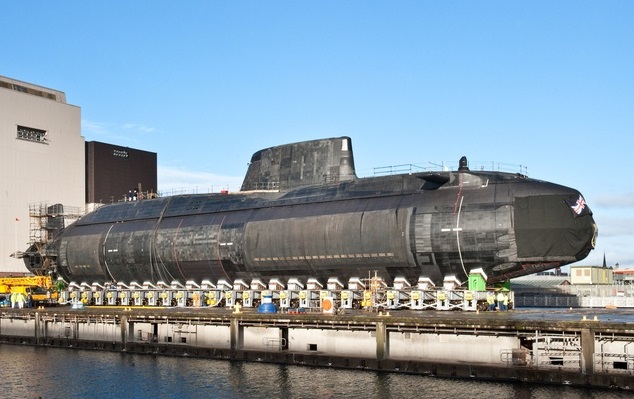
While most discussion of the AUKUS Agreement has focussed on the geopolitical implications for Australia’s standing in the world, the escalation of the risk of war and the crippling cost of the nuclear submarine purchases when less expensive and more sensible non-nuclear options are available, little has been said of the risk to the civilian population posed by these nuclear-powered submarines (or other nuclear-powered naval vessels) in Australia’s home ports.
Perhaps we citizens only enter the calculations as ‘collateral damage’. Any such necessarily technical discussion is hampered by military secrecy. Some information has been released officially, but most is from generalised inference, or conjecture, and so subject to uncertainty. However, in this important matter, it is worth attempting to join the dots….
News from the war in Ukraine includes, almost every other night, a report on the situation around the Zaporizhzhia Nuclear Power Plant, the largest in Europe. Though no longer continuing to generate power for Ukraine, it is always at risk of being shelled or bombed by one side or the other, and regularly just avoiding reactor cooling water pump failure from damaged power transmission lines or lack of diesel fuel for their backup generators for the pumps. How long this situation will continue remains to be seen. And now, after the breaching of the Kakhovka Dam, it is estimated just three months of water for cooling remains.
The consequences of the catastrophic failure of a nuclear reactor are well known to both the Ukrainians and the Russians. To the Northwest of Zaporizhzhia, and just 100 kilometres North of Kyiv, lies the Chernobyl Reactor No. 4, which, on 26 April 1986, underwent meltdown after a coolant and moderator failure, exploded, and caught fire. Radioactive material and fission products were ejected into the air, spreading across the immediate countryside and into Northern Europe. Radioactive rain was reported on the mountains of Wales and Scotland, in the Alps, and contamination in reindeer herds in Northern Sweden. The principal radiological contaminant of concern across this vast area was Caesium-137, one of many fission products and representing some 6% of fission reactor spent fuel. Just 27 kg of Caesium-137, it is calculated, caused this contamination. Some 150,000 square kilometres of Ukraine, Belarus and Russia were initially contaminated. Of course, at the time of the accident, all this was part of the Soviet Union. To this day, 2600 square kilometres around the plant are considered unsafe for human habitation, or agriculture, and will remain so for between 300 and 3000 years! The Reactor used 2% enriched Uranium fuel.
Although the loss of life at Chernobyl was a small fraction of the 100,000 deaths from one of the only two uses of nuclear weapons in war, on Hiroshima in 1945, Chernobyl created 400 times more radioactive pollution. The Hiroshima bomb, “Little Boy”, contained 64 kg of enriched Uranium, though less than 2% actually underwent nuclear fission. The bomb was detonated 500 metres above ground (‘airburst’), and the fatalities were the result of blast, heat, and irradiation, in a city centre. Chernobyl occurred at ground level and so ejected debris upwards initially, followed by smoke columns from subsequent fires. . The 31 deaths at Chernobyl were plant operators and, of course, firemen. The G7, the AUKUS Partners and the Quad just met at ‘ground zero’ in a rebuilt Hiroshima City, 78 years after the bombing.
The US Navy nuclear powered warships, including the ‘Virginia’ Class submarines that Australia would buy under the AUKUS Agreement, principally use Highly Enriched Uranium (HEU) reactors. The Uranium is enriched to above 93% fissionable Uranium-235. It is weapons grade material and has in part been sourced from decommissioned nuclear weapons. The submarine reactors are intended to last for the ‘Life of Ship’ (LOS), up to 33 years, without needing refuelling. Low Enriched Uranium reactors need fuel replacement every 5 to 10 years, when, importantly, the containment pressure vessel around the reactor is physically inspected for flaws and deterioration. This is not done for the HEU, LOS reactors.
The US Navy nuclear powered warships, including the ‘Virginia’ Class submarines that Australia would buy under the AUKUS Agreement, principally use Highly Enriched Uranium (HEU) reactors. The Uranium is enriched to above 93% fissionable Uranium-235. It is weapons grade material and has in part been sourced from decommissioned nuclear weapons. The submarine reactors are intended to last for the ‘Life of Ship’ (LOS), up to 33 years, without needing refuelling. Low Enriched Uranium reactors need fuel replacement every 5 to 10 years, when, importantly, the containment pressure vessel around the reactor is physically inspected for flaws and deterioration. This is not done for the HEU, LOS reactors. In one year, at full power, (210 x 365 ÷ 940 =) 81.5 kg of U-235 would be required. Along with other decay products from the U-235 (Strontium-90, Iodine-131, Xenon-133 etc.), as noted earlier some 6% (or 4.9 kg) would be Caesium-137. The ‘neutron poisons’ also created are balanced out by ‘burnable’ neutron poisons incorporated into the core when new, to maintain reactor function over the years. So far, simple nuclear physics and thermodynamics.
Operationally, one surmises, the submarine reactor will infrequently run at full power. Actual annual production of Caesium-137 may lie between, say, 0.8 kg for 1/6th capacity operation on average for the whole year, and 2.45 kg at half capacity for the year. As the reactor is designed to not need refuelling for the ‘Life of the Ship’, the Cs-137 would continuously accumulate inside the reactor fuel elements. At the lower bound of 1/6th operation, there would be approaching 27 kg of Cs-137 in the core after 33 years, allowing for the decay of some of the Caesiun-137, given its half-life of 30.05 years. At the upper bound, it would take about 13 years for 27 kg of Caesium-137 to accumulate.
Visiting nuclear-powered submarines, from the US or UK, would be similar. Visiting US nuclear-powered aircraft carriers, each with two A1B reactors each of 700MWt, may have 27 kg of Cs-137 in their reactor cores after just two years of operation.
Visiting ships may stay in Australian ports for days or even weeks. Australian submarines will be in port not only between deployments, but also for maintenance, for months and years. The US Navy appears to have about 40 Virginia Class Subs, with some 18 undergoing long-stay maintenance, or about half. We might expect the same. So, at any one time, the AUKUS plan would see naval nuclear reactors, US, or UK, or Australian, or all, in Adelaide, and/or Fremantle, and/or Port Kembla. While peacetime only presents the risk of a nuclear accident, wartime would see these important military assets easily detectable – and targetable – while in port. In the event of a nuclear war, this may be just one of our worries.
In a conventional, non-nuclear conflict, the story may be very different. The situation of the Zaporizhzhia civilian reactors in Ukraine is most instructive. However, as legitimate military targets, would such restraint be shown towards the reactors in the submarines? What would be the impact of a conventional cruise or hypersonic or ballistic missile warhead on the pressure hull and reactor containment vessel (and plumbing) of a nuclear-powered submarine?
Should just 27 kg of the Caesium-137 in the naval reactor cores be released into the air through an explosion (as at Chernobyl) in an accident or deliberate attack, what would be the outcome? In Fremantle, especially if the ‘Fremantle Doctor’ was blowing, would sections of Fremantle and Perth become unsafe for human habitation? In Port Kembla, especially if a ‘Southery Buster’ came through, the Illawarra and, depending on the particular weather conditions, would parts of the South of Sydney become unsuitable for human habitation? For Port Adelaide, especially if a NW change came through, would the Adelaide coastal strip from Gawler to Aldinga become unsuitable for human habitation?
Imagine the number of “single mums doing it tough” who would have to be relocated to emergency accommodation – somewhere! Imagine all that social housing rendered uninhabitable! Even if we ‘won’ the war.
This is a real possibility if we have nuclear reactors in surface ships or submarines in our ports, or in our ship building and maintenance facilities.
1 This month

of the week – Australians for War Powers Reform (AWPR)
To see nuclear-related stories in greater depth and intensity
 Antinuclear