TODAY. Atrocities upon atrocities – the Israelis have excelled themselves this time.
Who has the words to describe this? To express this horror?
Some of the victims have:
“Before our eyes, we saw bodies being torn apart and scattered on the roads, and we saw soldiers hidden in civilian clothes and in people’s cars running and killing everyone they met on their way without distinguishing between a child, a woman, a young person, or an old person. We saw the bodies of our brothers cut up, without heads, lying on the ground,” Abu Laban told Mondoweiss.
“I tried to stand up, but I couldn’t. I was covered in blood. I looked at my leg and it was cut off. I looked at my best friend next to me, and I found him taking his last breath.” – ” I cannot sleep. I cannot forget anything I witnessed and saw. I cannot forget the people who were running in panic and fear, searching for their relatives and families amidst the destruction and dismembered bodies.” -Al-Hawar
Do you think that I’m making this up – because I’m “anti-semitic”, because I “hate the Jews”?
I don’t hate the jews, but I hate what they are doing in Gaza – and I hate the way some other Jews are rejoicing in these atrocities. And I hate the way that some Gentiles are pretending that it’s all OK – because 80 years ago atrocities were done to Jews – so we can’t blame the poor things, really – can we?
Yes we can.
The International Criminal Court is investigating Israel’s alleged war crimes in Palestine.
Israel’s latest effort – the rescue of four hostages. This was planned well in advance, and was done in at 11 a.m. , as a complete surprise in a highly populated area. Israeli special forces had numerous men disguised as refugees, installed in the area. The attacking Israeli military wore civilian clothes, rode in Palestinian cars, and moved among the people in disguise. There were no warnings to evacuate, or orders from the army to move elsewhere, and people were surprised by the Israeli special forces and tanks. Helicopters, fighter planes, artillery, and tanks descended. Reconnaissance aircraft and foot solders then began committing massacres against the civilian population.
As reported by Robin Anderson – “When Israel Burned Refugees Alive, Establishment Media Called It a ‘Tragic Accident’. Anderson details the verbal gymnastics used by the corporate media, to obscure the truth about what happened, in this atrocity, and others. Words like words like “genocide,” “massacre” and “starvation.” are not used. Journalists from respected media like NBC were embedded with Israeli forces. The dead are as much as possible described as Hamas, not as Palestinian civilians. For the New York Times, Time magazine, Forbes and the AP, mass killings are “a mistake” or a “tragic accident”. A death toll of 274, and injuries to 696 – are reported as “figures from Hamas” – with the inference that you can’t really rely on them.
Well – it’s not working this time. People have had a gutful of corporate media toeing the USA line, as it toes the Israeli line.
Dutton confirms nuclear push and climate denial go hand in hand: The pretence has gone

Giles Parkinson, Jun 10, 2024, https://reneweconomy.com.au/dutton-confirms-nuclear-push-and-climate-denial-go-hand-in-hand-the-pretence-has-gone/—
So, let there now be no doubt or confusion: Opposition leader Peter Dutton has confirmed that his Coalition’s push for nuclear energy is inextricably linked with his party’s implacable denial of climate science. The pretence that it is anything else is now gone.
Dutton’s interview with The Weekend Australian published on Saturday makes two important concessions: That nuclear energy is very slow, and cannot feasibly be deployed in Australia before the mid 2040s. It also proves that he is ready and willing to rip up the Paris climate target – and sacrifice the country’s economic future – in the name of his energy dogma.
Australians should not be surprised, but they ought to be appalled, and terrified. The science is absolutely clear, the world is on track to blow the carbon budget that could hold average global warming below 1.5°C over the next five years. The world is already close to 1.5°C and the impact are being felt.
But Dutton wants to put off any serious action on emissions reduction for another two decades, using a re-heated scare campaign about the lights going out and a collapsing economy if the country pushes ahead with renewables.
He says there is “no hope” of reaching Australia’s 2030 interim target, still a relatively modest reduction of 43 per cent, mostly achieved through accounting tricks on land use. But he says the target of “net zero by 2050” will stand.
It always seemed inevitable that the 2050 target was going to be used by climate science deniers such as Dutton and legacy industries as an excuse to delay any action. It might as well have been invented by the fossil fuel industry, which uses it as a justification for business as usual.
The only significant corporate leader calling this out is iron ore billionaire Andrew Forrest, who aims for “real zero” by 2030 for his Pilbara operations, no mean feat but one the world should be following. At least his ambition is in line with the science, which demands urgent action and most emission cuts to be delivered this decade, not in 20 years time.
The federal Coalition, however, has hitched its flag with what the UN secretary general described last week as the “godfathers of chaos”, helping the fossil fuel industry spread disinformation and delay climate action, and throwing the rest of the world under a bus.
Dutton’s comments about tearing up the Paris agreement make the questions about cost, waste and social licence of nuclear almost redundant. The key issue here is the Coalition’s express intention to do little or nothing about emission cuts in the short term, or even the medium term, blocking the roll out of renewables, tearing up contracts, and sacrificing the future of Australian and its economy in the name of fossil fuel supremacy.
The push for nuclear power in Australia has long been directly linked with climate denial, because in a country like Australia with such magnificent wind and solar resources, it is not about an energy choice but about climate delay. What better technology to serve those purposes than nuclear.
Even when it was promoted by so called “eco modernists” and self-described “critical thinkers” – meaning they thought they were smarter than everyone else – the links were clear.
If you thought their intention was to solve the climate crisis it was betrayed by the relentless attacks on renewables. Stop what can be done now to wait for something that may or not work in the future. Dutton’s position is to expressly support the burning of more coal and gas in the interim.
It makes no environmental sense, and no economic sense. And it makes no engineering sense because the coal fired power stations are old and unreliable. They need to be replaced. Gas and nuclear are the two most expensive options, and the most ill-fitted to fit into a grid where rooftop solar is low cost, popular and increasingly dominant.
It is instructive that many of those individuals who claimed to have been such “critical thinkers” and so concerned about the climate crisis have now signed up with coal and gas lobby groups, where they can catch up with former federal energy ministers also given shelter by the fossil fuel industry. The environmental pretence is long gone.
These actors have been supported by a collection of so-called “think tanks”, which are now quite obviously little more than propaganda machines for the fossil fuel industry – cheered on and amplified by deeply funded misinformation campaigns on social media – including by the Atlas Group – and by the Murdoch press.
Dutton’s words are taking Australia’s climate and energy divisions back to the dark ages of the Tony Abbott era. But it is much darker than that. Abbott could hide under the argument that UN climate talks had failed, and could plug into lingering climate skepticism, and the old zingers about $100 roasts and turning cities into ghost towns.
But we now have an international climate agreement, imperfect as it is, and more ambitious emissions reduction targets, still inadequate as they are. Dutton would have Australia rip these up and do nothing for decades in the face of the overwhelming science, and the momentous shift to clean energy around the world.
It would turn Australia into the global pariah that it was seen during the Abbott years, and deprive it not only of making its own contribution to the efforts to limit global warming, but also of protecting the future of its own economy.
It comes as South Australia – with its 75 per cent share of wind and solar in the past year, its 100 per cent net renewable target for 2027, and the overwhelming interest from new industry seeking to plug into this cheap and green power – makes a nonsense of the federal Coalition’s claims about the lights going out.
To be sure, Labor’s own policies and targets need ramping up and that might be difficult given the party machine that still encourages the gas industry. It might only be possible in a minority Labor government where the influence of the Teals and the Greens can come to bear. What Dutton’s comments make clear is that Australia cannot afford a lurch back to the federal Coalition.
Does nuclear power have a future in Australia? These numbers will help cut through the debate
By energy reporter Daniel Mercer and climate lead Tim Leslie, 11 Jun 2024, [excellent charts and graphics]
As the shift away from fossil fuels gathers pace, the Coalition has turned to an emissions-free technology that has a long and contentious history — nuclear fission.
To help make sense of what role, if any, nuclear power could play we turned to Alan Finkel, Australia’s former chief scientist, and economist John Quiggin.
These are the numbers that you should keep in mind when thinking about its place in Australia’s energy transition.
Let’s look at nuclear power today
0 grams — The amount of carbon dioxide nuclear power plants emit generating electricity.

COMMENT. Unlike wind and solar, the continuing supply of fuel for nuclear power involves a long series of carbon emitting steps – starting with uranium mining
There are, according to Australia’s former chief scientist Alan Finkel, four kinds of large-scale power generation that directly emit no greenhouse gas emissions.
Three of them are obvious and fit firmly in the renewable category – hydro-electricity, wind and solar power.
The fourth is nuclear power, which produces no greenhouse gases during operation, but requires fuel in the form of radioactive elements to power it. …………………
Mix of electricity from low carbon sources
Solar and wind now generate more electricity globally than nuclear power.
………………………….. in an interview with the Australian Financial Review, the head of the IEA, Fatih Birol, said nuclear power was not a good option for Australia as it would take too long.
“I have been a proponent of nuclear for many years,” he said.
“But if there is a country that has a lot of resources from other sources, such as solar and wind, I wouldn’t see nuclear as a priority option. I’m talking about Australia now.”
…………………Australia would need to partner with another country to build a nuclear power plant, but turning to the current leaders in the space, Russia and China, wouldn’t be an option.
John Quiggin is a senior fellow in economics at the University of Queensland.
He said Australia — for obvious geopolitical reasons — would be unlikely to hitch its wagon to either country.
“I don’t think that requires a lot of imagination,” Professor Quiggin said. “If Chinese firms have any special sauce, that’s no use to us. I would say the Chinese model is essentially not relevant.”
…………………new nuclear energy is barely keeping pace with closures, and outside of China there is no evidence of a jump in the amount of nuclear energy coming online.
In another sign of where the world is going, 2023 was the year when global large-scale battery investment overtook nuclear investment for the first time.
How about how much it costs to build?
1.5 times — At least how much more expensive building nuclear power in Australia would be than renewables supported by batteries.
One of the reasons the Coalition is proposing nuclear is because of the cost of the clean energy transition, but when the CSIRO looked at the figures it found that nuclear was a significantly more expensive option.
Building renewable energy on its own is a fraction of the cost of new nuclear, and in some cases lower than the cost of actually running nuclear power stations.
However, a better comparison is between nuclear and solar or wind supported by storage and transmission.
The CSIRO looked at this in its latest GenCost report, which compares the cost of different ways of producing electricity, and found it was at least 50 per cent more expensive than large-scale wind and solar power backed by “firming” technologies such as batteries.
“We did a lot of work to determine what nuclear power would cost in Australia,” Paul Graham, the chief economist of the CSIRO’s energy business unit, said.
“We’ve previously reported on small modular reactors.
“But this time, we did an update and looked at the cost of large-scale nuclear reactors, and they’re cheaper — on the order of $150 to $250 a megawatt hour. That’s still one and a half to two times the cost of renewables.
……. digging into the modelling only makes the case worse for nuclear.
When looking at the cost of renewables, the CSIRO factored in the maximum possible figures for grid upgrades, higher than the expected cost.
It also warned that the nuclear cost could only be achieved by building nuclear power at scale, so multiple reactors one after the other. The first power plant would be subject to what’s called a “first of its kind” multiplier, which could double the price from $8.5 billion to $17 billion.
Nuclear isn’t alone in facing this cost, it’s applied to any technology a country hasn’t built before, and we only have to look at the NBN or Snowy 2.0 to see the likely outcome.
But even in the world of big projects, nuclear power stations have among the worst track records for running over time and over cost.
Mega project expert Bent Flyvbjerg has gathered a database of the costs and timeframes for major projects around the world.
It shows nuclear power plants are among the worst for cost and timeframe overruns — on average they come in at more than double the original quoted price.
Taking this conservative approach means the CSIRO’s figures are far more generous to nuclear than international comparisons.
Global investment bank Lazard has been publishing an analysis of what’s called the levelized cost of energy (LCOE) since 2008. LCOE is essentially how much money a power source would have to sell its electricity for to make any money.
In 2023, the lowest LCOE for nuclear power was $220 a megawatt hour, compared with onshore wind and batteries, which was $65MW/h, more than three times the cost. Even the top estimate of its range for solar and wind was still below nuclear’s cheapest range. ………………………………..
$88 billion — The latest projected cost of building the 3.2 gigawatt Hinkley C nuclear plant in the UK.
Unlike renewable energy produced at volume, getting an accurate price on nuclear power is tricky. But looking at projects underway indicates it can be a very expensive proposition.
A big part of the relative decline in nuclear power has been its high cost compared with many of the other technologies vying for political, investor, and social support.
Exhibit A in this tale is the Hinkley C plant on the Somerset coast of the UK.
In 2007, the then chief executive of French power provider EDF, which wanted to build the plant, boasted that by 2017 Britons would be able to cook their Christmas turkeys using electricity from Hinkley.
When EDF finally committed to the giant 3.2 gigawatt plant in 2015, the initial budget was £18 billion ($34 billion), with a scheduled completion date of 2025.
Earlier this year, following a spate of cost and time blowouts, EDF said the estimated costs of building the plant would soar to as much as £46 billion ($88 billion).
Completion of the first reactor was not expected until 2029 at the earliest.
The French utility, meanwhile, did not even bother to give a time-frame for the second reactor.
What we do know is how much the British public will be paying for power from Hinkley. In order to build the plant the UK government committed to paying $171/MWh for the first 35 years, adjusted to inflation. This means the prices rise in line with inflation, by the end of 2023 it was $245/MWh.
For context, Australia’s wholesale energy cost in the last quarter of 2023 was $48/MWh.
Dr Finkel described Hinkley’s costs as “stunningly expensive”. …………………………
Let’s talk about timeframes
………………………….20 years — How long Alan Finkel says going to nuclear will delay the shift from fossil fuels.
Dr Finkel is not opposed to nuclear power as an energy source, but said it cannot be thought of as a solution to decarbonising our power system for the next few decades.
He said a call to go direct from coal to nuclear is effectively a call to delay decarbonisation of our electricity system by 20 years. ……………………………..
96 per cent— How much of our grid is projected to run on renewables and storage by 2040.……………………………
10,000 years— How long the US EPA requires the isolation of nuclear waste.…………………..
What about smaller reactors?
0 — The number of commercial small modular reactors under construction or in operation outside of China and Russia. (COMMENT – and China and Russia have no more than one or two, and not operating well)
3.9 times — How much more a small modular reactor would cost compared to wind and solar supported by batteries.……………….. https://www.abc.net.au/news/2024-06-11/nuclear-power-for-australia-cost-and-timelines-explained/103641602?fbclid=IwZXh0bgNhZW0CMTAAAR390g5b6693i-HFkuGA0gyw1xFQP_10ZYzZ_zsk9fk0qwyp-S7AHZ9wwm0_aem_AUDX1LozQsj9FqEcFeQYTrTgIC8dBhGF8t3bhnH-snEwrlJGR8UxeU5JoNwc0rGGaSx-fHZ9Q5WDutOjBT25sbNz
The network of conservative think-tanks out to kill the switch to renewables
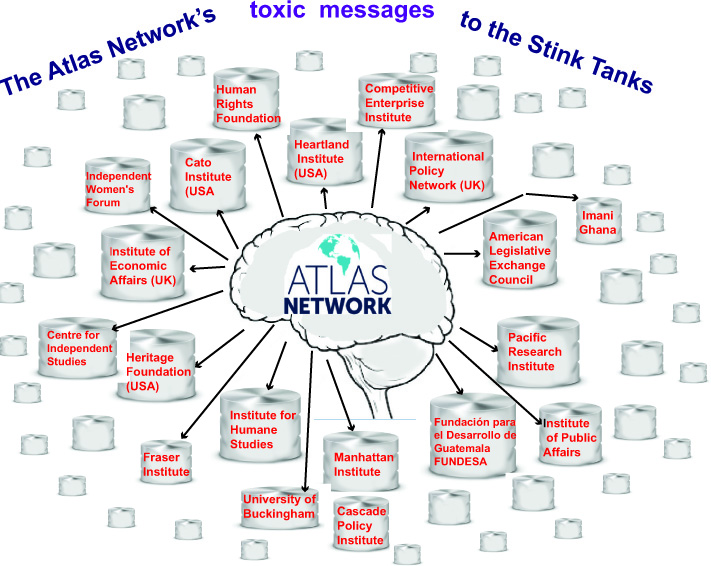
Michael Mazengarb, Feb 28, 2024 https://reneweconomy.com.au/the-network-of-conservative-think-tanks-out-to-kill-the-switch-to-renewables/
Australia’s renewable energy and emissions reduction plans are being targeted by coordinated campaigns from conservative “think tanks”, as the Coalition embraces nuclear and its MPs rail against all forms of large scale renewables and transmission lines being built as part of the clean energy transition.
Having successfully defeated the Voice to Parliament referendum by feeding the distribution of disinformation, conservative groups like the Institute of Public Affairs (IPA), the Centre for Independent Studies (CIS), the Liberal-party aligned Menzies Research Group and the ‘campaign group’ Advance Australia are all ramping up their pro-nuclear, anti-renewables campaigns.
Anyone familiar with Australian climate and clean energy policy over the last couple of decades will be familiar with the Institute of Public Affairs. The well-funded think tank – thanks to generous donors that include mining billionaire Gina Rinehart – has long railed against any efforts to tackle climate change, calling for the abolition of the carbon price and virtually any policy that supports renewable energy.
The IPA has published a flurry of reports that have sought to stoke fears renewables causing the loss agricultural land in Victoria, and high costs of renewables in Western Australia – two claims that rely on gross exaggeration.
Like the IPA, the Centre for Independent Studies has strong links with the Coalition parties – promoting the works of Coalition MPs, and several of the group’s ‘alumni’ going on to serve as Liberal Party MPs or candidates.
The group recently launched a new campaign to promote nuclear energy and to actively attack the efforts of energy market regulators and institutions, including the Australian Energy Market Operator and the CSIRO, to plan the transition to renewables.
The Menzies Research Centre has the clearest, explicit, ties to conservative politics – having been named for former prime minister Robert Menzies – and pumps out opinion pieces critical of renewables and advocating for fossil fuels that are often published by News Corp outlets.
For example, a recently authored piece by Menzies Research Centre’s senior fellow, Nick Cater, blamed renewables for the Victorian blackout (which was caused by storms and an outage at the Loy Yang A coal power station).
All of these campaigns are having an impact, being embraced and fuelled by the Federal Coalition, with opposition leader Peter Dutton set to reignite the ‘climate wars’ by pushing for an Australian nuclear power industry – despite the astronomical costs, and the huge wait times for the industry.
Coalition MPs dominated the speakers list of a recent anti-renewable energy rally, that descended on Canberra earlier this month.
The group that is likely to be running the pro-nuclear ground campaign ahead of the next election, Advance Australia, previously led substantial efforts to oppose the recent First Nations Voice to Parliament referendum. The group is already running campaigns that denigrate renewable energy technologies, campaign against net zero targets, question climate change and promote nuclear energy.
While attempting to portray itself as a ‘grassroots’ roots movement, a conservative counter to GetUp! that claims to be taking on ‘woke elites’ – Advance Australia has amassed significant funds from some of Australia’s wealthiest individuals.
Donors to Advance Australia include former Vales Point power station owner Trevor St Baker, Bakers Delight founder Roger Gillespie, owner of Kennards Self Storage Sam Kennard, the former Blackmores CEO Marcus Blackmore, former fund manager Simon Fenwick, and former Shark Tank investor Steve Baxter.
Recent political donation disclosures show Advance Australia receiving a massive, $1.025 million donation from Perth-based car salesman Brian Anderson, and $1.1 million over the last three years from Fenwick.
Sam Kennard – who is worth an estimated $2.6 billion and who also sits on the board of the Centre for Independent Studies – regularly attacks renewables and promotes climate change denial on social media, and donated $165,000 to Advance over the last three years.
The depth of the interconnections between these think tanks is difficult to assess, but there is growing evidence that points to a coordinated international campaign to undermine renewables and promote the interests of fossil fuels and the pro-nuclear lobby.
The efforts of researchers like University of Technology Sydney professor Jeremy Walker have drawn links between the campaigns of Australia’s conservative lobby groups and other members of a global ‘Atlas Network’ of conservative think tanks. The US-based Atlas Network disperses grant funding and runs training on campaigning and fundraising for its international network, including to Australian think tanks.
Australian members of the Altas Network include the IPA, the CIP, and the Australian Institute for Progress – which has also adopted anti-renewable energy and anti-electric vehicle positions.
A recently published submission by Walker draws the parallels between these ‘think tanks’ and the anti-wind farm campaigns that have targeted the Illawarra Renewable Energy Zone, and culminated in a bizarre anti-renewables rally outside Parliament House in Canberra – and similar campaigns that opposed wind farm developments in the United States.
Anti-off-shore wind farm campaigns in the states of New Jersey and Rhode Island have used similar, disproven, claims about impacts on whale populations. These campaigns, as reported by the New York Times, were being funded and coordinated on the other side of the United States, by fossil-fuel industry linked the Texas Public Policy Foundation – itself a member of the Atlas Network.
International members of the Atlas Network include high-profile propagators of climate denial and pro-fossil fuel propaganda, including the US-based Heartland Institute, and the London-based Global Warming Policy Foundation – which now features former Australian prime minister Tony Abbott on its board of trustees.
The complexity and opaqueness of the network is noteworthy, and has made the drawing of distinct relationships between groups and individuals difficult to track and analyse. But the shear number of linkages is clear, as are the relationships between the groups and Australia’s conservative political parties.
Several current and former members of the Australian-based think tanks have done stints with the Atlas Network and its members, with some members openly acknowledging the coordination between groups on training and funding.
This includes ex-IPA executive Alan Moran – who formally spearheaded the IPA’s climate denial efforts, former Abbott-government adviser and climate sceptic Maurice Newman – who have both held roles across several members of the Atlas Network
What is clear is that efforts to undermine the phase-out of fossil fuels remain strong, remain well funded and efforts are being coordinated globally.
The Voice to Parliament referendum was a stark example of how misinformation and disinformation can be deployed to influence the public and public policy, and Australia’s renewables sector will need to be ready to counteract these efforts when facing a similar campaign in the lead up to the next federal election.
1 This month
15 April – Zoom –Nuclear Power is Not the Solution
Apr 15, 2026 01:00 AM in Canberra, Melbourne, Sydney

Join the International Physicians for the Prevention of Nuclear War (IPPNW) on Tuesday, April 14th for a timely webinar exploring the risks associated with nuclear power and challenging the myth that it offers a simple, safe, carbon-free solution to the climate crisis

of the week – Australians for War Powers Reform (AWPR)
To see nuclear-related stories in greater depth and intensity
 Antinuclear