The Assange case – a win for journalism? Sort of.

Sort of – because his guilty plea leaves all journalists at risk. Because this freedom at last for Julian Assange means that the U.S. government can now claim that they’ve secured a conviction against a journalist under the Espionage Act. Assange’s impending legal case appealing against extradition did not take place – then what happens if another non-USA journalist reveals U.S. military atrocities?
The mainstream media can be relied on to snidely smear Julian Assange from now on.
However, 17 federal charges against Assange were dropped. He pled guilty to a felony charge of conspiracy to obtain and disclose national defence information. It could have been a lot worse. And Julian Assange, after all these years, now gets the opportunity for a decent life in Australia. with his family.
We’ve been here before. A courageous Australian journalist – a man of integrity reveals the horrors of American military atrocities. Wilfred Burchett was the first journalist to expose the truth about the devastating after-effects of the atom bomb -going to Hiroshima and defying the USA military’s ban on journalists going to Hiroshima.
The USA made sure that Burchett was smeared as a traitor, and the Australian government comfortably complied with that view – conservative Prime Minister Robert Menzies banned Burchett, and his children, from Australia – a ban that lasted 17 years.
A different case was that of Christopher Boyce, an American, who with a friend in 1977 was sentenced to 40 years in prison, mostly solitary confinement , for acquiring classified U.S. documents and selling them to Russia. Boyce claimed that the CIA was planning to remove Australia’s Prime Minister Whitlam from office, because Whitlam opposed the huge USA secret military base Pine Gap, in central Australia. Boyce seemed to care about Australia’s loss of sovereignty to the USA military. However, unlike Burchett and Assange – Boyce went on to a colourful career in a prison escape and bank robberies. Finally released from prison in 2002, Boyce settled down, but will never speak about his revelations of CIA intrigue in the 1970s.
Well, the USA government didn’t agree to Assange’s plea deal out of the goodness of their hearts. In this tense election year for the U.S. Democratic administration – Assange’s cruel incarceration in the U.K. Belmore prison was becoming an embarrassment. And what if Assange were to win his legal appeal against extradition to he USA? A damaging precedent?
And, above all – there was the unified pressure, from Assange’s wife, his family, his legal team, and thousands of people in the UK, Europe, USA, and Australia. The Australian government was no help, early on – but Australian politicians, and dignitaries like Kevin Rudd, gradually came on board. The whole thing was becoming awkward for the USA and the UK governments.
To some extent, this legal plea deal from an innocent journalist has been a success – for people power.
TODAY. The persecution of Wilfred Burchett and Julian Assange

Julian Assange’s “crime” was, in 2010, to expose military abuses committed by the USA .

Assange is not a USA citizen – he’s Australian. Yet his own national government is apparently abandoning him to the cruel vindictive revenge of a foreign government – the USA.
But hey – this is nothing new! While the world remembers the atomic bombing of Hiroshima and Nagasaki, it conveniently forgets that other Australian journalist, Wilfred Burchett, who,in 1945 revealed the horrors of that bombing.
In the 1930s, Burchett took many personal risks to help rescue Jews from Hitler’s Germany.
In August 1945, in defiance of the US army’s ban on journalists, he made his way to the devastated Japanese city of Hiroshima . He was the first journalist to expose the truth about the devastating after-effects of the atom bomb.The US military had wanted to keep radioactive contamination an official secret, concealing the death and suffering it caused for hundreds of thousands of Japanese civilians.
US officials accused Burchett of being under the sway of Japanese propaganda.[Burchett lost his press accreditation and he was ordered to leave Japan. His camera, containing photos of Hiroshima, was confiscated while he was documenting persistent illness at a Tokyo hospital. The film was sent to Washington and classified secret .
For daring to out these and later, many other important truths, Burchett was marked by Western intelligence services.
Burchett dedicated the rest of his life to exposing the lies told by Western governments.
Australian conservatives branded him a traitor and communist. the Australian Robert Menzies government illegally refused to replace his passport. He was barred from re-entering Australia, despite his citizenship. His children were also denied Australian passports. The Australian national security department, which became ASIO in 1949, opened a file on the whole Burchett family in the 1940s.
the Australian government investigated the possibility of charging Burchett with treason. ASIO agents were despatched to Japan and Korea to collect evidence, but their investigations uncovered little. Burchett was subjected to government-backed smear campaigns and barred from Australia.
In 1969, Australian authorities refused Burchett entry to attend his father’s funeral. Only in 1972 — after 17 years of exile — was Burchett finally given an Australian passport by the incoming Whitlam government.
I guess that Australia will never again be allowed by the USA to have a government like that of Gough Whltlam. Liberal or Labor, the Australian government is determined to toe the USA line – which is to persecute any journalist who tells the truth about USA war atrocities.
Newly identified tipping point for ice sheets could mean greater sea level rise
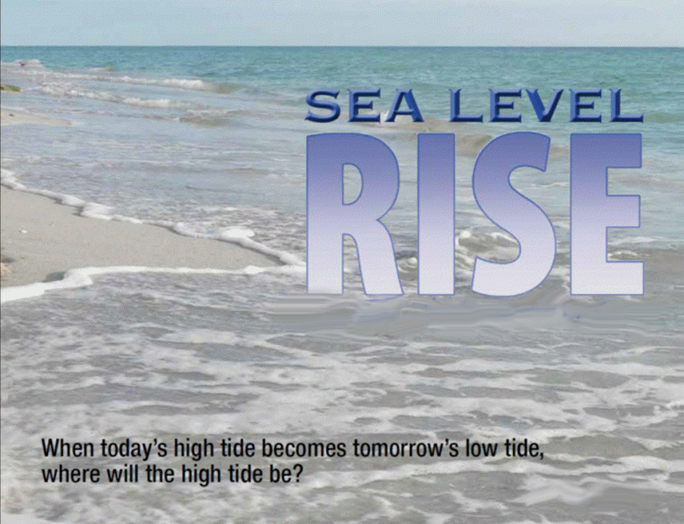
Small increase in temperature of intruding water could lead to very big increase in loss of ice, scientists say
A newly identified tipping point for the loss of ice sheets in Antarctica and elsewhere could mean future sea level rise is significantly higher than current projections.
A new study has examined how warming seawater intrudes between coastal ice sheets and the ground they rest on. The warm water melts cavities in the ice, allowing more water to flow in, expanding the cavities further in a feedback loop. This water then lubricates the collapse of ice into the ocean, pushing up sea levels.
The researchers used computer models to show that a “very small increase” in the temperature of the intruding water could lead to a “very big increase” in the loss of ice – ie, tipping point behaviour.
It is unknown how close the tipping point is, or whether it has even been crossed already. But the researchers said it could be triggered by temperature rises of just tenths of a degree, and very likely by the rises expected in the coming decades.
Sea level rise is the greatest long-term impact of the climate crisis and is set to redraw the world map in coming centuries. It has the potential to put scores of major cities, from New York City to Shanghai, below sea level and to affect billions of people.
The study addresses a key question of why current models underestimate the sea level seen in earlier periods between ice ages. Scientists think some ice sheet melting processes must not be yet included in the models.
“[Seawater intrusion] could basically be the missing piece,” said Dr Alexander Bradley of the British Antarctic Survey, who led the research. “We don’t really have many other good ideas. And there’s a lot of evidence that when you do include it, the amount of sea level rise the models predict could be much, much higher.”
Previous research has shown that seawater intrusion could double the rate of ice loss from some Antarctic ice shelves. There is also real-world evidence that seawater intrusion is causing melting today, including satellite data that shows drops in the height of ice sheets near grounding zones.
“With every tenth of a degree of ocean warming, we get closer and closer to passing this tipping point, and each tenth of a degree is linked to the amount of climate change that takes place,” Bradley said. “So we need very dramatic action to restrict the amount of warming that takes place and prevent this tipping point from being passed.”
The most important action is to cut the burning of fossil fuels to net zero by 2050.
Bradley said: “Now we want to put [seawater intrusion] into ice sheet models and see whether that two-times sea level rise plays out when you analyse the whole of Antarctica.”
Scientists warned in 2022 that the climate crisis had driven the world to the brink of multiple “disastrous” tipping points, including the collapse of Greenland’s ice cap and the collapse of a key current in the north Atlantic, disrupting rains upon which billions of people depend for food.
Research in 2023 found that accelerated ice melting in west Antarctica was inevitable for the rest of the century, no matter how much carbon emissions are cut, with “dire” implications for sea levels.
The new research, published in the journal Nature Geoscience, found that some Antarctic ice sheets were more vulnerable to seawater intrusion than others. The Pine Island glacier, currently Antarctica’s largest contributor to sea level rise, is especially vulnerable, as the base of the glacier slopes down inland, meaning gravity helps the seawater penetrate. The large Larsen ice sheet is similarly at risk.
The so-called “Doomsday” glacier, Thwaites, was found to be among the least vulnerable to seawater intrusion. This is because the ice is flowing into the sea so fast already that any cavities in the ice melted by seawater intrusion are quickly filled with new ice.
Dr Tiago Segabinazzi Dotto, of the UK’s National Oceanography Centre, welcomed the new analysis of the ocean-ice feedback loop under ice sheets.
“The researchers’ simplified model is useful for showing this feedback, but a more realistic model is highly needed to evaluate both positive and negative feedbacks,” he said. “An enhancement of observations at the grounding zone is also essential to better understand the key processes associated with the instability of ice shelves.”
Julian Assange is free, but curly legal questions about his case remain
National Tribune, 26 Jun 2024, Holly Cullen, Adjunct Professor in Law, The University of Western Australia
Today Julian Assange walked out of the Federal Court Building in Saipan, North Marianas Islands, a free man. He pleaded guilty to one count of breaching the US Espionage Act.
With the court accepting his 62 months already spent in Belmarsh Prison as a sufficient sentence, he has no more case to answer, and no more sentence to serve.
However, this case leaves behind it a trail of unanswered legal questions and unresolved controversies. In particular, there are questions of fundamental human rights that can only now be addressed in future cases, if ever.
Can freedom of speech concerns stop extradition?
Once Assange had formally pleaded guilty, the US government’s lawyers announced they would immediately withdraw the request to extradite Assange from the UK.
That means the appeal that would have been heard later this year will not go ahead.
To recap, in May the UK High Court gave Assange the right to appeal the UK Home Secretary’s order for his extradition. This was granted on two grounds, both related to free speech.
The first ground of appeal accepted by the court was that extradition would be incompatible with Assange’s right to freedom of expression, as guaranteed in the European Convention on Human Rights.
The second ground, related to the first, is that he would be discriminated against on the basis of his nationality because he could, as a non-citizen of the US, be unable to rely on First Amendment freedom of speech rights.
But as this appeal is no longer proceeding, the issue of whether a threat to the accused’s freedom of expression can stop extradition will therefore not be argued or decided. The European Court of Human Rights and other human rights bodies have never addressed this point. It’s unlikely to arise again soon.
An espionage precedent?
Also on freedom of expression, the relationship between the US Espionage Act and the First Amendment of the US Constitution remains an open question.
In today’s pleadings, Assange and the US government took different views on whether the exercise of freedom of expression should constitute an exception to the offences under the Espionage Act. Nonetheless, Assange accepted that no existing US case law established such an exception.
This leads to the question of whether today’s guilty plea establishes a precedent for prosecuting journalists for espionage.
In the strict legal meaning of precedent in common law, which refers to a binding judicial interpretation, it does not.
The judge made no determination on whether Assange or the US government was legally correct. However, the US government can now point to this case as an example of securing a conviction against a journalist under the Espionage Act.
The question of how much a non-national of the US can rely on the First Amendment likewise continues to be on the table. This issue would also have been addressed in the extradition appeal, as a question of whether Assange would be discriminated against on the basis of his nationality.
Detention or confinement?
Finally, today’s hearing revived the question of whether the time Assange spent in the Ecuadorian embassy between 2012 and 2019 counts as detention.
As the judge moved to determine whether the sentence of “time served” was a sufficient penalty for his offence, the US government insisted the judge could only consider the 62 months in Belmarsh……………………………………………………
Today, the main story is that Assange no longer faces prosecution for espionage and is now free to return to his family. However, some of the legal issues emerging from this case remain tantalisingly unresolved. https://www.nationaltribune.com.au/julian-assange-is-free-but-curly-legal-questions-about-his-case-remain/
julian assange news.
Julian Assange Is Finally Free, But Let’s Not Forget the War Crimes He Exposed. Julian Assange: Free at last, but guilty of practicing journalism. Julian Assange is finally free, but no thanks to the media. Assange’s Release: Exposing the Craven Media Stable. Glenn Greenwald: Enduring Media Lies And Myths About Julian Assange Debunked – https://www.youtube.com/watch?v=mk4cyAtplpQ Assange’s Return to Australia: The Resentment of the Hacks. Julian Assange is free, but curly legal questions about his case remain.
The Suspect Body Count: The Death Toll in Gaza is Much Higher Than We’re Being Told
Seymour Hersh Substack Thu, 27 Jun 2024 https://www.sott.net/article/492600-The-Suspect-Body-Count-The-Death-Toll-in-Gaza-is-Much-Higher-Than-We-re-Being-Told
The number of slain Palestinians in Gaza, including those believed to be Hamas cadres, has gone through a series of public recalibrations in recent weeks, as Israel’s reshuffled war cabinet has struggled to minimize international rage at the slaughter there. The reduced body count was little more than a sideshow because the Israeli offensive is continuing in Gaza with no signs of the ceasefire that the Biden administration has been desperately seeking.
Hamas triggered the war last October 7 with a surprise attack — there is so far no official explanation for Israel’s security failure that day — that killed 1,139 Israelis and injured 3,400 more. Some 250 soldiers and civilians were taken hostage.
Comment: There is plenty of evidence to strongly suggest that Israel allowed the incursion on Oct. 7th to happen and that parties unknown carried out most of the killing. This strategy fits with Israel’s decades-long goal of creating the right ‘conditions’ to justify implementing a final solution to their ‘Palestinian problem’.
The expected Israeli response began within days, with the bombing of the Gaza Strip. Some Israeli ground operations inside Gaza began on October 13, and two weeks later the expected full-scale offensive began. The war still rages, with one estimate concluding that by the beginning of April 70,000 tons of explosives had been dropped on targets throughout the 25-mile long Gaza, more tonnage than was dropped by Germany on London and by America and the United Kingdom on Dresden and Hamburg in World War II, combined.
The Gaza Health Ministry, which is under Hamas control, estimated as of Tuesday that the death toll from the Israeli attacks stood at 37,718, with more than 86,000 Gazans wounded. Last month the Israeli government issued a much lower estimate of the casualties, stating that its planes and troops had killed 14,000 “terrorists” — Hamas fighters — and no more than 16,000 civilians.
The Biden administration, on the eve of the first presidential debate, has said nothing about the new numbers, but there are many senior analysts in the international human rights and social science community who consider these numbers to be hokum: a vast underestimate of the damage that has been done to a terrorized civilian population living in makeshift tents and shelters amid disease and malnutrition, with a lack of sanitation, medical care, and medicines as well as increasing desperation and fatigue.
In days of telephone and email exchanges with public health and statistical experts in America I found a general belief that the civilian death toll in Gaza, both from the bombings and their aftermath, had to be significantly higher than reported, but none of the scientists and statisticians — appropriately — was willing to say so in print because of a lack of access to accurate data. I also asked one well-informed American official what he thought the actual civilian death count in Gaza might be and he answered, without pause: “We just don’t know.”
One public health expert acknowledged: “No clear and definite body count is possible, given the continuing Israeli bombing.” He added, caustically, “How many bombs does it take to kill a human being?”
Gaza was an ideal target for an air attack, he said. “No functioning fire department. No fire trucks. No water. No place to escape. No hospitals. No electricity. People living in tents and bodies stacked up all over . . . being eaten by stray dogs.
“What the fuck is wrong with the international medical community?” he asked. “Who are we kidding? Without a ceasefire, a million people are going to starve. This is not a debating point. How can you count something when the system is biting its own tail.” He was referring to the fact that the health system in Gaza — its hospitals and service agencies — “is being targeted and shattered” by Israeli aircraft and those responsible for the counting of the dead and injured “are themselves dead.”
The expert added that the lack of better casualty statistics is not only the fault of Israel. “Hamas has a vested interest in consistently minimizing the number of civilians killed “because of a lack of planning over the years when it was in charge of Gaza.” He was referring to ordinary Gazan citizens’ lack of access to Hamas’s vast underground tunnel complex that could have served as a bomb shelter for all. In Gaza during the Israeli bombing raids, “Is Hamas going to say that Israel” was able to kill all in Gaza “because we started a war without being able to fully protect our people?” His point was that Hamas has every reason, as does Israel, to minimize the extent of innocent civilians who have become collateral damage in the ongoing war.
Comment: Hamas did not start this most recent round of mass slaughter by Israel on Oct 7th. Hamas has never provided Israel with the justification it always sought to massacre Gazans wholesale. On Oct. 7th, Israel provided itself with that justification.
A prominent American public health official who spoke to me acknowledged that he was also concerned about the numbers of unreported dead in Gaza. In a crisis, he said, “we can start with a name-by-name count, but pretty soon the numbers of killed and missing exceed the capacity of any such approach, especially when the counters are being killed and the records [are] at risk.” He said that various postwar academic studies of mortality during the siege of Mosul — when a US-led coalition fought a door-to-door fight in 2017 against the Islamic State in Iraq, killing as many 11,000 civilians — “showed the large loss of life from the use of high-velocity weapons in urban areas. So we should expect similar in Gaza.”
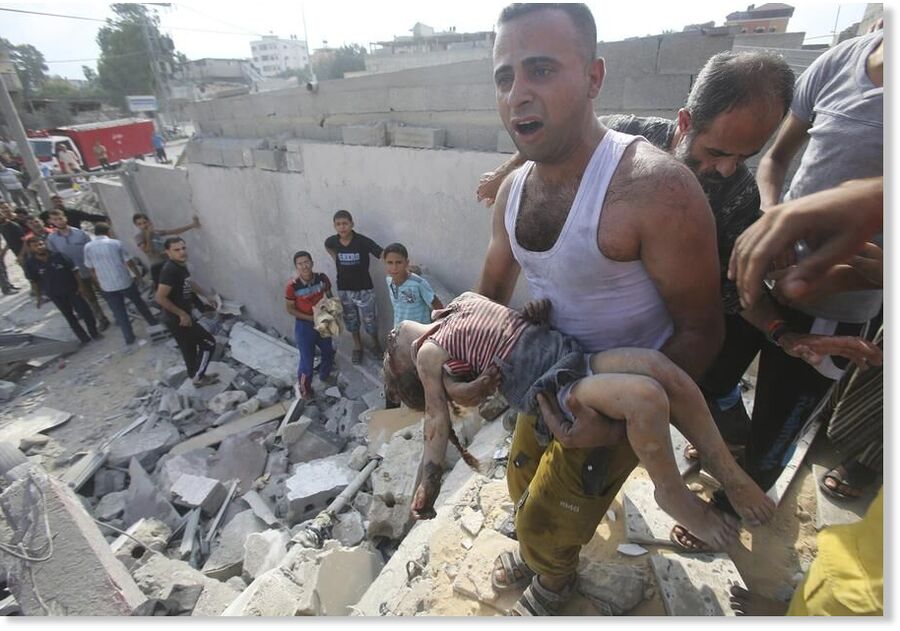
Other data suggest that the published death figures are seriously misleading. Save the Children, an international child protection agency, issued a report this month estimating that as many as 21,000 children in Gaza are “trapped beneath rubble, detained, buried in unmarked graves, or lost from their families.” Other children, the agency said, “have been forcibly disappeared, including an unknown number detained and forcibly transferred out of Gaza” with their whereabouts unknown to the families “amidst reports of ill-treatment and torture.”
Comment: As if the mass slaughter and starvation of Palestinians in Gaza is not enough, it is highly likely that a large number of Palestinian children have been abducted by Zionist state forces, likely to be tortured and killed or otherwise used for the depraved pleasures of some of the people that inhabit that “shitty little country”.
Jeremy Stoner, the charity’s regional director for the Middle East, said: “Gaza has become a graveyard for children, with thousands of others missing, their fates unknown. . . . We desperately need a ceasefire to find and support the missing children who have survived, and to prevent more families from being destroyed.”
Warnings about the inevitability of far more deaths among the ordinary citizens of Gaza have been around since last winter. In December, Devi Sridhar, the chair of global public health at the University of Edinburgh, wrote in the Guardian that the Gaza war was “the deadliest conflict for children in recent years” with as many as 160 children being killed daily. The surviving children do not have “the basic needs that any human, especially babies and children, need to stay healthy and alive. . . . Unless something changes, the world faces the prospect of almost a quarter of Gaza’s 2 million population — close to half a million human beings — dying within a year.
“It’s a crude estimate,” Sridhar wrote, “but one that is data-driven, using the terrifying real numbers of death in previous and comparable conflicts.”
The New York Times and the Washington Post reported Wednesday that a new study endorsed by the United Nations found that as many as half a million Gaza residents are facing imminent starvation because of “a lack of food.” The study also said that more than one half of the surviving residents of Gaza “had to exchange their clothes for money and one-third resorted to picking up trash to sell.”)
One of the most avid early critics of the official statistics published by the Gaza Health Ministry and accepted by most in the American media, has been Ralph Nader. On March 5, he wrote a column in the Capitol Hill Citizen, a monthly newspaper he founded, about what he called “the undercount” of Palestinian casualties in Gaza. He quoted Martin Griffiths, the United Nations under-secretary-general for humanitarian affairs: “Life is draining out of Gaza at terrifying speed.”
In my years as a journalist, I have often found an oddball story that says more with each retelling. Something like that happened in February when Al Jazeera ran an interview with a 64-year-old Gazan undertaker named Saadi Hassan Sulieman Baraka, whose nickname is Abu Jawad. He complained of working almost constantly since the Israeli invasion of Gaza began.
“I’ve buried about ten times more people during this war than I did across my entire 27 years as an undertaker,” he said. “The least was 30 people and the most was 800. Since October 7, I’ve buried more than 17,000 people.” He especially remembered the day he buried the 800 dead. “We collected them in pieces; their bodies so riddled with holes it was like Israeli snipers used them for target practice; Others were crushed like . . . like a boiled potato, and many had huge facial burns.
“We couldn’t really tell one person’s body from the other, but we did our best. We made one big deep grave, probably 10 meters (30 feet) deep and buried them together.”
It could be propaganda — of course, it could. But Abu Jawad made no mention of anyone from the Gaza Health Ministry coming to collect the names of the dead. He made no mention of any government official being involved in the process at all.
Assange’s Release: Exposing the Craven Media Stable
June 28, 2024 by: Dr Binoy Kampmark, https://theaimn.com/assanges-release-exposing-the-craven-media-stable/
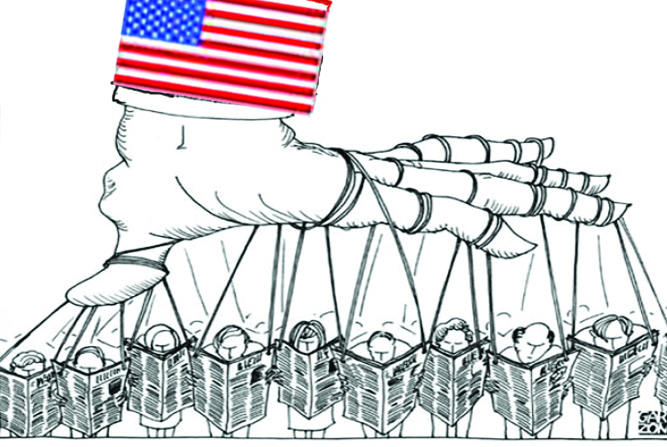
The WikiLeaks project was always going to put various noses out of joint in the journalistic profession. Soaked and blighted by sloth, easily bought, perennially envious, a good number of the Fourth Estate have always preferred to remain uncritical of power and sympathetic to its brutal exercise. For those reasons, the views of Thomas Carlyle, quoting the opinion of Edward Burke in his May 1840 lecture that “there were Three Estates in Parliament; but in the Reporters’ Gallery yonder, there sat a Fourth Estate more important far than they all” seem quaintly misplaced, certainly in a modern context.
The media response to the release of WikiLeaks founder Julian Assange from his scandalous captivity after pleading guilty to one count of conspiracy to obtain and disclose national defence information under the US Espionage Act of 1917 provides a fascinating insight into a ghastly, craven and sycophantic tendency all too common among the plodding hacks.
Take, for instance, any number of journalists working for the Australian Broadcasting Corporation, official national broadcaster and devotee of the safe middle line. One, a breakfast news anchor for the network’s meandering twenty-four-hour service, has a rather blotted record of glee regarding the mistreatment of Assange over the years.
Michael Rowland, torturously insipid and ponderously humourless, had expressed his inexpressible joy when the Ecuadorian government cut off Assange’s access to the Internet while confined to the country’s London embassy. “A big gold star to Ecuador,” he chirped on March 28, 2018. Andrew Fowler, another journalist and far more seasoned on the rise of WikiLeaks, reproached Rowland on Twitter, as the X platform was then called. “Why would silencing a fellow journalist be supported?” For Rowland, the matter was as clear as day. “That remains a disputed opinion, Andrew. Publisher and activist yes. But you put yourself in a small camp calling him a journalist.”
These points matter, because they go to the central libelling strategy of the US government’s prosecution so casually embraced by mainstream outlets. In such a generated smokescreen, crimes can be concealed, and the revealers shown to be those of bad faith. Labels can be used to partition truth, if not obscure it altogether: a publisher-activist is to be regarded more dimly than the establishment approved journalist.
The point was rather well made by Antony Loewenstein, himself an independent journalist keen to ferret out the grainier details of abusive power. When interviewed by none other than Rowland himself, he explained, with unflagging patience, the reasons why Assange and Wikileaks are so reviled by the orthodox scribblers of the Fourth Estate. WikiLeaks, he stated with salience, had confronted power, not succumbed to it.
Rowland could only reiterate the standard line that Assange had admitted guilt for a “very serious offence”, refusing to examine the reasons for doing so, or the implications of it. Again, the vulgar line that Assange had “put US lives at risk” with the WikiLeaks disclosures was trotted out like an ill-fed nag. Again, Loewenstein had to remind Rowland that there was no evidence that any lives had been exposed to harm, a point made in several studies on the subject from the Pentagon to the Australian Defence Department.
The tendency is pestilential. While more guarded in his current iteration as a professor of journalism, Peter Greste, formerly a journalist for Al Jazeera, was previously dismissive in the Sydney Morning Herald of Assange’s contributions as he was brutally evicted from the Ecuadorian Embassy in London. “To be clear, Julian Assange is no journalist, and WikiLeaks is not a news organisation.” An organisation boasting “the libertarian idea of radical transparency” was “a separate issue altogether from press freedom.
While approving the publishing activities centred on the release of the Collateral Murder video showing the killing of civilians including two Reuters journalists by Apache helicopters, and the release of the Afghanistan War Logs, the Iraq War Logs and “Cablegate”, Greste fell for the canard that the publisher did not redact names in documents to “protect the innocent” by dumping “them all onto his website, free for anybody to go through, regardless of their contents or their impact they might have had.”
There is no mention of the decrypting key carelessly included in WikiLeaks: Inside Julian Assange’s War on Secrecy by its bumbling authors David Leigh and Luke Harding, or the fact that the website Cryptome was the first to publish the unredacted files ahead of WikiLeaks. There is certainly no discussion of the extensive redacting efforts Assange had made, as many of his collaborators testify to, prior to the release in November 2010.
Writing on June 25 in The Conversation, Greste displays the emetic plumage of someone who has done an about face. “It is worth pausing for a moment to consider all Assange has been through, and to pop a bottle of champagne to celebrate his release,” he writes distastefully, also reflecting on his own carceral experiences in an Egyptian prison cell. He also claims that the role of WikiLeaks, in checking “the awesome power that governments wield”, should be celebrated, while stating, weakly, that he never believed that Assange should “have been charged with espionage.”
In such shifting views, we see wounded egos, cravenness, and the concerns about an estate whose walls had been breached by a usurping, industrious publisher. By all means use the spoils from Assange and his leakers, even while snorting about how they were obtained. Publish and write about them in the hope of getting a press award. Never, however, admit that Assange is himself a journalist with more journalism awards than many have had hot dinners. In this grotesque reality, we are now saddled with a terrifying precedent: the global application of a US espionage statute endangering journalists and publishers who would dare discuss and run material on Washington’s national security
1 This month

of the week – Australians for War Powers Reform (AWPR)
To see nuclear-related stories in greater depth and intensity
 Antinuclear