Richard Marles takes on reality, comes off second-best in growing Thales scandal

Is the defence minister right when he says his department handles contracts just fine? A long list of critical reports shows that’s garbage.
Crikey BERNARD KEANE, JUL 01, 2024
“I don’t think that there is a systemic issue within Defence in relation to the way in which defence contracts are managed” – .Defence Minister Richard Marles, June 30, 2024
The scandal around the Department of Defence’s $1.3 billion munitions factory contract with Thales gained an extra dimension late last week. French television reported the French arms company was raided by police in France, the Netherlands and Spain over two investigations: one into bribery concerning submarines and a naval base in Brazil; the other into “similar offences linked to the sale of military and civilian equipment abroad”.Defence-Thales scandal heads for corruption watchdog.…………………………………… (Subscribers only) more https://www.crikey.com.au/2024/07/01/richard-marles-defence-contract-thales-scandal/?utm_medium=Social&utm_source=Twitter#Echobox=1719808494
Labor gains in Newspoll as Australians narrowly oppose the Coalition’s nuclear energy plan

Adrian Beaumont, The Conversation, 1 July 24
Election Analyst (Psephologist) at The Conversation; and Honorary Associate, School of Mathematics and Statistics, The University of Melbourne
A national Newspoll, conducted June 24–28 from a sample of 1,260 people, gave Labor a 51–49% lead over the Coalition, a one-point gain for Labor since the previous Newspoll, three weeks ago. Primary votes were 36% Coalition (down three), 32% Labor (down one), 13% Greens (up two), 7% One Nation (steady) and 12% for all others (up two).
…………………………………..Opposition Leader Peter Dutton’s net approval slumped six points to -16, his lowest since October 2023. Albanese led Dutton by an unchanged 46–38% as better PM.
By 45–42%, voters disapproved of the Coalition’s “plans to build nuclear reactors in Australia on seven sites of current and former coal-fired power stations before 2050”.
Controversy over the nuclear plans has probably boosted Labor in two-party terms, despite the continued cost of living pressures hurting Albanese’s ratings.
Resolve poll on nuclear power
A national Resolve poll for Nine newspapers, conducted after Dutton’s nuclear plan announcement (June 20–23) from a sample of 1,003 people, had voters supporting nuclear power by 41–37%. In a more open question, 32% (down four since February) said they supported nuclear power, 28% were opposed (up five) and 30% (up three) did not have a strong view, but were open to investigating it.
Renewables, in general, had a net likeability of +66, nuclear-powered electricity +8 and coal-powered electricity +2.
Asked to choose between “Labor’s plan to use 100% renewables (supported by gas for the next decade or two)” and “the Coalition’s plan to use nuclear power and some gas to support the renewables”, voters backed Labor’s plan by 43–33%.
Essential poll: Labor’s first lead since April
A national Essential poll, conducted June 12–16 from a sample of 1,181 people, gave Labor a 48–46% lead including undecided after a 48–48% tie in early June.
This is Labor’s first lead in an Essential poll since April, with weak respondent-allocated preference flows for Labor partly responsible.
Primary votes in this poll were 32% Coalition (down four), 31% Labor (down one), 13% Greens (steady), 8% One Nation (up three), 1% UAP (down two), 9% for all others (up one) and 6% undecided (up two)…………………………………………………………………………………………………………………. more https://theconversation.com/labor-gains-in-newspoll-as-australians-narrowly-oppose-the-coalitions-nuclear-energy-plan-232693
Why cost should not be an obstacle to compensating nuclear survivors
The United Kingdom provided a “full and final” settlement payment of £20 million to Australia in 1993 to remediate former nuclear tests sites there, in comparison to the £6.5 billion ($8.1 billion) it spent on its nuclear arsenal in 2023.
By Alicia Sanders-Zakre, Susi Snyder | July 1, 2024, https://thebulletin.org/2024/07/why-cost-should-not-be-an-obstacle-to-compensating-nuclear-survivors/?utm_source=Newsletter+&utm_medium=Email&utm_campaign=MondayNewsletter07012024&utm_content=NuclearRisk_CompensatingNuclearSurvivors_07012024
Passing an extended and expanded Radiation Exposure Compensation Act (RECA) would be an enormous victory for those affected by US nuclear weapons testing and development who will receive compensation from the legislation. A proposed revised bill would include many communities formerly left out from the compensation program, including additional residents of Arizona, Nevada and Utah, for the first time, residents of Colorado, Idaho, Guam, Montana and New Mexico, uranium miners after 1971, veterans of nuclear waste clean-up in the Marshall Islands, and St. Louis area residents exposed to nuclear waste. The bill, originally estimated by the Congressional Budget Office to cost $147 billion over 10 years, was cut down to cost $50 billion over 10 years, due to concerns by members of Congress about the expense. A RECA bill has gained overwhelming support in the Senate, but it has yet to be passed by the House, in part due to ongoing concerns about the price tag.
Our research shows that more resources exist and should be directed to this important effort, in the United States and internationally, where many nuclear survivors still wait for justice. In our report, we found that nuclear-armed countries spent $91.4 billion on nuclear weapons in 2023 alone. That’s nearly $3,000 every second. The United States spent more than half of that total – $51.5 billion or $1,633 per second. In the five years that we have done this research, from 2019 to 2023, governments have spent a total of $387 billion on nuclear arsenals. The United States alone spent more than $212 billion of that total.
The amount that the United States and other nuclear-armed governments have put towards addressing the harmful legacy of nuclear weapons for their citizens pales by comparison. Since RECA was passed in 1990, the United States has put $2.67 billion into one-time settlements to compensate those whom the United States considered eligible. To address the nuclear legacy of its testing in the Marshall Islands, the United States gave $150 million to establish a Nuclear Claims Tribunal in 1987, but has not provided further funds explicitly for this purpose since.
Internationally, compensation for survivors also comes up short. Russian nuclear test veterans receive one-time compensation for harm to health of 22,102 roubles ($245 as of February 1, 2024) as well as small monthly stipends for food. In 2023, Russia spent 710.5 billion roubles ($8.3 billion) on its nuclear arsenal. In France, CIVEN, le Comité d’Indemnisation des Victimes des Essais Nucléaires, provided 14.9 million euros ($15.9 million) to victims of its nuclear testing in Algeria and French Polynesia in 2022. Last year, France spent 5.6 billion euros ($6.1 billion) on its nuclear weapons. The United Kingdom provided a “full and final” settlement payment of £20 million to Australia in 1993 to remediate former nuclear tests sites there, in comparison to the £6.5 billion ($8.1 billion) it spent on its nuclear arsenal in 2023.
It is no coincidence that, around the world, formerly colonized and Indigenous populations were the first to be bombed and the last to receive recognition and compensation. Existing programs rarely address the multifold harms of nuclear testing beyond physical harm from radiation, such as the psychological and economic toll of displacement, deprivation of traditional ways of life or the fear of children also suffering the scars of nuclear weapons.
But international efforts to address nuclear harms, grounded in human rights principles, have increased in recent years. In July 2017, 122 governments adopted the Treaty on the Prohibition of Nuclear Weapons. The treaty includes Articles 6 and 7, creating for the first time an international collective effort to address the impacts of nuclear weapons use and testing on people and the environment. States affected by nuclear weapons use and testing that have joined the treaty—such as Kazakhstan, Kiribati, Fiji, and New Zealand—take the lead in identifying needs for affected people and for environmental remediation in their countries and designing national plans of action and structures to address those needs. All governments that have joined this treaty pledge to help if they are able. States are currently discussing establishing an international trust fund to support this work.
Providing adequate assistance to those suffering from nuclear harm and beginning to remediate contaminated environments will cost money. It will also take time. But the cost is not an excuse to forgo necessary nuclear justice programs. Our research clearly shows that ever-growing budgets to build and rebuild nuclear arsenals are readily approved by every nuclear-armed government, while funds to help those suffering are a pittance in comparison.
The exorbitant funding poured into producing and maintaining weapons of mass destruction—as those who have borne the brunt of their impacts are dismissed—constitutes a gross dereliction of duty by the nuclear-armed countries. Governments must work together at the national and international level to address the multifaceted harms that nuclear weapons production and testing have inflicted on survivors and the environment. Extending and expanding RECA would be a good place to start. House leaders should stop stalling and start acting.
Julian Assange Is Finally Free, But Let’s Not Forget the War Crimes He Exposed
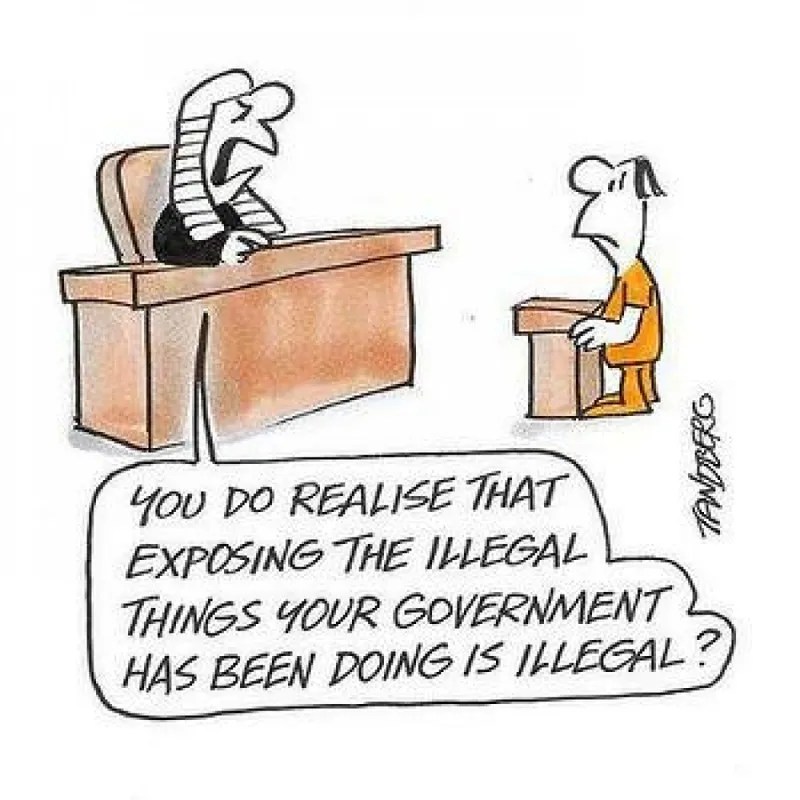
Contrary to US government claims, WikiLeaks’s revelations actually saved lives — and drove demand for US accountability.
| By Editor on June 29, 2024 https://truthout.org/articles/julian-assange-is-finally-free-but-lets-not-forget-the-war-crimes-he-exposed/ |
After a 14-year struggle, including five years spent in Belmarsh, a maximum-security prison in London, WikiLeaks publisher Julian Assange is finally free. Under the terms of a plea deal with the U.S. Department of Justice, Assange pled guilty to one count of conspiracy to obtain documents, writings and notes connected with the national defense under the Espionage Act. Assange was facing 175 years in prison for 18 charges in the indictment filed by the Trump administration and pursued by the Biden administration.
The plea agreement requires that before entering his plea, Assange must have done everything he could to either return or destroy “any such unpublished information in his possession, custody, or control, or that of WikiLeaks or any affiliate of WikiLeaks.”
As stipulated in the plea deal, Ramona Manglona, U.S. Chief Judge of the District Court for the Northern Mariana Islands, sentenced Assange to 62 months with credit for the time he served in Belmarsh Prison. The U.S. sentencing guidelines say the range for this “offense” is 41-51 months, so Assange served 11 to 21 months longer than this type of case would typically garner.
Assange was prosecuted because WikiLeaks exposed U.S. war crimes in Iraq, Afghanistan and Guantánamo Bay. In 2010, U.S. Army intelligence analyst Chelsea Manning, who had a “TOP SECRET” U.S. security clearance, furnished WikiLeaks with 700,000 documents and reports, many of which were classified “SECRET.”
These documents included the “Iraq War Logs,” 400,000 field reports documenting 15,000 unreported deaths of Iraqi civilians, as well as systematic rape, torture and murder after U.S. forces transferred detainees to a notorious Iraqi torture squad.
They also contained the “Afghan War Diary,” comprising 90,000 reports that documented more civilian casualties by coalition forces than the U.S. military had reported. And they included the “Guantánamo Files” — 779 secret reports containing evidence that 150 innocent people had been held at Guantánamo Bay for years. The reports explain how the nearly 800 men and boys there had been tortured and abused, which violated the Geneva Conventions and the Convention Against Torture and Other Cruel, Inhuman or Degrading Treatment or Punishment.
Manning also provided WikiLeaks with the infamous 2007 “Collateral Murder” video, which depicts a U.S. Army Apache attack helicopter crew targeting and killing 12 unarmed civilians in Baghdad, including two Reuters journalists, as well as a man who came to rescue the wounded. Two children were injured in the attack. A U.S. Army tank drove over one of the bodies, severing it in two. In a conversation after the attack, one pilot said, “Look at those dead bastards,” and the other responded, “Nice.” The video reveals evidence of three violations of the Geneva Conventions and the U.S. Army Field Manual.
WikiLeaks provided material for news outlets around the world to report on U.S.-led atrocities. Informing the public about the illegality of George W. Bush’s “war on terror” resulted in calls for accountability.
“10 years on, the War Logs remain the only source of information regarding many thousands of violent civilian deaths in Iraq between 2004 and 2009,” John Sloboda, co-founder of Iraq Body Count (IBC), wrote in his submitted testimony for Assange’s extradition hearing in October 2020. IBC is an independent NGO that has done the only comprehensive monitoring of credibly reported casualties in Iraq since Bush’s 2003 invasion.
“WikiLeaks cables have contributed to court findings that US drone strikes are criminal offences and that criminal proceedings should be initiated against senior US officials involved in such strikes,” Clive Stafford Smith, co-founder of Reprieve and attorney for seven Guantánamo detainees, wrote in his submitted testimony.
“They took a hero [Assange] and turned him into a criminal,” Vahid Razavi, founder of Ethics in Tech, told Common Dreams. “Meanwhile, all of the war criminals in the files exposed by WikiLeaks via Chelsea Manning are free and never faced any punishment or even their day in court.”
The Iraq War Logs
The Iraq War Logs contained extensive evidence of U.S. war crimes. Several reports of detainee abuse were supported by medical evidence. Prisoners were blindfolded, shackled and hung by their ankles or wrists. They were subjected to punching, whipping, kicking, electrocution, electric drills, and cutting off fingers or burning with acid. Six reports document the apparent deaths of detainees.
Secret U.S. Army field reports revealed that U.S. authorities refused to investigate hundreds of reports of murder, torture, rape and abuse by Iraqi soldiers and police. The coalition had a formal policy of ignoring these allegations, marking them “no investigation is necessary.”
Although U.S. and U.K. officials maintained that no official records of civilian casualties existed, the logs document 66,081 noncombatant deaths out of 109,000 fatalities from 2004-2009.
The log describes video footage of Iraqi army officers executing a prisoner in Tal Afar. It says, “The footage shows approximately 12 Iraqi army [IA] soldiers. Ten IA soldiers were talking to one another while two soldiers held the detainee. The detainee had his hands bound … The footage shows the IA soldiers moving the detainee into the street, pushing him to the ground, punching him and shooting him.”
The Afghan War Diary
The Afghan War Diary also revealed evidence of U.S. war crimes from 2004-2009. The reports describe how a secret “black” unit composed of special operations forces hunted down accused Taliban leaders for “kill or capture” without trial. Secret commando units — classified groups of Navy and Army special operatives — used a “capture/kill list,” which resulted in the killing of civilians, angering the Afghan people.
Moreover, the CIA expanded paramilitary operations in Afghanistan, carrying out ambushes, ordering airstrikes and conducting night raids. The CIA financed the Afghan spy agency, operating it like a subsidiary.
A 2007 meeting between Afghan district officials and U.S. civil affairs officers was documented in the reports. Afghan officials are quoted as saying, “The people of Afghanistan keep loosing [sic] their trust in the government because of the high amount of corrupted government officials. The general view of the Afghans is that the current government is worst [sic] than the Taliban.”
The logs recorded numerous civilian casualties from airstrikes, shootings on the road, in villages and at checkpoints; many were caught in the cross fire. The victims weren’t suicide bombers or insurgents. Several deaths were not reported to the public.
The Guantánamo Files
The Guantánamo Files say that only 220 of the 780 people held at the prison camp since 2002 were classified as “dangerous international terrorists.” Of the rest of the detainees, 380 were classified as low-level foot soldiers and 150 were considered innocent Afghan or Pakistani civilians or farmers.
Many detainees were held at Guantánamo for years based on paltry evidence or confessions extracted by torture and abuse. Among the detainees, for example, were an 89-year-old Afghan villager with senile dementia and a 14-year-old boy who was the innocent victim of a kidnapping.
The files document a system aimed more at extracting intelligence than detaining dangerous terrorists. One man was transferred to Guantánamo because he was a mullah with special knowledge of the Taliban. A taxi driver was sent to the prison camp because he had general knowledge of certain areas in Afghanistan. An Al Jazeera journalist was held at Guantánamo for six years to be interrogated about the news network.
Nearly 100 detainees were classified with depressive or psychotic disorders. Several joined hunger strikes to protest their indefinite detention or attempted suicide, the files revealed.
No One Was Harmed by WikiLeaks’s Revelations
Although the U.S. government alleged that WikiLeaks’s publication of information had caused “great harm,” they “admitted there was not a single person anywhere that they could produce that was harmed by these publications,” Assange’s attorney Barry Pollack said at a June 26 press conference in Australia.
The plea agreement says, “Some of these raw classified documents were publicly disclosed without removing or redacting all of the personally identifiable information relating to certain individuals who shared sensitive information about their own governments and activities in their countries with the U.S. government in confidence.”
The U.S. government claims that Assange endangered U.S. informants who were named in the published documents. But John Goetz, an investigative reporter who worked for Germany’s Der Spiegel, testified at the 2020 extradition hearing that Assange went to great lengths to ensure that the names of informants in Iraq and Afghanistan were redacted. Goetz said that WikiLeaks underwent a “very rigorous redaction process” and Assange repeatedly reminded his media partners to use encryption. Indeed, Goetz said, Assange tried to stop Der Freitag from publishing material that could result in the release of unredacted information.
Moreover, WikiLeaks’s revelations actually saved lives. After WikiLeaks published evidence of Iraqi torture centers established by the U.S., the Iraqi government refused then-President Barack Obama’s request to grant immunity to U.S. soldiers who committed criminal and civil offenses there. As a result, Obama had to withdraw U.S. troops from Iraq.
Obama took credit for ending U.S. military involvement in Iraq. But he had tried for months to extend it beyond the December 31, 2011, deadline his predecessor negotiated with the Iraqi government. Negotiations broke down when Iraq refused to grant criminal and civil immunity to U.S. troops.
What Assange’s Plea Bargain Means for Free Speech
Before she accepted Assange’s guilty plea, Judge Manglona asked him what he did to violate the law. “Working as a journalist, I encouraged my source to provide information that was said to be classified,” Assange said. “I believed the First Amendment protected that activity, but I accept that it was a violation of the espionage statute.” Assange then added, “The First Amendment was in contradiction with the Espionage Act, but I accept that it would be difficult to win such a case given all these circumstances.”
Even though Assange will go free, his plea deal raises concerns for First Amendment advocates in the U.S.
“The United States has now, for the first time in the more than 100-year history of the Espionage Act, obtained an Espionage Act conviction for basic journalistic acts,” David Greene, head of civil liberties at the Electronic Frontier Foundation, told The New York Times. “These charges should never have been brought.”
Charlie Savage, who has covered the Assange case extensively for years, warned that Assange’s plea sets a “new precedent” that “will send a threatening message to national security journalists, who may be chilled in how aggressively they do their jobs because they will see a greater risk of prosecution.” But, Savage noted, since Assange pled guilty and didn’t mount a constitutional challenge to the Espionage Act, that eliminated the risk that the U.S. Supreme Court would ultimately sanction a narrow interpretation of First Amendment press freedoms.
“WikiLeaks published groundbreaking stories of government corruption and human rights abuses, holding the powerful accountable for their actions,” WikiLeaks said in a statement announcing the plea agreement. “As editor-in-chief, Julian paid severely for these principles, and for the people’s right to know. As he returns to Australia, we thank all who stood by us, fought for us, and remained utterly committed in the fight for his freedom.”
There is no doubt that but for the sustained activism of people around the world and the work of his superb legal team, Julian Assange would still be languishing behind bars for revealing evidence of U.S. war crimes.
From 25th June – the most recent Australian nuclear news.
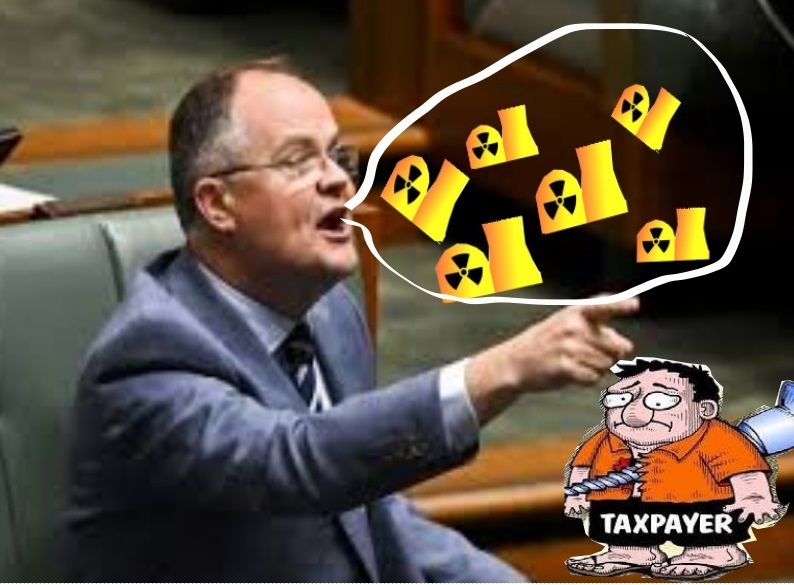
(See last week’s at https://antinuclear.net/2024/06/24/keep-up-to-date-on-australias-media-quagmire-on-nuclear-power/)
Climate. Nuclear more costly and could ‘sound the death knell’ for Australia’s decarbonisation efforts, report says. Incoming climate change tsar Matt Kean pours cold water on nuclear push.
Economics. Coalition’s taxpayer-funded nuclear con a road to ruin. Power prices will rise under Dutton’s incomplete nuclear energy ‘plan’.
Energy. Does the nuclear ‘plan’ add up? Australia’s carbon emissions under the Coalition’s proposal.
Opposition to nuclear. Unanimous trade union opposition to Dutton’s nuclear plans.
Politics. Dutton’s Nuclear ‘Thuggery’ Will Heat Up Debate And Energy Prices, But It Won’t Cool The Climate. Peter Dutton’s nuclear power plans are an ironic backflip to nationalisation for the Liberal Party. ‘Long held denialism’: Paul Keating launches stinging attack on Coalition’s nuclear power push. “Jam tomorrow:” Dutton’s confused nuclear plan won’t keep the lights o ACT ‘vulnerable’ to being forced into nuclear under Coalition: Barr. The cloud of coal has long hung over the Latrobe Valley. Now nuclear power is dividing it. ‘No one serious takes their plan seriously’: PM on nuclear power.
Politics International. Peter Dutton’s nuclear strategy relies on Trump winning the USA election, and tearing up global climate politics.
Public Opinion. Resolve Political Monitor: New poll reveals what Aussie voters think of Peter Dutton’s nuclear power plans. Labor gains in Newspoll as Australians narrowly oppose the Coalition’s nuclear energy plan.
Renewable. Nuclear option ‘not enough’ to avoid rush for more wind and solar. Economic Regulation Authority chair says nuclear ‘can’t work’ with renewables.
Secrets and lies. The Coalition says the rest of the G20 is powering ahead with nuclear – it’s just not true
Spinbuster. The Coalition’s nuclear fantasy serves short-term political objectives – and its fossil fuel backers Hidden costs? Cheaper energy? ‘Farcical’ locations? Debunking the hype around nuclear. Dutton Nuclear is just a scam | Scam of the Week https://www.youtube.com/embed/vVwkt9gX2DM?si=kv39UZ4-WYmyur9P Peter Dutton says nuclear power plants “burn energy.” No they don’t.
Technology. The Coalition says its nuclear plants will run for 100 years. What does the international experience tell us?
Wastes. What happens to nuclear waste under Peter Dutton’s Coalition plan to build seven nuclear power reactors? Nuclear energy creates the most dangerous form of radioactive waste. Where does Peter Dutton plan to put it?.
Assange’s Return to Australia: The Resentment of the Hacks
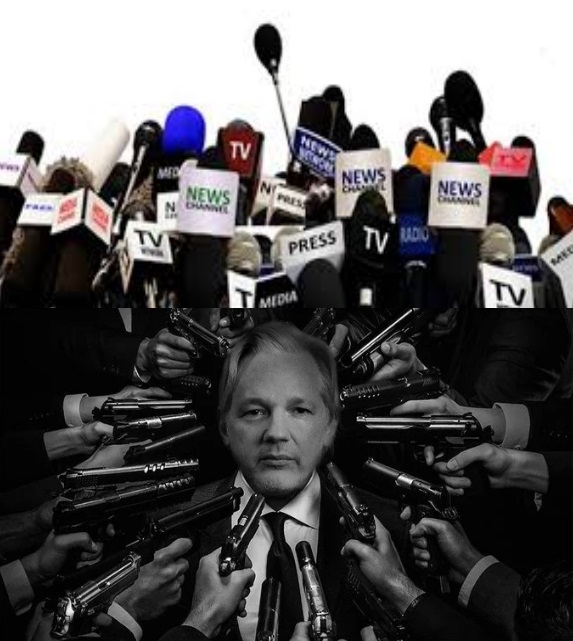
Sharp eyes will be trained on Assange in Australia, ……… He is in the bosom of the Five Eyes Alliance, permanently threatened by the prospect of recall and renewed interest by Washington. And there are dozens of journalists, indifferent to the dangers the entire effort against the publisher augurs for their own craft, wishing that to be the case.
Dr Binoy Kampmark 1 July 24 https://theaimn.com/author/binoy-kampmark/
Julian Assange of WikiLeaks fame is now back in the country of his birth, having endured conditions of captivity ranging from cramped digs in London’s Ecuadorian embassy to the maximum-security facilities of Belmarsh Prison. His return to Australia after striking a plea deal with the US Department of Justice sees him in a state with some of the most onerous secrecy provisions of any in the Western world.
As of January 2023, according to the Attorney-General’s Department, the Australian Commonwealth had 11 general secrecy offences in Part 5.6 of the Criminal Code, 542 specific secrecy offences across 178 Commonwealth laws and 296 non-disclosure duties spanning 107 Commonwealth laws criminalising unauthorised disclosure of information by current and former employees of the Commonwealth.
In November 2023, the Albanese Government agreed to 11 recommendations advanced by the final report of the review of secrecy provisions. While aspiring to thin back the excessive overgrowth of secrecy, old habits die hard. Suggested protections regarding press freedom and individuals providing information to Royal Commissions will hardly instil confidence.
With that background, it is unsurprising that Assange’s return, while delighting his family, supporters and free press advocates, has stirred the seething resentment of the national security establishment, Fourth Estate crawlers, and any number of journalistic sellouts. Damn it all, such attitudes seem to say: he transformed journalism, stole away our self-censorship, exposed readers to the original classified text, and let the public decide for itself how to react to disclosures revealing the abuse of power. Minimal editorialising; maximum textual interpretation through the eyes of the universal citizenry, a terrifying prospect for those in government.
Given that the Australian press establishment is distastefully comfortable with politicians – the national broadcaster, the Australian Broadcasting Corporation, for instance, has a central reporting bureau in Canberra’s Parliament House – Assange’s return has brought much agitation. The Canberra press corps earn their crust in a perversely symbiotic, and often uncritical relationship, with the political establishment that furnishes them with rationed morsels of information. The last thing they want is an active Assange scuppering such a neat understanding, a radical transparency warrior keenly upsetting conventions of hypocrisy long respected.
Let’s wade through the venom. Press gallery scribbler Phillip Coorey of the Australian Financial Review proved provincially ignorant, his mind ill-temperedly confused about WikiLeaks. “I have never been able to make up my mind about Assange.” Given that his profession benefits from leaks, whistleblowing and the exposure of abuses, one wonders what he is doing in it. Assange has, after all, been convicted under the US Espionage Act of 1917 for engaging in that very activity, a matter that should give Coorey pause for outrage.
For the veteran journalist, another parallel was more appropriate, something rather distant from any notions of public interest journalism that had effectively been criminalised by the US Republic. “The release of Julian Assange has closer parallels to that of David Hicks 17 years ago, who like Assange, was deemed to have broken American law while not in that country, and which eventually involved a US president cutting a favour for an Australian prime minister.”
The case of Hicks remains a ghastly reminder of Australian diplomatic and legal cowardice. Coorey is only right to assume that both cases feature tormented flights of fancy by the US imperium keen on breaking a few skulls in their quest to make the world safe for Washington. The military commissions, of which Hicks was a victim, were created during the madly named Global War on Terror pursuant to presidential military order. Intended to try non-US citizens suspected of terrorism held at the Guantánamo Bay detention facility, they were farcical exercises of executive power, a fact pointed out by the US Supreme Court in 2006. It took Congressional authorisation via the Military Commissions Actin 2009 to spare them.
Coorey’s colleague and international editor of The Sydney Morning Herald and The Age, Peter Hartcher, was similarly uninterested in what Assange exposed, babbling (paywalled) about the publisher’s return as the moment “Assangeism came into plain view”. He had no stomach for “the cult” which seemed to have infected Canberra’s cold weather. He also wondered whether Assange could constructively “use his global celebrity status to campaign for public interest journalism and human rights.” To do so – and here, teacher’s pet of the political establishment, beater of the war drum for the United States – Assange would have to “fundamentally” alter “his ways to advance the cause”.
All this was a prelude for Hartcher to take the hatchet to the journalistic exploits of a man more decorated with journalism awards that many in the Canberra gallery combined. The claim that he is “a journalist is hotly contested by actual journalists.” Despite the US government conceding that the disclosures by WikiLeaks had not resulted in harm to US sources, “there were many other victims of Assange’s project.” The returned publisher was only in Australia “on probation”, a signal reminder that the media establishment will be attempting to badger him into treacherous conformity.
Even this language was too mild for another Australian hack, Michael Ware, who had previously worked for Time Magazine and CNN. With pathological inventiveness, he thought Assange “a traitor in the sense that, during a time of war, when we had American, British and Australian troops in the field, under fire, Julian Assange published troves of unredacted documents.” Never mind truth to power; in Ware’s world, veracity is subordinate to it, even in an illegal war. What he calls “methods” and “methodology” cannot be exposed.
Such gutter journalism has its necessary cognate in gutter politics. All regard information was threatening unless appropriately handled, its more potent effects for change stilled. Leader of the opposition in the Senate, Simon Birmingham (paywalled), found it “completely unnecessary and totally inappropriate for Julian Assange to be greeted like some homecoming hero by the Australian Prime Minister.”Chorusing with hacks Coorey, Hartcher and Ware, Birmingham bleated about the publication by Assange of half a million documents “without having read them, curated them, checked to see if there was anything that could be damaging or risking the lives of others there.” Keep the distortions flying, Senator.
Dennis Richardson, former domestic intelligence chief and revolving door specialist (public servant becomes private profiteer with ease in Canberra), similarly found it inexplicable that the PM contacted Assange with a note of congratulation, or even showed any public interest in his release from a system that was killing him. “I can think of no other reason why a prime minister would ring Assange on his return to Australia except for purposes relating to politics,” moaned Richardson to the Guardian Australia.
For Richardson, Assange had been legitimately convicted, even if it was achieved via that most notorious of mechanisms, the plea deal. The inconvenient aside that Assange had been spied upon by CIA sponsored operatives, considered a possible object of abduction, rendition or assassination never clouds his uncluttered mind.
Sharp eyes will be trained on Assange in Australia, however long he wishes to say. He is in the bosom of the Five Eyes Alliance, permanently threatened by the prospect of recall and renewed interest by Washington. And there are dozens of journalists, indifferent to the dangers the entire effort against the publisher augurs for their own craft, wishing that to be the case.
Unanimous trade union opposition to Dutton’s nuclear plans
Jim Green, 1 July 24
Here’s a list of unions that endorsed a 2019 statement opposing nuclear power in Australia:
Australian Council of Trade Unions, Tasmanian Unions, Unions ACT, Unions WA, Unions SA, Unions NT, Victorian Trades Hall Council, Australian Education Union, Australian Manufacturing Workers Union, Australian Nursing and Midwifery Federation, Australian Services Union, Communication Workers Union, Electrical Trades Union, Independent Education Union (Vic – Tas), Maritime Union of Australia, National Union of Workers, United Voice, and the United Firefighters Union.
And the AWU and MEU are opposing Dutton’s nuclear plans (see below)… the only two unions previously supporting nuclear power.
Seems there is now 100% trade union opposition to nuclear power in Australia?
Undermining the frequent claim from Dutton and Ted O’Brien that ‘high energy IQ’ workers at coal plants will support nuclear power.
Two Labor-aligned unions accused of ‘backflipping’ on their ‘long held’ support for nuclear energy after Coalition policy announcement
Two Labor-aligned unions have been slammed for “backflipping” on their “long held” support for nuclear energy after they attacked the opposition’s nuclear policy despite recently calling on state and federal governments to back nuclear.
Two Labor-aligned unions accused of ‘backflipping’ on their ‘long held’ support for nuclear energy after Coalition policy announcement
Two Labor-aligned unions have been slammed for “backflipping” on their “long held” support for nuclear energy after they attacked the opposition’s nuclear policy despite recently calling on state and federal governments to back nuclear.
Sky News, 1 July 24, , 2024
Two Labor-aligned unions have been accused of “backflipping” on their “long-held” support for nuclear energy, after they attacked the Coalition’s proposal to build nuclear plants on the sites of aging coal plants.
Both the Australian Workers Union and the Mining and Energy Union (formerly the CFMEU’s mining and energy division) have long records of supporting nuclear energy, with the head of the AWU lobbying the government to lift the ban on nuclear as recently as December last year.
Despite this, both the AWU and MEU condemned the Coalition’s nuclear policy after the opposition revealed the seven sites where it is proposing to build nuclear reactors to replace aging coal-fired power plants……..
While neither the AWU or MEU reacted to the policy with images of toxic wastelands, both unions were quick to attack the policy.
The AWU hit out at the Coalition’s plans in a social media message posted just hours after the announcement, describing it as a “half-baked fantasy” that will “slam the brakes on our energy transition and put our industries in peril”.
“The Coalition must give up its nuclear dreaming and back the Future Gas Strategy,” AWU national secretary Paul Farrow was quoted as saying in the post.
In follow up posts the powerful union – which is aligned with Labor’s right faction – followed up with posts stating that this mean “investing now in firmed renewables backed up with gas.”
“It doesn’t mean sitting on our hands for decades to pay more for nuclear if and when it finally arrives,” the AWU post said.
“This proposal has no interest in solving real challenges faced by industry and workers today. Energy is not a political football: it’s our livelihoods. We deserve so much better.”………………………………….
The MEU also attacked the Coalition’s nuclear policy, despite years of advocating for nuclear as a solution to impending job losses from the closure of coal-fired power plants.
In a media release put out on June 19, the MEU described it as a “distraction” that would fail to provide jobs for workers in coal-fired plants before they shut down.
“Now is not the time for distractions. We need to be acting to deliver an orderly transition that focuses on jobs, economic activity in affected regions and positive social outcomes for affected workers while we still have the chance,” MEU General Secretary Grahame Kelly said.
1 This month
15 April – Zoom –Nuclear Power is Not the Solution
Apr 15, 2026 01:00 AM in Canberra, Melbourne, Sydney

Join the International Physicians for the Prevention of Nuclear War (IPPNW) on Tuesday, April 14th for a timely webinar exploring the risks associated with nuclear power and challenging the myth that it offers a simple, safe, carbon-free solution to the climate crisis

of the week – Australians for War Powers Reform (AWPR)
To see nuclear-related stories in greater depth and intensity
 Antinuclear