Why Julian Assange couldn’t outrun the Espionage Act
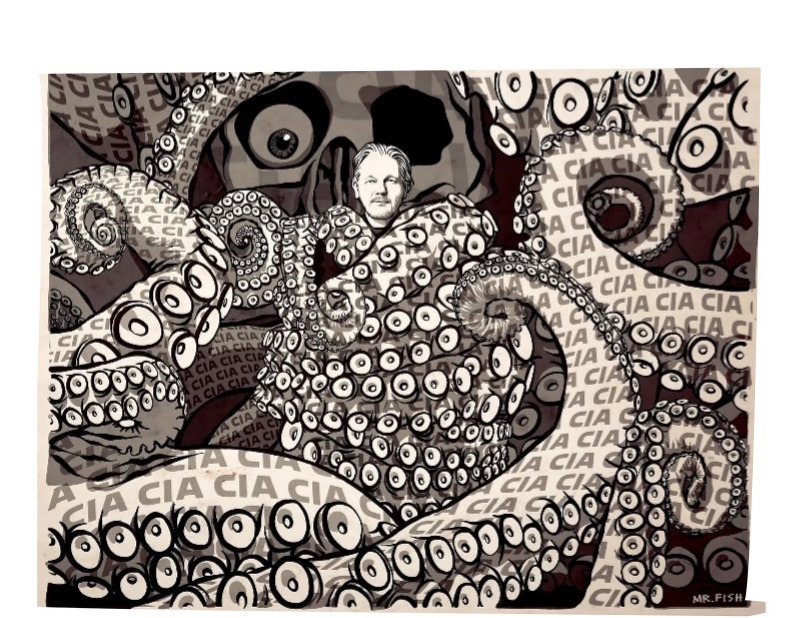
the grave threat the Espionage Act poses to journalism and the First Amendment
SOTT, Jordan Howell The FIRE, Wed, 26 Jun 2024
Julian Assange spent seven years in self-exile in London’s Ecuadorian Embassy avoiding arrest, and five more in prison, for publishing classified documents on WikiLeaks.
Julian Assange is a free man, and one of the most contentious press freedom controversies in living memory may finally be coming to a close.
The WikiLeaks founder reached a plea deal with the Department of Justice on Monday after spending five years in an English prison fighting extradition to the United States. Federal officials sought to charge Assange with conspiracy to obtain and disclose national security information under the Espionage Act of 1917.
Assange and WikiLeaks shocked the world in 2010 by publishing hundreds of thousands of secret military documents and diplomatic cables related to the wars in Iraq and Afghanistan that were leaked by Army intelligence analyst Chelsea Manning. Months later, Assange was on the run and Manning was in jail.
Assange claimed that by receiving and publishing confidential information, what he did was no different than the type of routine news reporting that journalists around the world engage in every day. As the Supreme Court ruled in New York Times Co. v. United States (1971), better known as “The Pentagon Papers” case, publishing leaked documents is protected under the First Amendment.
FIRE has long opposed use of the Espionage Act to curtail the rights of journalists to source information. And in December 2022, FIRE signed an open letter organized by the Committee to Protect Journalists along with 20 other civil liberties groups calling on the federal government to drop its charges against Assange.
“We are united . . . in our view that the criminal case against him poses a grave threat to press freedom both in the United States and abroad,” we argued. “[J]ournalists routinely engage in much of the conduct described in the indictment: speaking with sources, asking for clarification or more documentation, and receiving and publishing official secrets. News organizations frequently and necessarily publish classified information in order to inform the public of matters of profound public significance.”
Assange’s 12 year ordeal, including seven years in self-exile in the Ecuadorian Embassy in London before his arrest and imprisonment, underscores the continued threat that the century-old Espionage Act still poses to civil liberties today — and not just in the United States. Assange is not a U.S. citizen, nor was he ever a resident. But because of modern extradition treaties, there were few places in the world where he could travel to escape the Act’s reach,
Under the terms of Monday’s deal, Assange pleaded guilty to the charges and was sentenced to 62 months incarceration, but with credit for time served, according to documents filed with the U.S. District Court for the Northern Mariana Islands.
Ultimately, freedom of the press is what was at stake with the government’s case against Assange. It was never only about him. The precedent that would have been set by his extradition and trial would have sent a chilling message to journalists across the country and the world: You can run, but you can’t hide from the Espionage Act.
What is the Espionage Act?……………………………………………………………………………………….Based on the Defense Secrets Act of 1911, the Espionage Act of 1917 included much stiffer penalties — including the death penalty — for sharing secret or confidential information or otherwise interfering with the operations of the U.S. military.
The Espionage Act made it a crime to obtain information regarding national defense “with intent or reason to believe” that doing so would hurt the U.S. or to advantage another country. While subsequent amendments and court decisions have refined its language and scope, its core purpose remains the same.
Espionage Act and the Supreme Court
The law was immediately controversial because its use was not limited to actual acts of espionage. Rather, the Espionage Act allowed the government to clamp down on anyone who opposed the war effort.
In Schenck v. United States, in 1919, the Supreme Court upheld the conspiracy conviction against socialist Charles Schenck under the Espionage Act for distributing anti-war leaflets that urged people to boycott the draft.
The problem with the Court’s ruling in Schenck, as subsequent decisions would affirm, is that Schenk’s speech was not calling for violence or even civil disobedience. Rather, his speech was precisely the kind of political expression that decades of subsequent Supreme Court decisions would ultimately uphold. Numerous convictions under the Espionage Act would make their way to the Court, including that of socialist presidential candidate Eugene Debs, who was arrested for giving a speech opposing the war.
Since then, one of the most nefarious uses of the Espionage Act has been to silence journalists. At least insofar as publishing the leaked documents on the Wikileaks website, what Assange did was little different than what The New York Times and The Washington Post did in 1971 when they published and reported on thousands of pages from a classified report about the war in Vietnam.
……………………………………….As the Supreme Court has ruled, freedom of the press is a foundational principle, enshrined in the Bill of Rights. And though Julian Assange is finally free, FIRE continues to have serious concerns about the grave threat the Espionage Act poses to journalism and the First Amendment. https://www.sott.net/article/492768-Why-Julian-Assange-couldnt-outrun-the-Espionage-Act
When it comes to power, solar is about to leave nuclear and everything else in the shade
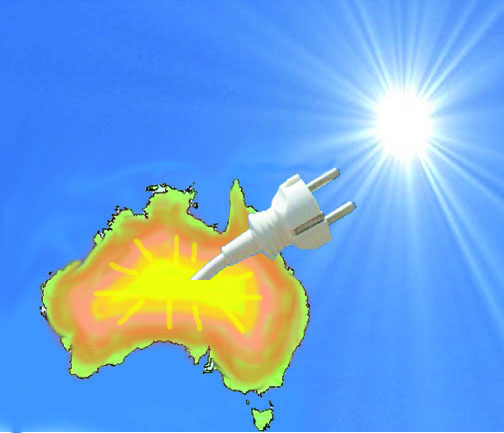
In Australia, solar is pushing down prices
Australia’s energy market operator says record generation from grid-scale renewables and rooftop solar is pushing down wholesale electricity prices.
Peter Martin, Visiting Fellow, Crawford School of Public Policy, Australian National University July 2, 2024 https://theconversation.com/when-it-comes-to-power-solar-is-about-to-leave-nuclear-and-everything-else-in-the-shade-233644
Opposition leader Peter Dutton might have been hoping for an endorsement from economists for his plan to take Australian nuclear.
He shouldn’t expect one from The Economist.
The Economist is a British weekly news magazine that has reported on economic thinking and served as a place for economists to exchange views since 1843.
By chance, just three days after Dutton announced plans for seven nuclear reactors he said would usher in a new era of economic prosperity for Australia, The Economist produced a special issue, titled Dawn of the Solar Age.
Whereas nuclear power is barely growing, and is shrinking as a proportion of global power output, The Economist reported solar power is growing so quickly it is set to become the biggest source of electricity on the planet by the mid-2030s.
By the 2040s – within this next generation – it could be the world’s largest source of energy of any kind, overtaking fossil fuels like coal and oil.
Solar’s off-the-charts global growth
Installed solar capacity is doubling every three years, meaning it has grown tenfold in the past ten years. The Economist says the next tenfold increase will be the equivalent of multiplying the world’s entire fleet of nuclear reactors by eight, in less time than it usually takes to build one of them.
To give an idea of the standing start the industry has grown from, The Economist reports that in 2004 it took the world an entire year to install one gigawatt of solar capacity (about enough to power a small city). This year, that’s expected to happen every day.
Energy experts didn’t see it coming. The Economist includes a chart showing that every single forecast the International Energy Agency has made for the growth of the growth of solar since 2009 has been wrong. What the agency said would take 20 years happened in only six.
The forecasts closest to the mark were made by Greenpeace – “environmentalists poo-pooed for zealotry and economic illiteracy” – but even those forecasts turned out to be woefully short of what actually happened.
And the cost of solar cells has been plunging in the way that costs usually do when emerging technologies become mainstream.
The Economist describes the process this way:
As the cumulative production of a manufactured good increases, costs go down. As costs go down, demand goes up. As demand goes up, production increases – and costs go down further.
Normally, this can’t continue. In earlier energy transitions – from wood to coal, coal to oil, and oil to gas – it became increasingly expensive to find fuel.
But the main ingredient in solar cells (apart from energy) is sand, for the silicon and the glass. This is not only the case in China, which makes the bulk of the world’s solar cells, but also in India, which is short of power, blessed by sun and sand, and which is manufacturing and installing solar cells at a prodigious rate.
Solar easy, batteries more difficult
Batteries are more difficult. They are needed to make solar useful after dark and they require so-called critical minerals such as lithium, nickel and cobalt (which Australia has in abundance).
But the efficiency of batteries is soaring and the price is plummeting, meaning that on one estimate the cost of a kilowatt-hour of battery storage has fallen by 99% over the past 30 years.
In the United States, plans are being drawn up to use batteries to transport solar energy as well as store it. Why build high-voltage transmission cables when you can use train carriages full of batteries to move power from the remote sunny places that collect it to the cities that need it?
Solar’s step change
The International Energy Agency is suddenly optimistic. Its latest assessment released in January says last year saw a “step change” in renewable power, driven by China’s adoption of solar. In 2023, China installed as much solar capacity as the entire world did in 2022.
The world is on track to install more renewable capacity over the next five years than has ever been installed over the past 100 years, something the agency says still won’t be enough to get to net-zero emissions by 2050.
That would need renewables capacity to triple over the next five years, instead of more than doubling.
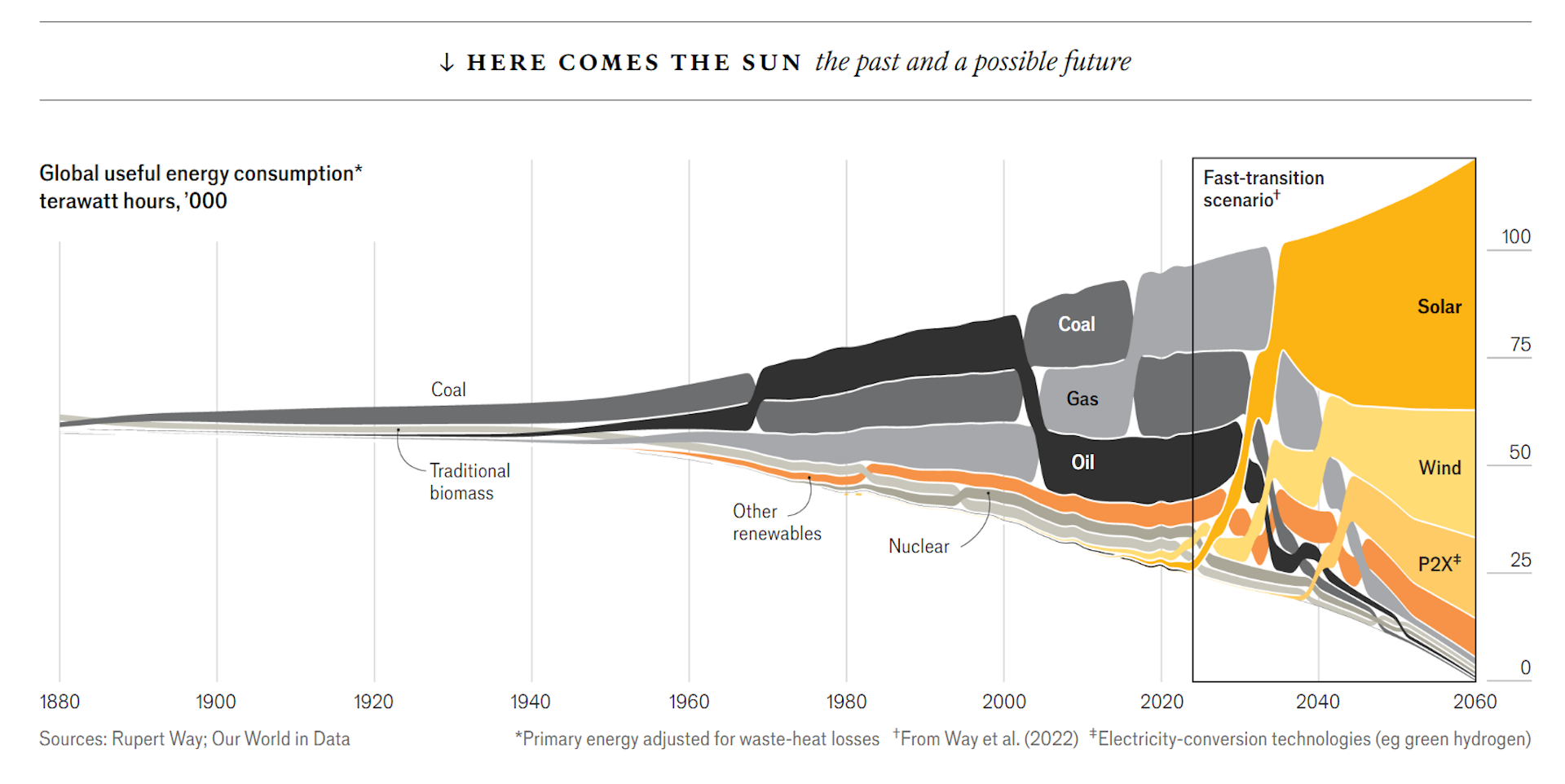
Oxford University energy specialist Rupert Way has modelled a “fast transition” scenario, in which the costs of solar and other new technologies keep falling as they have been rather than as the International Energy Agency expects.
He finds that by 2060, solar will be by far the world’s biggest source of energy, exceeding wind and green hydrogen and leaving nuclear with an infinitesimally tiny role.
In Australia, solar is pushing down prices
Australia’s energy market operator says record generation from grid-scale renewables and rooftop solar is pushing down wholesale electricity prices.
South Australia and Tasmania are the states that rely on renewables the most. They are the two states with the lowest wholesale electricity prices outside Victoria, whose prices are very low because of its reliance on brown coal.
It is price – rather than the environment – that most interests The Economist. It says when the price of something gets low people use much, much more of it.
As energy gets really copious and all but free, it will be used for things we can’t even imagine today. The Economist said to bet against that is to bet against capitalism.
Australian nuclear news headlines this week
Too uncertain, too slow: funds rule out financing Dutton nuclear plan. Without a massive grid upgrade, the Coalition’s nuclear plan faces a high-voltage hurdle. Dutton’s claim about G20 nuclear energy use doesn’t add up With its nuclear energy policy, Peter Dutton seems to have forgotten the Liberal Party’s core beliefs. Australia’s ‘carbon budget’ may blow out by 40% under the Coalition’s nuclear energy plan – and that’s the best-case scenario. Liberal National Party to debate nuclear despite ‘intriguing’ omission from Queensland state convention. Nuclear sidelined at LNP ‘unity’ convention (The Australian) . Dick Smith enters nuclear debate but CSIRO analysis shows his argument in meltdown. Australian conservation groups slam Federal Coalition’s “nuclear fantasy” plan as “a poison pill” When it comes to power, solar is about to leave nuclear and everything else in the shade. If you don’t know, vote ‘No’ to Dutton’s nuclear plan,
ALSO. Australians being kept in the dark about Pine Gap expansion. Australia to build ‘top-secret’ cloud for intelligence agencies in $2bn deal with Amazon. No House? Two-party Senate squeeze on cross-bench locks in Defence spending debacle.
1 This month

of the week – Australians for War Powers Reform (AWPR)
To see nuclear-related stories in greater depth and intensity
 Antinuclear