TODAY. The cover-up of the danger of nuclear radiation and health, but who is speaking for our grandchildren?
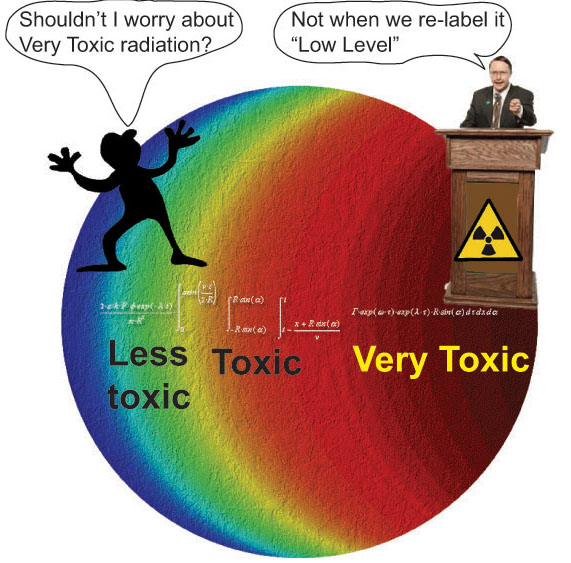
From the earliest days of Marie and Pierre Curie, the harm from ionising radiation was observed, but not fully acknowledged. And before long, it was enthusiastically used in medicine, as x-rays, and in the general world, in various forms, as an aid to health and beauty. When the “radium girls” who painted watch dials with the glow-in-the-dark, radium-based paint, became ill, they were diagnosed by company doctors as having poor diet, neuroses or even syphilis.
Accidents during the Manhattan Project showed the horror effects of high doses of radiation, – but with some military propaganda sleight-of-hand this seemed to be taken to show that “low level” radiation is fine.
Doctors and scientists of integrity, who researched the harm of nuclear radiation were harassed, ridiculed, and sidelined. Integrity was a career killer for DrJohn Gofman, Arthur Tamblin, Harold Knapp, Linus Pauling, Alice Stewart, Ernest Sternglass and Hermann Muller.
Despite the scientific report in 2007 – Biological Effects of Ionizing Radiation (BEIR) stating the danger, the nuclear lobby has been successful in obscuring the truth, and putting across a general acceptance that low dose radiation is well, OK, really.
Dr. Alice Stewart and , Dr. Rosalie Bertell showed the link between x-rays in the mothers and leukemia in their children – their results were similarly rubbished, (but medical authorities quietly curtailed the widespread use of x-rays)
Epidemiology and Statistics are boring stuff, I know. But population statistics of infant deaths and child cancers have shown the increased danger to embryos, infants and children living near nuclear facilities.
Sadly, health authorities have colluded in this cover-up. Public anxiety about ionising radiation is a threat to the thriving nuclear medicine industry. How much of nuclear medicine is absolutely necessary? How many CT scans and other radiological examinations are not really called for? It’s easier for medical professionals to just go along with the view that low level radiation is OK.
After all, amongst many thousands, if only a few thousand children die as a result of exposure to low level radiation – from nuclear reactors and other nuclear facilities, that’s OK isn’t it?
As world leaders enthuse over more nuclear power, and more nuclear “deterrents” , Dr. Gordon Edwards asks the question “Who is speaking for our grandchildren?”
(My inspiration for this short article came from Dr Dale Dewar’s Ionizing Radiation and Human Health .)
Nuclear power plan puts thousands of farms in “radiation alert zone”
ReNewEconomy, Stephanie Gardiner, Jul 18, 2024
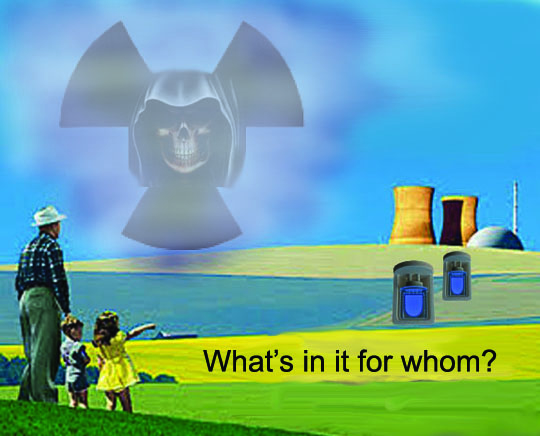
Nuclear energy threatens Australia’s food production with more than 11,000 farms near the opposition’s proposed reactor sites, the government says.
The farms are located within an 80km radius of the seven earmarked sites, according to a data analysis released by the federal government on Thursday morning.
Under international standards that radius is classified as an “ingestion exposure pathway” in which people may be exposed to radiation through contaminated food, milk and water after a nuclear leak.
US farmers in those zones must take on preventative measures in an emergency, such as providing livestock with separate feed and water, holding shipments and decontaminating produce.
“Based on international practice, farmers would need to take expensive steps during a nuclear leak and would need to inform their customers that they operate within the fallout zone,” Agriculture Minister Murray Watt said in a statement.
“It’s bizarre that the Nationals and Liberals are putting at risk our prime agricultural land like this, especially without the decency to explain it to farmers and consumers how they’d mitigate all the potential impacts.”
Senator Watt also told the Australian Global Food Forum on Wednesday that nuclear power needs more water than coal-fired energy and renewables.
“One issue not yet considered in the nuclear debate is the fact that nuclear energy production is a thirsty endeavour,” he told the industry crowd in Brisbane.
………………………………………..There would be more than 1000 affected farms close to each of the sites at Callide, Collie, Liddell and Mount Piper, 2400 near Tarong and 260 near Port Augusta, according to the government’s analysis.
Victoria’s La Trobe region would be the hardest hit with more than 4100 farms within the 80km radius.
Nuclear power will be on the agenda as the nation’s agriculture ministers meet in Queensland on Thursday…. https://reneweconomy.com.au/nuclear-power-plan-puts-thousands-of-farms-in-radiation-alert-zone/
HMAS Stirling nuclear waste management facility approval has Rockingham residents worried
By Daryna Zadvirna and David Weber, 19 July 24 https://www.abc.net.au/news/2024-07-19/nuclear-waste-facility-at-hmas-stirling-rockingham/104114228
In short:
Australia’s nuclear safety watchdog has approved a plan to prepare for a radioactive waste facility at HMAS Stirling naval base in Perth’s south, for waste from nuclear submarines.
But local residents are worried about the potential for nuclear accidents and the impact on the environment.
What’s next?
Approval to begin construction will now be sought, followed by licences for control and operation of the facility, which is expected to open in 2027.
Rockingham residents have expressed alarm at the prospect of a radioactive waste facility at HMAS Stirling naval base on Garden Island, following a decision by the nuclear safety watchdog to approve one.
The Australian Radiation Protection and Nuclear Safety Agency (ARPANSA) has given the green light to prepare a site for the facility, which will be a workshop for servicing and repairing the vessels, and will store waste from nuclear powered submarines.
The facility will also need separate approvals for construction and operation.
The facility, about five kilometres off the coast of Rockingham, which is 50 kilometres south of Perth’s CBD, would provide low-level waste management and maintenance support.
Can the Voices model help communities fight off nuclear reactors?
By Bianca Hall and Mike Foley, July 20, 2024
Coal communities across the country – facing the loss of industry, jobs and the social fabric that binds them together – are poised to transition from the fossil fuel that built their histories.
But what the future will look like in towns like Lithgow in NSW and Traralgon in Victoria’s Latrobe Valley is far less certain. Will they pivot to privately owned renewables, or have government-owned and funded nuclear reactor sites imposed on them by a future Coalition government?
Community groups in every site nominated by Peter Dutton as a potential future nuclear site have joined forces to offer their answer to his proposal: no.
Wendy Farmer is president of Voices of the Valley, a community group that formed in the Latrobe Valley after the Hazelwood coal mine fire in 2014, which burned for 45 days and caused health concerns for those living there amid the smoke.
Farmer united community groups from each area nominated for a nuclear plant to campaign together against the plans. Together, they’ve formed an alliance representing seven communities to fight against the proposal, reminiscent of the independent Voices movement that sent Cathy McGowan to federal parliament in 2013 and has since been replicated across the country.
Already, two people are preparing to nominate as independent candidates to take the fight to the next election.
“I’m really hoping that it will show communities that united, we can really make a change,” she says. “We can actually demand what we want as community. To me, it’s really important that we just aren’t dumped on and told ‘this is what’s good for you, and this is what’s going to happen’.”
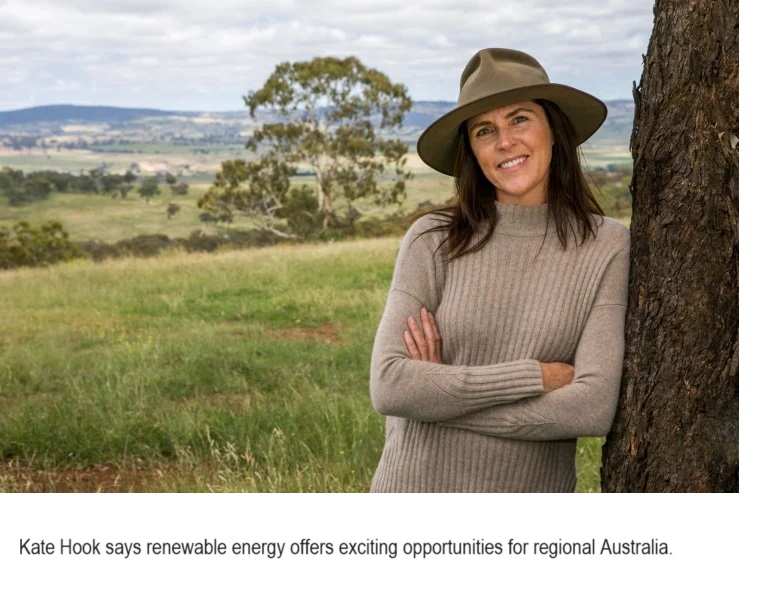
Kate Hook, who ran as an independent candidate in Calare in central western NSW in 2022, says she’s considering putting her hand up again at the next election against Nationals MP-turned-independent Andrew Gee.
Key to her candidacy, which she would run as a Voices-style campaign, is renewable energy and nuclear. “Is it a bunch of politicians who have just got together and said, ‘Here’s a talking point that will distract from renewable energy’?” she says.
“Because there is already something under way [the switch to renewables], which is an amazing opportunity for this region that we haven’t had in decades, and there’s a risk that that is squandered.”
AGL has announced its ambition to transform the sites of its coal-fired power stations in Victoria and NSW – the last of which is due to close in 2035 – into low-carbon energy “hubs” spanning renewable energy generation, big batteries and green tech manufacturing.
Meanwhile, Dutton in June nominated seven regional communities that he said would be home to nuclear reactors under a future Coalition government, at the sites of current or closing coal power plants.
They would be hosted at Lithgow and the Hunter Valley in NSW, Loy Yang in Victoria’s Latrobe Valley, Tarong and Callide in Queensland, Collie in Western Australia and Port Augusta in South Australia.
The announcement was made without consultation with the owners of the privately owned coal stations they would replace, according to several well-placed sources.
Unease about Dutton’s nuclear ambition isn’t limited to communities: local MPs are also wary of Dutton’s bid to build reactors on the sites of former coal-fired power plants.
Bathurst MP Paul Toole, who represents Lithgow in the NSW parliament for the Nationals, has criticised the lack of consultation by the federal opposition over the proposed takeover of the Mount Piper plant, about 20 kilometres north-west of Lithgow.
Rather than commit to the party line, he said he would back the community’s position. “I think the community feels as though they’ve been left in the dark,” Toole said last month. “The announcement lacks detail and raises more questions than answers. I’ll be backing the views of my community 100 per cent.”
Calare MP Andrew Gee, an independent who represents Lithgow in federal parliament, is also a sceptic of the opposition’s nuclear plans who has criticised lack of community consultation……………………………………………………………………………………..more https://www.theage.com.au/politics/federal/can-the-voices-model-help-communities-fight-off-nuclear-reactors-20240716-p5ju4o.html
Never Forget Julian Assange
SCHEERPOST, JULY 19, 2024
Although Julian Assange is free and home in his native Australia, his story and decade-long suffering at the hands of the U.S. government must never be forgotten for the sake of the survival of the First Amendment. In this episode of the Scheer Intelligence podcast, host Robert Scheer is joined by Kevin Gosztola, who runs The Dissenter newsletter and has been reporting on the Assange case and whistleblowers in the U.S. for more than a decade. Together, they underscore the significance of the Assange case and delve into the details explored in Gosztola’s recent book, “Guilty of Journalism.”
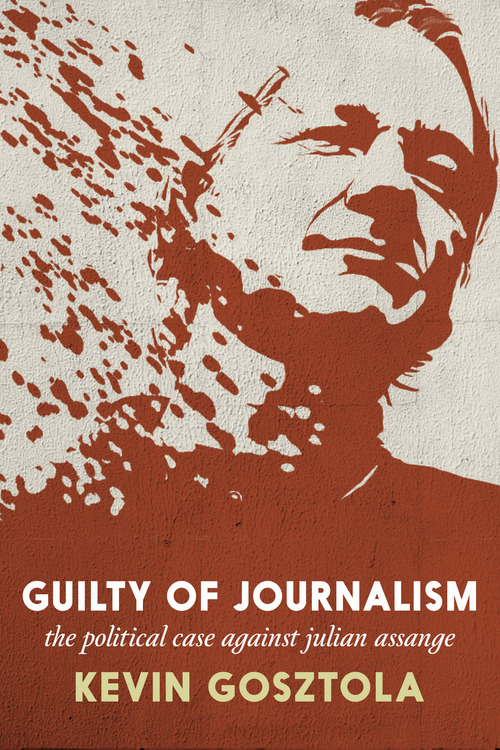
Gosztola makes clear one of the main points of the whole ordeal, which is the inconsistency in the U.S.’s interpretation of its own laws. “The First Amendment and the Espionage Act are in conflict in this country. You can’t reconcile the two, at least the way that the Justice Department wants to use the Espionage Act against people who aren’t even just U.S. citizens. They’re trying to apply U.S. law to international journalists,” Gosztola told Scheer.
The U.S. response to the internet age and the powerful journalistic revelations of Assange and WikiLeaks was to criminalize such actions, sending a clear message: anyone attempting to blow the whistle or expose the U.S. government’s crimes would face severe punishment, including the use of the Espionage Act, which could imprison someone for life.
“Unlike Daniel Ellsberg, [Chelsea] Manning didn’t have to sit there at a Xerox machine making copies. [She] just sent the copies of the documents to WikiLeaks, and then WikiLeaks had all these files that they could share with the world,” Gosztola said.
Despite the online journalism revolution, many in the media space still remained quiet throughout the Assange debacle both because of their ties to government officials and their lack of professional rigor. Gosztola posed several questions to them:
“Where were you? Why weren’t you doing the investigations to uncover these details? Why did this WikiLeaks organization come along and reveal these details about Afghanistan, the Iraq War, the nature of US foreign policy? Why do you accept that all of this information that was classified should be classified?”
TRANSCRIPT – ……………………………………………………………………………. , https://scheerpost.com/2024/07/19/never-forget-julian-assange/
1 This month

of the week – Australians for War Powers Reform (AWPR)
To see nuclear-related stories in greater depth and intensity
 Antinuclear