It is often claimed that many countries are going nuclear and if Australia wants to be a ‘Developed Country’ we should have nuclear power.
If that is the case, how would we go about it?
The first step is to build a regulatory framework. Regulations differ from country to country partly for historical reasons and partly different circumstances.
Then like all codes, the regulations are modified bit by bit in response to new hazards or changes in practice, but they become cluttered with deadwood with slightly conflicting requirements which make compliance difficult and expensive.
Typically, it takes two to three years and US$1-2bn to get a licence to build a new nuclear plant in the US, even if the plant itself is an approved design on an existing site.
We could work with the international agencies to develop a modern set of regulations, but that could easily take 4-5 years.
So, let’s say we agree to just doing a quick copy and paste job after legislation is passed in late 2025 and we start to recruit the necessary staff in 2026.
The UK has 700 regulation staff, France 1,500 and the US 2,700 so by 2030 the regulations would be published, and site selection could proceed.
The French regulator has a budget of €150m/y and French salaries are about 25 percent lower than ours.
We can then estimate that the first thirty years of the Regulator’s life would cost the taxpayer $3-5bn.
The nuclear workforce
At the same time, we need to establish and train the construction workforce.
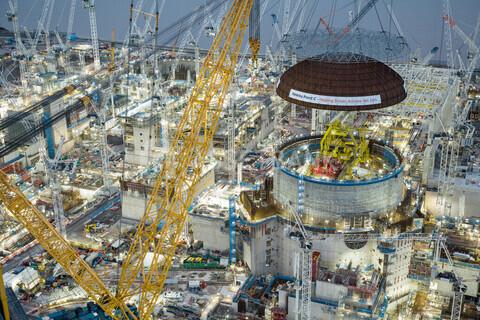
EDF Energy claims that 22,000 people in Britain are working on the Hinckley Point C power station (pictured). This is nine times the size of the Snowy II workforce and almost three times the size of the entire Australian oil and gas extraction industry.
Most of these people would need security clearance and many would need additional training and certification.
If we say that on average it is 3 months training for two thirds of the staff, that is an initial training load of about 900,000 person days, say 1,000,000 days including training the trainers.
ver seven years, that is a cost of about $200m not including students wages.
However, Britain is building two plants in about 17 years. If we want six plants on line by 2065 we would be building a peak of five at one time so the workforce would reach 45-50,000.
With retirements and departures, the training and security bill will be over $700m over thirty years
Fabricating nuclear power stations
Now apart from the lack of skills, we don’t have fabrication workshops with twin 500 tonne cranes and appropriate welding and heat treatment equipment.
These cost about $200m to build and equip.
Further, transport constraints and the distance between projects means that new workshops will probably need to be built near each site as would concrete batching plants etc. Some equipment would be shared but $500m in plant costs is not unreasonable.
Then there is the question of build cost. CSIRO used Korean figures, but they are highly questionable as there have been no public updates since 2018 and the company building and operating the nuclear plants is carrying US$150bn in debt, about two years annual sales.
We do have public data on other reactors, although that data usually doesn’t include all the losses made by contractors such as Westinghouse and Siemens who withdrew from projects after billions in losses.
All these plants are built on existing sites with plentiful cold cooling water and robust transmission access and an established nuclear workforce.
Access to cooling water can’t be dismissed. A single reactor cooling tower evaporates enough water for a city of 350,000 people.
Even without the traditional ‘Australian Premium’ for construction projects, believing we could build plants at less than a 10 percent premium over experienced northern hemisphere countries is stretching credibility, so A$42-45bn each in 2024 dollars is likely with another $2-4bn on water and transmission infrastructure per reactor.
Adding up the bill for nuclear power
ll up the bill is approaching $270bn over thirty years to build enough nuclear capacity to supply about 50-55,000 GWh/y.
If we build the cheapest plant above and somehow manage to give the Americans twenty-three years start and build them for the same cost, it is still close to A$175bn for less than 50,000 GWh/y.
According to the US Department of Energy, fuel, operations, security, maintenance and other overheads are around A$50-65/MWh.
At current cost of capital, amortising the establishment cost over 60 years, finance and depreciation works out at about $400-500/MWh.
Best case total cost of $450/MWh.
Further, as it is not uncommon to have three or four of six plants offline at once for six weeks or more, we would need to maintain even more gas/coal/hydro than we have now to supply 500-600,000 GWh/y of demand in 2060-70.
Or what of wind, solar?
On the other hand, we are currently building enough wind/solar/storage every year to add 7-10,000 GWh/y, roughly the equivalent of one nuclear power plant.
With enough storage to make wind/solar as reliable as nuclear, if the government offered a guaranteed price of A$120/MWh they would be knocked over in the rush.
Peter Farley holds an engineering degree and is a manufacturing leader who built pioneering CNC machine tools for export winning many export and engineering awards. Peter has been studying the electricity sector since his 2012 Election to the Victorian Committee of Engineers Australia. A realistic time frame for building nuclear- by Peter Farley
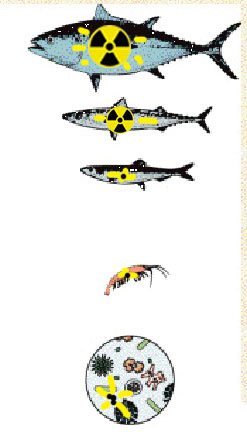
“The discharge, planned to continue for decades, is irreversible. Radionuclides bioaccumulate in marine organisms and can be passed up the food web, affecting marine life and humans who consume affected seafood,”
“The discharge, planned to continue for decades, is irreversible. Radionuclides bioaccumulate in marine organisms and can be passed up the food web, affecting marine life and humans who consume affected seafood,”
RNZ 19 July 2024 , By Pita Ligaiula in Tokyo
Consensus has been reached by Pacific leaders with Japan to address the controversial release of treated nuclear wastewater from the Fukushima nuclear power plant into the Pacific Ocean.
In August last year, Japan began discharging waste from about 1000 storage tanks holding 1.34 million metric tons of contaminated water collected after an earthquake and tsunami in 2011 that caused the meltdown of the Fukushima nuclear plant.
The agreement came at the Japanese hosted 10th Pacific Island Leaders Meeting (PALM10) on Thursday in the capital Tokyo attended by most of the Pacific Islands Forum (PIF) country leaders…………………………..
Pacific leaders emphasised the importance of a shared commitment to safeguarding the health, environment, and marine resources of the Pacific region and a need for transparency from Japan………………………………………….
TEPCO uses a process known as Advanced Liquid Processing System involving special filters which remove from the contaminated water most of the 62 types of radioactive materials, radionuclides such as cesium, strontium, iodine and cobalt but not tritium.
The leaders agreed to keep the ALPS treated water issue as a standing agenda item for future PALM meetings with Japan, supported by an ongoing review process. Their decision reflects concerns about addressing the long-term implications and ensuring continuous monitoring and evaluation.
While consensus was reached at the summit, the wastewater release continues to be questioned by some scientists.
Director of the Kewalo Marine Laboratory at the University of Hawaii, Research Professor Robert Richmond, said concerns remain regarding the efficacy of the ALPS treatment and the contents of the thousands of storage tanks of radioactive wastewater.
“The long-term effects of this discharge on Pacific marine ecosystems and those who depend on them are still unknown. Even small doses of radiation can cause cancer or genetic damage,” Richmond said in a statement to BenarNews after the agreement.
He criticised the current monitoring program as inadequate and poorly designed, failing to protect ocean and human health.
DECLASSIFIED AUSTRALIA by Peter Cronau | 3 Nov, 2023
The Pine Gap US surveillance base located outside of Alice Springs in Australia is collecting an enormous range of communications and electronic intelligence from the brutal Gaza-Israel battlefield – and this data is being provided to the Israel Defence Forces.
Two large Orion geosynchronous signals intelligence satellites, belonging to the US and operated from Pine Gap, are located 36,000 kms above the equator over the Indian Ocean. From there, they look down on the Middle East, Europe and Africa, and gather huge amounts of intelligence data to beam back to the Pine Gap base.
After collecting and analysing the communications and intelligence data for the USA’s National Security Agency (NSA), Pine Gap’s data is provided to the Israel Defence Forces, as it steps up its brutal assault on Palestinians in the Gaza enclave.
“Pine Gap facility is monitoring the Gaza Strip and surrounding areas with all its resources, and gathering intelligence assessed to be useful to Israel,” a former Pine Gap employee has told Declassified Australia.
David Rosenberg worked inside Pine Gap as ‘team leader of weapon signals analysis’ for 18 years until 2008. He is a 23-year veteran of the National Security Agency (NSA).
“Pine Gap has satellites overhead. Every one of those assets would be on those locations, looking for anything that could help them.”
“Pine Gap facility is monitoring the Gaza Strip and surrounding areas with all its resources, and gathering intelligence assessed to be useful to Israel.”
Rosenberg says the personnel at Pine Gap are tasked to collect signals such as ‘command and control’ centres in Gaza, with Hamas headquarters often located near hospitals, schools, and other civilian structures. “The aim would be to minimise casualties to non-combatants in achieving their objective of destroying Hamas.”……………………………………
Pine Gap base’s global role in fighting wars for US and allies
The sprawling satellite ground station outside Alice Springs, officially titled Joint Defence Facility Pine Gap (JDFPG), has been described as the United States’ second most important surveillance base globally.
About half the 800 personnel working at the Central Australian base are American, with Australian government employees making up fewer than 100 of the increasingly privatised staff.
The base is no mere passive communication collector. Personnel at the Pine Gap base provide vital detailed analysis and reporting on SIGINT (signals intelligence) and ELINT (electronic intelligence) it collects.
As well as surveillance of civilian, commercial, and military communications, it provides detailed geolocation intelligence to the US military that can be used to locate with precision targets in the battlefield.
This was first conclusively documented with concrete evidence in a secret NSA document, titled “Site Profile”, leaked from the Edward Snowden archive to this writer and first published by Australia’s ABC Radio ‘Background Briefing’ program in 2017:
“RAINFALL [Pine Gap’s NSA codename] detects, collects, records, processes, analyses and reports on PROFORMA signals collected from tasked target entities.”
These PROFORMA signals are the communications data of radar and weapon systems collected in near real-time – they likely would include remote launch signals for Hamas rockets, as well as any threatened missile launches from Lebanon or Iran.
This present war in Gaza is not the first time the dishes of Pine Gap have assisted Israel’s military with intelligence, including the detecting of incoming missiles, according to this previous report.
“During the [1991] Gulf War, Israeli reports praised Australia for relaying Scud missile launch warnings from the Nurrungar joint US-Australian facility in South Australia, a task now assigned to Pine Gap.”
During the early stages of the 2003 US invasion of Iraq, the NSA installed a data link to send early warning of any Iraqi missile launches detected directly to Israel’s Air Force headquarters at Tel Nof airbase, south of Tel Aviv.
Israel’s access to the jewels of the Five Eye global surveillance network
The NSA “maintains a far-reaching technical and analytic relationship with the Israeli SIGINT National Unit (ISNU),” according to documents published by The Intercept in 2014. The documents show the NSA and ISNU are “sharing information on access, intercept, targeting, language, analysis and reporting”.
“This SIGINT relationship has increasingly been the catalyst for a broader intelligence relationship between the United States and Israel.
It’s thanks to the Pine Gap base, with its satellites so strategically positioned to monitor the Middle East region, along with its targeting and analysis capability, that Israel is able to make use of these benefits.
………………….This wide intelligence sharing arrangement potentially opens up to the Israelis the ‘jewels’ of the Five Eye global surveillance system collected by the NSA global surveillance network, including by Australia’s Pine Gap base.
Declassified Australia asked a series of questions of the Australian Defence Department about the role of the Pine Gap base in the Israel-Gaza war, and about the legal protections that may be in place to defend personnel of the base should legal charges of war crimes be laid. No response was received by deadline. https://declassifiedaus.org/2023/11/03/targeting-palestine/
In some places, Friday’s mass tech outage resembled the beginning of an apocalyptic zombie movie. Supermarket checkouts were felled across the country and shoppers were turned away, airports became shelters for stranded passengers, and live TV and radio presenters were left scrambling to fill airtime. The iconic Windows “blue screen of death” hit millions of devices globally and rendered them effectively useless.
The ABC’s national youth station Triple J issued a call-out for anyone who could come to their Sydney studio to DJ in person. One woman was reportedly unable to open her smart fridge to access her food.
All because of a failure at CrowdStrike, a company that most of us – least of all those who were worst hit – had never heard of before.
It’s thought to be the worst tech outage in history and Australia was at its epicentre: the crisis began here, and spread to Europe and the US as the day progressed. Surgeries were cancelled in Austria, Japanese airlines cancelled flights and Indian banks were knocked offline. It was a horrifying demonstration of how interconnected global technology is, and how quickly things can fall apart.
At its peak, it reminded us of some of the most stressful periods of the pandemic, when shoppers fought each other for rolls of toilet paper and argued about whether they needed to wear masks.
Many of us lived through the Y2K panic. We avoided the worst outcomes but it was an early harbinger of how vulnerable our technology is to bugs and faults, and showed the work required to keep everything up and running. The CrowdStrike meltdown felt closer to what’s really at risk when things go wrong.
As a technology reporter, for years I’ve had warnings from industry executives of the danger of cyberattacks or mass outages. These warnings have become real.
The cause of this outage was not anything malicious. It was relatively innocuous: CrowdStrike has blamed a faulty update from its security software, which then caused millions of Windows machines to crash and enter a recovery boot loop.
Of course Australians are no strangers to mass outages, even as they become more common and more severe.
The Optus network outage that froze train networks and disrupted hospital services just over six months ago was eerily similar to the events on Friday, not least because it was also caused by what was supposed to be a routine software upgrade.
The resignation of chief executive Kelly Bayer Rosmarin did little to prevent another Optus outage a month later. If anything, Friday’s CrowdStrike outage highlights how many opportunities there are for one failure to cripple millions of devices and grind the global economy to a halt. So many of the devices that underpin our economy have hundreds of different ways that they can be knocked offline, whether through a cyberattack or human error, as was likely the case with CrowdStrike.
The incident would likely have been even worse were it a cyberattack. Experts have long warned about the vulnerability of critical infrastructure – including water supplies and electricity – to malicious hackers. Everything is now connected to the internet and is therefore at risk.
And yet the potential damage of such attacks is only growing. We are now more reliant than ever on a concentrated number of software firms, and we have repeatedly seen their products come up short when we need them to just work.
In the US, the chair of the Federal Trade Commission, Lina Khan, put it succinctly.
“All too often these days, a single glitch results in a system-wide outage, affecting industries from healthcare and airlines to banks and auto-dealers,” Khan said on Saturday.
“Millions of people and businesses pay the price.”
Khan is right. The technology we rely on is increasingly fragile, and is increasingly in the hands of just a few companies. The world’s tech giants like Microsoft and Apple now effectively run our daily lives and businesses, and an update containing a small human error can knock it all over, from Australia to India.
The heat is now on CrowdStrike, as well as the broader technology sector on which we rely so heavily, and some initial lessons are clear. Airlines have backup systems to help keep some flights operational in the case of a technological malfunction. As everyday citizens, it’s an unfortunate reality that we need to think similarly.
Keeping cash as a backup is a smart idea in the event of a payment systems outage, as is having spare battery packs for your devices. Many smart modems these days, like those from Telstra and Optus, offer 4G or 5G internet if their main connection goes down. We need more redundancies built in to the technology we use, and more alternatives in case the technology stops working altogether.
For IT executives at supermarkets, banks and hospitals, the outage makes it clear that “business as usual” will no longer cut it, and customers rightly should expect adequate backups to be in place. Before the Optus outage, a sense of complacency had permeated our IT operations rooms and our company boardrooms, and it still remains. No longer.
The “blue screen of death”, accompanied by a frowny face, was an apt metaphor for the current state of play when it comes to our overreliance on technology. Our technology companies – and us consumers, too – need to do things differently if we’re to avoid another catastrophic global IT outage. There’s too much at stake not to.
In this, the second in an occasional series about Peter Dutton’s Coalition plans for nuclear power in Australia, Peter Farley finds the earliest conventional nuclear power could be on online in Australia would be 2048-49. Read the first article on reliability here.
It has been said that we could have nuclear power plants running in Australia in 2035. How realistic is that?
Let’s start with an assessment of how long it would take to place an order. The first thing is for the Opposition to win an election, where they control both the House and Senate.
That is possible but quite unlikely before 2028 but lets assume they get into power and draft very detailed legislation and get it passed by the end of 2025.
Then we must vastly expand the nuclear safety agency ARPANSA to include people with experience in nuclear power plants.
The UK has 700 people doing this job with only nine reactors. Will we build a new industry with fewer inspectors?
Then regulations must be drafted which are updated versions of the very antiquated regulations in the UK and US.
This will be a trade-off be between risk of modernisation and making a mistake or copying and pasting very cumbersome foreign regulations which contribute to unnecessary delays in delivery.
Every page has to be scrutinised to ensure conflicts with existing NEM rules and regulations are resolved. This is not trivial.
Let’s say based on other new bureaucratic endeavours, two years from when the legislation is passed.
With luck draft regulations as far as siting, transmission standards and access, safety zones, cooling water priority and access might be delivered a little earlier to allow site selection to proceed.
Site selection for nuclear power
The Coalitions plans to use existing sites has many complications, that have not yet been clarified, so site selection is by no means simple.
For example, modern nuclear power plants are almost never built as isolated units, having two or more reactors in one spot is necessary for reliability of supply, sharing infrastructure etc.
This is the same as mainline coal and gas plants which are almost always built with two to ten generating units.
Then there is no prospect of having an SMR built in Australia by 2035.
Four projects have already failed this year and every other project has announced delays.
So, although the first commercial Proof of Concept reactor might be operating in Canada in 2032 on a site where it will only be producing 10 percent of site output, we would be foolish in the extreme to place orders for Collie or Port Augusta where two SMRs would be 40-60 percent of site output.
Conventional, large nuclear reactors
Thus, we will be focussed on conventional large reactors in SE Queensland, the Hunter Valley or Latrobe Valley.
Nuclear plants use 20-50 percent more water than coal plants, need additional transmission, need seismic rating and high security safety zones and can’t be built next to an old coal mine.
Given that it takes three to nine years for a simple wind or solar farm to get through all the planning and environmental hoops, it will probably be at best three years after preliminary regulations are released before a site is confirmed, taking us to 2030/31.
Now it is likely that preliminary tender documents could be worked on in parallel with the EIS, but they cannot be finalised until three to six months after all planning approvals are obtained.
In the UK and US it has usually taken two or more years from project approval to order placement, so now we are out to 2033/34 before a contract is signed.
But what about China?
There are claims that China can build a reactor in 4.5 years.
There is no evidence of this, the last reactor connected was on an existing site with existing infrastructure and took 7.5 years.
We could look at Korea, Shin Hanul II again on an existing site with established workforce and fifty years experience in building reactors took 11 years.
That the UK took 19 years, Finland 19 years, France 17 years and the US 15 years, all on existing sites with experienced workforces suggests 15 years would be very optimistic for the first Australian reactor.
Thus the first reactor might come on line if all is well in 2048/49. But if there are legal challenges, workforce issues, site issues (Snowy II, Westgate tunnel etc etc etc) 2055 is quite likely.
After that how fast can we build them.
Korea with an electric equipment industry 15 times as big as us and fifty years of experience building reactors has built six in the last twelve years, the US three and Britain is about halfway through two.
For many reasons the Barakah build time of twelve years from order for the first reactor is not applicable in Australia.
Let’s be really really optimistic and say we can commission a new Nuclear plant every four years, so we have six large reactors on line by 2070-75.
By that time demand is expected to be about 500-600,000 GWh/y and nuclear at best would supply 55,000 GWh or eight to 12 percent of demand.
On the other hand at the recent rate of building wind and solar we have been adding 8-10,000 GWh/y from wind and solar – so by 2070 without accelerating build times they would be supplying an additional 400-450,000 GWh/y
Peter Farley holds an engineering degree and is a manufacturing leader who built pioneering CNC machine tools for export winning many export and engineering awards. Peter has been studying the electricity sector since his 2012 Election to the Victorian Committee of Engineers Australia.
In this, the first in an occasional series about nuclear power in Australia, Peter Farley says the claim of nuclear reliability is vastly overstated.
“No amount of experimentation can ever prove me right; a single experiment can prove me wrong,” – Albert Einstein.
As a student in the late 60’s I watched a training film which assured us that nuclear power was available every hour of every day and it would soon be ‘too cheap to meter’ (Chairman of US Atomic Energy Commission 1954).
In the seventies the nuclear story began to unravel – nuclear plants were nowhere near as reliable as claimed.
Nuclear plants must be shut down for maintenance and refuelling which takes 4-6 weeks every 1-3 years.
An additional complication is that due to the huge thermal mass and the risk of fuel containment failing with rapid operating changes, a nominal two-hour repair of a simple wiring fault requires a 48–72-hour power down/power up process.
Consequently, in the seventies and eighties nuclear availability was in the 70-80% range, not the claimed 95%.
Later it was realised that an emergency shutdown due to an external issue such as a turbine fault, loss of transmission etc., xenon gas was generated within the reactor and stopped the nuclear reaction.
Xenon, which itself is radioactive, must be carefully and thoroughly extracted from the reactor before restart.
After the Great Northeast blackout in the US in 1965 some reactors took two weeks to return to service.
Then it became clear that the benefits of a common design had their downsides.
In Canada in 1998 it was discovered that their design led to premature failure of cooling tubes, so 8 of 22 reactors were shut down. It took until 2006 for production to fully recover.
Then by 2014 a series of upgrades began with one to three reactors offline for 24-30 months each. 2023 output was still 16% down on 2014. France had a similar experience in 2020 and 2022.
The British Magnox reactors had problems with graphite blocks. There wasn’t a single year where nuclear output in the UK was above 86% of capacity.
In Switzerland in 2015 for a brief period all five reactors were off-line.
In Belgium in 2015, output was down 46% on the 2000-2012 average. Worse, for six weeks late in 2018, four of five reactors were offline and for the whole second half of 2018 nuclear output was 61% down on historical levels.
Fortunately for Belgium, they burned a lot of cheap gas. More significantly, they imported an average of 24% and up to 44% of their electricity for the half.
Before turning to the big producers, France and the US, let’s check the latest nuclear champion, Finland.
In winter 23/24 nuclear power ran faultlessly but load varies, so its contribution varied between 23% and 48% of the load.
But by March for long periods, imports were larger than nuclear power output. In May, nuclear output was 40% down on January.
While France is a nuclear success story, it is not without significant problems. Nuclear output peaked in France in 2005 at 450 TWh, 79% share of generation and 81% capacity factor.
By 2016-17 problems began to appear and nuclear output dropped below 400 TWh, then by 2020 around 350 TWh and 67.5% market share.
Then in 2022 disaster struck. A new form of stress corrosion was discovered in Civaux-1 which was only 20 years old.
Further, a record drought meant cooling water was restricted at another six reactors halving power output there, even after a temporary suspension of environmental regulations.
Soon half of France’s reactors were offline. The result was that in the midst of the global gas crisis, France’s 2022 nuclear output was 182 TWh below 2005.
That is the equivalent to 520 Snowy 2.0s. Relative to the NEM, the reduction is equivalent to quadrupling our 2022 gas output and completely draining seventy Snowy 2.0.
The NEM was in near crisis when coal output fell by 4.8% between winter 2021 and winter 2022. In July to September 2022 French nuclear output was down 43% from historical levels so instead of exporting 14% of its electricity for those months it imported 10%. Who will we import from?
While the US nuclear system is more productive with 93% Capacity Factor, it also has 870 GW of fossil fuels and hydro/pumped hydro and import capacity to back up the 97 GW of nuclear.
That is equivalent to increasing our existing coal, gas and hydro capacity by 50% to back up 7 GW of nuclear.
Alternatively, US nuclear power works because it only supplies 18% of US grid electricity from 91 reactors.
If we only want 20% of grid supply from nuclear, that means just four or five conventional reactors.
With 43 coal generators we still have problems when there are clusters of outages. If a large number of reactors is required so that the loss of three to five at once, as has happened in Belgium, Switzerland, Sweden, and Canada is not a problem, we need a number about where the US is now, meaning roughly a hundred 80-120 MW reactors.
But even then, it is no guarantee – in April 2023 nuclear output in the US was down 20% on January
In conclusion, a feasible number of nuclear reactors in Australia would not guarantee reliability, regardless of cost.
Peter Farley holds an engineering degree and is a manufacturing leader who built pioneering CNC machine tools for export winning many export and engineering awards. Peter has been studying the electricity sector since his 2012 Election to the Victorian Committee of Engineers Australia.
Clare Silcock, 21 July 2024, https://www.queenslandconservation.org.au/nuclear_option_shutting_off_cheap_solar Queensland Conservation Council (QCC) has today released a new analysis showing that the equivalent of 45,000 Queensland household solar systems would need to be shut off every day to allow just one nuclear power station to operate in 2040. With the renewable energy rollout well underway, by the time we have built a nuclear power station in Queensland, we won’t have the need for it.
Clare Silcock, Energy Strategist at QCC, said:
Nuclear power stations can’t easily turn off, which means by 2040, we’d have to turn off a staggering 3,700 GWh of cheap renewable energy every year just to run one nuclear power station. We would be shutting off cheap energy to allow expensive nuclear power to run.
This report shows that nuclear power simply doesn’t fit into a modern grid and isn’t what we need to meet our future energy demands at the least cost.
Our energy system is changing rapidly. We’ve nearly doubled renewable energy in Queensland in five years. A large part of this has been from rooftop solar systems which have fundamentally changed when we need energy to support the grid.
Baseload generation is what our power system was built on, but it’s not what we need in the future. Saying that we need baseload generation is like saying that we need floppy disks to transfer files between computers.
What we need is flexible generation and storage which can move energy from when we have lots of it, in the middle of the day, to when we need it overnight. That is not how nuclear power stations work.
The earliest we could possibly build a nuclear power plant in Australia is 2040 – by then we will have abundant renewable energy and technology like batteries and pumped hydro will be providing the flexible storage we need to support that renewable energy.
Nuclear is also much more expensive than renewable energy backed by storage. CSIRO estimates nuclear could be up to four times more expensive to build. It’s as clear as day that the Federal Coalition’s nuclear plan is a fantasy to delay the closure of Australia’s polluting coal-fired power stations.
We would like to see the Federal Opposition focus on a real plan for bringing down emissions and power prices and that would mean backing renewable energy and storage.
The Nuclear Files: The pro-nuke lobby that surrounds the Liberal-National coalition wants Australia to become a fully-fledged nuclear nation – and a permanent dumping ground for the world’s high-level radioactive reactor waste.
“They want it all,” warns long-time anti-nuclear campaigner Dave Sweeney, from the Australian Conservation Foundation (ACF), which is leading the environment movement’s counterattack on the coalition’s nuclear insurgency: “They want Australia to adopt the full nuclear cycle, from cradle to grave.”
The far-reaching ambitions of the pro-nuclear campaign were revealed at their Navigating Nuclear event in Sydney earlier this year, formally opened by the Opposition’s nuclear torchbearer Ted O’Brien MP, and attended by The Fifth Estate.
O’Brien’s enthusiasm for the “big brains” and “calibre of people” in the room at the event, the “big idea” of nuclear energy for Australia, and his job to “listen and learn” is all on show in the video of his opening address.
These nuclear influencers, who have helped to shape the Peter Dutton led coalition’s still-emerging nuclear policy over the past two years, are looking well beyond overturning Australia’s ban on nuclear energy, which would clear the path to build reactors.
Navigating Nuclear, which was promoted as being all about “the facts”, but rapidly descended into a propaganda exercise, heard from one an MIT professor, name about extraordinary ambitions for an all in nuclear Australia:
Most controversially, becoming the world’s repository for high-level nuclear reactor waste, with America’s output alone worth $US1 billion a year
Leveraging the AUKUS nuclear submarine military pact with the US and the UK to drive a civilian nuclear industry
Challenging for the title of global number one uranium producer, which has long been an ambition for the powerful Minerals Council of Australia (MCA) and
Even building reactors in our arid lands to make the deserts bloom with agriculture fed by nuclear-powered water desalination plants.
However unlikely, crazy or dangerous these plans to go beyond nuclear energy may sound, they are being openly proposed within the pro-nuke lobby.
As the ACF’s Sweeney makes clear, this is because pro-nuclear advocates, both here and internationally, want Australia to take a seat at the table with Big Nuke’. This means participating in multiple aspects of the nuclear fuel cycle, from mining more and more uranium through to high level radioactive waste disposal as a global service.
The only thing off the table, at least for now, seems to be Australia joining ranks of nations that are nuclear weapons capable. But even that deep redline has been flirted with in recent months, with Jim Seth, a WA Liberal state executive extolling the benefits of nuclear weapons
His sentiments were echoed in a recent discussion paper from the Australian Strategic Policy Institute suggesting that uncertainty with the AUKUS deal necessitates that “discrete thinking must start now to address these potentially program-killing issues. A Plan B that raises alternatives must be developed. These must include, if China is indeed perceived as a possibly existential threat, the option of Australian nuclear weapons”.
While Sweeney and other critics of Dutton’s domestic nuclear plan do not see nuclear weapons as the inevitable next step they do loudly warn of the voracious appetite of the ideological drivers of the nuclear push and the dangers of nuclear normalisation and mission creep.
“Australians would be wise to be very cautious”, says Sweeney. “Some of the current crop of nuclear promoters absolutely want an Atomic Australia. Their vision is one of unfettered uranium mining and enrichment, fuel processing, domestic nuclear power, national and international radioactive waste storage and Australia to have or host nuclear weapons and war fighting capacity. If they are successful, we will all be far poorer – forever”.
The sheer scale of nuclear ambition was made clear at the all-day Navigating Nuclear workshop, which as well as being opened by O’Brien, the shadow minister for climate change and energy, was attended by his senior adviser, James Fleay, and another outspokenly pro-nuclear coalition MP, the National Party’s David Gillespie.
This is in spite of the event originally promoted as “politicsfree”.
One of the keynote international speakers, Professor Jacopo Buongiorno, based at the Massachusetts Institute of Technology in Boston a top US outlined the economic opportunity for Australia to take the world’s radioactive waste.
Buongiorno estimated that American reactors alone produce $US1 billion worth of high level waste each year.
Currently this waste in the US has been stored for decade above ground at reactor sites, even after decommissioning, Buongiorno said.
This is the same methodology O’Brien is proposing for the seven preferred sites for reactors that it has identified in Australia, which he has said could have operating lives of 60, 80 or even 100 years.
High-level radioactive waste is a hot button issue for the public. Australia has decades of deeply contested history to find a site to accommodate permanent disposal of low and intermediate level radioactive waste from the Australian Nuclear Science and Technology Organisation’s Lucas Heights facility and other sources such as medical.
Commercial reactor waste is hot dangerous and extremely long lived
Sweeney warns that: “Commercial reactor waste is a whole different ball game – hot, dangerous and extremely long lived, the current international best practice for its long term disposal requires very expensive confinement in purpose built facilities, located deep underground in highly geologically stable areas.”
Ultimately, the waste held indefinitely in so-called “dry casks” spread around America is meant to end up in such facilities, but so far, the Americans have never gotten around to actually doing it, in part at least because it costs a bomb!
It’s difficult to imagine a more controversial proposal for Australia’s future than becoming a nuclear dumping ground for the world’s reactor waste, at least part of which will remain dangerously radioactive for many tens of thousands of years.
Sweeney says: “Previous attempts to advance high level global radioactive waste disposal in WA in the 1990s and more recently in South Australia last decade foundered on the jagged rocks of hostile politics, community concern and deep First Nation opposition. But neither the nuclear industry’s waste, nor its need to be seen to have a pathway for disposing of this, has gone away.”
Overseas observers see Australia offers “a convenient postcode to store a permanent poison,” Sweeney says.
They have followers closer to home, including former Foreign Minister Alexander Downer. In a June 2024 column in Adelaide’s The Advertiser, Downer argued that hospitals, schools and roads could all be paid for by a nuclear waste storage facility servicing Australia and other parts of the world, which could reap tens of billions of dollars in revenue, which he based on a state Labor-commissioned 2016 royal commission report.”
The radioactivity of nuclear waste naturally decays and has a finite radiotoxic lifetime. Within a period of 1000 to10,000 years, the radioactivity of HLW (high-level waste) decays to that of the originally mined ore. Its hazard then depends on how concentrated it is … Most nuclear waste produced is hazardous, due to its radioactivity, for only a few tens of years and is routinely disposed of in near-surface disposal facilities. Only a small volume of nuclear waste (~3 per cent of the total) is long-lived and highly radioactive and requires isolation from the environment for many thousands of years.
Sweeney has been close to multiple community fights around plans to site global and national radioactive waste facilities throughout remote and regional Australia.
His experience over decades has seen many promises and scant progress. “Radioactive waste is a serious and unresolved management issue here and overseas. It needs to be isolated and secured from people and the wider environment for staggering periods of time – up to 100,000 years. It lasts longer than any politician’s promise and needs serious attention and management. It should always be approached through the lens of responsibility and human and environmental health, not shouted and touted as a revenue stream.”
O’Brien and his senior adviser Fleay were in the Navigating Nuclear audience when Buongiorno, outlined a series of major nuclear related options for Australia, including the world’s waste dump “opportunity”………………………………………………………………………………………..
What about the security risk and the synergy between military alliance and a civilian nuclear industry?…………………………………………………………..
Such security and proliferation concerns were not high on Buongiorno’s radar as he also cited leveraging AUKUS as another key opportunity for Australia, seeing clear synergies between the military alliance and a civilian nuclear industry.
This is despite then Prime Minister Scott Morrison being very clear of a distinction between AUKUS and any domestic nuclear industry when he stated, “Australia is not seeking to acquire nuclear weapons or establish a civil nuclear capability.
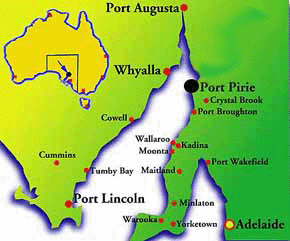
Earmarking Port Augusta for the opposition’s nuclear plan has proved wildly unpopular with Indigenous leaders, who say mining and dumping nuclear material is akin to “killing your mother”.
Others say they believe Australia is lagging behind and needs to embrace nuclear energy.
What’s next?
Questions remain, with voters saying they are still in the dark about how much the plan will cost and how the privately owned land would be acquired.
Earmarking Port Augusta for Peter Dutton’s nuclear plan has proved wildly unpopular with an Indigenous leader, who says he feels so strongly about the issue that he is willing to go to court to fight the proposal.
Nukunu elder Lindsay Thomas said his community was against mining fissionable elements, such as uranium as a whole.
“Our people don’t believe in this, we don’t believe it should have even been dug out of the ground anywhere in Australia,” he said.






 Antinuclear