FBI Sued For Withholding Files On Assange And WikiLeaks

Kevin Gosztola, Sep 12, 2024, https://thedissenter.org/fbi-sued-for-withholding-files-on-assange-and-wikileaks/
“With the legal persecution of Julian Assange finally over, the FBI must come clean to the American people,” Chip Gibbons, policy director for Defending Rights & Dissent.
The civil liberties organization Defending Rights and Dissent sued the FBI and United States Justice Department for withholding records on WikiLeaks and its founder Julian Assange.
“For nearly a decade and a half, we’ve been trying to get at the truth about the U.S. government’s war on WikiLeaks,” declared Chip Gibbons, the policy director for Defending Rights and Dissent.
Gibbons added, “With the legal persecution of Julian Assange finally over, the FBI must come clean to the American people.”
On June 25, 2024, U.S. government attorneys submitted a plea agreement [PDF] in the U.S. District Court for the Northern Mariana Islands after Assange agreed to plead guilty to one conspiracy charge under the U.S. Espionage Act.
Assange was released on bail from London’s Belmarsh prison, where he had been jailed for over five years while fighting a U.S. extradition request. He flew on a charter flight to the Northern Mariana Islands, a U.S. territory where a plea hearing was held.
The plea agreement marked the end of a U.S. campaign to target and suppress Assange and WikiLeaks that spanned 14 years and first intensified after WikiLeaks published documents from U.S. Army whistleblower Chelsea Manning that exposed crimes committed in U.S. wars in Iraq and Afghanistan as well as U.S. complicity in human rights abuses in dozens of countries around the world.
“As soon as we began publishing newsworthy stories about US war crimes in 2010, we know the US government responded to what was one of most consequential journalistic revelations of the 21st century by spying on and trying to criminalize First Amendment-protected journalism,” stated WikiLeaks editor-in-chief Kristinn Hrafnsson.
Hrafnsson continued, “While WikiLeaks has fought for transparency, the U.S. government has cloaked its war on journalism in secrecy. That’s why Defending Rights & Dissent’s lawsuit is so important, as it will help unmask the FBI’s efforts to criminalize journalism.”
On June 27, Defending Rights and Dissent requested [PDF] “all records created, maintained, or in the custody of the FBI that mention or reference: WikiLeaks; Julian Assange.”
The FBI separated the request into two requests—one for files mentioning “WikiLeaks,” one for files mentioning Julian Assange. And by August 19, the organization was informed by the FBI that it would take around five and a half years (2,010 days) to “complete action.”
Previously, on June 22, 2021, Defending Rights and Dissent submitted a nearly identical request. It took the FBI two years to respond and notify the organization that the documents could not be provided because there was a “law enforcement” proceeding that was pending against Assange.
The FBI became involved in pursuing an investigation against Assange and WikiLeaks in December 2010.
In 2011, FBI agents and prosecutors flew to Iceland to investigate what they claimed was a cyber attack against Iceland’s government systems. But as Iceland Interior Minister Ögmundur Jónasson told the Associated Press in 2013, it became clear that the FBI agents and prosecutors came to Iceland to “frame” Assange and WikiLeaks.
The FBI was interested in interviewing Sigurdur Thordarson, a serial liar and sociopath who embezzled funds from the WikiLeaks store and sexually preyed on underage boys. As I recount in my book “Guilty of Journalism: The Political Case Against Julian Assange,” Thordarson subsequently became an FBI informant or cooperating witness.
“When I learned about it, I demanded that Icelandic police cease all cooperation and made it clear that people interviewed or interrogated in Iceland should be interrogated by Icelandic police,” Jónasson added.
A little more than a year before the U.S. government’s prosecution against Assange collapsed, the FBI approached three journalists who had worked with Assange but had a falling-out with him. Each refused to help U.S. prosecutors further their attack on journalism.
“The decision to respond to reporting on U.S. war crimes with foreign counterintelligence investigations, criminal prosecutions, and dirty tricks continues to cast a dark shadow over our First Amendment right to press freedom,” Gibbons said.
Gibbons concluded, “We will work tirelessly to see that all files documenting how the FBI criminalized and investigated journalism are made available to the public.”
Albanese has a second chance with AUKUS
Australia is to spend mind-boggling money to weaken its own security. Marles has released a National Defence Strategy which centres on what he calls “projection”. That is, Australian forces threatening China from China’s surrounding waters.
it is America which now sets our defence policy,
By Mike Gilligan, Sep 14, 2024 https://johnmenadue.com/albanese-has-a-second-chance-with-aukus
Australia is to spend mind-boggling money to weaken its own security. Minister RIchard Marles has released a National Defence Strategy which centres on what he calls “projection”. That is, Australian forces threatening China from China’s surrounding waters. The Albanese Government’s defence policy manufactures grievous risk for Australia. That risk must be understood by the government.
The weekend Sydney Morning Herald (7 September) front page said: “Australia key to new US security scheme” by Peter Hartcher in Washington.
Hartcher is known as part of the Herald’s China-threat scare in March 2023, telling Australians that we face war with China within three years. Today that leaves just 18 months at the outside before war breaks out. Clearly ill-founded, it was a sensationalist attempt to panic Australians into embracing America’s planning for conflict with China.
The Americans are still at it, of course. And Hartcher is their messenger – boasting that his access in Washington is special because his interview at the White House is the only one which President Joe Biden’s National Security Adviser, Jake Sullivan, has given to Australian media in his 3-1/2 years in the role. Hartcher followed up with another report a few days later explaining that the Americans are looking for another big technology project to foist on Australia. In a hurry, because progress against China has been too slow.
Sullivan wants the new scheme stitched up before Biden leaves office. And by the way, Australia must spend more on defence for its role against China.
America is accustomed to dealing with its allies in that way. Europe’s NATO forces always have been shaped by US close oversight. Its member states are regularly hectored to spend more on defence against a common enemy. Sullivan is treating Australia just as he would another NATO ally. Without a second thought. And Australia’s leaders have fallen into line obsequiously.
Again it has to be said – Australia is not like the NATO countries. NATO was set up in response to an agreed security threat, the USSR.
We have no security threat. No Australian Government has declared, much less demonstrated, that China is a security threat. We had decades of understanding with the United States that our defence spending should be directed to Australia’s own defence with our own forces. Without relying on America. In situations where Australia supported the US militarily overseas, it would be with forces which we held for our own priorities. Nothing special would be done for America. America agreed. That was Australia’s independence in action.
It worked for 35 years until President Barack Obama visited in 2010 effectively requiring Australia to do an about-face. Signalling that henceforth Australia’s defence would be done America’s way.
The Albanese Government’s defence policy manufactures grievous risk for Australia. That risk must be understood by the government.
It is Australia’s experience with the US itself which defines the risk. No need to look elsewhere for examples. Ever since the ANZUS treaty was signed in 1953, America has told Australia not to rely on it if attacked. Again in contrast to NATO, ANZUS deliberately avoids American commitment to assisting Australia if attacked. It was the proof of that American reluctance (over Indonesia) and the Vietnam tragedy which led to Australia facing reality – bipartisanly adopting a self- reliant defence policy in 1976. The risk of not embracing self- reliance was deemed intolerable. To not pursue self-reliance feckless. And that initiative came with America’s enthusiastic endorsement, for 35 years.
Today it suits America to use Australia’s forces for its own ends against China. Yet it won’t commit to our security by dignifying us with a genuine treaty. The obvious risk is that America’s interest in Asia will decline, for many reasons. Then Australia will be left with defences of little use for our own need. What good is an island-hopping army dependent on US Marines, who have gone home? It’s been said before. But the profound risk hasn’t sunk in.
At the business end, the Albanese Government is spending heavily to dump Australia ever deeper into the risk predicament. Marles flaunts the financial cost. Noting that the Defence budget was $48 billion in 2022-23, the Albanese Government will raise it to $55.7 billion in 2024-25:
“These increases will see annual Defence spending almost double over the next ten years to $100 billion in the financial year 2033-34. Taken over a 10-year period, it will be the largest sustained growth in the Defence budget since the Second World War.”
This is the spending which Sullivan says should be increased. Australia’s defence budget of $58 billion is the same as Japan’s, also accelerating because of US pressure.
Australia is to spend mind-boggling money to weaken its own security. Marles has released a National Defence Strategy which centres on what he calls “projection”. That is, Australian forces threatening China from China’s surrounding waters. Sam Roggeveen in his elegant essay “The Jakarta Option” describes the influences which render Marles’ strategy foolhardy. He presents evidence of a structural shift in warfare which renders maritime attack on an opponent’s territory increasingly hazardous. The exchange ratio of maritime forces to land-based weapons has swung heavily to the defender ie China in this case. Marles strategy of “projection” is squarely on the wrong side of this asymmetry.
So, what to do about this latest American “initiative”? Albanese tells the tale of having just one day to consider AUKUS when in opposition. He now has the full resources of Cabinet and can set his own timetable. He can require Marles to talk to the risks and costs to Australia of his National Strategy of power projection. And this latest directive from Washington. Ministers, especially the treasurer, should work through the risks, costs and consequences so that they genuinely know what Australia is being led into at vast cost.
Back to Hartcher. He unwittingly does us a service, demonstrating yet again that Australians have to rely on the candour of American leaders to see through the murky verbiage of Defence Ministers, confirming that it is America which now sets our defence policy, down to project detail. Hartcher will have something to brag about when he has the level of access in Beijing which he claims in Washington.
Labor claims Aukus nuclear waste dumping issue just a Greens scare campaign

the amendment did not specifically mention “high-level radioactive waste” and it “still allows the US and UK to dump intermediate-level waste, and Australian high-level waste, anywhere in Australia”.
Matt Thistlethwaite, an assistant minister, said Australia would “not manage, store or dispose of spent nuclear fuel from the US or the UK submarines”.
Legislation before Australian parliament covers the way the country’s nuclear-powered submarine program will be regulated
Guardian, Daniel Hurst Foreign affairs and defence correspondent, 13 Sept 24
The Albanese government has bowed to pressure to close an Aukus loophole, insisting that the newly revealed changes will ensure Australia will not become a dumping ground for nuclear waste from US and UK submarines.
The Greens argued the government’s latest amendments did not go far enough and it was becoming increasingly clear the Aukus security pact was “sinking”.
But Labor MPs later told the parliament Australia would not become “a dumping ground for nuclear waste for other countries” and argued such claims were part of “a scare campaign”.
The legislation before the Australian parliament covers the way the country’s nuclear-powered submarine program will be regulated. It includes the creation of a new statutory agency, the Australian Naval Nuclear Power Safety Regulator.
The bill – in its original form – talked about “managing, storing or disposing of radioactive waste from an Aukus submarine”, which it defined broadly as Australian, UK or US submarines.
This prompted concerns from critics that the bill could pave the way for Australia to eventually store nuclear waste from other countries, regardless of a political commitment from the incumbent government not to do so.
In May, a Labor-chaired inquiry called for a legislative safeguard to specifically rule out accepting high-level nuclear waste from the US and the UK.
New amendments circulated by the government on Wednesday include a “prohibition on storage and disposal of spent nuclear fuel that is not from an Australian submarine”.
The wording says the regulator “must not issue a licence” for the storage or disposal in Australia “of spent nuclear fuel that is not from an Australian submarine”.
The government is also amending the bill to prevent appearances of conflicts of interest at the new naval nuclear safety regulator.
The legislation will ensure anyone who has worked in the Australian defence force or the Department of Defence in the previous 12 months cannot be appointed to be the director general or deputy of the new regulator.
The defence minister, Richard Marles, said the amendments would “reaffirm the government’s already-established commitment that Australia will not be responsible for the storage or disposal of high-level radioactive waste from the US, UK or other countries”.
He said the government would “continue to build the foundations to safely and securely build, maintain and operate conventionally armed, nuclear-powered submarines”.
Greens say changes ‘far from clear’
But the Greens defence spokesperson, David Shoebridge, said the amendments were “far from clear”.
“The Albanese Labor government tried to sneak through a loophole that would allow the UK and US to dump their nuclear waste in Australia,” Shoebridge said.
“We called the government out and people around Australia pushed back, now Albanese is quickly putting through a half-measure to shut everyone up.”
Shoebridge said the amendment did not specifically mention “high-level radioactive waste” and it “still allows the US and UK to dump intermediate-level waste, and Australian high-level waste, anywhere in Australia”.
“Everyone can see Aukus is sinking,” he said.
Matt Thistlethwaite, an assistant minister, said Australia would “not manage, store or dispose of spent nuclear fuel from the US or the UK submarines”.
He told the parliament’s federation chamber that the government’s new amendments were intended to “put the matter beyond doubt”.
A fellow Labor MP, Rob Mitchell, said: “We will not be, as some have suggested, a dumping ground for nuclear waste for other countries. And it’s important that we put that scare campaign to bed very quickly and very clearly.”……………. https://www.theguardian.com/world/article/2024/sep/11/labor-aukus-nuclear-waste-loophole-greens
Record weeks for renewables blow up Dutton’s nuclear con

The record high of low-cost wind and solar in the grid comes as we are still waiting for the costing on the Coalition’s plan to nationalise the eye-watering cost of seven nuclear plants.
Tim Buckley and Annemarie Jonson, 12 Sept 24, https://www.afr.com/policy/energy-and-climate/record-weeks-for-renewables-blow-up-dutton-s-nuclear-con-20240910-p5k9e4
It’s been a red-letter few weeks for renewables in Australia. In the last week of August, coal dropped below 50 per cent of electricity generation for the first time, as renewables’ share rose to a record high 48.7 per cent, boosted by windy conditions and low grid demand.
In August last year, coal contributed 57 per cent and renewable energy held a 37 per cent share
As in the US and Britain, where zero-emissions supply is burgeoning as fossil fuels’ contribution to generation falls, this threshold moment in Australia symbolises that the inevitable shift to clean energy is well under way and accelerating here and globally. China is deploying 23 gigawatts of renewables every month, four times what Australia does in a year.
The record-high renewable energy penetration in our national electricity market was accompanied by near record-low wholesale prices, averaging $57 per megawatt hour in the last week of August, versus $91 in August last year. This shows that more renewables equals cheaper power.
South Australia is the standard-bearer for Australia’s renewable energy future. In the past seven days, more than 75 per cent of its power use was generated by renewables, at average wholesale prices of just $37 per megawatt hour, way below the $123 average over the past year.
South Australian Energy Minister Tom Koutsantonis has revised the state’s renewables target to 100 per cent by 2027, off the back of the continued rollout of clean energy infrastructure.
This includes three big batteries announced last week under Federal Energy Minister Chris Bowen’s flagship Capacity Investment Scheme – a key driver of investment momentum underpinning the renewables build-out nationally – and major grid developments, with concomitant projected residential and business energy bill savings.
The federal government and its state counterparts are getting on with the job of accelerating our national energy transition, working to deliver the federal 82 per cent renewables by 2030 target and the resulting energy bill relief. The lower house passed the Future Made in Australia Act this week, key to the government’s vision for a renewables-powered economy.
Still no nuclear costings
Meanwhile, the federal Coalition continues to perpetuate its nuclear con, designed to blow up progress on the transformation of our energy system to low-cost, reliable firmed renewables and entrench decades more of volatile, expensive fossil fuel-based power while we wait … and wait.
Next week marks three months since Opposition Leader Peter Dutton and chief nuclear spruiker Ted O’Brien released their fact- and costings-free, one-page nuclear memo, effectively a note proposing to nationalise the eye-watering cost of construction of seven nuclear plants nationwide – in a country with zero history and expertise in nuclear power generation, on a timeframe that, by all expert accounts, will not result in any material delivery before the mid-2040s. We’re still waiting for their budget projections on this excuse for a policy.
Only this week, Dutton was reported as dismissing questions about budget impacts because he didn’t want to overload Australians with too much information, as the government released an ad citing calculation by industry body the Smart Energy Council that the nuclear energy build would cost up to $600 billion and add $1000 annually to household electricity bills.
Our estimate is that the public cost would be a minimum of $100 billion, and this would inevitably be taxpayer-funded because, unlike firmed renewables, into which private capital is increasingly flowing, there is zero investor interest in nuclear in Australia without massive government subsidies, risk transfer and guarantees.
The Coalition plan involves a fiscally negligent impost on consumers already struggling with cost-of-living pressures. The global history of huge cost blowouts and bailouts in every Western economy building nuclear exacerbates this, and should discourage even the most credulous believer.
This alone makes nuclear unviable here. But the clincher is ongoing generation costs feeding into retail prices. The 2024 GenCost report by the CSIRO and the Australian Energy Market Operator prices large-scale nuclear energy at $155 to $252 a megawatt hour. That is double their estimate of the cost of fully firmed renewable energy of $90 to $100, even after factoring in grid transmission, curtailment and battery firming costs.
The renewables surge is the way of the future. We cannot afford to entertain the Coalition’s damaging nuclear distraction.
Any government proposing nuclear here would be robbing Australians three times: once via a $100 billion public capital subsidy for nuclear reactors; again by locking in long-term hyperinflated energy prices; and third to compensate owners of the former coal power sites the Coalition has slated for nuclear, which have already built new clean energy assets, such as batteries onsite.
Progress is building on transforming our grid with superabundant wind and solar energy, distributed across rooftops and utility-scale, backed up by battery storage and modernised transmission. This now needs further acceleration, particularly given looming closures of breakdown-prone, expensive end-of-life coal power clunkers.
The evidence that firmed renewables win on cost is irrefutable, and double-digit annual deflation of battery and solar costs widens this advantage every year. The energy market operator last month confirmed it sees no energy supply reliability gaps to 2030 in the national electricity market, assuming planned renewables projects proceed on time and at the targeted scale.
The renewables surge we have experienced is the way of the future. We cannot afford to entertain the Coalition’s damaging nuclear distraction. For the sake of Australia, let’s hope that as the renewables reality rises, the Coalition’s domestic nuclear pipe dream is consigned to oblivion, where it belongs.
Any government proposing nuclear here would be robbing Australians three times: once via a $100 billion public capital subsidy for nuclear reactors; again by locking in long-term hyperinflated energy prices; and third to compensate owners of the former coal power sites the Coalition has slated for nuclear, which have already built new clean energy assets, such as batteries onsite.
Progress is building on transforming our grid with superabundant wind and solar energy, distributed across rooftops and utility-scale, backed up by battery storage and modernised transmission. This now needs further acceleration, particularly given looming closures of breakdown-prone, expensive end-of-life coal power clunkers.
The evidence that firmed renewables win on cost is irrefutable, and double-digit annual deflation of battery and solar costs widens this advantage every year. The energy market operator last month confirmed it sees no energy supply reliability gaps to 2030 in the national electricity market, assuming planned renewables projects proceed on time and at the targeted scale.
The renewables surge we have experienced is the way of the future. We cannot afford to entertain the Coalition’s damaging nuclear distraction. For the sake of Australia, let’s hope that as the renewables reality rises, the Coalition’s domestic nuclear pipe dream is consigned to oblivion, where it belongs.
TODAY. What is behind all the drama of long range missiles for Ukraine to send to Russia?
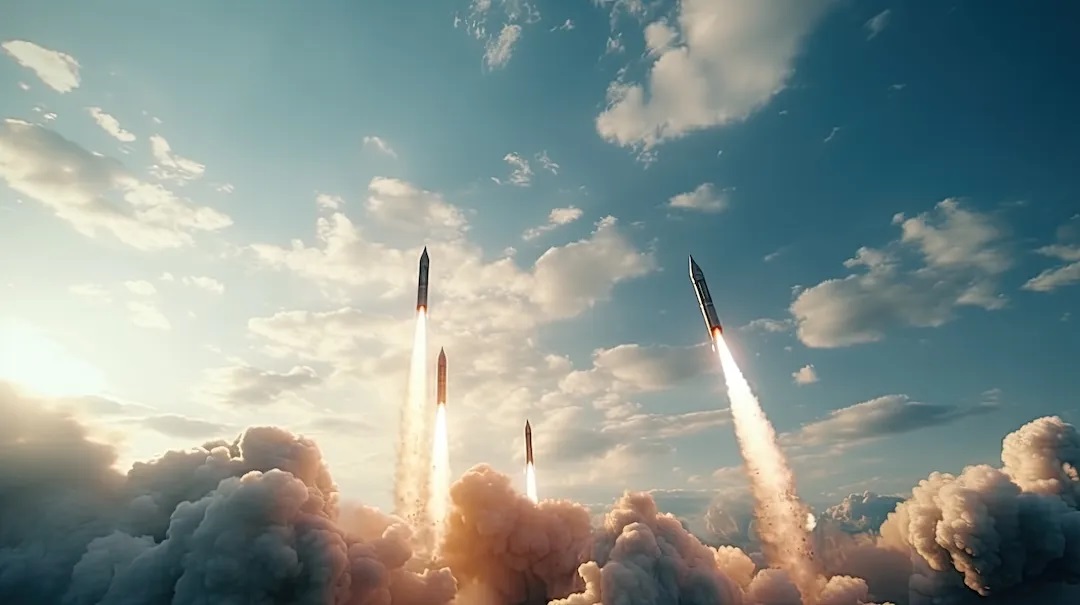
It certainly looks like a dramatic development – as globe-trotting master of ceremonies Antony Blinken, strongly hinted that the US, UK, and NATO might soon allow Ukraine to have long-range missiles attacking deep inside Russia.
Jubilation all round – this is what Zelensky has been clamouring for! It’s the next exciting development, following all the joy of Ukraine’s incursion into the Russian area of Kursk. Best to get over that one quickly, with its huge cost in Ukrainian troops’ lives, without any actual military usefulness to Ukraine.
The dramatic need for these missiles is emphasised as Blinken confirmed that Iran was sending ballistic missiles for Russia to use against Ukraine. These are in fact Project 360 close-range missiles. But no matter – it sounds like a good reason for Ukraine to get long- range ones.
Anyway the point is – we all have to be reassured that Ukraine is winning this war. The Western media dwells on each exciting new development like this, rather than the unpalatable facts that Ukraine is falling back in the critical Donbass area, and that it’s running out of troops, that Zelensky’s survival as president depends on the war continuing a losing fight.
Meanwhile Putin is strongly warning of severe repercussions if the West lets Zelensky attack Russia with long-range missiles. USA and NATO are well aware of the danger of the war expanding into a Russia versus NATO and USA. They don’t want this. Russia doesn’t want this.
The dilemma is for the USA to demonstrate its “iron-clad” support for Ukraine, without actually really upsetting Putin too much. Hence there’s a lot of debate in the West about how to go about sort of sending long-range missiles for Ukraine, but sort of not really using them too much. And how to train and support Ukrainians in the use of them?
To further complicate this issue, it is important for Joe Biden in his last months as President to demonstrate that he’s a tough guy – not some sort of weak sop who would – heaven forfend! sink to negotiations with Putin and end the carnage. So – a forceful decision about long-range missiles for Ukraine would look pretty good in that context.
Only you need some intricate diplomatic footwork to spin it all – which is where the silver-tongued skills of manipulators like Antony Blinken come in. It all has to look very hard and dangerous, without actually being so – without too much provocation of Wladimir Putin, who probably understands all this, underneath his bombastic pronouncements.
So – the war drags on, the deaths continue, Ukraine faces a winter with possibly great suffering, as Russia continues not only its troop attack, but also attacks on Ukraine’s power supply.
But – look on the bright side – it’s great for the USA’s weapons companies and their investors. And we, distant media-watchers continue to be awed with the drama, wait for the next development, and wonder if it’s a dress rehearsal for the Taiwan-China one to follow this.
1 This month

of the week – Australians for War Powers Reform (AWPR)
To see nuclear-related stories in greater depth and intensity
 Antinuclear