Coalition should show us its sums on nuclear
September 20, 2024, https://www.smh.com.au/national/nsw/coalition-should-show-us-its-sums-on-nuclear-20240920-p5kc2k.html
How many more studies are needed to show what is glaringly obvious to everyone? That nuclear power is not cheap and that it is potentially very expensive (“Extra cost of nuclear power revealed”, September 20)?
Despite this, the Coalition keeps sticking to its guns. They can’t be wrong and any study that says otherwise is “shallow and flawed”. They claim the latest study cherry-picks the worst cases, ignoring that any selection is needed to make the study more realistic. Australia won’t have access to cheap labour, so those cases should rightly be ignored. Also, nuclear energy is not where you want to cut corners to keep costs down. And yet, the Coalition has decided to go down the nuclear path.
How can you make a decision without the supporting numbers? If they have the numbers they should release them. David Rush, Lawson
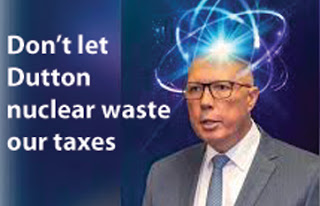
Nuclear is not a viable option for Australia. It will be too expensive and it will take far too long to be of any use and by the Coalition’s own numbers, it will produce almost no electricity even if they are built. Every report from the CSIRO down that exposes Peter Dutton’s nuclear brain explosion has been belittled by the Coalition. The Coalition says it will release its costings eventually. Presumably, they don’t know what the cost will be yet, but given their wildly inaccurate estimates on Snowy 2.0 and inland rail, we have little cause for hope of an accurate figure. Ross Hudson, Mount Martha (Vic)
Coalition energy spokesman Ted O’Brien calls the first analysis of the Coalition’s nuclear plan shallow and flawed – in other words fake news. Having cherry-picked the lowest numbers in their discussions of this policy, and choosing their examples, the Coalition will now have to present their documentation as to how low electricity prices will be under their leadership. As a taxpayer, I’m concerned about the level of accountability if there are cost blowouts or hugely extended construction times. So even if the proposed nuclear plants can deliver cheaper electricity, what happens in the meantime? The Coalition’s switch to government ownership of this infrastructure and the cash splash to those communities who accept a nuclear plant is using taxpayer money to subsidise lower electricity prices to win this argument. We are not just building a few buildings – we are creating a whole new industry from scratch. Meanwhile, another decade or so will pass and more opportunities will be wasted for a better environment. Robert Mulas, Corlette
Ted O’Brien says the US non-profit think tank the Institute for Energy Economics and Financial Analysis has cherry-picked the costs for the opposition’s nuclear “plan”. Why it would do this is unclear but far from choosing selected examples, it has based its analysis on average bills for construction of large-scale nuclear plants by countries with comparable economies to Australia. As for who will put up the money, O’Brien says they will be built by a government entity while Angus Taylor says they will not be publicly subsidised. Peter Nash, Fairlight
More than a third of Australian households have solar power and they won’t like analysis from the Smart Energy Council that shows Dutton’s seven nuclear reactors will shut down solar panels for between 1.8 and 2.9 million homes. The council says that as nuclear power can’t be switched off, it will continue pushing power into the grid, “regardless of whether it’s the most expensive form of energy, or even needed”. Is this really the best energy policy Dutton can come up with, or is it simply an expensive smokescreen to extend the life of fossil fuels? Alison Stewart, Riverview
We are now told our power bills may rise by $665 a year to pay for nuclear energy infrastructure costs. Is this why Dutton is so reluctant to release his costings? Peng Ee, Castle Cove
No comments yet.
1 This month

of the week – Australians for War Powers Reform (AWPR)
To see nuclear-related stories in greater depth and intensity
 Antinuclear
Leave a comment