Indonesia, Solomon Islands join countries banning nuclear weapons, putting Australia at odds with neighbours
ABC, By Lachlan Bennett and Erwin Renaldi, 29 Sept 24.
Indonesia, a country of 275 million and one of Australia’s closest neighbours, is stepping up efforts to enforce a global ban on nuclear weapons.
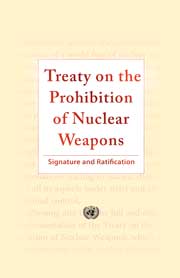
This week, it officially joined the United Nations Treaty on the Prohibition of Nuclear Weapons — confirming its ratification of the pact along with Solomon Islands and Sierra Leone.
Indonesia’s Ministry of Foreign Affairs said in a statement it would put “moral and political pressure on nuclear weapon states to stop their development”.
The treaty, which came into force in 2021, now boasts almost 100 signatories.
But it has thus far failed to secure Australia or the big nuclear powers: China, the US, Russia, India, the UK and France.
Amid rising tensions in the Asia-Pacific, many smaller nations want the bomb banned before it’s too late.
Why hasn’t Australia signed the new prohibition treaty?
Australia has a long history of supporting anti-nuclear weapons initiatives.
This includes helping to establish the 1996 Comprehensive Nuclear Test Ban Treaty and the 2010 Non-Proliferation and Disarmament Initiative.
Most importantly, Australia’s efforts are underpinned by the Treaty on the Non-Proliferation of Nuclear Weapons — which it signed in 1970.
That treaty has 191 signatories, more than any other arms disarmament agreement in history, and has overseen a decline in global stockpiles and countries including South Africa and Ukraine agreeing to relinquish their arsenals.
But international relations lecturer Muhadi Sugiono, from Gadjah Mada University in Indonesia, said non-proliferation alone had failed to force nuclear powers to abandon their weapons programs.
“It is impossible, in fact, to expect the Non-Proliferation of Nuclear Weapons Treaty will achieve this goal,” he said.
“There is no legal framework which demands them to do so.”………………………………………………………………………
Is Australia really serious about banning nukes?
Despite Australia’s strong anti-nuclear activities, its alliance and reliance on nuclear superpower the US has raised eyebrows among advocates.
Dr Sugiono said Indonesian authorities recognised Australia’s “very, very strong” opposition to nuclear proliferation.
“But at the same time, the position is very ambiguous because Australia is very close to the US,” he said.
These concerns were brought into focus during a Senate hearing in 2023, when the Defence Department was grilled about Australia’s commitment to the South Pacific Nuclear Free Zone.
That treaty prohibits the stationing of nuclear explosives on Australian territory.
However, the United States’ policy of “neither confirming or denying” the presence of its weapons raised suspicions about what might be onboard visiting US aircraft…………………………………………………..
University of Sydney international relations professor Justin Hastings said that explains why most signatories of the new prohibition treaty were “non-aligned states” — in other words, countries that are neither allied with Western powers or their strategic rivals like China and Russia.
“Australia and many other countries want to have their cake and eat it too,” he said.
“They don’t have nuclear weapons, but they do want to benefit from the extended deterrence that comes from other countries having nuclear weapons.”
What does AUKUS have to do with it?
The optics were further clouded by the signing of the AUKUS defence pact with the US and UK, even though it will bring nuclear-powered submarines and not nuclear weapons to Australian shores.
The Indonesian government said it was blindsided by the announcement, forcing Australian diplomats to rush to calm the anxieties in South-East Asia and emphasise that Australia has no desire to obtain nuclear weapons.
International Campaign to Abolish Nuclear Weapons coordinator Tim Wright said signing the prohibition treaty would help Australia allay the concerns of its Pacific neighbours and “create additional guardrails against nuclear weapons”.
And Australia wouldn’t have to end its alliance with the US, given other allies like the Philippines have already signed.
“There would clearly be issues that arise in relation to the alliance that would need to be dealt with,” Mr Wright said.
“But there are precedents that we can point to that suggests that this wouldn’t spell an end to the alliance, as some people have feared.”
Why is there a new treaty, when we’ve already got one?
The prohibition treaty is designed to work in conjunction with existing non-proliferation agreements and fill a “legal gap” to ensure nuclear nations eliminate their weapons……………………………………………………
The new treaty also contains provisions to people and places impacted by nuclear testing, such as the Pacific, which saw hundreds of bombs denoted over several decades.
“It’s not just a treaty about disarmament, it’s also a treaty for nuclear justice,” Mr Wright said.
“There’s a real strong sense of regional solidarity in advancing disarmament, this understanding that people in the region have suffered.”
So what does this mean for Australia’s relations in the region?…………………………………. https://www.abc.net.au/news/2024-09-29/indonesia-ratifying-nuclear-pact-what-it-means-for-australia/104401610—
No comments yet.
1 This month
15 April – Zoom –Nuclear Power is Not the Solution
Apr 15, 2026 01:00 AM in Canberra, Melbourne, Sydney

Join the International Physicians for the Prevention of Nuclear War (IPPNW) on Tuesday, April 14th for a timely webinar exploring the risks associated with nuclear power and challenging the myth that it offers a simple, safe, carbon-free solution to the climate crisis

of the week – Australians for War Powers Reform (AWPR)
To see nuclear-related stories in greater depth and intensity
 Antinuclear
Leave a comment