Today. In praise of Joe Biden – an unfashionable opinion.

Yeah. We’ve all gotta agree. Joe Biden is silly, demented, – blah blah.
Well, I don’t agree. I watched that famous debate, after which everyone affirmed that Biden was a disaster.
The thing is – Biden made a couple of obvious glitches – mixing up names – during this debate (something that could happen to anybody, in the stress of the moment).
So the media, and the rest of the world, blindly agreed on how badly Biden debated. Never mind the fact that he gave a clear and lucid discussion on the achievements and policies of his government.
Meanwhile – the media coverage of the more colourful Trump was much more fun. There was definite disagreement about it between media outlets. The big question was exactly how many lies did Trump tell? Was it 32? No – some argued that it was only 28.
So – now that we’re all convinced that Biden doesn’t matter -we can ignore what he says and does about current urgent issues?
On the present Israeli military crisis – how will Israel punish Iran for its attacks on Israel? There’s this great idea that I’m sure that Netanyahu would love – to attack Iran’s nuclear site. But the Israelis do need the USA’s blessing to do that. But President Biden has said that while he is working with Israel he wouldn’t support strikes on Iran’s nuclear facility.
On the present Ukraine military crisis, the Western media seems to be in complacent agreement that Ukraine can defeat Russia, and all that Ukraine needs is long-range missiles – supplied by USA/NATO. These missiles could strike deep inside Russia, could potentially strike Moscow. Russia’s President Putin has repeatedly warned against this. Now Putn has changed Russia’s doctrine on using nuclear weapons, making it clear that he is prepared to use them, in the event of Ukrainian attacks deep within Russia.
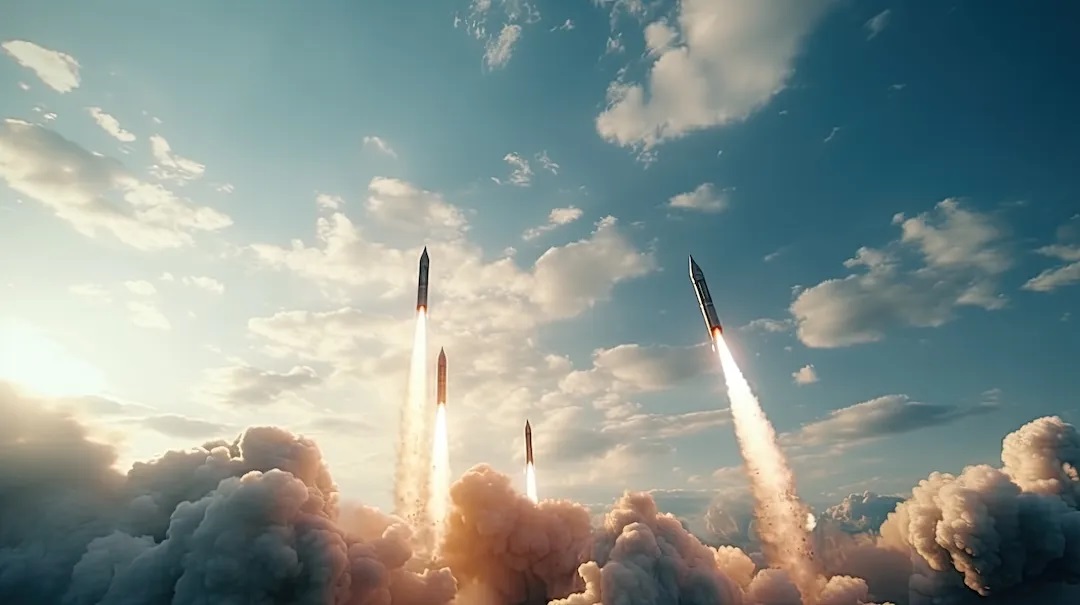
President Biden, while allowing Ukraine some use of long-range missiles in areas near Ukraine, continues to rule out strikes deep within Russia.
For this attitude, Biden gets criticism, near to ridicule, from the media, almost universally – summed up by the Washington Post editorial board – “Mr. Biden needs to give permission and set the ground rules quickly.”
Donald Trump has come out with a very sensible-sounding policy on Ukraine. Trouble is – (a) you cannot trust a word that this man says, and (b) Trump’s record as president promotes nuclear war – undoing the Iran nuclear deal and the Intermediate-Range Nuclear Forces treaty with Russia.
It is now perhaps only President Joe Biden who is stalling and preventing the rush to nuclear Armageddon.
I can only conclude that the Western media in general (some exceptions):
*doesn’t do its homework – check on the facts.
*likes to please its nuclear-military-industrial-complex sponsors
*finds Trump much more entertaining to write about.
I am grateful to Julie Hollar, who clearly set out the case for questioning the corporate media’s judgement in covering this issue of the risk of Ukraine using long-range missiles.
Hey Australia, Ontario is no model for energy and climate policy
Energy and climate strategy should prioritize options with lowest economic, environmental, technological and safety risks. Ontario’s does the opposite.
by Mark Winfield October 4, 2024, https://policyoptions.irpp.org/magazines/october-2024/ontario-energy/
Over the past few weeks, word has begun to reach Ontario of a series of stories in the Australian media in which the province is being held up as a model for climate and energy policy Down Under.
It seems that Peter Dutton, the leader of the federal opposition Liberal (the conservative party in Australian politics), has been promoting Ontario’s nuclear heavy energy plans as a pathway for Australia.
For those in the province familiar with the ongoing saga of its energy and electricity policies, the reactions to the notion of Ontario being an example of energy and electricity policymaking have ranged from “bizarre” to “you couldn’t make this up.”
Poor maintenance and operating practices led to the near-overnight shutdown of the province’s seven oldest reactors in 1997, leading to a dramatic rise in the role of coal-fired generation and its associated emissions of greenhouse gases (GHGs) and smog precursors. The refurbishment of the “laid-up” reactors themselves went badly. Two ended in write-offs, and the others ran billions over budget and years behind schedule, accounting for a large portion of the near doubling of electricity rates in the province between the mid-2000s and 2020.
Towards a $100-billion nuclear binge?
Only two other provinces followed Ontario’s lead on nuclear. Quebec built two reactors and New Brunswick one, each of them completed in the 1970s or the early 1980s. The Gentilly-1 facility in Quebec was barely ever operational and closed in 1977. The Gentilly-2 facility was shut down in 2012, and assessed as uneconomic, particularly in light of Ontario’s experiences in attempting to refurbish its own. The construction and then refurbishment of the Point Lepreau facility has repeatedly pushed New Brunswick Power to the brink of bankruptcy.
The current government of Ontario, led by Conservative Premier Doug Ford, has seemed determined to ignore the nuclear experiences of these provinces, and its own history of failed nuclear megaprojects. The government’s July 2023 energy plan includes the refurbishment of six reactors at the Bruce nuclear power facility (owned by OPG), and four reactors at the OPG’s Darlington facility. It subsequently added the refurbishment of four more reactors at OPG’s Pickering B facility, an option that had previously been assessed as unnecessary and uneconomic. The plant had originally been scheduled to close in 2018. There are also proposals for four new reactors totaling 4,800 MW in capacity at Bruce and four new 300MW reactors at Darlington. (The current capacity is 6,550 MW at Bruce, and 3,512 MW at Darlington.)
The total costs of these plans are unknown at this point, but an overall estimate in excess of $100 billion would not be unrealistic:
- $13 billion for the refurbishment at Darlington;
- approximately $20 billion for the refurbishment at Bruce;
- $15 billion for Pickering B (based on Darlington costs and plant age for both this case and Bruce);
- about $50 billion for the new build at Bruce, based on previous new build proposals;
- and the Darlington new build (unknown, but likely $10 billion or more).
Even this 100$-billion figure would assume that things go according to plan, which rarely happens with nuclear construction and refurbishment projects.
The government’s ambitious nuclear plans have not been subject to any form of external review or regulatory oversight in terms of costs, economic and environmental rationality, or the availability of lower-cost and lower-risk pathways for meeting the province’s electricity needs. Rather, the system now runs entirely on the basis of ministerial directives that agencies in the sector, including the putative regulator, the Ontario Energy Board, are mandated to implement.
The province’s politically driven policy environment is very advantageous to nuclear proponents. When previous nuclear expansion proposals had been subject to meaningful public review, the plans collapsed in the face of soaring cost estimates and unrealistic demand projections. This was the case in the early 1980s with the Royal Commission on Electric Power Planning – aka the Porter commission, at the turn of the 1990s with the Ontario Hydro demand and supply plan environmental assessment, and in the late 2000s, with the Ontario Power Authority’s integrated power system plan review.
A halt to renewable energy
There is a second dimension to Ontario’s electricity plans that also should not be overlooked. Upon arriving in office the Ford government promptly terminated all efforts at renewable energy development, including having completed wind turbine projects quite literally ripped out of the ground at a cost of hundreds of millions of dollars. It then scrapped the province’s energy efficiency strategy for being too effective at reducing demand. Repeated offers of low-cost electricity from the hydropower-rich neighbouring province of Quebec were ignored. The results of studies by the province’s own electricity system operator on energy efficiency potential and the possible contributions of distributed generation, like building and facility-level solar photovoltaics (PV) and storage, have been largely disregarded.
These choices have left the province with no apparent option but to rely on natural gas-fired generation to replace nuclear facilities that are being refurbished or retired. With existing facilities dramatically ramping up their output, and new facilities being added, GHG and other emissions from gas-fired generation have more than tripled since 2017, and are projected to continue to increase dramatically over the next years. On its current trajectory, gas-fired generation will constitute a quarter of the province’s electricity supply, the same portion provided by coal-fired plants before their phase-out, completed in 2013. The province has recently announced a re-engagement around renewable energy, but the seriousness of this interest has been subject to considerable doubt.
Given all of this, it would be difficult to see Ontario as a model for Australia or any other jurisdiction to follow in designing its energy and climate strategy. The province has no meaningful energy planning and review process. Its current nuclear and gas-focussed pathway seems destined to embed high energy costs and high emissions for decades to come. And it will leave a growing legacy of radioactive wastes that will require management of timescales hundreds of millennia.
A rational and transparent process would prioritize the options with the lowest economic, environmental, technological and safety risks. Higher-risk options, like new nuclear, should only be considered where it can be demonstrated that the lower-risk options have been fully optimized and developed in the planning process. Ontario’s current path goes in the opposite direction. To follow its example would be a serious mistake.
If Peter Dutton has a better understanding of the cost of building nuclear, then let’s see it
Johanna Bowyer & Tristan Edis, l Oct 4, 2024, https://reneweconomy.com.au/if-peter-dutton-has-a-better-understanding-of-the-cost-of-building-nuclear-then-lets-see-it/
Two weeks ago, the Institute for Energy Economics and Financial Analysis released a report analysing how much electricity prices and Australian household energy bills would need to rise to make nuclear power plants financially viable.
The report found that household energy bills across the four states analysed would rise by an average of $665 a year relative to existing prices.
Federal opposition energy spokesperson Ted O’Brien claimed the report’s analysis was based on a “cherry-picked” sample of nuclear power projects. Opposition treasury spokesperson Angus Taylor described the analysis as “nonsense.”
The leader of the opposition Peter Dutton had the opportunity to provide a detailed response to our research in a speech he gave on nuclear power several days later. Yet his speech contained no alternative economic analysis or costing to support the opposition’s claims our research is incorrect.
Our analysis was informed by the actual construction costs of all nuclear power projects that have been committed to construction in the past 20 years across the European Union and North America.
In addition, we also considered two projects that had reached the tender contract pricing stage. A sample of six projects may appear small but the lack of a significant number of projects committed to construction is a warning bell in itself.
The limit of 20 years was chosen because projects from any earlier would have employed reactor technologies that lacked critical safety features now deemed essential by EU and US regulators.
The EU and North America were chosen for the following reasons:
– Those regions have relatively similar labour market conditions to Australia, particularly wages and rights to collectively bargain and strike;
– Similar systems of government – liberal democracies with a free press;
– The reactor technologies they certify as safe are likely to be the only technologies Australia will be willing to adopt, and;
– Regulatory structures that ensure transparent and reliable cost data such as investor disclosure or competition law requirements.
It is important to note that within our sample, we included the agreed price Korea Hydro & Nuclear Power Company has bid to build two reactors in Dukovany in Czechia.
History suggests that a tender bid price is highly likely to be an underestimate of the actual construction cost of a nuclear reactor. Nonetheless, we included this project in the study as the Korean APR reactor technology is mentioned as an option in the Coalition’s nuclear policy statements.
Our report explains in further detail that Korea’s experience in building reactors in its own country is highly unlikely to be replicable in Australia. This is because the scale of their nuclear reactor build program is vastly larger than the Coalition’s plans.
Instead, the Dukovany project is a better representation of the costs the Koreans might be able to achieve outside their home base, in a developed, democratic nation.
O’Brien also cited the exclusion Japanese projects from our sample. The only two projects to have been committed to construction in Japan in the past 20 years were halted by regulatory authorities due to safety concerns. We would also note that investigations following the Fukushima Reactor explosion in 2011 uncovered serious problems with the rigour and independence of Japan’s nuclear regulatory safety regime.
The fact that the Japanese regulator had a tendency to overlook or ignore safety issues puts into serious question the applicability of Japanese nuclear construction experience as one Australia would wish to replicate.
It is more than decade since the Fukushima accident prompted the suspension of Japan’s reactor operations pending safety reviews. Since that safety review, only 12 reactors have restarted operations, with 21 units remaining mothballed and a further 21 reactors decommissioned.
China, Russia and the Middle East are often cited by nuclear power lobbyists as better representing reactor construction costs than the EU or North America. However, conditions in these markets vary significantly from Australia, such as:
– Vastly lower wages for construction workers;
– Outlawing of collective bargaining and strikes;
– Severe penalties including jail terms for people peacefully protesting or publicly criticising government authorities;
– The use of nuclear reactor technologies not certified as safe by EU or North American nuclear regulatory authorities, and;
– Reliance on Russian suppliers that are subject to trade sanctions in Australia.
Our research is detailed and extensively referenced, with the methods laid out transparently for others to review. If the federal Coalition has a better understanding of the cost of a nuclear build in Australia than the real-world experience of the EU and North America, we look forward to seeing their analysis.
In the absence of that, expect household power bills to rise by about $665 a year if and when nuclear power plants are built in Australia.
Johanna Bowyer is the Lead Analyst in the Australian Electricity Program at the Institute of Energy Economics and Financial Analysis, Tristan Edis is Director of Analysis and Advisory at Green Energy Markets. They are co-authors of the report, Nuclear in Australia would increase household power bills.
1 This month
Chernobyl: The Lost Tapes – A good documentary on Chernobyl on SBS available On Demand for the next 3 weeks– https://www.sbs.com.au/ondemand/tv-program/chernobyl-the-lost-tapes/2352741955560
15 April – Zoom –Nuclear Power is Not the Solution
Apr 15, 2026 01:00 AM in Canberra, Melbourne, Sydney

Join the International Physicians for the Prevention of Nuclear War (IPPNW) on Tuesday, April 14th for a timely webinar exploring the risks associated with nuclear power and challenging the myth that it offers a simple, safe, carbon-free solution to the climate crisis

21 April Webinar: No Nuclear Weapons in Australia
Start: 2026-04-21 18:00:00 UTC Canberra, Melbourne, Sydney (GMT+10:00)
End: 2026-04-21 19:30:00 UTC Canberra, Melbourne, Sydney (GMT+10:00)
Event Type: Virtual
A virtual link will be communicated before the event.
Host Contact Info: australia@icanw.org

of the week – Australians for War Powers Reform (AWPR)
To see nuclear-related stories in greater depth and intensity
 Antinuclear