TODAY. Media enthusiasm for dodgy “cutting edge Lego-like micro-nuclear power plants” , (but doubts creep in).

modules assembled “like a LEGO kit” and designed to be fabricated, transported, and assembled within 24 months”
BUT -“the tech is still in the early stages and faces a myriad of hurdles.”
“has yet to obtain licensing and planning approvals“
“How the new fleet of SMRs will be funded has yet to be established. The technology is not yet generating power anywhere in the world”
I am fascinated with the way that the media continues to obediently trot out the official dogma that small nuclear reactors are the new great white hope – for everything – jobs, reduce carbon emissions, revitalise the economy, cheap, clean, plentiful energy, – blah blah. The interesting thing is that, in the midst of their enthusiasm, some respectable news outlets occasionally now slip in a little bit of doubt.
A couple of examples of doubt from the UK.:
Guy Taylor, Transport and Infrastructure Correspondent at City A.M. enthuses over a “hotly anticipated tender“ surrounding the development of Small Modular Reactors (SMR)’s in the UK. A micro reactor project in Wales will bring energy for 244,000 UK homes – “will pump around £30m into the local economy”.
But he also mentions that “the tech is still in the early stages and faces a myriad of hurdles.”
Ian Weinfass, in Construction News gives a positive, optimistic, story on this micro nuclear reactor development, but clearly states that the company (Last Energy) “has yet to obtain licensing and planning approvals for its technology.“ He tellingly concludes “How the new fleet of SMRs will be funded has yet to be established. The technology is not yet generating power anywhere in the world”
However, don’t fret, little nuclear rent-seekers! Most of the media is still obedient, and they know which side their bread is buttered on . Sion Barry, writing in Wales Online, describes the same “24/7 clean energy” project as “of national significance“. There’s a reassuring note about wastes, and the barest mention of “planning and licensing approvals“. Business Green discusses the Last Energy plan as “clean energy” – modules assembled “like a LEGO kit” and designed to be fabricated, transported, and assembled within 24 months”
News media, on the whole, are happy to uncritically trot out a nuclear company’s line – as we find this same project touted in Reuters, in Power, Sustainable Times, in New Civil Engineer. On Google News today, there are 15 similar articles, with only Yahoo! News including a tad of doubt about local public reaction.
And by the way, Tom Pashby in New Civil Engineer also adds to the joy by telling us that the company involved, Last Energy is working with Nato on military applications of micro-reactors.
Congressional report suggests Australia could dump plans to acquire AUKUS nuclear submarines

“This division of power no doubt makes sense from a US perspective with Australia providing them with funds and bases and getting no actual submarines,”
“From an Australian perspective that looks far more like a strategic surrender than a partnership – Greens Senator David Shoebridge
ABC News, By Defence Correspondent Andrew Greene and State Political Reporter Rory McClare, 18 Oct 24
In short
An influential US research body has published a report arguing Australia could invest in long-range bombers and other capabilities instead of nuclear-powered submarines.
The report says there is “little indication” that “rigorous” analysis was conducted on whether there were more cost-effective options.
What’s next?
Greens senator David Shoebridge, a vocal opponent, said the AUKUS partnership looked like a “surrender” of Australian interests.
Research prepared for the United States Congress argues Australia could abandon its $368 billion AUKUS push to buy nuclear-powered submarines (SSNs), outlining several alternatives including US owned boats serving both nations.
According to the report published by the Congressional Research Service (CRS), billions of Australian dollars could instead be diverted to military capabilities for this country and the US, such as missiles and B-21 long-range bombers.
Under the AUKUS Pillar 1 plan, US and British nuclear submarines will rotate out of Western Australia from 2027, before Australia buys up to five second-hand Virginia class boats in the 2030s, and then begins constructing a new fleet known as SSN-AUKUS.
In the 105-page report, a number of policy options are presented including Australia no longer purchasing US submarines but instead having American boats perform missions on its behalf, while still continuing to design and build the SSN-AUKUS fleet.
“An alternative to Pillar 1 as currently structured would be a US-Australia military division of labour under which US SSNs would perform both US and Australian SSN missions while Australia invested in military capabilities for performing non-SSN missions for both Australia and the United States,” the report reads.
“Australia, instead of using funds to purchase, build, operate, and maintain its own SSNs, would instead invest those funds in other military capabilities — such as, for example, long-range anti-ship missiles, drones, loitering munitions, B-21 long-range bombers, or other long-range strike aircraft.
“Under this variation, the size of the US SSN force would eventually be expanded above previously planned levels by eight boats (i.e., the planned eventual number of SSNs that Australia had planned to acquire).”
Using stark language, the report warns that the costs of AUKUS Pillar 1 for Australia could “reduce, perhaps significantly, funding within Australia’s military budget for other Australian military capabilities” particularly if the project’s budget blows out.
“If this were to occur, there could be a net negative impact on Australia’s overall military capabilities for deterring potential Chinese aggression,” the report says.
The CRS report claims no alternatives were ever considered by AUKUS partners and concludes by diverted spending elsewhere it would help “create an Australian capacity for performing non-SSN military missions for both Australia and the United States”.
“There is little indication that, prior to announcing the AUKUS Pillar 1 project … an analysis of alternatives (AOA) or equivalent rigorous comparative analysis was conducted to examine whether Pillar 1 would be a more cost-effective way to spend defence resources”.
Proposals a ‘strategic surrender’
Greens Senator David Shoebridge, a vocal opponent of AUKUS, says the proposals outlined in the congressional report appeared more like “a strategic surrender than a partnership”.
“This division of power no doubt makes sense from a US perspective with Australia providing them with funds and bases and getting no actual submarines,” he said.
“From an Australian perspective that looks far more like a strategic surrender than a partnership.
“For the US, the whole AUKUS deal always had at its heart US access to Australian real estate for their submarines, bombers and marines, with any marginal additional Australian capacity being very much secondary.”……….. https://www.abc.net.au/news/2024-10-17/report-suggests-australia-dump-aukus-nuclear-submarine-plans/104486868—
Inside the room that loves Nuclear Ted
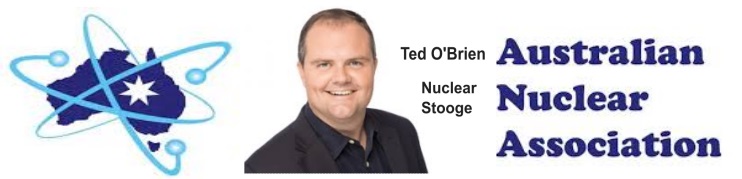
The Opposition’s fission frontman Ted O’Brien was in his element at Australia’s premier pro-nuclear conference last week, feeling the love from a hot-to-trot audience swallowing every word from a smooth-talking messiah . Freelance Journalist Murray Hogarth was there and imbibed the vibe — but not the glow-in-the-dark Kool-Aid.
by MURRAY HOGARTH., https://thepolitics.com.au/inside-the-rooms-that-love-nuclear-ted/?fbclid=IwY2xjawF8E1hleHRuA2FlbQIxMQABHeNqjz022ugJko-9VboOWN2DC-94pA7Y5ifdvNwZFTZ_YaikPJPpvYhkNw_aem_dxORDyGfCPnc4VD223hWhA 16 Oct 24
Ted O’Brien MP was confecting political outrage, playing to Australia’s ultimate pro-nuclear audience in Sydney last Friday. The day before, the Albanese Labor government had sprung a pre-election surprise on the Liberal-National coalition, and O’Brien as its nuclear torchbearer, when it forced through a tactical parliamentary inquiry into nuclear energy.
“It was hard not to be a little bit suspicious, not just because there’d been zero engagement on this,” he confided, eager to share his take on the backstory to how the Coalition had been politically blindsided and outmuscled.
O’Brien was in high dudgeon about the inquiry’s terms of reference, but mainly about its committee having four Labor government members versus two from the Coalition, a two-to-one ratio, plus one from the crossbench, a teal. That’s a clear government majority, so official committee reports will say what it wants, which is realpolitik at work. But to O’Brien it was a desperate government “very clearly trying to weaponise the parliamentary system to kill the idea that Australia should include nuclear energy as part of its mix”.
Of course, hypocrisy is quite the thing in politics. It turns out the last parliamentary inquiry into nuclear energy in 2019, which was chaired by O’Brien, and which supported partial lifting of Australia’s long-standing nuclear energy ban, was even more dominated by the then Coalition government — 5-2 also plus a single teal.
The Coalition under PM Scott Morrison then squibbed it on running a go-nuclear policy at the 2022 elections, which it lost to Labor. Yet, as the opposition, it now expects a Labor government to overturn the nuclear ban that the Coalition introduced in 1998, under the conservative leadership of PM John Howard.
Nothing for O’Brien to melt down over here. But don’t let facts get in the way of a convenient story.
Smug, glib, righteous and on the Right
O’Brien approaches a speaking platform with a radioactive level of smugness and glibness that makes me feel queasy to the core. Perhaps that’s because I’ve been overexposed to him in the past six months as I’ve tracked the emerging nuclear story: three live speeches and seemingly endless videos and television interviews. His own productions. 7.30. Insiders. Four Corners. Sky News on loop.
A committed spruiker, in an Americanised preachy showman kind of way, the ambitious O’Brien is both righteous and on the Right. To paraphrase him: nuclear is vital to our future energy mix and to achieving net zero. Labor’s 100% renewables can’t do it. Blah blah blah. Oh, and we’ll make public the costs and other key details “in due course”.
Last Friday, in contrast to my gut feeling, there was love vibing in the room when O’Brien returned to his people at Australia’s premier pro-nuclear event, the annual conference of the Australian Nuclear Association (ANA). Among this fraternity, he’s Nuclear Ted, the reactor-evangelising federal Liberal from Queensland who’s putting the fission back into the politics of energy in Australia, with a touch of frisson too for this audience.
It’s a pro-nuke constituency that has been in the Australian political wilderness seems like forever, but at least since the 1960s. Now a smooth-talking messiah has emerged, vowing to lead it to its promised land: a nuclear Australia.
If you’ve been thinking it’s mainly renewables-hating, climate-denying National Party political malcontents who are behind the Coalition’s plans — which include prolonging coal and expanding gas generation — think again.
Friends in high places
ANA conferences are where corporate big nuke and its international and local lobbyists meet Australia’s nuclear true believers. Weirdly, however, this gathering of 200 or so delegates has the Australian government as its long-standing principal sponsor. That’s right. The Albanese Labor government is sponsoring a platform for O’Brien, its would-be nuclear energy policy nemesis, to attack the government. And unsurprisingly he keeps coming back to do just that. It’s almost like the government wants O’Brien out there, talking his talk.
The government’s sponsorship comes via its main nuclear advisory agency, the Australian Nuclear Science and Technology Organisation (ANSTO), which operates the nation’s only reactor, a research and medical isotopes facility at Lucas Heights in Sydney. The other event sponsors include the Canadian nuclear engineering powerhouse AtkinsRéalis, and the Australian lobbying outfit SMR Nuclear Technologies.
ANSTO definitely isn’t meant to play politics, challenge policies of the government of the day, or otherwise advocate for nuclear energy. So it’s worth pointing out that the ANA’s president, and the conference’s main host, Dr Mark Ho, is a senior ANSTO scientist in his day job, and the event’s key organiser, Dr John Harries, is former ANSTO, as are many in the ANA orbit.
Beyond the conference, the ANA is increasingly involved in promoting nuclear energy. It and Ho helped organise the Navigating Nuclear forum in May, where O’Brien was a surprise guest speaker after it had been promoted as being “free of politics”.
The Nuclear for Australia campaign thanked Ho for joining its first public event in Lithgow — one of the Coalition’s targeted communities for nuclear reactors — several weeks ago, and Ho was billed as a speaker at an ultra-conservative, anti-renewables, pro-nuclear forum in western Sydney in September where Barnaby Joyce was a pop-up speaker, as previously reported in The Politics, before Harries stepped in to replace him.
I missed Lithgow, but I was at the Navigating Nuclear and western Sydney events. Hence my delicate stomach.
The Coalition is all over this
O’Brien gave a keynote at the ANA’s conference last year too, lambasting the Albanese Labor government then as well. His National Party colleague Dr David Gillespie MP, who spoke at the end of last Friday’s event, has been a regular at these conferences since 2018. Gillespie used the 2022 conference as a springboard for pro-nuclear lobbying through his chairmanship of the Coalition-dominated Parliamentary Friends of Nuclear Industries.
With O’Brien, they played a key role in shaping Opposition Leader Peter Dutton’s headland nuclear energy policy announcements in mid-2023. Indeed, O’Brien passed on Dutton’s greetings to last Friday’s conference, and indicated Dutton’s wish to attend a future event “in due course”.
The irony of this phrase choice may have escaped O’Brien in the moment. But he and Dutton are constantly promising the media and the Australian public that they will announce the Coalition’s nuclear energy policy costs and other details “in due course”. Thus far there is no sign of them.
As the day-long conference played out last Friday, it became more and more clear this wasn’t just a political speaker and an audience with a common interest. It’s more like they are collaborators, private sector interests included, working not just for a nuclear Australia but for a global nuclear renaissance.
One of the main industry sponsor presenters, for example, mentioned a recent economic assessment it had undertaken looking at nuclear generation for the NSW Hunter region that “isn’t public”, saying that “hopefully David and Ted can use that going forward”. Very cosy. It’s all very reciprocal and transactional. The kind of thing which Donald Trump, the self-proclaimed master of the deal turned political leader, might applaud.
It’s a fair bet that if Trump returns to the US presidency after next month’s election the Americans will be all over Australia to buy its nuclear energy technologies and services — a number of which were showcased at the 2023 ANA conference, especially Brookfield-owned Westinghouse, already on Dutton’s reactor design shopping list, and Bill Gates’s TerraPower.
The dream merchant
O’Brien, meanwhile, hung around the conference for an extra Q&A session, and actively canvassed for political support via the ANA community, inviting delegates to mobilise their networks ahead of the federal election, and make wide-ranging submissions to the Labor-dominated parliamentary inquiry into nuclear energy now underway, without feeling constrained by “Labor’s terms of reference”.
In return, O’Brien is promising the realisation of their nuclear dream. If only the Coalition can return to political power, they’ll get nuclear power, or at least that’s the bait, whatever happens down the years ahead. At one stage in the Q&A he even indicated that a future Coalition government could help promote nuclear energy development ambitions with other nations across the Asia-Pacific.
Standing in the way, however, as O’Brien the reactor evangelist tells it, is a Labor government at odds with the nation’s patriotic spirit, and “Team Australia” to revive a favoured Tony Abbott line:
“This is about Australia … But it is people in this room and beyond, who’ve been doing the heavy lifting for years. It is the intellectual capacity of people in this room and the willingness to be patriots, to put Australia first … It is very much a Team Australia effort of patriots who are prepared to engage and assist along the way.”
Oh dear, I’m feeling queasy all over again.
FOOTNOTE: A key conclusion from delving into O’Brien’s nuclear journey, and that of the Dutton Opposition over the past couple of years, is that they haven’t gone to energy experts to work out if and how nuclear fits into Australia’s energy future. Rather, they’ve gone to nuclear vested interests and true believers, and surprise! surprise! they are all for it! As are fossil-fuel diehards, who know a strategic distraction when they see one.
Let’s urge the Australian government to get off the fence and vote YES FOR NUCLEAR DISARMAMENT.

Gem Romuld, Director, ICAN Australia, 17 Oct 24
In one week, Australia will vote on several resolutions on nuclear weapons at the United Nations. While our political representatives can, and do, make compelling speeches about their commitment to ending nuclear weapons, these UN votes are important indicators of where government policy is really at.
For the last couple of years, Australia has abstained on both the Resolution on the Humanitarian Impacts of Nuclear Weapons and the Resolution on the Treaty on the Prohibition of Nuclear Weapons. It’s time to get off the fence and vote “Yes” for a future free of nuclear weapons.
| The Resolution on the Humanitarian Impacts of Nuclear Weapons stresses that the “immense and uncontrollable destructive capability and indiscriminate nature of nuclear weapons cause unacceptable humanitarian consequences” and it calls for all states to “achieve nuclear disarmament”. Australia’s abstentions on this resolution are totally inconsistent with its “solemn recognition of the devastating humanitarian consequences of nuclear war” and “enduring commitment to the objective of a world without nuclear weapons”, as stated by Amanda Gorely, Australia’s Ambassador to the United Nations in Geneva, 10 October 2024. There is no good reason that Australia should continue to abstain. |
| The way Australia votes at the UN matters. It is one way that the Australian public, our regional neighbours and the globe can understand our government’s true position on a range of issues. Write to the Foreign Minister NOW to let her know that you are watching, that you care, and that it’s time to get off the fence and vote yes for a future free of nuclear weapons. |
| We are so excited that Nihon Hidankyo, the Japanese organisation of atomic bomb survivors, will be awarded this year’s Nobel Peace Prize. They have been telling their harrowing stories of survival and campaigning for nuclear abolition for decades. No reasonable person can listen to the testimony of an atomic bomb survivor and still tolerate the existence of a single nuclear weapon. We must heed Nihon Hidankyo’s warning “Nuclear weapons and humanity cannot coexist.” |
Making “Australia a Global Nuclear Waste Dump”: Senator Shoebridge on Labor’s Latest Betrayal

This is purely designed to make AUKUS work, to make Australia a global nuclear waste dump, starting with waste from the UK and US nuclear submarines.
surrender of our sovereignty: the surrender of our national interest to these so-called great powerful friends.
It is an incredibly dangerous pathway, but it is one that we can still step aside from.
SYDNEY CRIMINAL LAWYERS, by Paul Gregoire, 15 Oct 2024
In passing the Australian Naval Nuclear Power Safety Bill 2024 on Thursday last week, the Albanese government quietly got a proposition over the line in this country that had been resisted for decades and that was in the passing of laws that facilitate the imposition of nuclear waste dumps.
Greens Senator David Shoebridge stepped out of the chamber to announce this straight after the bill had passed and he decried the fact that both majors shut down debate on the divisive laws and then promptly jammed them through with bipartisan approval.
Of course, the official line is that the nation needs to be able to store its own nuclear waste that will be produced by the eight nuclear-propelled submarines the AUKUS Pillar I provides that the nation will be receiving over the next four decades or so. However, this acquisition is not guaranteed.
And as Shoebridge has made clear in his campaigning against turning this continent into a site for nuclear waste dumps, the framework that’s been enacted provides that the US and the UK will be dumping their nuclear waste at multiple sites here and other nations could join in the future.
AUKUS dumping ground
Defence minister Richard Marles explained on introducing the laws into parliament that they’re the “second legislative step of Australia’s conventionally armed, nuclear-powered submarines”, and the laws are “specifically focused on… ensuring Australia maintains the highest nuclear safety”.
Under the new laws, regulated activities – nuclear facility, submarine and material activities – are regulated to “designated zones”. Two such zones have already been passed into law, one in WA and the other in SA, while a designated zone can further be any other area in Australia that’s chosen.
The bill also establishes NNP (naval nuclear propulsion) facilities, which are purpose-built facilities for constructing AUKUS submarines and they will further serve as radioactive waste management facilities as well. And this will all be taking place within the designated zones.
And besides a last-minute amendment to prevent the disposal of spent fuel from a submarine that is not Australian, Shoebridge warns that the major parties have swung open the door for this nation to take on the low, intermediate and high-level nuclear waste of the US and the UK going back years.
Opening the floodgates
As the senator explained in an interview in April, despite the US and the UK having nuclear industries going back half a century, neither of them have come up with a permanent solution for their high-grade military nuclear waste. Indeed, the US has only managed this for their intermediate range.
In addressing the 53rd weekly protest for Palestine and now Lebanon on Gadigal land in Sydney last weekend, Shoebridge further warned that the tone of the federal Liberal opposition has become ever more warlike of late, in terms of its support for Israel, which is ensuring Labor slides to the right.
Sydney Criminal Lawyers spoke to Greens Senator David Shoebridge about his insistence that the nation is not yet bound to AUKUS, although it’s getting quite close, as well as the implications of the imposition of nuclear waste dumps and his warning about the Coalition’s new low in war posturing…………………………..
Senator Shoebridge:
What we saw was Albanese, Labor and the Dutton Coalition join up to do what’s known in parliamentary terms as a guillotine: to just ram this through parliament without any debate. And this is after a year of community resistance.
This is purely designed to make AUKUS work, to make Australia a global nuclear waste dump, starting with waste from the UK and US nuclear submarines.
This is going to be arriving in a town or city near you, in the next few months and years because of this legislation they rammed through.
In the next few years, we’re going to be receiving nuclear waste from visiting US nuclear submarines, which can do repairs, starting first at Garden Island off the coast of Fremantle, but also, at Osborne Naval Facility, just south of the Adelaide CBD.
This law greenlights working on those nuclear submarines at both of those facilities and then receiving and storing waste.
But it also means taking waste from those decommissioned UK and US submarines, and they’ve each got dozens and dozens of old submarines rusting away.
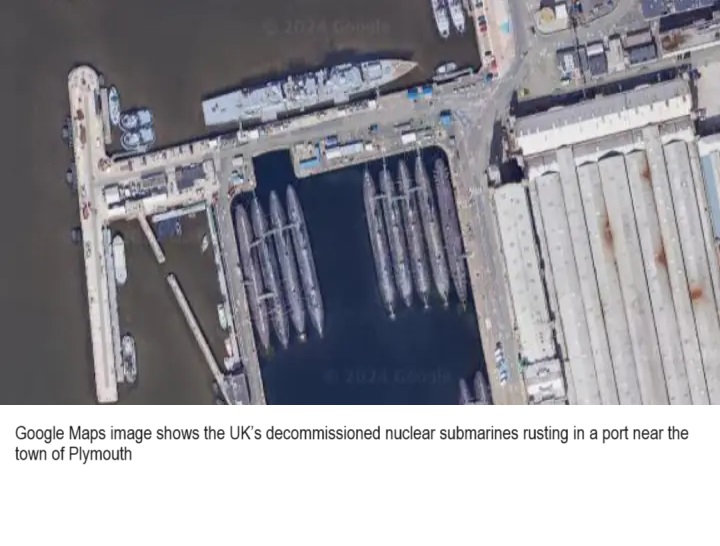
What the Albanese government has done – and they’ve held Peter Dutton’s hand on this journey all the way through – is work around decades and decades of First Nations resistance to nuclear waste dumps and ram this legislation through under the shadow of AUKUS.
I can tell you now, there are people inside Defence, and there are people inside Labor and the Coalition, who desperately want to turn nuclear waste dumps into broader civilian waste dumps and really use this to open up the nuclear industry across this country.
It has been deceitful from day one. When we pointed out last year that the legislation, as initially drafted, allows for the importation of any nuclear waste, even the high-level waste, which is the equivalent of weapons-grade uranium from the UK and US subs, we were attacked by defence minister Marles.
The minister called it a “Green conspiracy” when we pointed out that the law provided that. We won that argument. He had to concede that the bill, as it was drafted, allowed for any nuclear waste and that is partly why we got that amendment up to at least exclude one form of nuclear waste: nuclear fuel.
But from day one it has been deceitful. From day one it has been a stalking horse, using the cover of AUKUS to literally open up this country for the dumping of a global nuclear waste stream.
As more people find out about what this is, people are getting angrier and angrier, but we need to convert that into political mobilisation to undo this.
………………………………………………………………………………………………………………………………………………………………….. If we get to a dystopian future, where we start receiving thousands of tonnes of other countries’ nuclear waste, there will be no path back from that. They will never accept that waste back.
That’s the kind of cruel bargain that the Albanese government is opening up.
I say this especially for First Nations peoples, who have been protecting this continent for tens of thousands of years. This is a particularly cruel bargain that the Albanese government is opening up.
I remain incredibly hopeful that the Australia public are increasingly seeing this for what it is.
Each time political support for AUKUS is tested, it falls and falls. And that is because people can see that we have a political class in both the Labor Party and the Coalition, who are willing to sell out our national interest – poison our land, poison our water – because they’re so keen to follow the US lead and be seen as a sub-imperial power, as a deputy sheriff, they can rely upon.
This latest piece of legislation, that opens up this country to the dumping of US and UK nuclear waste, is just the most recent example of that surrender of our sovereignty: the surrender of our national interest to these so-called great powerful friends.
It is an incredibly dangerous pathway, but it is one that we can still step aside from. https://www.sydneycriminallawyers.com.au/blog/making-australia-a-global-nuclear-waste-dump-senator-shoebridge-on-labors-latest-betrayal/?fbclid=IwY2xjawF72VJleHRuA2FlbQIxMQABHcYCk8aMc9ghXrB4wqCjiVYrmvoQtdGFca2r7nnmWrxwp8Zl17RummiVUw_aem_6KEWHWbagHvCNwR1mF-lWQ
1 This month
15 April – Zoom –Nuclear Power is Not the Solution
Apr 15, 2026 01:00 AM in Canberra, Melbourne, Sydney

Join the International Physicians for the Prevention of Nuclear War (IPPNW) on Tuesday, April 14th for a timely webinar exploring the risks associated with nuclear power and challenging the myth that it offers a simple, safe, carbon-free solution to the climate crisis

of the week – Australians for War Powers Reform (AWPR)
To see nuclear-related stories in greater depth and intensity
 Antinuclear